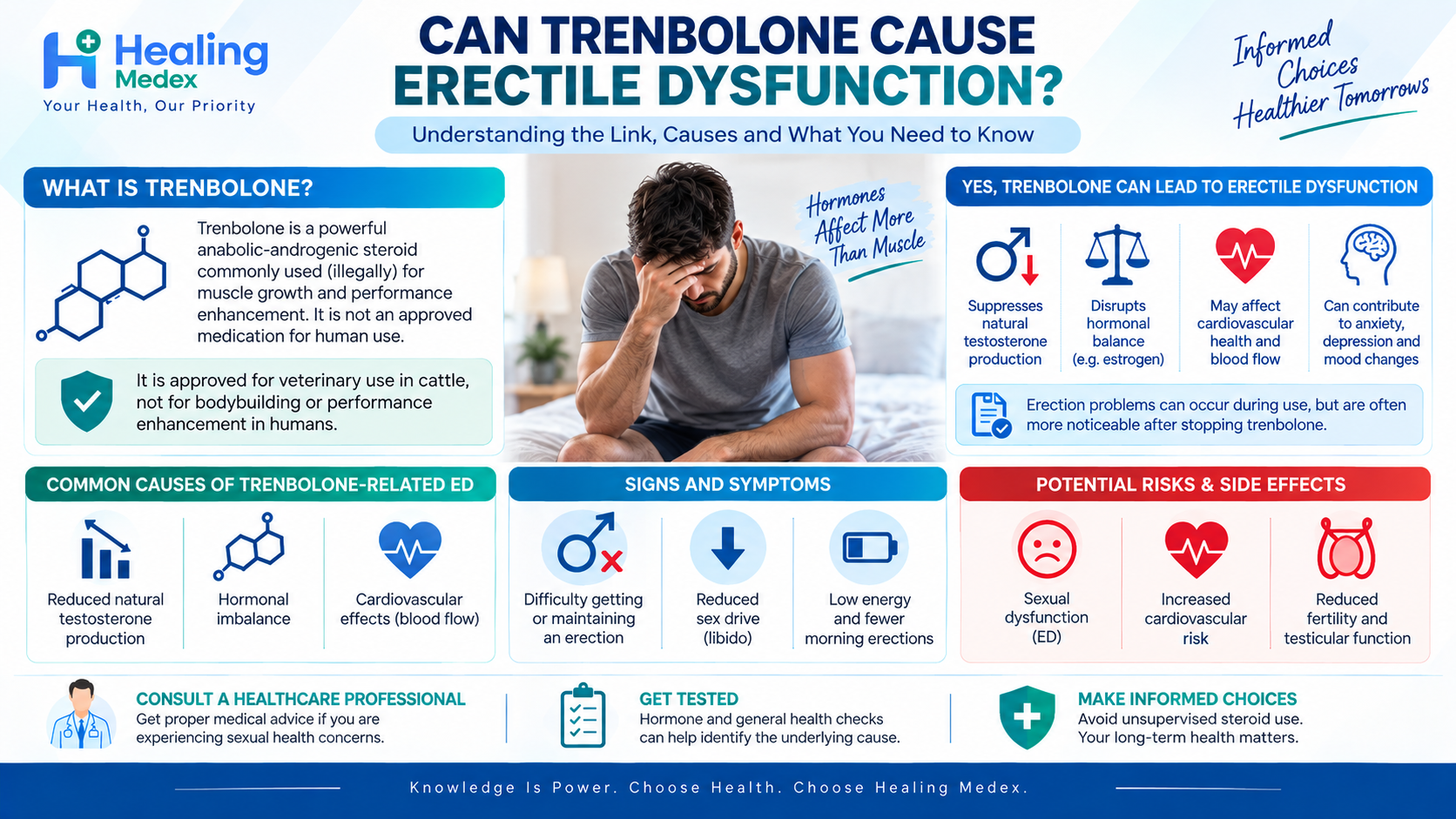
Yes, trenbolone and other anabolic-androgenic steroids may contribute to erectile dysfunction, particularly by suppressing the body's natural testosterone production and altering normal hormonal function. Sexual problems may occur during steroid use, but they are often especially noticeable after anabolic steroids are stopped.
Human research specifically studying trenbolone is limited. Most available evidence evaluates anabolic-androgenic steroids (AAS) as a group rather than trenbolone alone. A 2026 review found an association between prolonged AAS use, hormonal disturbances, hypogonadism and impaired erectile function.
What Is Trenbolone?
Trenbolone is a synthetic anabolic-androgenic steroid related to testosterone.
Unlike medicines such as medically prescribed testosterone, trenbolone is not an approved medication for bodybuilding or performance enhancement in humans. Trenbolone acetate is used in certain FDA-approved hormone implants for beef cattle to increase weight gain and feed efficiency. FDA documentation for trenbolone-containing veterinary products identifies them for animal use rather than human use.
Because controlled human clinical trials of nonmedical trenbolone use are lacking, its safety profile in humans cannot be established in the same way as that of approved medications.
How Can Trenbolone Cause Erectile Dysfunction?
Several mechanisms may contribute to erection problems in people using trenbolone or other anabolic steroids.
1. Suppression of Natural Testosterone Production
One of the most important mechanisms is suppression of the hypothalamic-pituitary-gonadal (HPG) axis.
Normally, the brain releases hormonal signals that tell the testes to produce testosterone. When large amounts of external anabolic steroids are introduced into the body, the brain detects high androgen activity and reduces these signals.
Levels of luteinizing hormone (LH) and follicle-stimulating hormone (FSH) may fall. As a result, the testes can reduce their own testosterone production.
This condition is sometimes called anabolic steroid-induced hypogonadism.
Low testosterone can cause:
Reduced sex drive
Difficulty achieving erections
Difficulty maintaining erections
Fewer spontaneous or morning erections
Fatigue
Reduced energy
Testicular shrinkage
Reduced sperm production
Fertility problems
The Endocrine Society lists anabolic steroid use as a potential cause of male hypogonadism and identifies reduced libido and erectile dysfunction among symptoms of testosterone deficiency.
2. Erectile Dysfunction May Become More Noticeable After Stopping Trenbolone
Some anabolic steroid users report increased sexual drive while using high androgen doses. The situation can change significantly after the steroids are discontinued.
Once the external androgen supply disappears, natural testosterone production may remain suppressed for a period of time.
This can create a temporary — and occasionally prolonged — hormonal state characterized by low testosterone, low libido and difficulty with erections.
A systematic review examining male fertility and AAS exposure found that erectile function could be higher during steroid exposure in some users but that reduced libido and erectile dysfunction were reported following withdrawal.
Clinical observations show the same pattern. In one specialist clinic involving 180 current or former AAS users, decreased libido and erectile dysfunction were among the problems reported after anabolic steroid cycles.
3. Hormonal Imbalance Can Affect Sexual Function
Erections depend on more than simply having a high androgen level.
Testosterone, estrogen and other hormones work together as part of a complex endocrine system. Using powerful anabolic steroids can disturb this balance.
Trenbolone itself is different from testosterone because it does not behave identically in normal hormone pathways. Many people using trenbolone also use additional anabolic steroids or hormone-modifying drugs, making the resulting hormonal environment even less predictable.
For example, unnecessary use of aromatase inhibitors can reduce estrogen excessively. Both abnormal androgen status and disrupted estrogen balance may contribute to sexual symptoms.
Some online discussions also blame trenbolone-related erectile problems entirely on prolactin. However, human evidence showing that prolactin is the primary cause of erectile dysfunction specifically from trenbolone is limited.
Rather than assuming that one particular hormone is responsible, appropriate laboratory testing is more useful.
4. Anabolic Steroids Can Affect Cardiovascular Health
A healthy erection requires adequate blood flow.
Anabolic steroid exposure has been associated with cardiovascular and metabolic changes including:
Increased blood pressure
Unfavorable cholesterol changes
Increased hematocrit in some users
Structural changes affecting the heart with prolonged exposure
Reviews of anabolic steroid adverse effects have identified hypertension, dyslipidemia, testosterone deficiency and erectile dysfunction among potential health concerns associated with AAS use.
This does not mean that cardiovascular changes are responsible for every case of steroid-associated ED. However, vascular health is an important part of erectile function and should not be overlooked.
5. Anxiety, Depression and Psychological Changes Can Contribute to ED
Erectile function depends on both physical and psychological health.
Anabolic steroid use and withdrawal can be associated with changes in mood. Some individuals experience:
Depression
Irritability
Reduced confidence
Sleep problems
Changes in sexual desire
Any of these factors may worsen erection difficulties.
Research presented by the Endocrine Society found greater sexual-function impairment among men who had recently stopped illicit anabolic steroids compared with men who were still using them, with lower testosterone and psychological factors potentially contributing to symptoms.
6. Testicular Function May Be Suppressed
Anabolic steroids can suppress LH and FSH — two hormones essential for normal testicular function.
Consequences may include:
Reduced natural testosterone production
Reduced testicular size
Lower sperm production
Reduced sperm quality
Infertility
A systematic review found lower gonadotropin levels and smaller testicular size among anabolic steroid users. Effects on reproductive function can continue after use has stopped.
Does Trenbolone Always Cause Erectile Dysfunction?
No.
Not every person who uses anabolic steroids develops erectile dysfunction.
Sexual effects can differ considerably depending on factors such as:
Duration of anabolic steroid exposure
Total androgen exposure
Whether several steroids are being used together
Previous anabolic steroid use
Baseline testosterone levels
Psychological health
Alcohol or recreational drug use
Other medications
Individual hormonal response
Some users may initially notice increased libido, while others experience reduced sexual function. Problems may also develop primarily after the anabolic steroids are discontinued.
Because trenbolone users commonly combine several substances, it can be difficult to determine which drug is responsible.
Can Erectile Dysfunction Continue After Stopping Trenbolone?
It can.
Natural testosterone production does not necessarily return to normal immediately after anabolic steroids are stopped.
Research shows considerable variation in recovery of the HPG axis following AAS exposure. Some individuals recover within several months, while others may experience hormonal symptoms for substantially longer.
The recovery period may depend on the duration and extent of previous AAS exposure as well as individual physiology.
Therefore, persistent erectile dysfunction after stopping trenbolone should not automatically be assumed to be permanent, but it also should not be ignored.
Does PCT Guarantee Testosterone and Erectile Function Recovery?
No.
Post-cycle therapy (PCT) does not guarantee that natural testosterone production or erectile function will return to normal.
Drugs such as hCG, clomiphene, tamoxifen and aromatase inhibitors are sometimes self-administered by anabolic steroid users. However, these medications have legitimate medical indications, potential adverse effects and specific hormonal actions.
Research on the best treatment strategy for anabolic steroid-induced hypogonadism remains limited, and management needs to consider the person's hormone results, symptoms, fertility goals and previous steroid exposure.
Self-treatment can also alter hormone measurements and make the underlying problem more difficult to evaluate.
Persistent symptoms are therefore better assessed by an endocrinologist, urologist or other clinician experienced in male hormone disorders.
What Tests May Be Needed for Erectile Dysfunction After Steroid Use?
A doctor may consider a combination of medical history, examination and laboratory testing.
Depending on the individual, evaluation may include:
Morning total testosterone
Repeat testosterone measurement when appropriate
Free testosterone when clinically indicated
LH
FSH
Prolactin when indicated
Estradiol when clinically relevant
Blood pressure
Blood count/hematocrit
Cholesterol and triglycerides
Blood glucose or HbA1c
Liver and kidney function tests
For men concerned about fertility, semen analysis may also be considered.
The Endocrine Society recommends diagnosing hypogonadism based on compatible symptoms together with consistently low testosterone levels rather than symptoms alone. LH and FSH measurements can help determine whether testosterone deficiency is primarily testicular or related to pituitary/hypothalamic suppression.
Can Trenbolone-Related Erectile Dysfunction Be Reversed?
Improvement is possible, particularly if erectile dysfunction is related to temporary hormone suppression following anabolic steroid use.
However, there is no single recovery timeline that applies to everyone.
Recovery may depend on:
How long anabolic steroids were used
Overall exposure
Whether several anabolic steroids were combined
Previous cycles
Baseline hormone function
Age
Cardiovascular and metabolic health
Other medications or substances
Psychological factors
Some aspects of hormone function can recover gradually following discontinuation, while prolonged symptoms have been reported in some former users.
This is one reason persistent symptoms should be evaluated rather than repeatedly treated with additional hormones without laboratory testing.
When Should You See a Doctor?
Medical evaluation should be considered if erectile dysfunction persists, repeatedly occurs or is accompanied by symptoms such as:
Significant decrease in libido
Loss of morning erections
Persistent fatigue
Testicular shrinkage
Breast tenderness or enlargement
Depression or severe mood changes
Fertility problems
High blood pressure
Palpitations or unusual shortness of breath
Urgent medical attention is appropriate for symptoms such as chest pain, fainting, severe shortness of breath or other signs of a cardiovascular emergency.
When speaking with a healthcare professional, it is important to disclose previous or current anabolic steroid use. Knowing which substances have been taken helps clinicians interpret hormonal tests and investigate the possible cause of the symptoms.
Frequently Asked Questions
Can trenbolone cause ED even if testosterone appears high?
Yes, erection problems can occur even when an androgen measurement appears high. Erectile function involves vascular health, psychological factors and multiple hormones. A single testosterone result does not provide a complete assessment.
Why might erectile dysfunction occur after stopping trenbolone?
External anabolic steroids can suppress LH and FSH, reducing natural testosterone production. After the steroid is stopped, endogenous testosterone production may remain suppressed while the HPG axis recovers.
Does trenbolone permanently lower testosterone?
Not necessarily. Hormonal recovery varies considerably between individuals. Some recover relatively quickly, whereas others can experience prolonged anabolic steroid-induced hypogonadism.
Can low testosterone cause erectile dysfunction?
Can anabolic steroids affect fertility as well as erections?
Yes. AAS exposure can suppress LH and FSH, reduce testicular size and interfere with sperm production and fertility.
Should erectile dysfunction after trenbolone automatically be treated with testosterone?
No. The underlying cause should first be established. Testosterone therapy is not appropriate for everyone and can further suppress sperm production, which is particularly important for men who want to preserve fertility.
Final Thoughts
Trenbolone can contribute to erectile dysfunction, primarily because powerful anabolic-androgenic steroid exposure can interfere with the body's natural hormone-regulating system.
Suppression of natural testosterone production, hormonal imbalance, changes in cardiovascular health and psychological factors may all contribute. Erectile dysfunction may become particularly noticeable after anabolic steroids are discontinued, when natural testosterone production remains suppressed.
However, most human research involves anabolic-androgenic steroids collectively rather than controlled studies of trenbolone itself. This distinction is important because trenbolone does not have an established human therapeutic safety profile.
Persistent erectile dysfunction, reduced libido or symptoms of low testosterone following anabolic steroid use deserve proper medical evaluation rather than assumptions about a single hormone or reliance on unsupervised post-cycle medications.