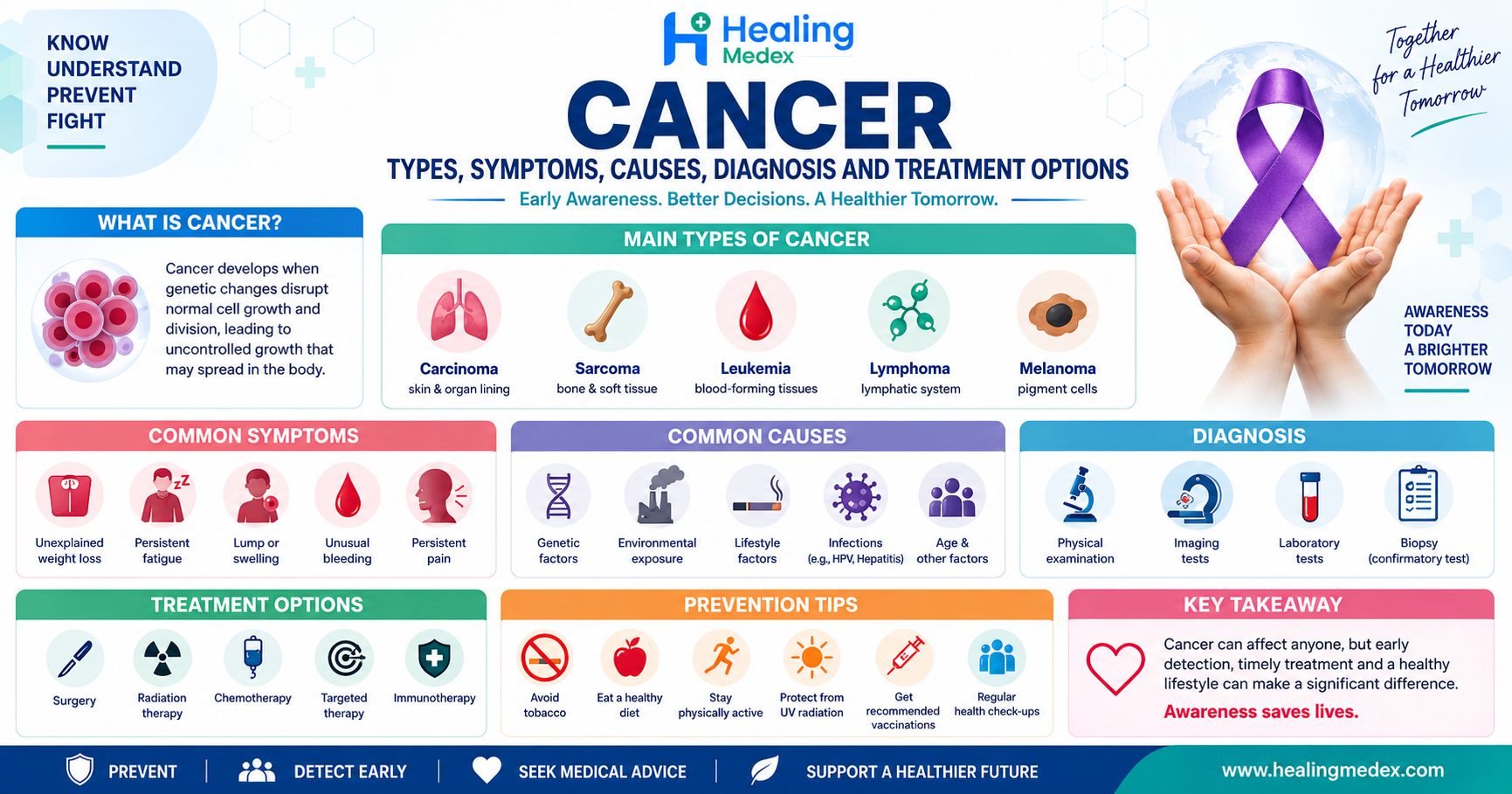
What Is Cancer?
The human body is made up of trillions of cells. Normally, cells grow, divide and die in a controlled manner.
Cancer develops when genetic changes disrupt this normal process. Abnormal cells may continue to grow and divide when they should not. These cells can sometimes form a mass known as a tumor.
Not every tumor is cancerous. Tumors are generally classified as:
Benign tumors: Do not invade nearby tissues or spread to distant organs.
Malignant tumors: Can invade surrounding tissues and may spread to other areas of the body.
Some cancers, including leukemia, primarily affect blood-forming tissues and may not form a solid tumor.
What Are the Main Types of Cancer?
There are more than 100 types of cancer. They are commonly named according to the organ, tissue or type of cell in which they begin.
1. Carcinoma
Carcinomas develop from epithelial cells, which cover the internal and external surfaces of the body.
They include many common cancers such as:
breast cancer
lung cancer
colorectal cancer
prostate cancer
kidney cancer
certain skin cancers
2. Sarcoma
Sarcomas develop in connective and supporting tissues, including:
bone
cartilage
muscle
fat
blood vessels
fibrous tissue
Examples include osteosarcoma and soft-tissue sarcoma.
3. Leukemia
Leukemia is a cancer of blood-forming tissues, particularly the bone marrow. Abnormal blood cells multiply and interfere with the production and function of healthy blood cells.
Major forms include:
acute lymphoblastic leukemia (ALL)
acute myeloid leukemia (AML)
chronic lymphocytic leukemia (CLL)
chronic myeloid leukemia (CML)
4. Lymphoma
Lymphoma develops in cells of the lymphatic and immune systems.
The two major categories are:
Hodgkin lymphoma
non-Hodgkin lymphoma
5. Multiple Myeloma
Multiple myeloma develops from plasma cells, a type of immune cell found primarily in bone marrow.
Abnormal plasma cells can accumulate in the bone marrow and affect the bones, kidneys and normal blood-cell production.
6. Melanoma
Melanoma develops from melanocytes, the cells responsible for producing the pigment melanin.
It most commonly develops in the skin but can occasionally occur in other areas containing melanocytes.
7. Brain and Central Nervous System Tumors
Tumors may develop in the brain, spinal cord or related tissues.
Different brain tumors behave differently, and some may be benign while others are malignant.
Common Types of Cancer
Some frequently diagnosed cancers worldwide include:
lung cancer
breast cancer
colorectal cancer
prostate cancer
stomach cancer
liver cancer
cervical cancer
thyroid cancer
pancreatic cancer
kidney cancer
bladder cancer
skin cancer
leukemia
lymphoma
According to the World Health Organization, lung, breast, colorectal and prostate cancers are among the most commonly diagnosed cancers globally.
What Are the Symptoms of Cancer?
Cancer does not have one single set of symptoms. Symptoms depend on factors such as:
the type of cancer
its location
the size of the tumor
whether it has spread
which organs or tissues are affected
Cancer may also produce few or no noticeable symptoms during its early stages.
Possible Warning Signs of Cancer
Symptoms that should be medically evaluated when persistent or unexplained can include:
unexplained weight loss or weight gain
persistent or extreme fatigue
a new lump or swelling
persistent or worsening pain
unusual bleeding or bruising
blood in the urine or stool
persistent cough
persistent hoarseness
difficulty swallowing
changes in bowel habits
changes in urination
loss of appetite
persistent fever or night sweats
a sore that does not heal
new or changing skin lesions or moles
unexplained breast changes
persistent headaches
unexplained neurological changes
These symptoms do not necessarily mean that a person has cancer. Infections, inflammatory diseases and many other non-cancerous conditions can cause similar symptoms. Persistent, unexplained or worsening changes should nevertheless be evaluated by a healthcare professional.
What Causes Cancer?
Cancer usually develops because of changes or mutations in genes that regulate how cells grow, divide and repair themselves.
These genetic changes may develop because of inherited factors, environmental exposure, lifestyle factors, infections or simply changes that accumulate as cells divide over time.
The World Health Organization groups important cancer-causing exposures into physical, chemical and biological carcinogens.
Major Cancer Risk Factors
Having a risk factor does not mean that someone will definitely develop cancer. Likewise, people without obvious risk factors can still develop cancer.
Important cancer risk factors include:
Tobacco Use
Smoking and other forms of tobacco exposure are major preventable causes of cancer.
Tobacco is associated with cancers including those affecting the:
lungs
mouth
throat
larynx
esophagus
pancreas
bladder
kidney
Avoiding tobacco is one of the most important steps a person can take to reduce cancer risk.
Alcohol Consumption
Alcohol consumption increases the risk of several cancers, and risk generally increases with the amount consumed.
Excess Body Weight
Being overweight or obese is associated with an increased risk of several types of cancer.
Physical Inactivity
Regular physical activity can contribute to maintaining a healthy body weight and may help reduce the risk of certain cancers.
Diet
Dietary patterns can influence overall cancer risk. A balanced diet containing fruits, vegetables, whole grains and other nutrient-rich foods is generally recommended as part of a healthy lifestyle.
Ultraviolet Radiation
Excessive exposure to ultraviolet radiation from sunlight or tanning devices can increase the risk of skin cancers.
Ionizing Radiation
High or repeated exposure to ionizing radiation can increase cancer risk.
Certain Infections
Some infections can increase the risk of particular cancers.
Examples include:
human papillomavirus (HPV)
hepatitis B virus
hepatitis C virus
Helicobacter pylori
Epstein-Barr virus
Vaccination against HPV and hepatitis B can help prevent infections associated with certain cancers in people for whom these vaccines are recommended.
Environmental and Occupational Exposure
Certain substances encountered in the environment or workplace can increase cancer risk.
Examples include some forms of:
asbestos
arsenic
tobacco smoke
industrial chemicals
air pollution
Age
Cancer risk generally increases with age because genetic changes and exposure to risk factors accumulate over time.
Family History and Inherited Genetic Changes
Some people inherit genetic variants that substantially increase their risk of certain cancers.
However, inheriting a cancer-predisposition gene does not necessarily mean cancer will develop.
How Is Cancer Diagnosed?
There is no single test that can diagnose every type of cancer.
The diagnostic process depends on a person’s symptoms, medical history, examination findings and the suspected type of cancer.
Doctors may use several different approaches.
1. Medical History and Physical Examination
A healthcare professional may ask about:
symptoms
when symptoms began
personal medical history
family history of cancer
lifestyle factors
occupational or environmental exposure
A physical examination may be performed to identify lumps, swelling, skin abnormalities or other possible signs.
2. Laboratory Tests
Blood, urine or other laboratory tests may provide information about a person’s overall health or detect abnormalities associated with certain cancers.
However, abnormal laboratory results alone do not usually confirm cancer.
3. Imaging Tests
Imaging can help doctors identify suspicious growths and determine whether cancer may have spread.
Tests may include:
X-ray
ultrasound
CT scan
MRI
PET scan
bone scan
mammography
The test used depends on the suspected cancer.
4. Endoscopy
Doctors may use a flexible instrument with a camera to examine areas inside the body.
Examples include:
colonoscopy
bronchoscopy
gastroscopy
cystoscopy
5. Biopsy
A biopsy involves removing cells or tissue so they can be examined by a pathologist.
For many cancers, biopsy is an important step in establishing a definitive diagnosis.
Biopsies may be performed using a:
needle
endoscopic procedure
minor surgical procedure
surgical operation
6. Molecular and Biomarker Testing
Some cancers are tested for specific genes, proteins or other biomarkers.
These tests can sometimes help doctors determine which targeted treatment or immunotherapy is most likely to benefit a particular patient.
What Is Cancer Staging?
Once cancer has been diagnosed, additional tests may be performed to determine its stage.
Cancer staging helps describe factors such as:
where the cancer originated
tumor size
whether nearby lymph nodes are involved
whether cancer has spread to distant organs
Many cancers are described using stages ranging from Stage I to Stage IV, although staging systems vary according to cancer type.
Generally, a higher stage indicates more extensive disease.
Cancer stage is important because it helps doctors select treatment and estimate prognosis.
What Are the Treatment Options for Cancer?
Cancer treatment is highly individualized.
Treatment depends on factors such as:
type of cancer
cancer stage
tumor characteristics
biomarker results
patient’s age
overall health
previous treatments
patient’s preferences
Some people require a single therapy, while others receive a combination of treatments.
1. Surgery
Surgery removes cancerous tissue from the body.
It is commonly used for localized solid tumors and may sometimes be combined with chemotherapy or radiation therapy.
2. Chemotherapy
Chemotherapy uses medicines that kill cancer cells or interfere with their ability to grow and divide.
Chemotherapy may be given:
before surgery
after surgery
together with radiation therapy
as the primary treatment for certain cancers
to control advanced disease
Because chemotherapy can also affect healthy rapidly dividing cells, side effects may occur.
3. Radiation Therapy
Radiation therapy uses high-energy radiation to damage cancer cells and reduce their ability to reproduce.
It may be used to:
destroy cancer cells
shrink tumors before surgery
eliminate remaining cancer cells after surgery
relieve symptoms caused by advanced cancer
4. Targeted Therapy
Targeted therapies are designed to act on specific molecular changes that help cancer cells grow, survive or spread.
Different targeted therapies work against different cancer-related pathways, which is why biomarker testing may be needed before treatment.
5. Immunotherapy
Immunotherapy helps the body’s immune system recognize and fight cancer.
Different forms of immunotherapy work in different ways and are currently used for selected cancer types.
6. Hormone Therapy
Some cancers depend on hormones to grow.
Hormone therapy can block hormone production or interfere with hormone activity.
It is commonly used for certain:
7. Stem Cell Transplantation
Blood-forming stem cell transplantation may be used in selected patients with cancers such as leukemia, lymphoma or multiple myeloma.
It can restore blood-forming cells after intensive chemotherapy or radiation treatment.
8. Precision Medicine
Precision medicine uses information about the genetic and molecular characteristics of a person’s cancer to help select treatments.
This approach has become increasingly important in modern oncology.
9. Palliative and Supportive Care
Cancer care is not limited to treatments aimed at eliminating cancer.
Supportive and palliative care may help manage:
pain
nausea
fatigue
nutritional problems
breathing difficulties
other symptoms caused by cancer or its treatment
Palliative care can be provided alongside active cancer treatment and is not limited to end-of-life care.
Can Cancer Be Prevented?
Not every cancer can be prevented, but many cancer cases are associated with preventable or modifiable risk factors.
The World Health Organization estimates that a substantial proportion of cancers can be prevented through established prevention strategies.
Steps that may help reduce cancer risk include:
avoiding tobacco products
avoiding second-hand tobacco smoke where possible
limiting or avoiding alcohol
maintaining a healthy body weight
exercising regularly
following a balanced diet
protecting skin from excessive ultraviolet radiation
receiving recommended HPV vaccination
receiving recommended hepatitis B vaccination
reducing unnecessary exposure to carcinogenic substances
following occupational safety procedures
participating in recommended cancer-screening programs
Why Is Early Detection of Cancer Important?
Cancer is often easier to treat when it is detected before it has spread extensively.
Early detection involves two related strategies:
Early diagnosis means identifying cancer promptly in people who have symptoms.
Cancer screening attempts to detect certain cancers or precancerous changes before symptoms develop.
Screening is appropriate for certain cancers and particular age or risk groups; there is no single screening test recommended for every cancer or every person.
Patients should discuss appropriate screening with a healthcare professional based on their age, sex, family history and individual risk factors.
When Should You See a Doctor?
Consult a healthcare professional if you develop a new, unexplained or persistent change such as:
an unusual lump
unexplained bleeding
unexplained weight loss
persistent cough
changes in bowel or bladder habits
difficulty swallowing
a changing mole or skin lesion
persistent unexplained pain
prolonged fatigue
symptoms that continue to worsen or do not resolve
Having one of these symptoms does not automatically indicate cancer. Medical evaluation is necessary to determine the cause.
Frequently Asked Questions About Cancer
Is every tumor cancerous?
No. Tumors can be benign or malignant. Benign tumors do not normally invade surrounding tissues or spread to distant organs, while malignant tumors are cancerous and can invade and spread.
Can cancer spread from one part of the body to another?
Yes. Cancer cells can sometimes travel through the bloodstream or lymphatic system and establish tumors elsewhere in the body. This process is called metastasis.
Is cancer always hereditary?
No. Most cancers are not simply inherited from a parent. However, inherited genetic variants can increase susceptibility to certain cancers in some families.
Does cancer always cause symptoms in the early stages?
No. Some cancers produce few or no symptoms during their early stages, which is one reason recommended screening can be important for selected cancers.
Can cancer be cured?
Some cancers can be cured, particularly when diagnosed early and treated effectively. Outcomes vary considerably depending on cancer type, stage, molecular characteristics, available treatments and the patient’s overall health.
Is chemotherapy the only treatment for cancer?
No. Cancer treatment may include surgery, radiation therapy, chemotherapy, targeted therapy, immunotherapy, hormone therapy, stem cell transplantation or combinations of these approaches.
Can cancer treatment be purchased and used without an oncologist?
No. Anticancer medicines can have serious risks and require accurate diagnosis, appropriate dosing and medical monitoring. Cancer treatment should be prescribed and supervised by qualified oncology professionals. Patients should never start, stop or change an anticancer medicine without medical advice.
Conclusion
Cancer includes a diverse group of diseases characterized by uncontrolled abnormal cell growth. Although cancer can be serious, improvements in prevention, screening, diagnosis and treatment continue to improve outcomes for many patients.
Understanding potential warning signs and risk factors is important, but symptoms alone cannot confirm cancer. Anyone experiencing persistent or unexplained health changes should consult a qualified healthcare professional.
Treatment depends heavily on the exact type and stage of cancer. Surgery, chemotherapy, radiation therapy, targeted therapy, immunotherapy, hormone therapy and other specialized treatments may be used individually or in combination.
At Healing Medex, our goal is to provide clear and accessible health information that helps patients better understand diseases, medicines and treatment terminology so they can have informed discussions with their healthcare professionals.