Fenbendazole 500 mg: Uses, Dosage Considerations, Side Effects & Safety Guide:
Fenbendazole 500 mg is an antiparasitic medicine primarily used in veterinary medicine to help treat certain parasitic worm infections in animals. It belongs to the benzimidazole class of anthelmintic medicines and is used to manage susceptible intestinal parasites.
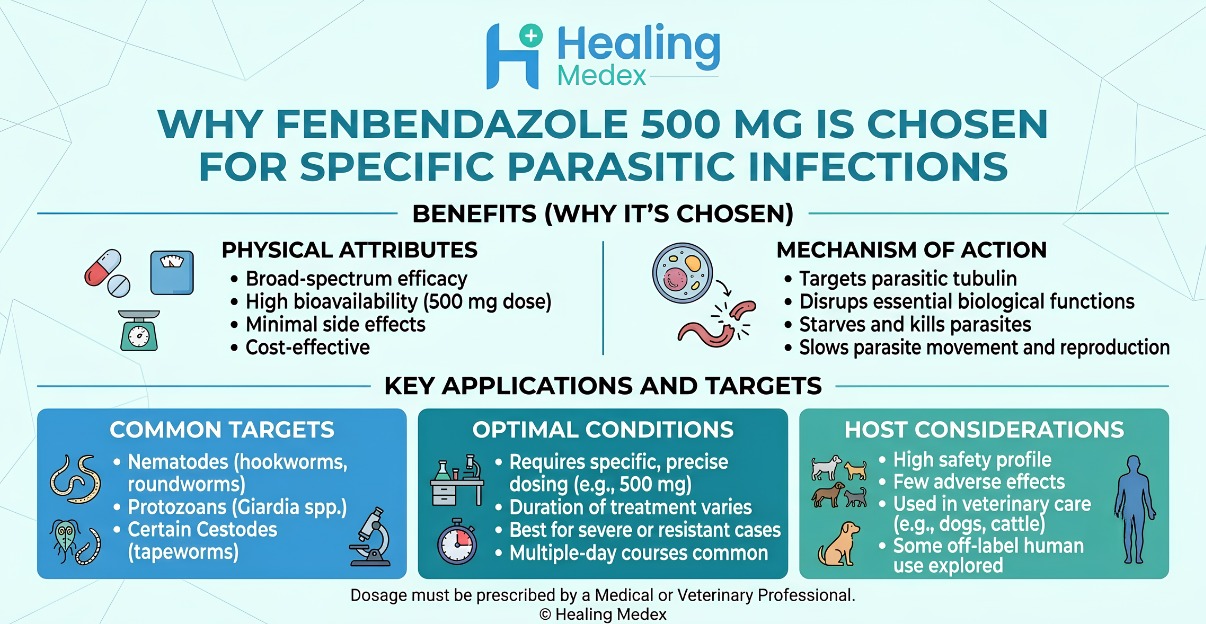
Fenbendazole works by interfering with important biological processes inside susceptible parasites. This can affect their ability to absorb nutrients and maintain normal cellular functions, eventually helping eliminate the parasites from the animal's body.
Because fenbendazole is widely discussed online, it is important to understand what it is actually intended for, how it works, and how it should be used responsibly.
Important: Veterinary medicines are formulated for specific animal species and should not automatically be considered suitable for human use.
With the increasing availability of medicines through online platforms, people may search for fenbendazole without fully understanding the correct product, strength, formulation, or intended use.
At Healing Medex, we believe that medicines should be approached with accurate information, professional guidance, and responsible use.
This guide explains:
What Fenbendazole 500 mg is
How it works
Common veterinary uses
Dosage considerations
Possible side effects
Safety precautions
Important considerations when obtaining it online
What Is Fenbendazole 500 mg?
Fenbendazole is an antiparasitic medicine belonging to the benzimidazole group of anthelmintic medicines. It is primarily used in veterinary medicine to control certain types of parasitic worms.
Fenbendazole may be available in different formulations and strengths. The 500 mg strength indicates the amount of fenbendazole contained in a particular product or dosage unit.
However, this does not mean that 500 mg is an appropriate dose for every animal.
The correct treatment can depend on several factors, including:
Animal species
Body weight
Age
Type of parasite
Severity of infection
Product formulation
Treatment duration
Fenbendazole is commonly used in veterinary care when a veterinarian determines that the parasite is susceptible to treatment. The specific product instructions should always be followed carefully.
It is also important to distinguish veterinary medicines from medicines approved for human use. Fenbendazole products intended for animals should not be used by people as a substitute for approved human antiparasitic medicines.
How Does Fenbendazole Work?
Fenbendazole works by interfering with tubulin, a protein that plays an important role in the structure and function of parasite cells.
The medicine disrupts the formation and function of microtubules within susceptible parasites. This can interfere with the parasite's ability to absorb nutrients and carry out essential cellular processes.
As these processes are disrupted, the parasite may become unable to maintain normal growth, development, and survival.
Fenbendazole's effectiveness depends on the specific parasite and whether that organism is susceptible to the medicine.
Important Note
Fenbendazole should not be assumed to treat every type of parasite.
Different parasites may require different medicines or treatment approaches.
Identifying the parasite is an important part of selecting appropriate treatment.
Important Uses of Fenbendazole
Fenbendazole is primarily used in veterinary medicine for certain parasitic worm infections.
1. Roundworms
Roundworms are intestinal parasites that can affect various animals, including dogs and livestock.
Depending on the parasite and animal species, fenbendazole may be used as part of a veterinary deworming treatment.
Roundworm infections may cause:
Digestive problems
Changes in appetite
Poor growth
Weight loss
Other health concerns
2. Hookworms
Hookworms are parasitic worms that can attach to the intestinal lining of susceptible animals.
Certain hookworm infections can contribute to:
Digestive problems
Weakness
Blood loss
A veterinarian may recommend fenbendazole when it is considered appropriate for the specific parasite and animal.
3. Whipworms
Whipworms can affect the intestinal tract, particularly in dogs.
Infected animals may experience:
Diarrhea
Abdominal discomfort
Weight loss
Changes in normal bowel movements
Fenbendazole may be included in a treatment plan when the parasite is susceptible and veterinary assessment supports its use.
4. Other Susceptible Parasites
Fenbendazole has activity against several susceptible gastrointestinal parasites.
However, its effectiveness varies depending on the organism.
Not every parasitic infection responds to fenbendazole, so veterinary diagnosis and guidance are important before treatment.
Why Proper Diagnosis Is Important
Parasitic infections can produce a wide range of symptoms.
Animals may experience:
Diarrhea
Vomiting
Weight loss
Poor appetite
Weakness
Abdominal discomfort
Changes in stool
However, these symptoms can also be caused by many other health conditions, including:
Digestive disorders
Other diseases
Treating an animal based only on symptoms may therefore fail to address the actual cause of the problem.
A veterinarian may consider the animal's:
Medical history
Physical examination
Body weight
Age
Stool testing
Other relevant factors
Correct diagnosis helps ensure that the appropriate medicine and treatment approach are selected.
Fenbendazole 500 mg Dosage Considerations
The appropriate amount of fenbendazole depends on the individual veterinary situation.
Factors that may influence treatment include:
Animal species
Body weight
Age
Type of parasite
Severity of infection
Existing health conditions
Product formulation
Treatment duration
A 500 mg product should not automatically be given as a complete dose simply because the package states 500 mg.
Pet owners should follow the exact instructions provided by a veterinarian and the directions on the specific approved veterinary product.
Do not:
Increase the dose without professional advice
Repeat treatment unnecessarily
Extend the treatment period without guidance
Using an incorrect dose may reduce the effectiveness of treatment or increase the risk of unwanted effects.
Can Humans Use Fenbendazole?
Fenbendazole is primarily a veterinary medicine, and veterinary formulations should not be used for human self-treatment.
There are online discussions about experimental or unapproved uses of fenbendazole in humans. However, online claims should not be interpreted as evidence that veterinary fenbendazole is safe or effective for treating human diseases.
People who believe they may have a parasitic infection should consult a qualified healthcare professional.
A healthcare professional can identify the underlying condition and recommend an appropriate medicine that is approved and suitable for human use.
Using a veterinary medicine without professional medical guidance can expose a person to:
Inappropriate formulations
Incorrect dosing
Other unknown risks
Possible Side Effects of Fenbendazole
Like other medicines, fenbendazole may cause unwanted effects in some animals.
Possible reactions can include:
Temporary digestive upset
Vomiting
Diarrhea
Reduced appetite
Changes in stool
Mild gastrointestinal discomfort
Tiredness
Changes in normal behavior
Individual reactions can vary depending on the animal, its health condition, the parasite being treated, and the specific product used.
If an animal develops severe, persistent, or unusual symptoms after receiving fenbendazole, contact a veterinarian promptly.
Pet owners should also inform the veterinarian about any other medicines, supplements, or treatments the animal is receiving.
Fenbendazole and Other Medicines
Animals may sometimes receive several medicines at the same time.
Before starting fenbendazole, tell the veterinarian about all medicines and supplements currently being given to the animal.
This may include:
Prescription medicines
Over-the-counter products
Other antiparasitic medicines
A veterinarian can determine whether the combination is appropriate and whether additional monitoring may be necessary.
Avoid combining multiple deworming medicines simply because they are available online or appear to have similar purposes.
Who Should Take Extra Precautions?
Certain animals may require additional veterinary assessment before receiving antiparasitic treatment.
This may include:
Very young animals
Older animals
Pregnant or nursing animals
Underweight animals
Animals with chronic health conditions
Animals taking multiple medicines
Animals with a history of medicine reactions
The veterinarian can determine whether fenbendazole is appropriate based on the animal's individual health condition.
Never assume that a treatment prescribed for one animal is automatically suitable for another animal.
Buying Fenbendazole Online: What Should You Check?
Online pharmacies and veterinary medicine suppliers can make it easier to access products, but buyers should still verify the reliability of the source.
1. Verify the Product
Check the following:
Product name
Strength
Dosage form
Manufacturer
Batch information
Expiry date
Packaging
Product instructions
If any information appears inconsistent or unclear, contact the supplier or veterinarian before using the product.
2. Choose a Trusted Source
Use a reputable pharmacy or veterinary medicine supplier that provides:
Clear product information
Transparent contact details
Reliable product labeling
Avoid websites that make unrealistic medical claims or provide medicines without appropriate product information.
3. Check Storage Conditions
Some medicines require specific storage conditions to maintain their quality.
When receiving an online order, check whether:
The packaging is intact
The product appears properly stored
The manufacturer's storage instructions have been followed
4. Avoid Damaged or Expired Products
Do not use medicines that are:
Expired
Damaged
Contaminated
Unclear or incorrectly labeled
If you have concerns about the condition of an online order, contact the supplier or a veterinary professional before using it.
Veterinary Fenbendazole vs Human Medicines
One of the most important safety considerations is understanding the difference between veterinary and human medicines.
Veterinary medicines may contain:
Different formulations
Different concentrations
Different inactive ingredients
Dosage instructions specifically designed for animals
A veterinary product should not be considered equivalent to a human medicine simply because both are described as antiparasitic treatments.
People should not substitute veterinary fenbendazole for an approved human antiparasitic medicine without appropriate medical direction.
Common Mistakes to Avoid
When searching for fenbendazole online, avoid these common mistakes:
Assuming veterinary fenbendazole is automatically safe for humans
Choosing a dose based only on the 500 mg strength
Treating an animal without identifying the underlying parasite
Using another animal's treatment instructions
Ignoring the animal's body weight
Buying products from unverified online sellers
Using expired or damaged products
Combining multiple antiparasitic medicines without professional advice
Assuming fenbendazole treats every type of parasite
Relying on social media claims instead of veterinary guidance
Responsible antiparasitic treatment begins with accurate diagnosis and professional advice.
Storage and Handling
Fenbendazole should be stored according to the instructions provided on the specific product label.
General precautions include:
Avoid unsuitable temperatures
Protect from excessive moisture when instructed
Avoid direct sunlight if the product instructions advise against it
Keep medicines away from children
Keep medicines away from animals not intended to receive the treatment
Do not use a product if its packaging has been:
Opened improperly
Damaged
Contaminated
Altered in a way that raises concerns about its quality
If an online order arrives with damaged packaging or incorrect product information, contact the supplier or veterinarian before administering it.
Why Choose a Trusted Source?
When obtaining veterinary medicines online, reliability and transparency are important.
A responsible supplier should provide clear information about:
Medicine strength
Product formulation
Manufacturer
Expiry information
Intended use
Healing Medex focuses on providing accessible information about medicines and healthcare products while encouraging responsible medicine use.
If you are considering fenbendazole for an animal, always verify that the product is appropriate for the specific animal and condition.
Professional veterinary guidance can help ensure that the correct medicine and treatment approach are selected.
Frequently Asked Questions (FAQs)
What is Fenbendazole 500 mg used for?
Fenbendazole is primarily used in veterinary medicine to treat certain susceptible parasitic worm infections. The appropriate use depends on the animal species and parasite involved.
Is Fenbendazole an antibiotic?
No. Fenbendazole is an antiparasitic medicine belonging to the benzimidazole class of anthelmintic medicines. It is not an antibiotic.
Can Fenbendazole be used for dogs?
Fenbendazole may be used in dogs for certain susceptible parasitic infections when recommended by a veterinarian and administered according to appropriate product instructions.
Can humans take Fenbendazole 500 mg?
Fenbendazole is primarily a veterinary medicine. People should not self-medicate with veterinary fenbendazole products.
Anyone concerned about a parasitic infection should consult a qualified healthcare professional.
Does Fenbendazole treat all parasites?
No. Fenbendazole works against certain susceptible parasites but does not treat every type of parasite.
The correct treatment depends on the organism causing the infection.
Is Fenbendazole safe for every animal?
Not necessarily. The suitability of fenbendazole depends on:
Animal species
Age
Health condition
Type of parasite
Specific product
Veterinary guidance is recommended.
Is buying Fenbendazole online safe?
Obtaining veterinary medicines online can be appropriate when using a reputable and authorized supplier and following applicable regulations.
Always verify:
Product information
Packaging
Expiry date
Intended use
before administering the medicine.
Conclusion
Fenbendazole 500 mg is an antiparasitic medicine primarily used in veterinary medicine to help manage certain parasitic worm infections.
It works by interfering with essential biological processes within susceptible parasites, which can prevent their normal growth and survival.
Understanding the medicine's uses, mechanism of action, dosage considerations, possible side effects, and safety precautions is important before treatment.
Fenbendazole should not be assumed to work against every parasite, and the correct treatment depends on the specific animal and infection.
Before obtaining fenbendazole online, verify the:
Product details
Manufacturer
Strength
Expiry date
Packaging
Choose a reliable source and follow the treatment instructions provided by a qualified veterinary professional.
At Healing Medex, we encourage informed and responsible medicine use.
Always seek professional veterinary guidance to determine whether fenbendazole is appropriate, which formulation should be used, and how the treatment should be administered safely.