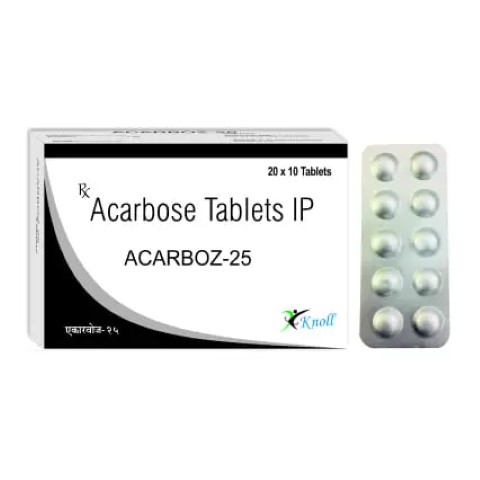
Acarboz 25 MG Tablet
$0.26 / unit
Available Options
| Pack Size | Price | Price / Unit | Quantity | Action |
|---|---|---|---|---|
| 180 Tablets | $35.00 | $0.19/unit | ||
| 150 Tablets | $30.00 | $0.20/unit | ||
| 120 Tablets | $24.00 | $0.20/unit | ||
| 90 Tablets | $19.00 | $0.21/unit | ||
| 60 Tablets | $14.00 | $0.23/unit | ||
| 30 Tablets | $8.00 | $0.27/unit |
Product Description
What is this medicine?
ACARBOZ 25 MG TABLET contains Acarbose 25 mg, an oral antidiabetic medicine belonging to the alpha-glucosidase inhibitor class.
Acarbose works mainly in the intestine by inhibiting enzymes responsible for breaking down complex carbohydrates into simple sugars such as glucose. This slows carbohydrate digestion and helps prevent a sharp rise in blood glucose after meals.
This medicine is commonly used for:
type 2 diabetes mellitus
controlling high blood glucose after meals
reducing post-meal glucose spikes
improving overall blood-glucose control
diabetes not adequately controlled by diet and exercise alone
combination treatment with other antidiabetic medicines when prescribed
Acarboz is particularly useful for controlling postprandial (after-meal) blood glucose levels.
Important: Acarboz should be used as part of a complete diabetes-management program that includes an appropriate diet, regular exercise, weight management, and blood-glucose monitoring.
What should I tell my health care provider before I take this medicine?
They need to know if you have any of these conditions:
allergy to acarbose or any ingredient in the tablet
inflammatory bowel disease
Crohn's disease
ulcerative colitis
intestinal obstruction or risk of intestinal blockage
chronic intestinal disease affecting digestion or absorption
severe gastrointestinal problems
kidney disease
liver disease
diabetic ketoacidosis
frequent episodes of low blood sugar
if you use insulin
if you take sulfonylureas or other diabetes medicines
if you regularly consume alcohol
if you are pregnant or planning pregnancy
if you are breastfeeding
The manufacturer's information specifically cautions about use in people with kidney or liver problems, bowel ulceration/inflammation, pregnancy or breastfeeding, and excessive alcohol intake.
Tell your healthcare professional about all prescription medicines, nonprescription medicines, vitamins, herbal preparations, and supplements you use.
How should I use this medicine?
Take Acarboz 25 mg Tablet exactly as prescribed by your healthcare professional.
Because acarbose acts on carbohydrates during digestion, it should be taken in connection with a meal. Product information recommends taking it before a meal or with the first bites of a meal, according to your prescriber's instructions.
For appropriate use:
take the tablet at the beginning of a main meal
swallow it as directed
take only the prescribed dose
take it consistently with meals
follow your recommended diabetic diet
continue regular physical activity
monitor your blood glucose as advised
do not increase or decrease the dose yourself
do not stop treatment without consulting your healthcare professional
Your doctor may start with a lower dose and adjust treatment according to your blood-glucose response and gastrointestinal tolerance.
Important: The 25 mg strength does not mean that 25 mg is the correct dose for every patient or every meal.
NOTE: This medicine is only for you. Do not share it with another person.
What if I miss a dose?
Because Acarboz works on carbohydrates being digested, dose timing is important.
If you forget to take the medicine at the beginning of your meal and have already finished eating, generally skip the missed dose and take your next prescribed dose with your next appropriate meal.
Do not take two doses together to compensate for a missed dose.
Do not take an additional tablet between meals unless specifically instructed by your healthcare professional.
What may interact with this medicine?
Acarbose may interact with:
insulin
sulfonylureas such as glimepiride, gliclazide, and glipizide
other blood-glucose-lowering medicines
digoxin
intestinal adsorbents such as activated charcoal
digestive enzyme preparations
medicines that can alter blood-glucose levels
alcohol
Digestive enzyme preparations and intestinal adsorbents may reduce the effectiveness of acarbose, while medicines such as digoxin may require additional consideration or monitoring.
Important information about low blood sugar
Acarbose used alone generally has a low risk of causing hypoglycemia. However, low blood sugar can occur when it is combined with insulin or another antidiabetic medicine capable of causing hypoglycemia.
If hypoglycemia occurs while taking acarbose, glucose (dextrose) is preferred for rapid treatment. Ordinary table sugar (sucrose) may work more slowly because acarbose delays its breakdown.
Follow your healthcare professional's individualized instructions for managing low blood sugar.
What should I watch for while using this medicine?
Your healthcare professional may monitor your:
fasting blood glucose
post-meal blood glucose
HbA1c
kidney function when clinically appropriate
liver function when appropriate
Continue monitoring your blood glucose and following your prescribed diet and exercise program while taking Acarboz.
Watch for low blood sugar
When Acarboz is combined with insulin or another medicine that can cause hypoglycemia, watch for:
sweating
shaking or trembling
intense hunger
dizziness
weakness
confusion
rapid heartbeat
blurred vision
Treat low blood sugar according to the plan provided by your healthcare professional.
What side effects may I notice from this medicine?
Because acarbose works primarily within the digestive tract, its most common adverse effects involve the gastrointestinal system.
Side effects that may occur and should be reported if persistent or troublesome:
flatulence (gas)
abdominal bloating
stomach discomfort
abdominal pain
diarrhea
changes in bowel movements
Current product information lists gas, bloating, stomach upset, diarrhea, gastrointestinal discomfort, and flatulence among common adverse effects.
These effects can be more noticeable when treatment is first started and may improve as the body adjusts.
Side effects that you should report to your healthcare professional promptly:
severe or persistent abdominal pain
severe diarrhea
persistent vomiting
severe abdominal swelling
yellowing of the skin or eyes
dark urine
unusual or severe tiredness
signs of liver problems
severe allergic reaction
swelling of the face, lips, tongue, or throat
difficulty breathing or swallowing
Seek medical attention if gastrointestinal symptoms become severe or persistent.
What happens if I take too much?
Taking more Acarboz than prescribed, particularly with carbohydrate-containing foods or drinks, may cause increased:
flatulence
abdominal bloating
abdominal discomfort
diarrhea
Do not intentionally take additional tablets to compensate for eating a larger or high-carbohydrate meal.
If a substantial overdose occurs or severe symptoms develop, seek medical advice promptly.
What happens if I suddenly stop taking this medicine?
Do not stop Acarboz simply because your blood-glucose readings have improved.
Stopping treatment without medical advice may cause blood glucose levels to rise again. The manufacturer warns that discontinuing treatment without consulting a doctor can increase the risk of diabetes complications, including kidney and eye damage.
Poorly controlled diabetes over time can affect the:
kidneys
eyes
nerves
heart
blood vessels
Continue taking Acarboz for as long as your healthcare professional recommends.
Diet and lifestyle while taking Acarboz
Acarboz works best as part of a complete diabetes-management program.
Follow your healthcare professional's recommendations regarding:
balanced carbohydrate intake
portion control
limiting excessive refined sugars
regular physical activity
maintaining an appropriate body weight
regular blood-glucose monitoring
HbA1c testing
routine eye examinations
appropriate foot care
The manufacturer specifically describes Acarboz as part of a treatment program involving a healthy diet, regular exercise, and weight reduction when appropriate.
Do not compensate for excessive carbohydrate or sugar intake by taking additional Acarboz tablets.
Where should I keep my medicine?
Keep out of the reach of children.
Keep Acarboz 25 mg Tablet:
in its original blister packaging
according to the temperature specified on the product pack
protected from excessive heat
protected from moisture
away from direct sunlight
securely stored away from children
Do not use the tablets after their expiration date or if the blister packaging has been damaged.