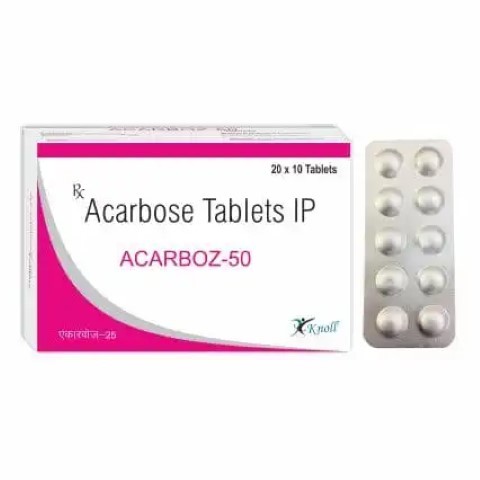
Acarboz 50 MG Tablet
$0.46 / unit
Available Options
| Pack Size | Price | Price / Unit | Quantity | Action |
|---|---|---|---|---|
| 180 Tablets | $62.00 | $0.34/unit | ||
| 150 Tablets | $53.00 | $0.35/unit | ||
| 120 Tablets | $43.00 | $0.36/unit | ||
| 90 Tablets | $34.00 | $0.38/unit | ||
| 60 Tablets | $24.00 | $0.40/unit | ||
| 30 Tablets | $14.00 | $0.47/unit |
Product Description
What is this medicine?
ACARBOZ 50 MG TABLET contains Acarbose 50 mg, an oral antidiabetic medicine belonging to the alpha-glucosidase inhibitor class.
Acarbose works mainly in the intestine by slowing enzymes responsible for breaking carbohydrates into absorbable sugars. This delays carbohydrate digestion and helps prevent a rapid rise in blood glucose after meals.
This medicine is commonly used for:
type 2 diabetes mellitus
controlling high blood glucose after meals
reducing post-meal glucose spikes
improving overall blood-glucose control
diabetes not adequately controlled with diet and exercise alone
combination therapy with other antidiabetic medicines when prescribed
helping reduce the risk of long-term complications associated with poorly controlled diabetes
Acarboz is particularly useful for controlling postprandial (after-meal) blood glucose levels.
Important: Acarboz should be used together with the diet, exercise, weight-management, and blood-glucose monitoring program recommended by your healthcare professional.
What should I tell my health care provider before I take this medicine?
They need to know if you have any of these conditions:
allergy to acarbose or any ingredient in the tablet
inflammatory bowel disease
Crohn's disease
ulcerative colitis
intestinal obstruction or risk of intestinal blockage
chronic intestinal disease affecting digestion or absorption
severe gastrointestinal problems
severe liver disease
significant kidney disease
diabetic ketoacidosis
frequent episodes of low blood sugar
if you use insulin
if you take sulfonylureas or other diabetes medicines
if you regularly consume alcohol
if you are pregnant or planning pregnancy
if you are breastfeeding
Acarbose should not be used in certain patients with serious intestinal disorders or obstruction.
Tell your healthcare professional about all prescription medicines, nonprescription medicines, vitamins, herbal preparations, and supplements you use.
How should I use this medicine?
Take Acarboz 50 mg Tablet exactly as prescribed by your healthcare professional.
Because acarbose acts on carbohydrates during digestion, the timing of the medicine is important. Acarboz should generally be taken just before or with the first few bites of a main meal.
For appropriate use:
take it just before or with the first bites of your meal
swallow the tablet as directed
take only the prescribed dose
take it consistently with meals
follow your prescribed diabetic diet
continue regular physical activity
monitor your blood glucose as instructed
do not increase or decrease the dose yourself
do not stop treatment without consulting your healthcare professional
Your healthcare professional may start with a lower dose and gradually adjust it according to your blood-glucose response and gastrointestinal tolerance.
Important: Acarboz should not be taken on an empty stomach because its effect depends on being present when carbohydrates from the meal are being digested.
NOTE: This medicine is only for you. Do not share it with another person.
What if I miss a dose?
Because Acarboz is taken in connection with meals, dose timing is important.
If you forget to take the tablet at the beginning of a meal and the meal has already been completed, generally skip the missed dose and take the next prescribed dose with your next appropriate meal.
Do not take two doses together to compensate for a missed dose.
Do not take an extra tablet between meals unless specifically instructed by your healthcare professional.
What may interact with this medicine?
Acarbose may interact with:
insulin
sulfonylureas such as glimepiride, gliclazide, and glipizide
other blood-glucose-lowering medicines
digoxin
intestinal adsorbents such as activated charcoal
digestive enzyme preparations
medicines that can alter blood-glucose levels
alcohol
Acarbose used alone does not usually cause significant hypoglycemia. However, low blood sugar can occur when it is combined with insulin or another medicine that can independently cause hypoglycemia.
Important information about low blood sugar
If hypoglycemia develops while taking acarbose with insulin or a sulfonylurea, glucose (dextrose) is generally preferred for rapid treatment.
Ordinary table sugar (sucrose) may work more slowly because acarbose delays its breakdown.
Follow the individualized hypoglycemia-management instructions provided by your healthcare professional.
What should I watch for while using this medicine?
Your healthcare professional may monitor your:
fasting blood glucose
post-meal blood glucose
HbA1c
kidney function when clinically appropriate
liver function during prolonged treatment when appropriate
Continue monitoring your blood glucose regularly while taking Acarboz.
Watch for low blood sugar
When Acarboz is combined with insulin or another medicine capable of causing hypoglycemia, watch for symptoms such as:
sweating
shaking or trembling
intense hunger
dizziness
weakness
confusion
rapid heartbeat
blurred vision
Treat low blood sugar according to the plan provided by your healthcare professional.
What side effects may I notice from this medicine?
Because acarbose acts mainly in the digestive tract, its most common adverse effects involve the gastrointestinal system.
Side effects that may occur and should be reported if persistent or troublesome:
flatulence (gas)
abdominal bloating
stomach discomfort
abdominal pain
diarrhea
changes in bowel movements
Current Acarboz product information identifies gas, bloating, stomach upset, and diarrhea among its common adverse effects.
These effects may be more noticeable during the first weeks of treatment and can improve as the body adjusts.
Side effects that you should report to your healthcare professional promptly:
severe or persistent abdominal pain
severe diarrhea
persistent vomiting
severe abdominal swelling
yellowing of the skin or eyes
dark urine
unusual or severe tiredness
signs of liver problems
severe allergic reaction
swelling of the face, lips, tongue, or throat
difficulty breathing or swallowing
Seek medical attention if gastrointestinal symptoms become severe or persistent.
What happens if I take too much?
Taking more Acarboz than prescribed, particularly together with carbohydrate-containing food or drinks, may cause significant:
flatulence
abdominal bloating
abdominal discomfort
diarrhea
Do not intentionally take additional tablets to compensate for eating a larger or high-carbohydrate meal.
If a substantial overdose occurs, contact a healthcare professional or poison-information service promptly.
What happens if I suddenly stop taking this medicine?
Do not stop Acarboz simply because your blood-glucose readings have improved.
Stopping treatment without medical advice may cause blood glucose levels to rise again.
Poorly controlled diabetes over time can increase the risk of complications involving the:
kidneys
eyes
nerves
heart
blood vessels
Current product guidance warns that stopping Acarboz without medical advice can cause blood glucose to rise and increase the risk of serious diabetes-related complications.
Continue taking Acarboz for as long as your healthcare professional recommends.
Diet and lifestyle while taking Acarboz
Acarboz works best as part of a complete diabetes-management program.
Follow your healthcare professional's recommendations regarding:
balanced carbohydrate intake
portion control
limiting excessive refined sugars
regular physical activity
maintaining an appropriate body weight
regular blood-glucose monitoring
HbA1c testing
routine eye examinations
appropriate foot care
Do not compensate for excessive carbohydrate or sugar intake by taking additional Acarboz tablets.
Where should I keep my medicine?
Keep out of the reach of children.
Keep Acarboz 50 mg Tablet:
in its original blister packaging
at the temperature stated on the product pack
protected from excessive heat
protected from moisture
away from direct sunlight
securely stored away from children
Do not use the tablets after their expiration date or if the blister packaging has been damaged.