Acprex Plus Tablet
$0.13 / unit
Available Options
| Pack Size | Price | Price / Unit | Quantity | Action |
|---|---|---|---|---|
| 180 Tablets | $19.00 | $0.11/unit | ||
| 150 Tablets | $17.00 | $0.11/unit | ||
| 120 Tablets | $13.00 | $0.11/unit | ||
| 90 Tablets | $11.00 | $0.12/unit | ||
| 60 Tablets | $8.00 | $0.13/unit | ||
| 30 Tablets | $4.00 | $0.13/unit |
Product Description
What is this medicine?
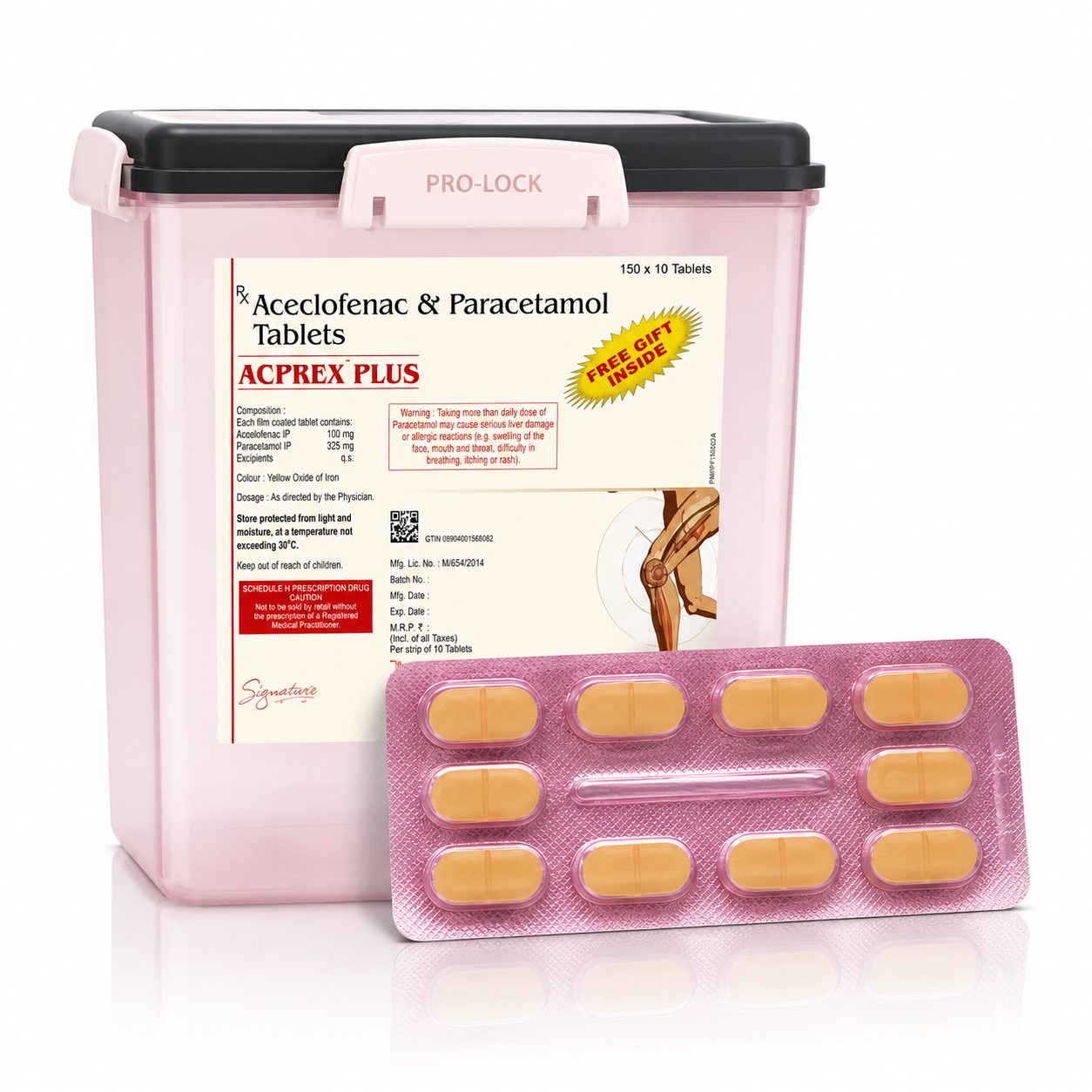
ACPREX PLUS TABLET contains Aceclofenac 100 mg + Paracetamol (Acetaminophen) 325 mg. It is a prescription analgesic and anti-inflammatory medicine marketed by HAB Pharmaceuticals & Research Ltd. / HAB Pharma, commonly supplied in a strip of 10 tablets.
Aceclofenac is a non-steroidal anti-inflammatory drug (NSAID) that reduces the production of prostaglandins involved in pain and inflammation. Paracetamol is an analgesic and antipyretic that helps reduce pain and fever. Together, they provide relief from pain, swelling, stiffness, and inflammation.
This medicine is commonly used for:
osteoarthritis
rheumatoid arthritis
ankylosing spondylitis
joint pain and inflammation
muscle pain
back pain
dental pain and toothache
sprains and strains
other short-term painful inflammatory conditions
Acprex Plus relieves symptoms such as pain and swelling but does not cure the underlying arthritis or inflammatory disease.
What should I tell my health care provider before I take this medicine?
They need to know if you have any of these conditions:
allergy to aceclofenac or paracetamol
allergy to aspirin, ibuprofen, diclofenac, or another NSAID
previous asthma, hives, or allergic reaction after taking aspirin or an NSAID
current or previous stomach or intestinal ulcer
gastrointestinal bleeding
inflammatory bowel disease
kidney disease
liver disease
heart disease or heart failure
high blood pressure
previous heart attack or stroke
asthma
blood-clotting or bleeding disorder
dehydration
diabetes
high cholesterol
if you regularly drink significant amounts of alcohol
pregnancy or plans to become pregnant
breast-feeding
Tell your doctor about all other painkillers you use. Taking Acprex Plus together with another NSAID or another paracetamol-containing medicine can significantly increase the risk of serious adverse effects.
How should I use this medicine?
Take Acprex Plus exactly as prescribed by your doctor.
Important instructions include:
swallow the tablet whole with a glass of water
do not crush, chew, or break it unless your doctor or pharmacist confirms this is appropriate
taking it with or immediately after food can help reduce stomach irritation
use the lowest effective dose for the shortest necessary duration
do not increase the dose or frequency yourself
do not continue long-term treatment without medical supervision
The appropriate dose depends on the severity and cause of your pain and your other medical conditions. Do not take additional paracetamol/acetaminophen products unless your doctor or pharmacist has checked your total daily intake.
Avoid taking additional NSAIDs such as ibuprofen, diclofenac, naproxen, or high-dose aspirin unless specifically instructed by your doctor.
Avoid alcohol during treatment because alcohol may increase the risk of stomach bleeding and liver damage, particularly because this medicine contains paracetamol.
Overdosage: Paracetamol overdose can cause severe and potentially life-threatening liver damage, sometimes before obvious symptoms appear. If you think you have taken too much Acprex Plus or another paracetamol-containing medicine, contact a poison control center, doctor, or emergency room at once—even if you feel well.
NOTE: This medicine is only for you. Do not share this medicine with others.
What if I miss a dose?
If you miss a dose, take it when you remember unless it is almost time for your next scheduled dose.
If it is nearly time for the next dose, skip the missed dose and continue with your regular schedule.
Do not take two doses at the same time or take extra tablets to make up for a missed dose.
What may interact with this medicine?
Important interactions may include:
aspirin
ibuprofen
diclofenac
naproxen and other NSAIDs
other medicines containing paracetamol/acetaminophen
warfarin and other anticoagulants
antiplatelet medicines
corticosteroids
SSRIs and other medicines that can increase bleeding risk
medicines for high blood pressure
ACE inhibitors
angiotensin receptor blockers (ARBs)
diuretics
lithium
methotrexate
cyclosporine
tacrolimus
digoxin
certain diabetes medicines
some antibiotics
alcohol
Taking multiple NSAIDs together can increase the risk of stomach ulceration, gastrointestinal bleeding, kidney injury, and cardiovascular adverse effects.
Be particularly careful with cold, flu, headache, and combination pain medicines because many contain paracetamol, which could lead to an accidental overdose.
This list may not describe all possible interactions. Give your health care provider a complete list of prescription medicines, non-prescription drugs, herbs, vitamins, and dietary supplements you use. Also tell them if you drink alcohol or use recreational drugs.
What should I watch for while using this medicine?
Use Acprex Plus for the shortest duration necessary to control your symptoms unless your doctor has prescribed longer-term therapy.
Contact your doctor if:
pain does not improve
pain repeatedly returns
you develop severe stomach pain
you notice black or tarry stools
you vomit blood or material resembling coffee grounds
you develop swelling of the feet or ankles
you pass less urine than usual
you develop unusual tiredness
your skin or eyes become yellow
you develop chest pain or shortness of breath
you develop a severe skin rash
NSAIDs such as aceclofenac can cause stomach ulcers and gastrointestinal bleeding, sometimes without much warning. Risk is generally higher in older adults and people with previous ulcers, those taking anticoagulants or corticosteroids, and those using NSAIDs for longer periods.
Stay adequately hydrated, particularly during hot weather or illness. Dehydration can increase the risk of NSAID-related kidney problems.
Acprex Plus may cause dizziness or drowsiness in some people. Avoid driving or operating machinery until you know how the medicine affects you.
What side effects may I notice from this medicine?
Side effects that you should report to your doctor or health care professional as soon as possible:
severe stomach or abdominal pain
black or tarry stools
blood in the stool
vomiting blood
severe or persistent vomiting
reduced urine output
swelling of the hands, feet, ankles, or face
yellowing of the skin or eyes
dark urine
severe weakness
chest pain
difficulty breathing
severe dizziness or fainting
severe skin rash
blistering or peeling of the skin
swelling of the face, lips, tongue, or throat
difficulty breathing or swallowing
other signs of a severe allergic reaction
Side effects that usually do not require medical attention (report them if they continue or are bothersome):
nausea
vomiting
indigestion
heartburn
stomach discomfort or pain
diarrhea
dizziness
drowsiness
loss of appetite
Current product information particularly lists nausea, dizziness, and diarrhea among commonly reported effects.
This list may not describe all possible side effects.
Where should I keep my medicine?
Keep out of the reach of children.
Current Indian product information recommends storing Acprex Plus below 30°C.
Keep the tablets:
in their original blister packaging
in a cool and dry place
protected from moisture
protected from excessive heat
away from direct sunlight
Do not use the medicine after the expiration date printed on the package. Dispose of expired or unused tablets appropriately.