Axepta 25 MG Tablet
$1.13 / unit
Available Options
| Pack Size | Price | Price / Unit | Quantity | Action |
|---|---|---|---|---|
| 180 Tablets | $156.00 | $0.87/unit | ||
| 150 Tablets | $134.00 | $0.89/unit | ||
| 120 Tablets | $109.00 | $0.91/unit | ||
| 90 Tablets | $86.00 | $0.96/unit | ||
| 60 Tablets | $62.00 | $1.03/unit | ||
| 30 Tablets | $34.00 | $1.13/unit |
Product Description
What is this medicine?
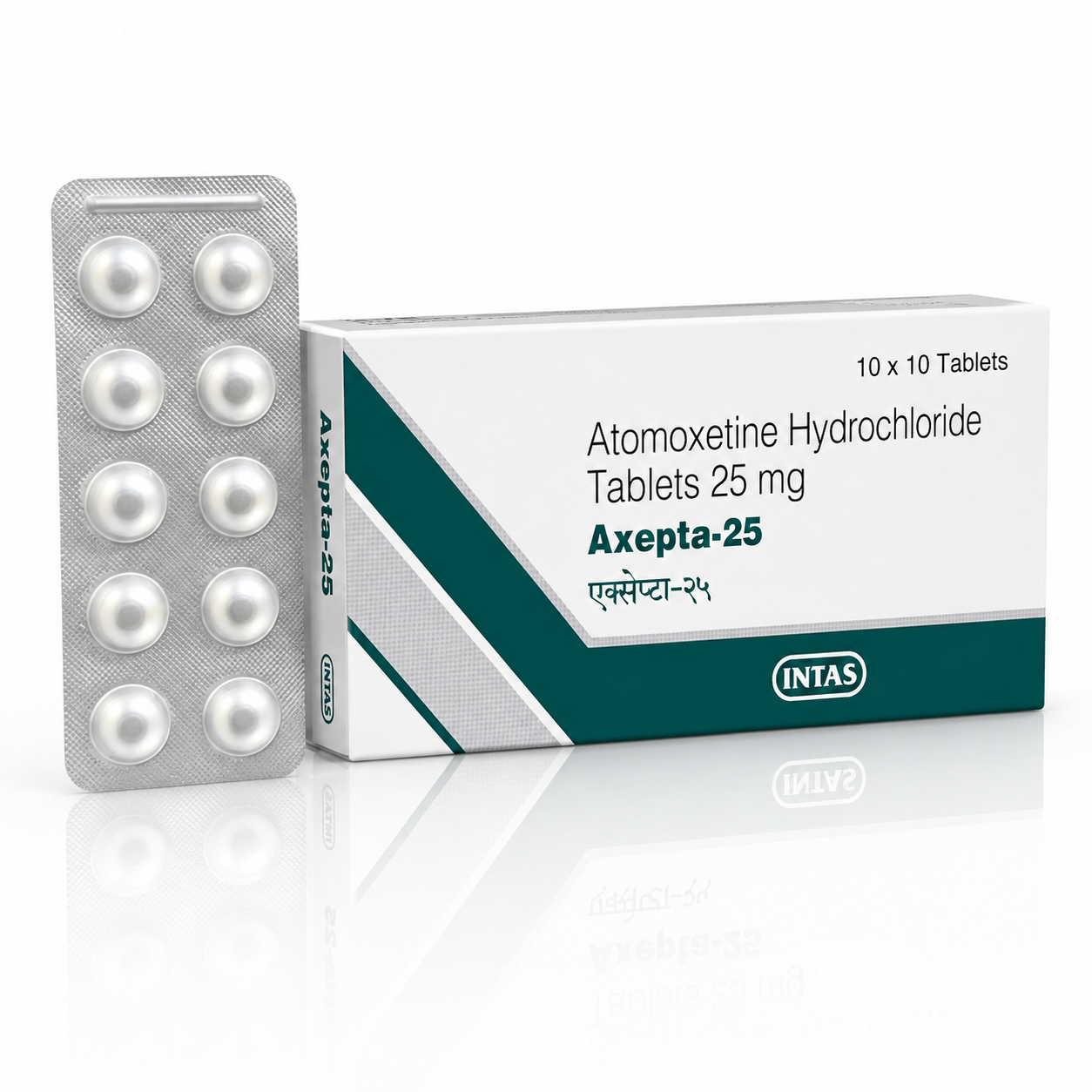
AXEPTA 25 MG TABLET contains Atomoxetine 25 mg, a selective norepinephrine reuptake inhibitor (NRI) used for the treatment of attention-deficit/hyperactivity disorder (ADHD). It is manufactured/marketed by Intas Pharmaceuticals Ltd. and is a prescription medicine. Current Indian listings confirm the 25 mg strength and tablet dosage form.
Atomoxetine works mainly by increasing the availability of norepinephrine (noradrenaline) in certain areas of the brain involved in attention, concentration, impulse control, and behavior. Unlike medicines such as methylphenidate, atomoxetine is considered a non-stimulant ADHD medicine.
This medicine is commonly used for:
attention-deficit/hyperactivity disorder (ADHD)
improving attention and concentration
reducing impulsive behavior
reducing excessive hyperactivity
improving organization and task completion
improving day-to-day functioning associated with ADHD
treatment of ADHD in children, adolescents, and adults when prescribed
Current Axepta information specifically identifies Atomoxetine 25 mg as the active ingredient and ADHD as its therapeutic use.
What should I tell my health care provider before I take this medicine?
They need to know if you have any of these conditions:
allergy to atomoxetine or any ingredient in the tablet
heart disease or structural heart problems
abnormal heart rhythm
high blood pressure
low blood pressure or a tendency to faint
previous stroke or other cardiovascular disease
glaucoma, particularly narrow-angle glaucoma
liver disease
kidney disease
seizures or epilepsy
difficulty passing urine
prostate problems
pheochromocytoma
depression, anxiety, bipolar disorder, or another psychiatric condition
history of suicidal thoughts or behavior
aggressive behavior, agitation, or significant mood changes
tics or Tourette syndrome
if you are taking an MAO inhibitor
if you take antidepressants
if you take medicines that increase heart rate or blood pressure
pregnant or planning to become pregnant
breast-feeding
Tell your healthcare provider about any personal or family history of serious heart disease, abnormal heart rhythms, fainting, or sudden unexplained death before starting atomoxetine.
How should I use this medicine?
Take AXEPTA 25 MG TABLET exactly as prescribed by your healthcare provider.
Axepta 25 mg may be taken with or without food. Taking it at approximately the same time each day can help maintain a consistent treatment routine.
Swallow the tablet with water.
Atomoxetine may be prescribed once daily or divided into two daily doses, depending on factors such as:
age
body weight
severity of ADHD symptoms
response to treatment
tolerability
liver function
other medicines being taken
The appropriate atomoxetine dose can differ substantially between children and adults, so do not increase from 25 mg to a higher strength unless instructed by your doctor.
Atomoxetine is not an immediate-acting stimulant. Improvement may develop gradually, and several weeks of regular treatment may be needed to properly assess its benefit.
Do not stop, increase, or decrease your dose without consulting your healthcare provider.
NOTE: Axepta 25 mg is a prescription medicine and should be used as part of an appropriate ADHD treatment plan.
What if I miss a dose?
If you miss a dose, take it as soon as you remember on the same day.
If it is nearly time for your next scheduled dose, skip the missed dose and continue with your normal schedule.
Do not take two doses together to make up for a missed dose.
Do not take more than your prescribed total daily amount within a 24-hour period.
What may interact with this medicine?
Tell your healthcare provider if you take:
monoamine oxidase inhibitors (MAOIs)
fluoxetine
paroxetine
bupropion
quinidine
other antidepressants
medicines that increase blood pressure
medicines that increase heart rate
certain asthma medicines such as salbutamol/albuterol
decongestants containing sympathomimetic medicines
medicines that affect heart rhythm
other medicines used to treat ADHD
Atomoxetine should not be taken together with an MAO inhibitor, and an appropriate separation period is required when changing between these treatments.
Some medicines that inhibit the CYP2D6 enzyme, including fluoxetine and paroxetine, can substantially increase atomoxetine concentrations and may require dose adjustment.
This list may not describe all possible interactions. Give your healthcare provider a complete list of all prescription medicines, non-prescription medicines, vitamins, herbal products, and supplements you use.
What should I watch for while using this medicine?
Your healthcare provider may periodically monitor:
blood pressure
heart rate
body weight
height and growth in children and adolescents
ADHD symptoms
mood and behavior
liver function when clinically appropriate
Atomoxetine can increase heart rate and blood pressure in some patients. Current Axepta information recommends monitoring blood pressure during treatment.
Seek medical attention if you develop:
chest pain
unexplained fainting
severe shortness of breath
very fast or irregular heartbeat
severe dizziness
seizures
yellowing of the skin or eyes
dark-colored urine
severe upper abdominal pain
significant changes in mood or behavior
Children and adolescents taking atomoxetine should be monitored for new or worsening suicidal thoughts or unusual behavioral changes, particularly when treatment begins or the dose changes.
Tell the prescribing doctor promptly about marked aggression, agitation, severe mood changes, or suicidal thinking.
Because Axepta can cause dizziness or drowsiness, avoid driving or operating machinery until you know how the medicine affects you.
What side effects may I notice from this medicine?
Side effects that you should report to your doctor or health care professional as soon as possible:
severe allergic reaction
swelling of the face, lips, tongue, or throat
difficulty breathing
chest pain
fainting
rapid or irregular heartbeat
severe increase in blood pressure
seizures
suicidal thoughts or significant behavioral changes
symptoms of liver injury such as yellow skin or eyes or dark urine
prolonged or painful erection (priapism)
severe difficulty passing urine
Side effects that usually do not require medical attention (report to your doctor if they continue or are bothersome):
nausea
vomiting
decreased appetite
stomach or abdominal discomfort
constipation
dry mouth
headache
dizziness
tiredness or fatigue
sleepiness
difficulty sleeping
increased sweating
reduced appetite or weight loss
sexual side effects in some adults
Current Axepta product information lists nausea, vomiting, decreased appetite, drowsiness, and constipation among commonly reported effects.
This list may not describe all possible side effects.
Where should I keep my medicine?
Keep AXEPTA 25 MG TABLETS out of the reach of children.
Current Indian product information recommends storing Axepta 25 mg below 30°C.
Keep the tablets:
in their original blister packaging
protected from excessive heat
protected from moisture
away from direct sunlight
Keep the medicine in a secure location and do not share it with anyone else.
Do not use the tablets after the expiration date printed on the strip or carton.