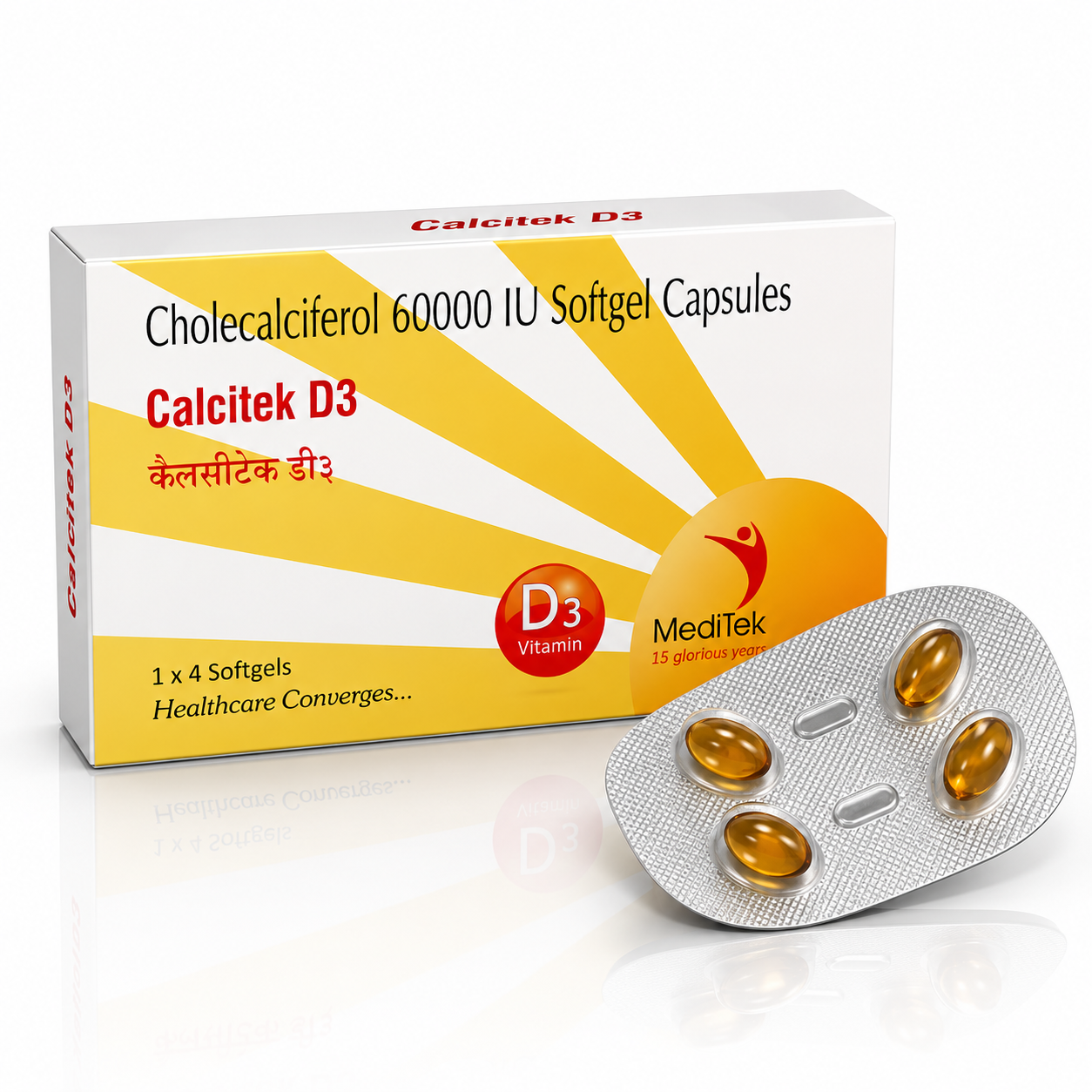
Calcitek D3 Capsule
$1.00 / unit
Available Options
| Pack Size | Price | Price / Unit | Quantity | Action |
|---|---|---|---|---|
| 24 capsules | $18.00 | $0.75/unit | ||
| 20 capsules | $15.00 | $0.75/unit | ||
| 16 capsules | $13.00 | $0.81/unit | ||
| 12 capsules | $10.00 | $0.83/unit | ||
| 8 capsules | $7.00 | $0.88/unit | ||
| 4 capsules | $4.00 | $1.00/unit |
Product Description
What is this medicine?
CALCITEK D3 contains Cholecalciferol (Vitamin D3), commonly in a high dose such as 60,000 IU, used to treat or prevent Vitamin D deficiency. It helps your body absorb calcium and phosphorus, essential for maintaining healthy bones, teeth, and muscles. It is used in conditions like osteoporosis, osteomalacia, rickets, and in individuals at risk due to limited sun exposure, dietary deficiency, or malabsorption syndromes.
What should I tell my health care provider before I take this medicine?
They need to know if you have any of these conditions:
High calcium levels in the blood (hypercalcemia)
High vitamin D levels (hypervitaminosis D)
Kidney disease or history of kidney stones
Heart disease
Liver disease
Sarcoidosis or other granulomatous diseases
If you are on a calcium-restricted or phosphate-restricted diet
An unusual or allergic reaction to vitamin D3, other vitamins, foods, dyes, or preservatives
Pregnant or trying to get pregnant
Breast-feeding
How should I use this medicine?
Take this medicine by mouth with a glass of water. It is usually taken once a week or as prescribed by your doctor. It is best taken after a meal to improve absorption.
Do not exceed the recommended dose unless advised by your doctor.
Overdosage: If you think you have taken too much of this medicine, contact a poison control center or emergency room at once.
What if I miss a dose?
If you miss a dose, take it as soon as possible. If it is nearly time for your next dose, skip the missed dose. Do not take double or extra doses.
What may interact with this medicine?
Calcium supplements or antacids
Magnesium-containing products
Diuretics, especially thiazides
Digoxin or digitalis
Steroids like prednisone
Cholestyramine or colestipol
Orlistat (used for weight loss)
Anticonvulsants (e.g., phenytoin, phenobarbital)
This list may not include all interactions. Give your health care provider a list of all the medicines, herbs, non-prescription drugs, or dietary supplements you use. Also tell them if you smoke, drink alcohol, or use recreational drugs.
What should I watch for while using this medicine?
Your doctor may monitor your calcium and vitamin D blood levels during treatment.
Avoid taking additional vitamin D or calcium supplements unless directed.
Drink enough fluids to reduce the risk of kidney stones.
Contact your doctor if you experience symptoms of high calcium levels such as nausea, vomiting, constipation, increased thirst or urination, confusion, or fatigue.
Pregnant or breastfeeding women should use this medicine only under medical supervision.
What side effects may I notice from this medicine?
Side effects that you should report to your doctor or health care professional as soon as possible:
Allergic reactions (rash, itching, swelling of face/lips/tongue)
Severe weakness or fatigue
Irregular heartbeat
Persistent vomiting or constipation
Kidney stone symptoms (sharp pain in back/side, blood in urine)
Side effects that usually do not require medical attention (report if persistent or bothersome):
Nausea
Dry mouth
Headache
Metallic taste
Drowsiness
This list may not describe all possible side effects.
Where should I keep my medicine?
Keep out of the reach of children.
Store at room temperature, between 20 and 25°C (68 and 77°F).
Protect from light and moisture.
Do not freeze.
Discard any unused medicine after the expiration date.