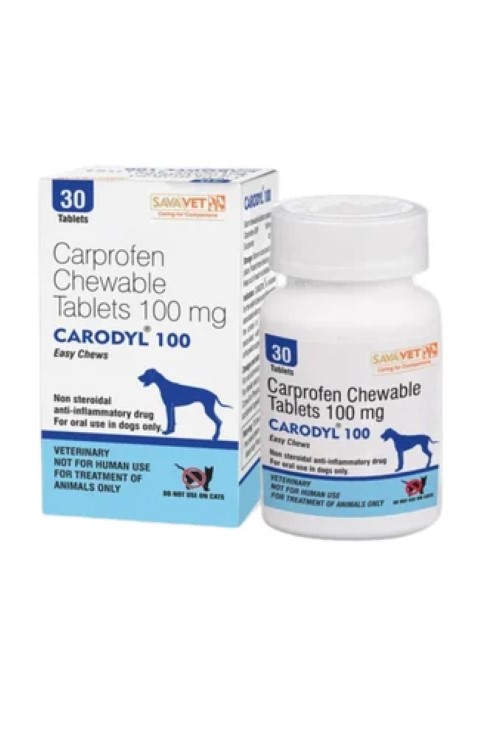
Carodyl 100 MG Tablet 1*30
$3.50 / unit
Available Options
| Pack Size | Price | Price / Unit | Quantity | Action |
|---|---|---|---|---|
| 180 Tablets | $479.00 | $2.66/unit | ||
| 150 Tablets | $411.00 | $2.74/unit | ||
| 120 Tablets | $334.00 | $2.78/unit | ||
| 90 Tablets | $266.00 | $2.96/unit | ||
| 60 Tablets | $190.00 | $3.17/unit | ||
| 30 Tablets | $105.00 | $3.50/unit |
Product Description
What is this medicine?
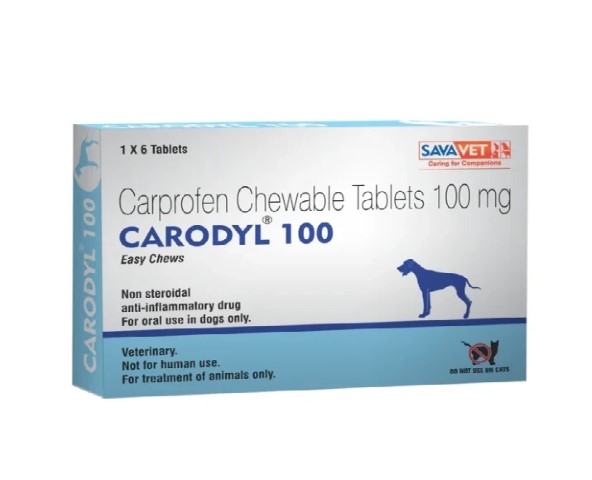
CARODYL 100 MG TABLET 1×30 is a prescription veterinary medicine containing Carprofen 100 mg per chewable tablet. It is manufactured/marketed by SAVA Healthcare / SAVA Vet and is intended for use in dogs. The manufacturer's official product information confirms that Carodyl 100 mg is available as a bottle containing 30 tablets.
Carprofen belongs to the non-steroidal anti-inflammatory drug (NSAID) class. It reduces the production of prostaglandins involved in pain and inflammation by inhibiting cyclooxygenase (COX) enzymes. SAVA describes carprofen as having preferential COX-2 inhibitory activity, providing analgesic and anti-inflammatory effects.
This medicine is commonly used in dogs for:
pain associated with osteoarthritis
inflammation associated with osteoarthritis
joint pain and stiffness
improving mobility in dogs with arthritis
musculoskeletal pain and inflammation
postoperative pain
pain following orthopedic surgery
pain following soft-tissue surgery
other painful inflammatory conditions when prescribed by a veterinarian
The official manufacturer specifically indicates Carodyl for pain and inflammation associated with osteoarthritis and for controlling postoperative pain following soft-tissue and orthopedic surgery in dogs.
Important: Carodyl is a veterinary NSAID for dogs and should be used only under veterinary supervision.
What should I tell my veterinary health care provider before I give this medicine?
Tell your veterinarian if the dog has any of these conditions:
allergy to carprofen
allergy to another NSAID
previous adverse reaction to pain medicines
stomach or intestinal ulcers
gastrointestinal bleeding
frequent vomiting or diarrhea
kidney disease
liver disease
heart disease
blood-clotting disorder
dehydration
poor appetite
significant weakness or debilitation
pregnancy
lactation
very young age
advanced age
if the dog is taking another NSAID
if the dog is taking corticosteroids
if the dog takes medicines affecting kidney or liver function
Tell your veterinarian about all prescription medicines, non-prescription medicines, vitamins, supplements and herbal products being given to the dog.
Before beginning longer-term NSAID treatment, appropriate veterinary examination and, when indicated, baseline blood tests may be recommended to evaluate kidney, liver and general health.
How should I use this medicine?
Give CARODYL 100 MG TABLET exactly as prescribed by your veterinarian.
The official SAVA product information lists a total daily carprofen dose of:
4 mg/kg body weight once daily, or
2 mg/kg body weight twice daily.
However, your veterinarian should determine the actual dose for an individual dog.
For general administration:
Determine the dog's body weight accurately.
Give only the amount prescribed by the veterinarian.
Administer the tablet orally.
Give it consistently according to the prescribed schedule.
Make sure the dog consumes the complete prescribed dose.
Continue treatment only for the recommended duration.
Do not assume that one 100 mg tablet is appropriate for every dog. The required amount depends on the dog's body weight, medical condition, age and overall health.
Do not increase the dose or treatment duration yourself.
For long-term osteoarthritis treatment, the veterinarian may periodically reassess whether the lowest effective dose is being used.
What if I miss a dose?
If you forget to give a dose of Carodyl 100 mg Tablet, give it when you remember unless it is nearly time for the next scheduled dose.
If the next dose is due soon, skip the missed dose and continue with the normal schedule.
Do not give two doses together to compensate for a missed dose unless specifically instructed by your veterinarian.
Giving excessive carprofen can increase the risk of serious gastrointestinal, kidney and liver adverse effects.
What may interact with this medicine?
Tell your veterinarian if the dog receives:
another carprofen-containing medicine
meloxicam
firocoxib
deracoxib
aspirin
ibuprofen
naproxen
diclofenac
other NSAIDs
prednisone
prednisolone
dexamethasone
other corticosteroids
anticoagulants
certain diuretics
medicines that may affect kidney function
other prescription pain medicines
Do not combine Carodyl with another NSAID or corticosteroid unless specifically instructed by a veterinarian.
Combining NSAIDs can significantly increase the risk of:
stomach irritation
gastrointestinal ulcers
gastrointestinal bleeding
kidney injury
Do not give human painkillers such as ibuprofen, naproxen or diclofenac to a dog taking Carodyl unless specifically directed by a veterinarian.
What should I watch for while using this medicine?
Monitor the dog carefully during treatment.
Watch for:
vomiting
diarrhea
reduced appetite
black or tarry stools
blood in the stool
vomiting blood
increased thirst
changes in urination
unusual tiredness
weakness
behavioural changes
yellowing of the gums, skin or whites of the eyes
loss of coordination
significant changes in activity
For dogs receiving Carodyl over an extended period, the veterinarian may recommend periodic:
physical examinations
complete blood counts
liver-function tests
kidney-function tests
serum biochemical tests
Contact your veterinarian promptly if the dog becomes noticeably unwell during treatment.
Do not continue giving Carodyl to a dog that develops significant vomiting, diarrhea, loss of appetite, black stools or other suspected NSAID-related reactions without contacting the veterinarian.
What side effects may I notice from this medicine?
Carprofen is generally well tolerated by many dogs when appropriately prescribed, but NSAID-related adverse reactions can occur.
Side effects that should be reported to a veterinarian as soon as possible:
repeated or severe vomiting
severe or persistent diarrhea
bloody diarrhea
black, tarry stools
vomiting blood
severe loss of appetite
significant weakness
collapse
major changes in thirst or urination
yellowing of the eyes, gums or skin
severe behavioural changes
seizures
difficulty breathing
facial swelling
severe allergic reaction
Side effects that may not require emergency treatment but should be reported if persistent:
mild vomiting
soft stools
mild diarrhea
temporary reduction in appetite
mild lethargy
gastrointestinal discomfort
NSAID adverse reactions can occasionally become serious, particularly when a dog has underlying kidney, liver or gastrointestinal disease.
This list may not describe all possible veterinary adverse reactions.
Where should I keep this medicine?
Keep CARODYL 100 MG TABLETS out of the reach of children and animals that could accidentally consume the bottle.
Official/current product information identifies:
Brand Name: Carodyl 100
Generic Name: Carprofen
Strength: 100 mg
Dosage Form: Chewable Tablet
Therapeutic Class: Veterinary NSAID / Analgesic / Anti-inflammatory
Target Species: Dogs
Manufacturer/Marketer: SAVA Healthcare / SAVA Vet
Pack Size: 1×30 tablets
Packaging: Bottle of 30 tablets
Route: Oral
For Veterinary Use Only
The official SAVA listing confirms that while Carodyl 100 mg is available as a strip of 6 tablets, it is also available as a bottle containing 30 tablets.
Keep the tablets:
in their original bottle
with the bottle tightly closed
in a cool, dry place
protected from excessive heat
protected from moisture
away from direct sunlight
separate from human medicines
away from food and animal feed
Follow the exact storage conditions printed on the original Carodyl bottle or carton.
Do not use tablets that have changed significantly in colour, appearance or physical condition.
Do not use Carodyl 100 mg Tablet 1×30 after the expiration date printed on the bottle or outer packaging.