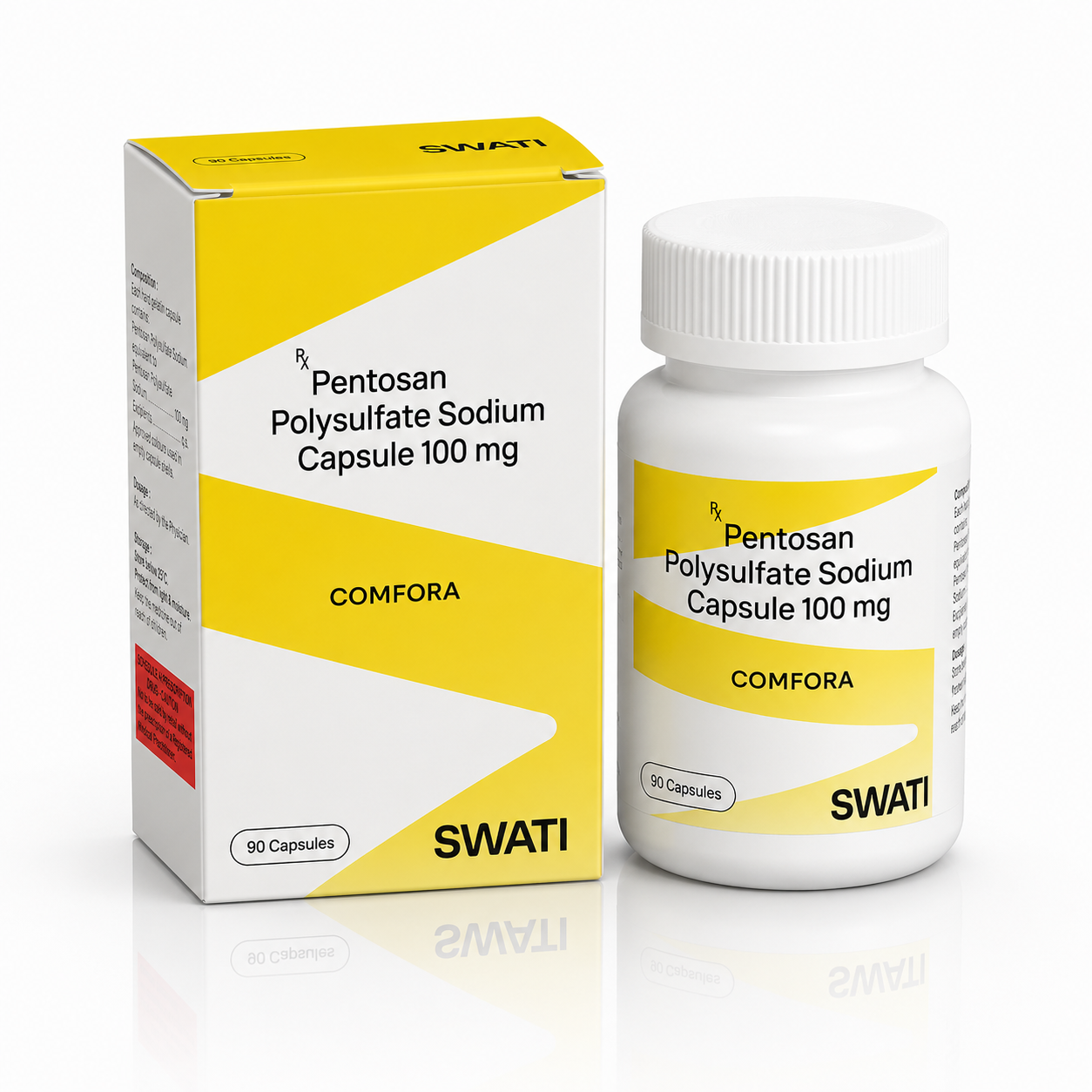
Comfora 100 MG Capsule
$4.67 / unit
Available Options
| Pack Size | Price | Price / Unit | Quantity | Action |
|---|---|---|---|---|
| 180 Capsule | $841.00 | $4.67/unit | ||
| 150 Capsule | $701.00 | $4.67/unit | ||
| 120 Capsule | $561.00 | $4.67/unit | ||
| 90 Capsule | $421.00 | $4.67/unit | ||
| 60 Capsule | $280.00 | $4.67/unit | ||
| 30 Capsule | $140.00 | $4.67/unit |
Product Description
What is this medicine?
COMFORA 100 MG CAPSULE is a prescription medicine containing Pentosan Polysulfate Sodium 100 mg. It is used mainly to relieve bladder pain and discomfort associated with interstitial cystitis (bladder pain syndrome). Current Indian listings identify Swati Spentose Pvt. Ltd. as the manufacturer/marketer.
Pentosan polysulfate sodium is a weak anticoagulant-like compound and bladder-protective agent. It is believed to form a protective layer over the damaged inner surface of the bladder, helping prevent irritating substances in urine from contacting the bladder wall. This can gradually reduce pain and discomfort associated with interstitial cystitis.
This medicine is commonly used for:
interstitial cystitis
bladder pain syndrome
chronic bladder pain associated with interstitial cystitis
bladder discomfort
urinary urgency associated with bladder pain syndrome
urinary frequency associated with interstitial cystitis
irritation of the bladder wall
long-term management of symptoms of interstitial cystitis
Comfora does not provide immediate pain relief. Improvement may occur gradually, and some patients may require several months of treatment before experiencing substantial benefit.
What should I tell my health care provider before I take this medicine?
Tell your healthcare provider if you have any of these conditions:
allergy to pentosan polysulfate sodium
allergy to any ingredient in the capsule
bleeding or clotting disorder
history of unusual or excessive bleeding
low platelet count
stomach or intestinal ulcer
gastrointestinal bleeding
liver disease
spleen disorder
recent surgery
upcoming surgery or dental procedure
history of nosebleeds or bleeding gums
retinal or other significant eye problems
if you bruise easily
if you take anticoagulant medicines
if you regularly take aspirin or NSAIDs
pregnant or planning to become pregnant
breast-feeding
Pentosan polysulfate sodium has weak anticoagulant activity, so patients who have an increased risk of bleeding or are taking medicines that affect blood clotting require particular caution.
Tell your doctor if you are scheduled for surgery, dental surgery or another invasive procedure.
How should I use this medicine?
Take COMFORA 100 MG CAPSULE exactly as prescribed by your healthcare provider.
General administration instructions include:
Take the capsule by mouth with water.
Swallow the capsule whole.
Do not crush, chew or open the capsule unless specifically instructed.
Take it consistently according to your prescribed schedule.
Continue treatment for the duration recommended by your doctor.
Available Comfora information recommends taking the medicine on an empty stomach, generally at least 1 hour before a meal or 2 hours after a meal.
Do not take more capsules than prescribed.
Do not stop treatment simply because symptoms do not improve immediately. Pentosan polysulfate may work gradually, and available product information notes that improvement may take 3–6 months in some patients.
Your healthcare provider will determine the appropriate dose and treatment duration.
What if I miss a dose?
If you miss a dose of Comfora 100 mg Capsule, take it when you remember.
If it is almost time for your next scheduled dose, skip the missed dose and continue with your regular dosing schedule.
Do not take two doses together to compensate for a missed dose.
Taking additional capsules will not provide faster relief and may increase the risk of side effects, particularly bleeding.
What may interact with this medicine?
Tell your healthcare provider if you take:
warfarin
heparin
other anticoagulants or blood thinners
aspirin
clopidogrel
other antiplatelet medicines
ibuprofen
naproxen
diclofenac
other nonsteroidal anti-inflammatory drugs (NSAIDs)
thrombolytic medicines
medicines or supplements that increase bleeding risk
Because pentosan polysulfate sodium has weak anticoagulant activity, combining it with other medicines that affect blood clotting may increase the risk of bleeding.
Tell your healthcare provider about all:
prescription medicines
non-prescription medicines
vitamins
herbal preparations
nutritional supplements
Do not start or stop anticoagulant or antiplatelet medicines without discussing this with your healthcare provider.
What should I watch for while using this medicine?
Watch for signs of unusual bleeding, including:
easy bruising
frequent nosebleeds
bleeding gums
prolonged bleeding from small cuts
blood in urine
black or bloody stools
vomiting blood
unusually heavy menstrual bleeding
Bleeding complications reported with pentosan polysulfate include bruising, nosebleeds, bleeding gums and rectal bleeding.
Important eye warning
Long-term exposure to pentosan polysulfate sodium has been associated with a specific type of retinal/macular damage (pigmentary maculopathy). Tell your doctor promptly if you notice:
difficulty reading
blurred vision
difficulty adjusting to low light
problems seeing in dim conditions
unusual changes in central vision
distorted vision
Your healthcare provider may recommend an eye examination, particularly when prolonged treatment is expected.
Also tell your doctor if your bladder symptoms become significantly worse or fail to improve after an adequate treatment period.
What side effects may I notice from this medicine?
Reported side effects of Comfora/pentosan polysulfate include gastrointestinal symptoms, headache, dizziness and hair loss.
Side effects that you should report to your doctor or health care professional as soon as possible:
unusual or excessive bleeding
blood in urine
black or bloody stools
severe or persistent rectal bleeding
vomiting blood
severe bruising
persistent nosebleeds
significant vision changes
difficulty reading
difficulty seeing in low light
severe abdominal pain
yellowing of the skin or eyes
severe allergic reaction
swelling of the face, lips, tongue or throat
difficulty breathing
Side effects that usually do not require medical attention (report to your doctor if they continue or are bothersome):
diarrhea
nausea
vomiting
stomach upset
indigestion
abdominal discomfort
headache
dizziness
hair loss
heartburn
skin rash
dry throat
ringing in the ears
mouth sores
Hair loss, diarrhea, nausea, headache, stomach upset and dizziness are among the reactions reported with Comfora.
This list may not describe all possible side effects.
Where should I keep my medicine?
Keep COMFORA 100 MG CAPSULES out of the reach of children.
Current product information identifies:
Brand Name: Comfora 100 mg Capsule
Generic Name: Pentosan Polysulfate Sodium
Strength: 100 mg
Dosage Form: Capsule
Therapeutic Class: Urinary/Bladder Pain Syndrome Therapy
Manufacturer/Marketer: Swati Spentose Pvt. Ltd.
Route: Oral
Regulatory Status: Prescription medicine
Country of Origin: India
Keep the capsules:
in their original bottle or strip
tightly closed when supplied in a bottle
in a cool, dry place
protected from excessive heat
protected from moisture
away from direct sunlight
Follow the exact storage temperature stated on your Comfora package.
Do not use capsules that have changed significantly in colour, appearance or condition.
Do not use Comfora 100 mg Capsules after the expiration date printed on the bottle, strip or outer packaging.