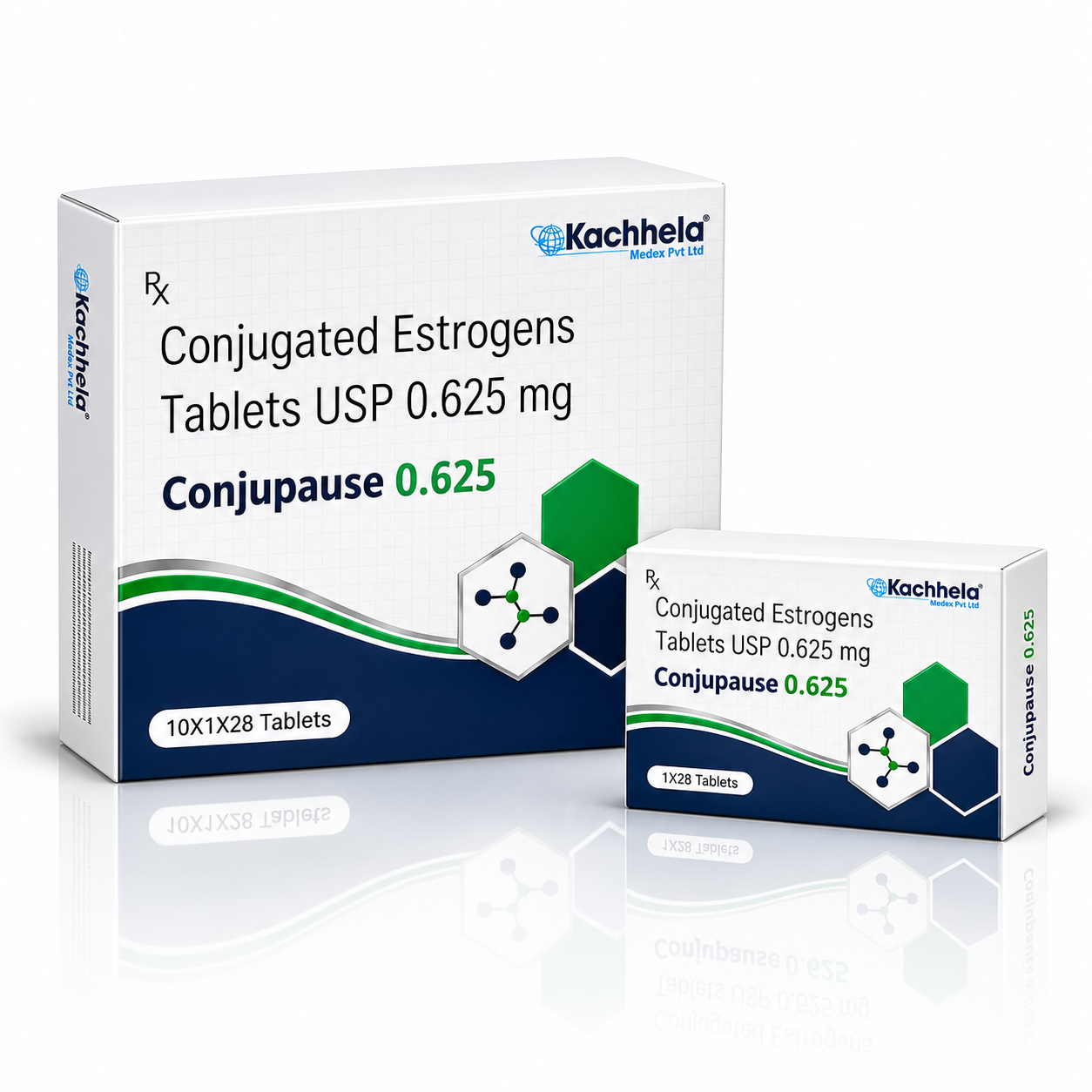
Conjupause 0.625 MG Tablet
$1.00 / unit
Available Options
| Pack Size | Price | Price / Unit | Quantity | Action |
|---|---|---|---|---|
| 180 Tablets | $136.00 | $0.76/unit | ||
| 150 Tablets | $117.00 | $0.78/unit | ||
| 120 Tablets | $95.00 | $0.79/unit | ||
| 90 Tablets | $76.00 | $0.84/unit | ||
| 60 Tablets | $54.00 | $0.90/unit | ||
| 30 Tablets | $30.00 | $1.00/unit |
Product Description
CONJUPAUSE 0.625 MG TABLET
Brand Name: Conjupause 0.625 MG Tablet
Generic Name: Conjugated Estrogens
Strength: 0.625 mg
Dosage Form: Oral Tablet
Therapeutic Class: Estrogen Hormone / Hormone Replacement Therapy (HRT)
Brand / Supplier: Kachhela Medex
Manufacturer / Marketer: Kachhela
Pack Size: 1 × 10 Tablets
Prescription Status: Prescription Medicine
What is this medicine?
CONJUPAUSE 0.625 MG TABLET contains conjugated estrogens, a mixture of estrogen hormones used in hormone replacement therapy.
Estrogen is an important hormone involved in:
Female reproductive health
Regulation of body temperature
Vaginal tissue maintenance
Bone metabolism
Menstrual and reproductive functions
Maintenance of certain hormone-responsive tissues
During menopause, estrogen production decreases.
This hormonal change may cause:
Hot flashes
Night sweats
Vaginal dryness
Genital irritation
Sleep disturbances associated with menopausal symptoms
Accelerated bone loss
Conjupause may be prescribed to replace estrogen when the expected benefits outweigh the potential risks.
How Does Conjupause Work?
Conjugated estrogens consist of several estrogenic compounds.
These hormones act by binding to estrogen receptors in different parts of the body.
Estrogen receptors are present in:
Reproductive organs
Vaginal tissues
Brain
Bones
Breast tissue
Blood vessels
Other hormone-sensitive tissues
By activating estrogen receptors, the medicine modifies cellular processes affected by declining estrogen levels.
Its effects may help:
Reduce the frequency of hot flashes
Decrease night sweats
Improve estrogen-deficiency symptoms
Maintain vaginal tissue health
Reduce excessive bone breakdown
Help maintain bone mineral density
Important: Estrogen therapy affects several body systems. Treatment requires an individualized assessment of benefits and risks.
Common Uses
Conjugated estrogens may be prescribed for:
Moderate to severe menopausal hot flashes
Moderate to severe night sweats
Selected symptoms of vulvar and vaginal atrophy
Estrogen deficiency associated with certain ovarian disorders
Estrogen deficiency following removal of the ovaries
Prevention of postmenopausal osteoporosis in selected patients
Other specialist-directed estrogen replacement indications
These are established uses of conjugated estrogen medicines. The exact approved indications for the Kachhela-associated Conjupause product should be confirmed from its local prescribing information.
Menopausal Hot Flashes
Hot flashes are common during menopause.
Symptoms may include:
Sudden feelings of warmth
Facial flushing
Sweating
Rapid heartbeat
Temporary discomfort
Sleep interruption
Conjugated estrogens can help reduce the frequency and intensity of moderate to severe hot flashes.
Night Sweats
Night sweats involve episodes of excessive sweating during sleep.
They may cause:
Interrupted sleep
Discomfort
Frequent awakening
Damp clothing or bedding
Daytime tiredness
Estrogen therapy may improve night sweats associated with menopause.
Important: Persistent night sweats can also result from infections, medicines and other medical conditions.
Vaginal Dryness After Menopause
Reduced estrogen may cause changes in the vaginal and vulvar tissues.
Symptoms can include:
Dryness
Burning
Irritation
Genital discomfort
Pain during intercourse
Urinary discomfort
Conjugated estrogens may improve symptoms caused by estrogen deficiency.
However, when symptoms are limited to the vagina or vulva, local vaginal estrogen or other targeted treatments are often preferred because they generally involve less systemic hormone exposure.
Estrogen Deficiency
Conjupause may be considered for selected estrogen-deficiency conditions.
These may include:
Primary ovarian insufficiency
Certain forms of hypogonadism
Surgical removal of both ovaries
Other medically diagnosed estrogen-deficiency disorders
The treatment regimen depends on age, uterus status, medical history and the cause of estrogen deficiency.
Surgical Menopause
Surgical menopause can occur when both ovaries are removed.
The sudden reduction in estrogen may cause:
Hot flashes
Night sweats
Vaginal dryness
Sleep disturbance
Other estrogen-deficiency symptoms
Systemic estrogen therapy may be appropriate in some patients.
The clinician should determine the most suitable formulation and whether progestogen treatment is necessary.
Prevention of Postmenopausal Osteoporosis
Estrogen helps regulate bone remodeling.
After menopause, estrogen deficiency increases bone resorption and can lead to:
Reduced bone density
Osteopenia
Osteoporosis
Increased fracture risk
Conjugated estrogens may reduce bone loss.
However, when osteoporosis prevention is the only reason for treatment, other approved osteoporosis medicines should generally be considered first.
Important Uterus-Related Treatment Consideration
Patients with an intact uterus generally require a progestogen alongside systemic estrogen therapy to protect the endometrial lining.
Unopposed systemic estrogen can increase the risk of:
Endometrial hyperplasia
Abnormal uterine bleeding
Endometrial cancer
Patients who have undergone hysterectomy may be eligible for estrogen-only therapy, depending on their medical history.
Important: Conjupause should not be used alone in a patient with an intact uterus unless the prescriber has specifically assessed and addressed endometrial protection.
Important Treatment Limitations
Conjupause should not be used for:
Birth control
General anti-aging
Cosmetic hormone enhancement
Prevention of heart attacks
Prevention of stroke
Prevention of dementia
Unsupervised estrogen supplementation
Treatment of unexplained vaginal bleeding
Self-treatment during pregnancy
NOTE: Hormone therapy should be prescribed according to an individualized treatment plan.
What should I tell my healthcare provider before I take this medicine?
Inform your healthcare provider if you have:
Allergy to conjugated estrogens
Unexplained vaginal bleeding
Breast cancer or a previous history of breast cancer
Endometrial cancer
Other estrogen-sensitive cancers
Previous deep vein thrombosis
Previous pulmonary embolism
Previous stroke
History of heart attack
Blood-clotting disorders
Liver disease
High blood pressure
Diabetes
High cholesterol or triglycerides
Migraine
Gallbladder disease
Uterine fibroids
Endometriosis
Systemic lupus erythematosus
Epilepsy
Asthma
Kidney disease
Thyroid disease
Obesity
Smoking history
Planned major surgery
Prolonged immobility
Pregnancy or plans to become pregnant
Breastfeeding
Also inform your clinician about all medicines, supplements and herbal products you use.
Important Contraindications
Systemic conjugated estrogen therapy is generally contraindicated in patients with:
Undiagnosed abnormal genital bleeding
Known, suspected or previous breast cancer
Known or suspected estrogen-dependent cancer
Active or previous deep vein thrombosis
Active or previous pulmonary embolism
Active or previous arterial thromboembolic disease
Certain inherited or acquired thrombophilic disorders
Active liver disease
Serious hypersensitivity to conjugated estrogens
Treatment should not be used during pregnancy.
The complete contraindications should be checked against the approved product label.
Important Endometrial Cancer Warning
Systemic estrogen without adequate progestogen protection increases the risk of endometrial hyperplasia and cancer in patients with an intact uterus.
Warning symptoms include:
Unexpected vaginal bleeding
Persistent spotting after menopause
Bleeding after previously stable hormone therapy
Important: Any unexplained postmenopausal bleeding requires medical evaluation.
Important Blood Clot Warning
Oral estrogen therapy may increase the risk of blood clots.
Potential complications include:
Deep vein thrombosis
Pulmonary embolism
Other venous thromboembolic events
Warning symptoms include:
Sudden swelling of one leg
Calf pain
Sudden breathlessness
Chest pain
Coughing up blood
These symptoms require emergency medical attention.
Important Stroke Warning
Systemic oral estrogen therapy may increase stroke risk in certain patients.
Warning symptoms include:
Sudden facial drooping
Weakness on one side of the body
Difficulty speaking
Sudden vision changes
Severe unexplained headache
Sudden loss of coordination
Seek emergency medical care if these occur.
Important Breast Cancer Warning
Breast cancer risk depends on:
Whether estrogen is taken alone or with a progestogen
Duration of treatment
Age
Personal medical history
Other risk factors
Combined estrogen-progestogen therapy has been associated with an increased risk of breast cancer in major clinical studies.
Patients should follow recommended breast screening schedules.
Important Cardiovascular Warning
Hormone therapy should not be initiated to prevent cardiovascular disease.
The healthcare professional should review:
Blood pressure
Smoking
Diabetes
Obesity
Cholesterol levels
Cardiovascular history
Blood-clot risk
Important Pregnancy Warning
Conjupause is not intended for use during pregnancy.
If pregnancy occurs or is suspected, contact the prescribing clinician.
How should I use this medicine?
Take Conjupause 0.625 MG Tablet exactly as prescribed by your healthcare provider.
Swallow the tablet with water.
Take it at the prescribed time.
It may generally be taken with or without food.
Take it consistently when prescribed daily.
Do not change the dose independently.
Do not combine it with other estrogen medicines without medical advice.
Follow the prescribed continuous or cyclic schedule.
Take a progestogen when indicated.
Attend regular medical reviews.
Report unexpected vaginal bleeding.
Do not share the medicine.
Understanding the Tablet Strength
Each tablet contains:
Conjugated Estrogens: 0.625 mg
Dosage Form: Oral tablet
Route of Administration: Oral
Conjugated estrogens contain a mixture of estrogenic compounds rather than a single purified estrogen molecule.
The 0.625 mg strength is a standard marketed strength for oral conjugated estrogen products.
Usual Adult Dosage
The appropriate dosage depends on the medical indication and individual risk profile.
For moderate to severe menopausal symptoms, conjugated estrogens may be prescribed:
Once daily, according to a continuous or cyclic treatment regimen.
A reference starting dose for some conjugated estrogen products is 0.3 mg once daily, with adjustments based on symptom control.
The 0.625 mg strength may be prescribed when clinically appropriate, but it is not necessarily the lowest effective dose.
Important: The patient should not automatically begin with 0.625 mg unless that dose has been specifically prescribed.
Treatment of Menopausal Hot Flashes
Conjupause may help reduce:
Frequent hot flashes
Intense flushing
Menopause-related night sweats
Sleep interruptions associated with these symptoms
The prescriber should periodically assess whether the dose remains appropriate.
Continuous Hormone Therapy
In a continuous regimen, estrogen is taken daily according to the prescription.
Patients with an intact uterus generally require an accompanying endometrial protection strategy.
The treatment plan may include a progestogen.
Cyclic Hormone Therapy
Some estrogen regimens use scheduled treatment days and breaks.
The precise regimen depends on:
Medical indication
Uterus status
Age
Treatment response
Risk factors
Approved product labeling
Important: Do not introduce treatment-free intervals or alter the schedule independently.
Patients With an Intact Uterus
Patients who have a uterus generally need adequate progestogen treatment with systemic estrogen.
This helps reduce the risk of:
Endometrial hyperplasia
Abnormal uterine bleeding
Endometrial cancer
The prescriber determines the appropriate progestogen and schedule.
Patients After Hysterectomy
Some patients who have undergone hysterectomy may receive estrogen-only therapy.
However, the decision depends on:
Reason for hysterectomy
History of endometriosis
Personal cancer history
Other medical conditions
A clinician should determine the appropriate regimen.
Older Adults
Older patients may have greater risks involving:
Blood clots
Stroke
Cardiovascular disease
Certain cancers
Dementia
Other age-related conditions
Starting systemic hormone therapy in older adults requires careful individualized assessment.
Special Patient Populations
Liver Disease: Systemic estrogen is generally contraindicated in active liver disease.
Kidney Disease: Requires individual assessment.
Heart Disease: Review cardiovascular and thromboembolic risks.
Diabetes: Monitor glucose and relevant cardiovascular risk factors.
Migraine: Report new or worsening headaches, especially neurological symptoms.
History of Blood Clots: Systemic estrogen is generally contraindicated with previous venous thromboembolism.
Pregnancy: Not intended for use.
Breastfeeding: Generally unsuitable because estrogen can reduce milk production.
How Long Does Conjupause Take to Work?
Estrogen begins interacting with hormone-sensitive tissues after absorption.
However, improvement in menopausal symptoms usually develops gradually.
Some patients notice reduced hot flashes within the first few weeks.
The full response may require several weeks.
Treatment response depends on:
Symptom severity
Hormone levels
Prescribed dosage
Treatment adherence
Age
Other medical conditions
Important: Do not increase the dose simply because symptoms have not improved immediately.
Important Treatment Duration
The appropriate duration varies by patient.
Hormone therapy should be used at the lowest effective dose and for a duration consistent with treatment goals and individual risks.
Regular review should include:
Symptom relief
Blood pressure
Breast health
Unexpected vaginal bleeding
Blood-clot risk
Treatment side effects
Continued need for therapy
There is no single fixed treatment duration suitable for every patient.
What if I miss a dose?
If you miss a dose:
Take it when remembered unless the next dose is approaching.
If the next dose is nearly due, skip the missed dose.
Continue with the prescribed schedule.
Do not take two tablets together.
Do not double the next dose.
If you miss several doses or develop unexpected bleeding, contact your prescriber.
What may interact with this medicine?
Conjugated estrogens may interact with medicines that affect estrogen metabolism, hormone-binding proteins or other hormone-sensitive processes.
Potential interactions include:
Rifampicin
Rifabutin
Carbamazepine
Phenytoin
Phenobarbital
Certain antiviral medicines
Certain antifungal medicines
Clarithromycin
St. John's wort
Thyroid hormone replacement
Other estrogen-containing medicines
Important Drug Interaction Considerations
Rifampicin: May increase estrogen metabolism and reduce estrogen exposure.
Carbamazepine: May reduce estrogen concentrations.
Phenytoin: May increase estrogen metabolism and reduce treatment effectiveness.
Phenobarbital: May decrease estrogen exposure.
St. John's Wort: May reduce hormone concentrations through enzyme induction.
Certain Antifungal Medicines: Some enzyme inhibitors may increase estrogen exposure.
Certain Antiviral Medicines: Can increase or decrease estrogen exposure depending on the medicine.
Thyroid Hormone Replacement: Oral estrogen can increase thyroid-binding globulin and may change levothyroxine requirements.
Other Hormonal Medicines: May cause additive hormonal effects.
Important Thyroid Medicine Interaction
Oral estrogen therapy may increase thyroid-binding globulin.
Patients using levothyroxine may require:
Thyroid function testing
Assessment of symptoms
Dose adjustment when clinically indicated
Important: Do not change thyroid medicine doses independently.
Important Antiseizure Medicine Interaction
Certain antiseizure medicines may lower estrogen exposure.
Examples include:
Carbamazepine
Phenytoin
Phenobarbital
The clinician may need to review treatment effectiveness.
Important Herbal Supplement Interaction
St. John's wort may increase estrogen metabolism.
This could reduce hormone exposure.
Patients should inform their clinician about herbal products and supplements.
Important Drug Interaction Precaution
Tell your healthcare provider about all medicines you take, including over-the-counter products, hormonal medicines and nutritional supplements.
What should I watch for while using this medicine?
Contact your healthcare provider promptly if you experience:
Unexpected vaginal bleeding
Persistent spotting after menopause
New breast lumps
Persistent breast tenderness
Severe headaches
New or worsening migraine symptoms
Sudden leg swelling
Unexplained leg pain
Significant fluid retention
Persistent nausea
Yellowing of the skin or eyes
Changes in vision
Seek emergency medical attention for:
Sudden chest pain
Sudden shortness of breath
Facial drooping
Sudden weakness on one side
Difficulty speaking
Sudden vision loss
Severe unexplained headache
Coughing up blood
Loss of consciousness
Severe allergic reactions
Important Monitoring
Menopausal Symptoms: Track hot flashes, night sweats and symptom improvement.
Blood Pressure: Regular monitoring may be appropriate.
Breast Health: Follow recommended breast screening.
Vaginal Bleeding: Investigate unexpected or persistent bleeding.
Blood-Clot Risk: Review risk factors at follow-up appointments.
Cardiovascular Health: Monitor relevant cardiovascular conditions.
Bone Health: Bone density testing may be appropriate in selected patients.
Treatment Duration: Review continued need for hormone therapy.
Uterus Status: Ensure appropriate endometrial protection when necessary.
Important Abnormal Vaginal Bleeding
Unexpected postmenopausal bleeding should be medically evaluated.
Potential causes include:
Hormonal treatment effects
Endometrial polyps
Endometrial hyperplasia
Other gynecological conditions
Endometrial cancer
Important: Do not assume postmenopausal bleeding is harmless simply because hormone therapy has been started.
Important Breast Monitoring
Report:
New breast lumps
Unusual nipple discharge
Persistent localized breast pain
Other unexplained breast changes
Continue appropriate age- and risk-based breast screening.
Important Blood Clot Monitoring
Seek urgent medical attention for:
Sudden swelling of one leg
Calf pain
Redness or warmth in a leg
Sudden breathlessness
Chest pain
These symptoms may indicate deep vein thrombosis or pulmonary embolism.
Important Surgery and Immobilization Warning
Major surgery or prolonged immobilization may increase blood-clot risk.
The prescriber may recommend temporarily discontinuing oral estrogen before selected procedures.
Important: Discuss planned surgery, hospitalization or prolonged bed rest with the healthcare professional managing hormone therapy.
Important Cardiovascular Monitoring
Patients should be assessed for risk factors such as:
Hypertension
Diabetes
Smoking
Obesity
High cholesterol
Previous cardiovascular disease
Hormone therapy is not intended to prevent cardiovascular disease.
What side effects may I notice from this medicine?
Conjupause may cause mild, moderate or serious side effects.
Side effects that should be reported promptly:
Deep vein thrombosis
Pulmonary embolism
Stroke
Heart attack
Unexplained vaginal bleeding
Severe allergic reactions
Serious liver-related symptoms
New breast lumps
Severe headaches with neurological symptoms
Significant vision changes
Serious gallbladder-related symptoms
Side effects that may not require immediate medical attention:
Breast tenderness
Headache
Nausea
Abdominal discomfort
Bloating
Fluid retention
Mild swelling
Vaginal spotting
Changes in vaginal discharge
Mood changes
Changes in libido
Hair changes
Not every patient experiences these adverse effects. Comparable conjugated estrogen prescribing information documents both common and serious reactions.
Important Breast Tenderness
Estrogen therapy may cause:
Breast fullness
Tenderness
Mild discomfort
Persistent or unusual symptoms require evaluation.
Important Nausea and Bloating
Some patients experience:
Nausea
Stomach discomfort
Bloating
Fluid retention
These symptoms may improve with time, but persistent symptoms should be discussed with the prescriber.
Important Vaginal Bleeding
Spotting or bleeding may occur with hormone therapy.
However, unexpected or persistent bleeding after menopause should always be evaluated.
Important Fluid Retention
Estrogen can contribute to fluid retention.
Possible symptoms include:
Bloating
Mild swelling
Weight fluctuations
Patients with heart, kidney or liver disease may need additional monitoring.
Important Gallbladder Effects
Oral estrogen therapy may increase the risk of gallbladder disease.
Possible symptoms include:
Upper abdominal pain
Nausea
Vomiting
Pain after meals
Persistent symptoms require medical assessment.
Important Blood Clot and Stroke Risk
Systemic oral estrogen may increase the risk of:
Venous thrombosis
Pulmonary embolism
Stroke
The risk varies according to age, treatment regimen and other medical conditions.
Important Cancer-Related Risks
Unopposed systemic estrogen increases endometrial cancer risk in patients with an intact uterus.
Breast cancer risk varies by treatment regimen and duration.
Important: Regular medical review and appropriate cancer screening are essential.
Important Pregnancy and Breastfeeding Considerations
Pregnancy: Conjupause should not be used during pregnancy.
Breastfeeding: Estrogen can reduce milk production and is generally not recommended during breastfeeding.
Patients should consult their healthcare provider regarding suitable treatment alternatives.
Where should I keep my medicine?
Store according to the instructions on the supplied product carton.
Keep in a cool, dry place.
Protect from excessive heat.
Protect from direct sunlight.
Protect from moisture.
Keep tablets in their original blister packaging.
Keep out of the reach of children.
Keep away from pets.
Do not use after the expiry date.
Do not use tablets from damaged packaging.
Do not transfer tablets into unlabelled containers.
Dispose of unused or expired medicine according to pharmacist instructions.
Storage Note: Certain comparable conjugated estrogen tablets are labeled for controlled room-temperature storage at 20–25°C, while some international product information permits storage below 30°C. These conditions have not been verified for the Kachhela-associated Conjupause pack; follow the actual product label.
DailyMed+1
Manufacturer Details
Field | Information |
|---|---|
Brand Name | Conjupause 0.625 MG Tablet |
Generic Name | Conjugated Estrogens |
Strength | 0.625 mg |
Dosage Form | Oral Tablet |
Therapeutic Class | Estrogen Hormone / Hormone Replacement Therapy |
Primary Indication | Moderate to Severe Menopausal Vasomotor Symptoms |
Common Uses | Menopausal Hot Flashes and Night Sweats |
Additional Uses | Selected Estrogen-Deficiency Conditions, Vaginal Atrophy and Osteoporosis Prevention |
Mechanism of Action | Activates Estrogen Receptors and Replaces Estrogenic Activity |
Brand / Supplier Specified | Kachhela Medex |
Manufacturer / Marketer | Kachhela Attribution Not Independently Verified for This Exact Product |
Manufacturer Address | Verify from Current Product Packaging |
Manufacturing Facility | Not Independently Verified |
Prescription Status | Prescription Medicine |
Route of Administration | Oral |
Common Administration Frequency | Once Daily, When Prescribed |
Dose Selection | Individualized; Lowest Effective Dose |
Endometrial Protection | Progestogen Generally Required With Systemic Estrogen When Uterus Is Intact |
Important Safety Risks | Blood Clots, Stroke, Endometrial Cancer Risk Without Progestogen, Regimen-Dependent Breast Cancer Risk |
Storage | Follow Supplied Product Label |
Supplier-Listed Pack Size | 1 × 10 Tablets |
Country of Manufacture | Verify from Product Packaging |