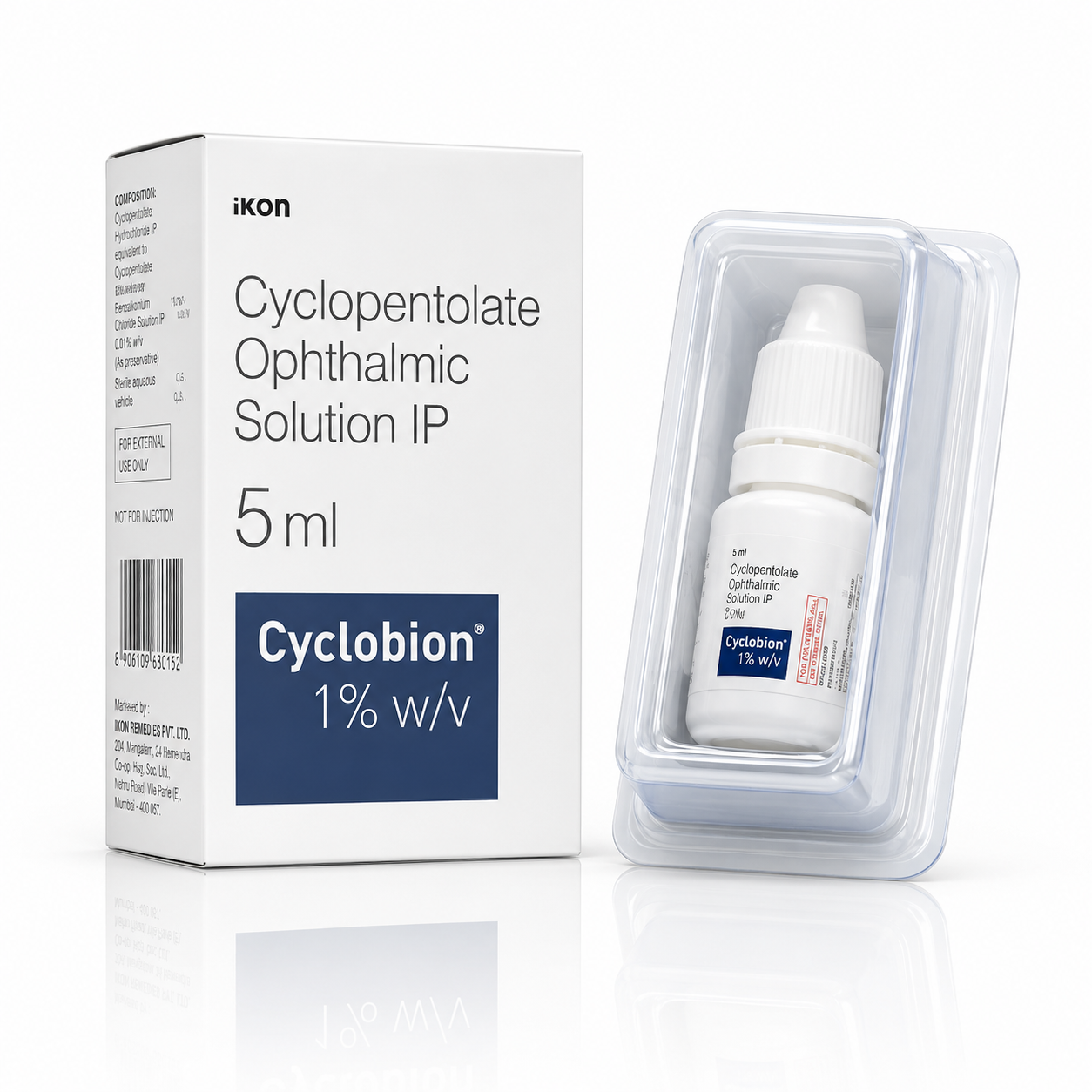
Cyclobion 1% Eye Drop
$8.00 / unit
Available Options
| Pack Size | Price | Price / Unit | Quantity | Action |
|---|---|---|---|---|
| 10 Drop | $63.00 | $6.30/unit | ||
| 8 Drop | $50.00 | $6.25/unit | ||
| 6 Drop | $38.00 | $6.33/unit | ||
| 4 Drop | $27.00 | $6.75/unit | ||
| 2 Drop | $15.00 | $7.50/unit | ||
| 1 Drop | $8.00 | $8.00/unit |
Product Description
What is this medicine?
CYCLOBION 1% EYE DROPS contains Cyclopentolate Hydrochloride 1% w/v, an antimuscarinic mydriatic and cycloplegic medicine. It is manufactured/marketed by Ikon Remedies Pvt. Ltd. Product information lists Cyclobion as a 1% cyclopentolate ophthalmic preparation.
Cyclopentolate temporarily dilates the pupil (mydriasis) and relaxes/paralyzes the eye's focusing muscle (cycloplegia). This allows an ophthalmologist to examine the inside of the eye and accurately perform certain vision/refraction tests. It may also be prescribed in inflammatory eye conditions such as uveitis to reduce painful ciliary muscle spasm.
What should I tell my health care provider before I use this medicine?
They need to know if you have any of these conditions:
allergy to cyclopentolate or any ingredient in the drops
narrow-angle or angle-closure glaucoma
increased pressure inside the eye
previous serious reaction to atropine or similar anticholinergic medicines
eye injury or recent eye surgery
Down syndrome
neurological disorders, particularly in children
if you are using other pupil-dilating eye drops
if you take medicines with anticholinergic effects
if the medicine is intended for an infant or young child
pregnant or planning to become pregnant
breast-feeding
Cyclobion should not be used in people with narrow-angle glaucoma or known hypersensitivity to cyclopentolate. Children can be particularly sensitive to systemic anticholinergic effects.
How should I use this medicine?
Use CYCLOBION 1% EYE DROPS exactly as directed by your ophthalmologist.
For eye examinations, cyclopentolate is generally administered before the examination to produce adequate pupil dilation and temporary loss of focusing ability. The exact number of drops and timing should be determined by the eye-care professional.
When prescribed for an inflammatory eye condition such as uveitis, the dosing schedule may be different and should be followed exactly as prescribed.
Wash your hands before using the drops.
Tilt your head backward and gently pull down the lower eyelid to create a small pocket. Instill the prescribed number of drops without allowing the dropper tip to touch your eye, eyelid, fingers, or other surfaces.
After applying the drop, close the eye gently. Pressing lightly over the inner corner of the eye near the nose for 1–2 minutes may help reduce the amount of medicine absorbed into the bloodstream.
If you use another ophthalmic medicine, leave an appropriate interval between the different eye drops. Product guidance recommends approximately 5–10 minutes between medicines.
NOTE: This medicine is for ophthalmic use only. Do not swallow it or share it with others.
What if I miss a dose?
When Cyclobion is administered specifically for an eye examination, a missed dose generally does not apply because it is often administered according to the examination schedule.
If your ophthalmologist has prescribed regular use and you miss a dose, apply it when you remember.
If it is almost time for your next scheduled dose, skip the missed dose and continue with your normal schedule.
Do not use extra drops or double the dose to make up for a missed application.
What may interact with this medicine?
Tell your healthcare provider if you use:
atropine or atropine-containing eye medicines
other cycloplegic or pupil-dilating eye drops
other anticholinergic medicines
trihexyphenidyl
procyclidine
certain antihistamines
certain antidepressants
antipsychotic medicines
other prescription or non-prescription ophthalmic medicines
Combining cyclopentolate with other medicines that have anticholinergic effects may increase adverse effects such as dry mouth, rapid heartbeat, blurred vision, or confusion. Interactions with medicines such as trihexyphenidyl and procyclidine are specifically noted in current product information.
This list may not describe all possible interactions. Tell your healthcare provider about all prescription medicines, non-prescription medicines, eye drops, herbal products, and supplements you use.
What should I watch for while using this medicine?
Cyclobion causes temporary pupil dilation and loss of focusing ability, so your vision may become blurred after application.
Your eyes may also become more sensitive to bright light. Wearing sunglasses may make you more comfortable until the medicine's effects wear off.
Do not drive, operate machinery, or perform activities requiring clear vision until your eyesight has returned to normal.
Children may be more susceptible to systemic effects of cyclopentolate. Contact a healthcare professional immediately if a child develops unusual behavioral changes, severe drowsiness, confusion, hallucinations, difficulty walking, fever, or a rapid heartbeat after the drops.
Contact your ophthalmologist promptly if you develop:
severe eye pain
severe or persistent redness
significant swelling
persistent blurred vision
sudden worsening of vision
severe headache with nausea or vomiting
Do not allow the dropper tip to touch the eye or other surfaces because this can contaminate the solution.
What side effects may I notice from this medicine?
Side effects that you should report to your doctor or health care professional as soon as possible:
severe eye pain
marked increase in eye pressure
severe or persistent changes in vision
severe allergic reaction
swelling of the face, lips, tongue, or throat
difficulty breathing
rapid or irregular heartbeat
severe confusion or agitation
hallucinations
unusual behavioral changes
severe drowsiness
difficulty with coordination, particularly in children
Side effects that usually do not require medical attention (report to your doctor if they continue or are bothersome):
temporary blurred vision
sensitivity to bright light
mild burning or stinging
eye irritation
eye redness
itching
foreign-body sensation in the eye
temporary difficulty focusing
Eye irritation, blurred vision, itching, stinging, burning and increased intraocular pressure are among the reported adverse effects of Cyclobion.
This list may not describe all possible side effects.
Where should I keep my medicine?
Keep CYCLOBION 1% EYE DROPS out of the reach of children.
Current Indian product information specifies storage below 30°C. Keep the bottle tightly closed and protect it from excessive heat, contamination, and direct sunlight.
Do not touch the dropper tip to your eye, fingers, or any other surface.
Do not use the medicine after the expiration date printed on the bottle/carton. Product guidance also advises using the drops within the specified period after first opening; one current listing specifies within 4 weeks of opening.