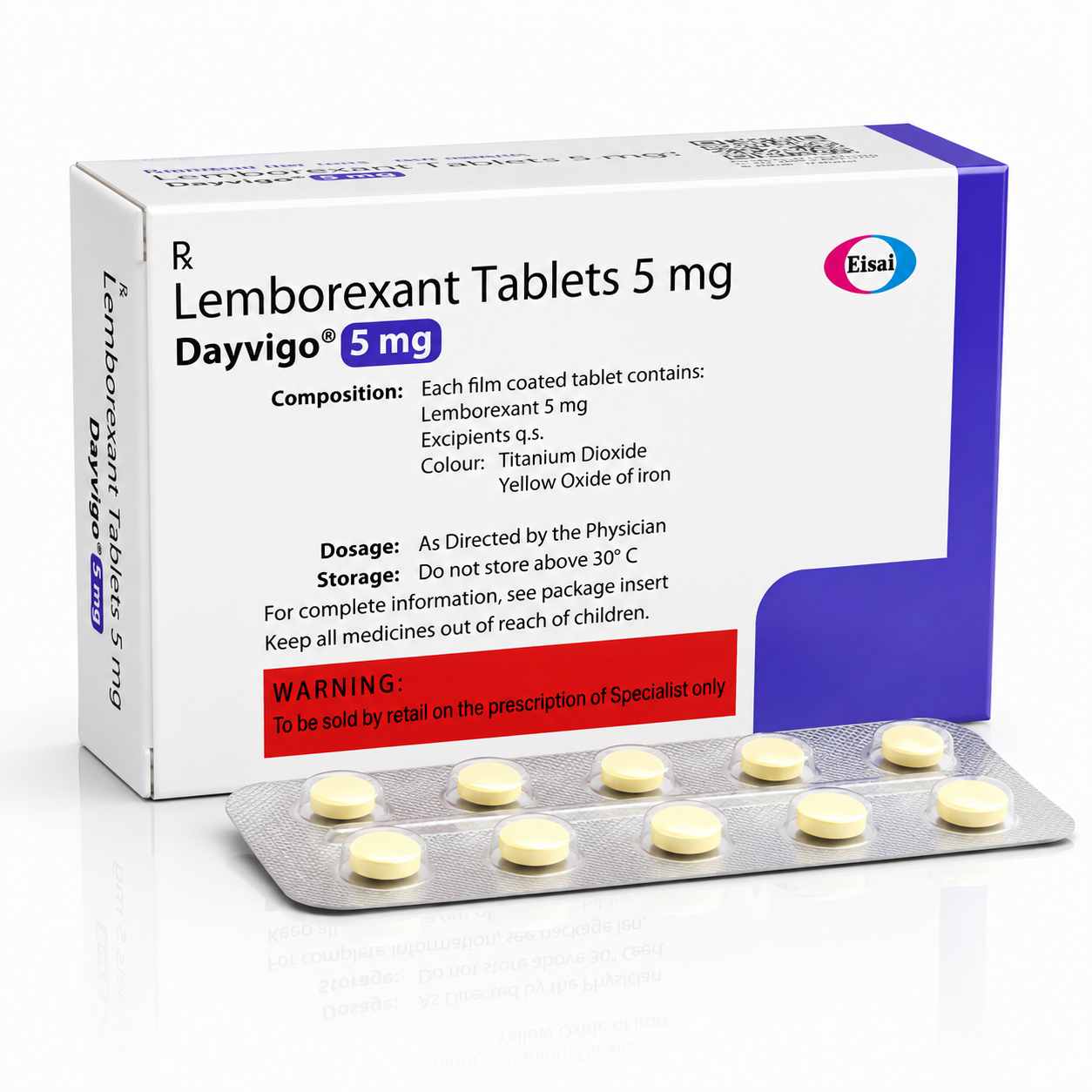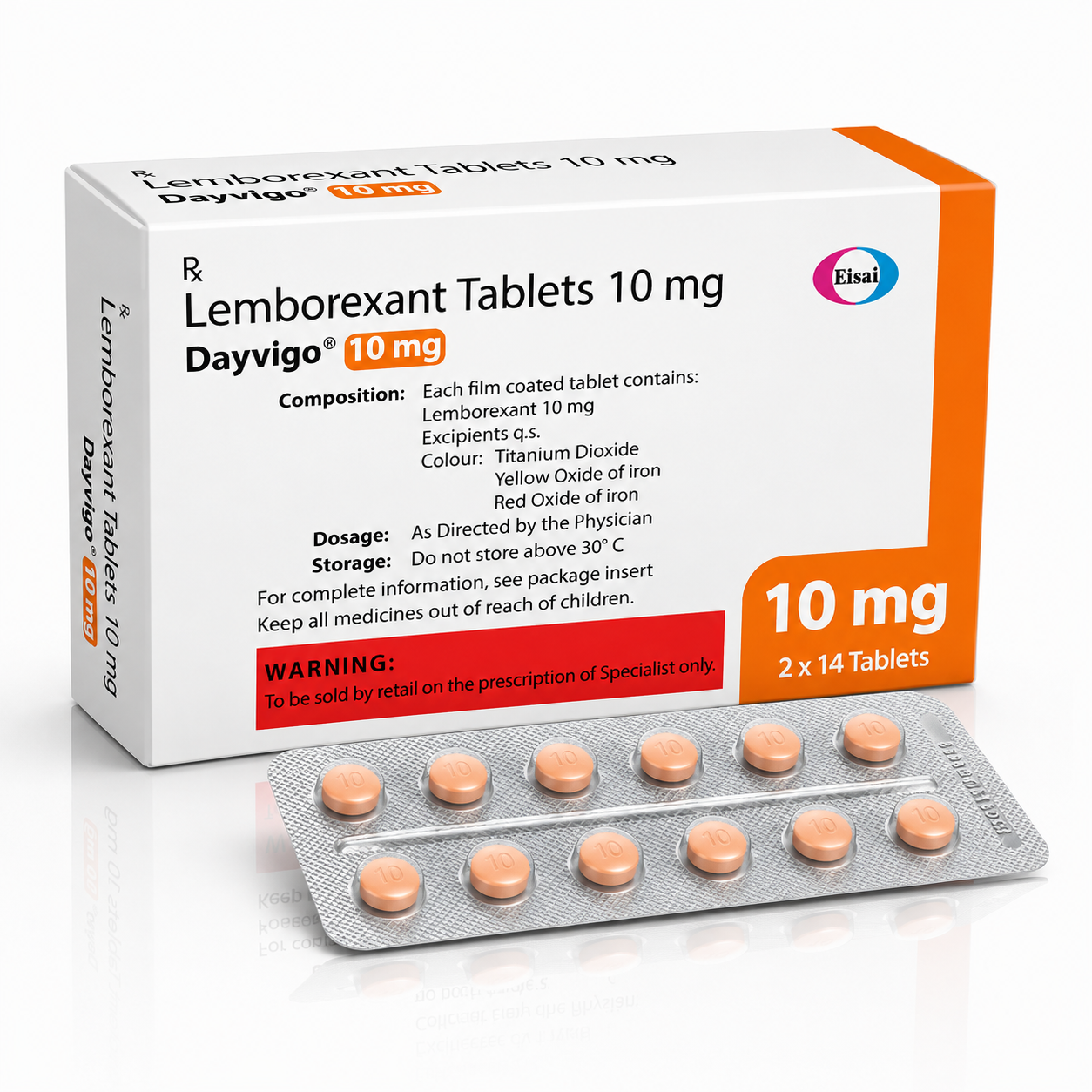
Dayvigo 10 MG Tablet
$1.34 / unit
Available Options
| Pack Size | Price | Price / Unit | Quantity | Action |
|---|---|---|---|---|
| 84 Tablets | $112.74 | $1.34/unit | ||
| 70 Tablets | $93.95 | $1.34/unit | ||
| 56 Tablets | $75.16 | $1.34/unit | ||
| 42 Tablets | $56.37 | $1.34/unit | ||
| 28 Tablets | $37.58 | $1.34/unit | ||
| 14 Tablets | $18.79 | $1.34/unit |
Product Description
What is this medicine?
DAYVIGO 10 MG TABLET contains Lemborexant 10 mg, a dual orexin receptor antagonist (DORA) used for the treatment of insomnia in adults, particularly difficulty falling asleep and/or staying asleep. In India, Dayvigo 10 mg is marketed by Eisai Pharmaceuticals India Pvt. Ltd.
Lemborexant works by blocking orexin receptors OX1R and OX2R in the brain. Orexin is involved in promoting wakefulness. By reducing orexin signaling, Dayvigo decreases the drive to remain awake and helps facilitate sleep onset and sleep maintenance.
This medicine is commonly used for:
insomnia in adults
difficulty falling asleep
difficulty staying asleep
frequent nighttime awakenings associated with insomnia
improving sleep onset and sleep maintenance
insomnia causing inadequate or disturbed nighttime sleep
Dayvigo 10 mg is the maximum recommended daily dose. Treatment is generally started at 5 mg, and the dose may be increased to 10 mg based on clinical response and tolerability.
What should I tell my health care provider before I take this medicine?
They need to know if you have any of these conditions:
narcolepsy
severe daytime sleepiness
sleep apnea
chronic obstructive pulmonary disease (COPD)
other breathing problems
liver disease
depression or another mental-health condition
history of suicidal thoughts or behavior
history of alcohol or substance misuse
previous sleepwalking or unusual behaviors while asleep
if you regularly consume alcohol
if you take other sleeping medicines
if you take sedatives or tranquilizers
if you take opioid pain medicines
if you take medicines that cause drowsiness
pregnant or planning to become pregnant
breast-feeding
Dayvigo must not be used in people with narcolepsy. In moderate liver impairment, the maximum recommended dose is 5 mg, and use is not recommended in severe hepatic impairment.
How should I use this medicine?
Take DAYVIGO 10 MG TABLET exactly as prescribed by your healthcare provider.
Dayvigo should be taken no more than once per night, immediately before going to bed, and only when you have at least 7 hours remaining before your planned waking time.
The usual starting dose is 5 mg once nightly. Your doctor may increase the dose to 10 mg once nightly depending on your response and tolerability.
10 mg is the maximum recommended dose per night. Do not take more than 10 mg in 24 hours.
Swallow the tablet orally as directed.
Dayvigo may be taken with or without food. However, taking it with or soon after a meal may delay the time it takes to fall asleep.
Take the medicine only when you are ready to go to bed.
Do not take an additional dose if you wake during the night.
NOTE: Dayvigo 10 mg should be used only when prescribed for you. Do not increase from 5 mg to 10 mg without your doctor's advice.
What if I miss a dose?
If you forget to take Dayvigo at bedtime, take it only if you still have at least 7 hours available for sleep.
If you cannot remain in bed for at least 7 hours, skip the dose for that night.
Take your normal prescribed dose the following night.
Do not take two doses in one night.
Do not take a double dose to make up for a missed tablet.
What may interact with this medicine?
Tell your healthcare provider if you use:
other sleeping medicines
benzodiazepines such as alprazolam, clonazepam, diazepam, or lorazepam
opioid pain medicines
sedating antihistamines
muscle relaxants
certain antidepressants
antipsychotic medicines
other medicines that depress the central nervous system
clarithromycin
itraconazole
ketoconazole
certain antiviral medicines
rifampicin
carbamazepine
phenytoin
St. John's wort
alcohol
Lemborexant is metabolized mainly through CYP3A. Strong or moderate CYP3A inhibitors can substantially increase lemborexant exposure, while strong or moderate CYP3A inducers can reduce its effectiveness.
Combining Dayvigo with alcohol, opioids, benzodiazepines, or other CNS depressants can increase drowsiness and impairment.
This list may not describe all possible interactions. Give your healthcare provider a complete list of prescription medicines, non-prescription medicines, herbal products, and supplements you use.
What should I watch for while using this medicine?
Dayvigo can cause daytime sleepiness and impaired alertness, particularly at the 10 mg dose.
Make sure you have a full night's sleep after taking the medicine. Do not drive, operate machinery, or perform hazardous activities if you feel sleepy or less alert the following day.
Dayvigo may sometimes cause:
sleep paralysis
vivid or unusual dreams
hallucinations when falling asleep or waking up
temporary leg weakness
unusual behaviors while not fully awake
sleepwalking
More serious complex sleep behaviors can occur, including sleepwalking, sleep-driving, preparing or eating food, or performing other activities while not fully awake. Stop taking Dayvigo and contact your healthcare provider promptly if this occurs.
Tell your doctor if you develop new or worsening:
depression
unusual mood or behavioral changes
suicidal thoughts
severe daytime sleepiness
breathing problems during sleep
If insomnia persists despite treatment, your healthcare provider may need to evaluate you for another medical, psychiatric, or sleep disorder.
What side effects may I notice from this medicine?
Side effects that you should report to your doctor or health care professional as soon as possible:
severe allergic reaction
swelling of the face, lips, tongue, or throat
difficulty breathing
severe or persistent daytime sleepiness
sleepwalking or other complex sleep behaviors
sleep-driving
severe confusion
hallucinations
significant behavioral or mood changes
worsening depression
suicidal thoughts or behavior
severe sleep paralysis
significant muscle weakness
breathing difficulties during sleep
Side effects that usually do not require medical attention (report to your doctor if they continue or are bothersome):
sleepiness or somnolence
daytime tiredness or fatigue
headache
dizziness
unusual or vivid dreams
sleep paralysis
Somnolence/fatigue is one of the most commonly reported adverse reactions with lemborexant. The likelihood of next-day impairment can increase with the 10 mg dose, insufficient sleep time, or use with other CNS depressants.
This list may not describe all possible side effects.
Where should I keep my medicine?
Keep DAYVIGO 10 MG TABLETS out of the reach of children.
Indian product information recommends storing Dayvigo 10 mg below 30°C.
Keep the tablets in their original blister or package and protect them from:
excessive heat
moisture
direct sunlight
Keep the medicine in a secure location and do not share it with anyone else.
Do not use the tablets after the expiration date printed on the strip or carton.