Doxyt 100 MG Tablet
$0.70 / unit
Available Options
| Pack Size | Price | Price / Unit | Quantity | Action |
|---|---|---|---|---|
| 60 Tablets | $31.00 | $0.52/unit | ||
| 50 Tablets | $27.00 | $0.54/unit | ||
| 40 Tablets | $22.00 | $0.55/unit | ||
| 30 Tablets | $17.00 | $0.57/unit | ||
| 20 Tablets | $12.00 | $0.60/unit | ||
| 10 Tablets | $7.00 | $0.70/unit |
Product Description
Doxyt 100 MG Tablet
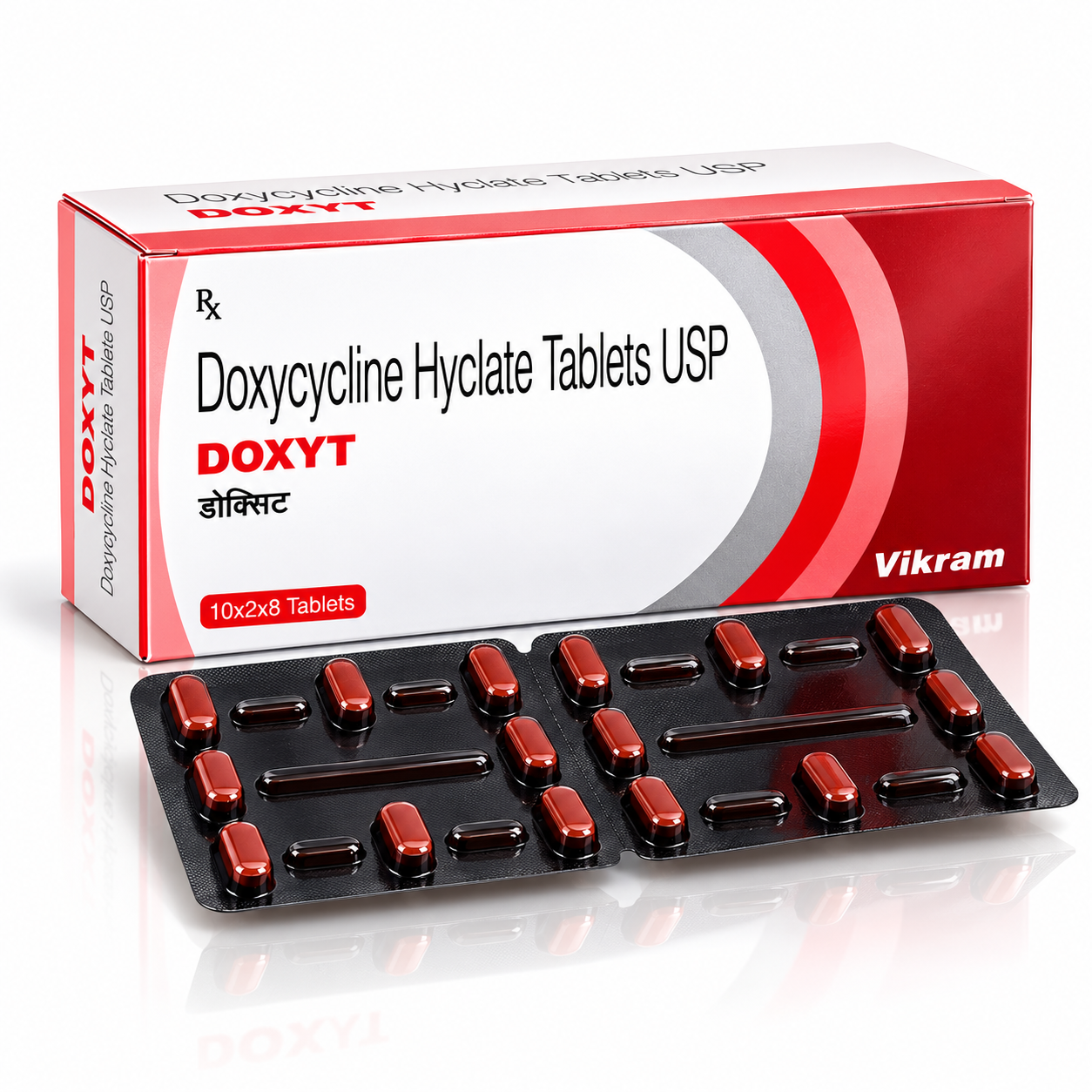
Brand Name: Doxyt 100 MG Tablet
Generic Name: Doxycycline
Strength: 100 mg
Dosage Form: Oral Tablet
Therapeutic Class: Tetracycline Antibiotic / Antibacterial Medicine
Manufacturer / Marketer: Vikram Laboratories Pvt. Ltd.
Pack Size: 1 × 8 Tablets
What is this medicine?
DOXYT 100 MG TABLET contains Doxycycline 100 mg, a broad-spectrum antibiotic belonging to the tetracycline class. It is used to treat various bacterial infections caused by microorganisms susceptible to doxycycline.
Doxycycline works by binding to the 30S ribosomal subunit of bacteria, inhibiting bacterial protein synthesis. This prevents susceptible bacteria from producing essential proteins required for their growth and multiplication.
This medicine is active against certain gram-positive and gram-negative bacteria, as well as several other microorganisms.
This medicine is commonly used for:
Respiratory tract infections caused by susceptible bacteria
Bacterial skin and soft tissue infections
Certain sexually transmitted infections, including chlamydia
Selected urinary tract infections caused by susceptible bacteria
Certain bacterial eye infections
Rickettsial infections
Lyme disease
Malaria prevention in selected travellers
Certain other bacterial and parasitic infections under medical supervision
NOTE: Doxyt 100 MG Tablet does not treat viral infections such as the common cold or influenza. Antibiotics should only be used when medically appropriate.
The product's doxycycline composition, manufacturer and eight-tablet packaging are supported by Netmeds' Doxyt Tablet listing.
What should I tell my health care provider before I take this medicine?
They need to know if you have any of these conditions:
Allergy to doxycycline, tetracycline antibiotics, or any ingredient of the tablet
Liver disease
Kidney disease
History of oesophageal irritation or difficulty swallowing
Severe acid reflux or oesophagitis
History of intracranial hypertension
Lupus or other autoimmune disorders
Previous severe skin reactions to antibiotics
Myasthenia gravis
Frequent exposure to strong sunlight
Pregnancy or planning pregnancy
Breastfeeding
Current use of isotretinoin or other systemic retinoids
Inform your healthcare provider about all medicines, supplements, vitamins, herbal products and nutritional supplements you are currently taking.
Important: Doxycycline is generally avoided during pregnancy and in children younger than eight years because of potential effects on developing teeth and bones. However, it may be recommended for certain serious infections, such as rickettsial infections, when the expected benefits outweigh the risks.
How should I use this medicine?
Take this medicine exactly as prescribed by your healthcare provider.
Swallow the tablet with a full glass of water.
Take the medicine while sitting or standing upright.
Do not lie down for at least 30 minutes after taking the tablet.
Avoid taking the medicine immediately before bedtime.
It may be taken with food to reduce stomach discomfort.
Follow the prescribed dosage and treatment schedule.
Take the medicine at approximately the same time each day.
Separate it from antacids, calcium, iron, zinc and other mineral supplements as advised by your pharmacist.
Avoid excessive exposure to direct sunlight.
Use sunscreen and protective clothing.
Complete the prescribed antibiotic course unless your healthcare provider advises otherwise.
Do not increase or decrease the dosage without medical advice.
Usual Dose: The dosage depends on the infection being treated. Some adult doxycycline regimens begin with 200 mg on the first day, followed by 100 mg daily. Other infections require 100 mg twice daily or different treatment schedules.
Duration of Treatment: As prescribed by the physician, depending on the infection, its severity and clinical response.
Route of Administration: Oral.
Overdosage: Seek immediate medical attention if an overdose is suspected. Symptoms may include nausea, vomiting, abdominal discomfort or other adverse reactions.
NOTE: Doxycycline can irritate or damage the oesophagus if taken with insufficient water or immediately before lying down.
What if I miss a dose?
Take the missed dose as soon as you remember, unless it is almost time for your next scheduled dose.
If your next dose is due soon, skip the missed dose.
Do not take a double dose to compensate for a missed dose.
Continue with your normal dosing schedule.
Contact your healthcare provider if you miss several doses.
Important: Missing antibiotic doses may reduce treatment effectiveness. Follow your prescribed course and consult your healthcare professional if you are unsure how to resume treatment.
What may interact with this medicine?
Antacids containing aluminium, calcium or magnesium
Iron supplements
Zinc supplements
Calcium supplements
Bismuth-containing medicines
Oral retinoids, including isotretinoin
Warfarin and certain other anticoagulants
Carbamazepine
Phenytoin
Phenobarbital
Rifampicin
Certain penicillin antibiotics
Methotrexate
Other medicines that may affect liver function
Alcohol, particularly regular heavy consumption
Important Drug Interaction Considerations:
Antacids and Mineral Supplements: Calcium, magnesium, aluminium, iron and zinc may reduce doxycycline absorption.
Isotretinoin: Concurrent use may increase the risk of intracranial hypertension and should generally be avoided.
Warfarin: Doxycycline may increase anticoagulant effects, requiring additional monitoring.
Anticonvulsants: Phenytoin, carbamazepine and phenobarbital may reduce doxycycline concentrations.
Rifampicin: May reduce doxycycline effectiveness by increasing its elimination.
Inform your healthcare provider about all medicines you are taking before starting treatment.
What should I watch for while using this medicine?
Seek immediate medical attention if you experience:
Severe allergic reactions
Difficulty breathing or swelling of the face, lips or throat
Severe or blistering skin reactions
Severe or persistent diarrhoea, particularly with blood
Severe headache accompanied by blurred vision
Sudden changes in eyesight
Severe pain or difficulty swallowing
Yellowing of the skin or eyes
Severe abdominal pain
Persistent vomiting
Symptoms of serious liver problems
While using this medicine:
Take each dose with plenty of water.
Avoid lying down immediately after taking the tablet.
Follow the prescribed dosage and treatment duration.
Avoid excessive direct sunlight and tanning beds.
Use sunscreen and protective clothing.
Report severe diarrhoea or persistent digestive symptoms.
Inform your healthcare provider if the infection does not improve or becomes worse.
Do not share antibiotics with other people.
Avoid using leftover antibiotics for a different illness.
Inform your physician if you become pregnant.
Follow recommended monitoring if receiving prolonged doxycycline treatment.
NOTE: Doxycycline can cause photosensitivity, increasing susceptibility to sunburn. Rarely, it may cause intracranial hypertension, which can present with severe headache and visual disturbances.
What side effects may I notice from this medicine?
Side effects that should be reported immediately:
Severe allergic reactions
Severe skin rashes or blistering
Serious sun sensitivity reactions
Severe or persistent diarrhoea
Intracranial hypertension
Severe headache with visual disturbances
Oesophageal ulceration
Severe pain or difficulty swallowing
Liver problems
Yellowing of the skin or eyes
Severe abdominal pain
Side effects that usually do not require medical attention:
Nausea
Vomiting
Mild stomach discomfort
Loss of appetite
Diarrhoea
Mild abdominal pain
Indigestion
Increased sensitivity to sunlight
Mild skin rash
Vaginal yeast infection
Oral thrush
Many common side effects are temporary and may improve during treatment. However, persistent or worsening symptoms should be reported to a healthcare professional.
Important: Photosensitivity, gastrointestinal irritation and oesophageal injury are important adverse effects of doxycycline. Correct administration can help reduce some of these risks.
Where should I keep my medicine?
Keep out of the reach of children.
Store according to the temperature printed on the original product packaging.
Protect from moisture and direct sunlight.
Keep the tablets in their original blister packaging until use.
Store in a cool, dry place.
Avoid excessive heat and humidity.
Do not use after the expiry date.
Do not use tablets if the packaging is damaged.
Dispose of expired or unused antibiotics according to your pharmacist's instructions.
Storage Note: The exact storage temperature for Doxyt 100 MG Tablet from Vikram Laboratories could not be confirmed from an official manufacturer-issued leaflet. Follow the storage instructions on the original carton.
Manufacturer Details
Field | Information |
|---|---|
Brand Name | |
Generic Name | Doxycycline |
Strength | 100 mg |
Dosage Form | Oral Tablet |
Therapeutic Class | |
Indication | Treatment of Susceptible Bacterial Infections; Selected Other Approved Doxycycline Uses |
Manufacturer / Marketer | Vikram Laboratories Pvt. Ltd. |
Prescription Status | Prescription Only Medicine |
Storage | Follow Original Product Label |
Route of Administration | Oral |
Pack Size | 1 × 8 Tablets |
Country of Origin | India |