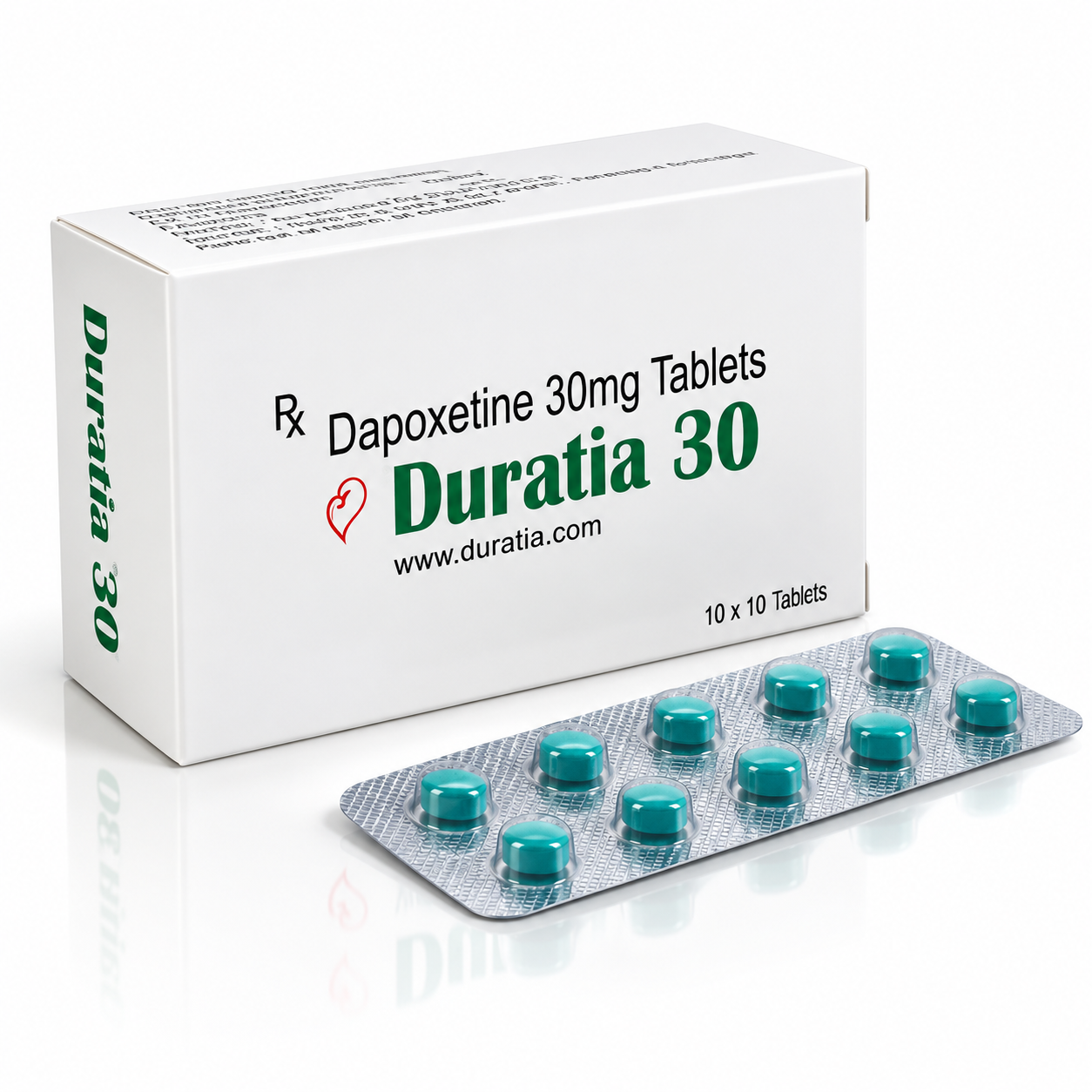
Duratia 30 MG Tablet
$0.40 / unit
Available Options
| Pack Size | Price | Price / Unit | Quantity | Action |
|---|---|---|---|---|
| 180 Tablets | $56.00 | $0.31/unit | ||
| 150 Tablets | $48.00 | $0.32/unit | ||
| 120 Tablets | $39.00 | $0.33/unit | ||
| 90 Tablets | $31.00 | $0.34/unit | ||
| 60 Tablets | $22.00 | $0.37/unit | ||
| 30 Tablets | $12.00 | $0.40/unit |
Product Description
Duratia 30 MG Tablet
Brand Name: Duratia 30 MG Tablet
Generic Name: Dapoxetine Hydrochloride
Strength: 30 mg
Dosage Form: Oral Tablet
Therapeutic Class: Short-Acting Selective Serotonin Reuptake Inhibitor (SSRI) / Premature Ejaculation Medicine
Manufacturer / Marketer: Fortune Healthcare Product Pvt. Ltd.
Pack Size: 1 × 10 Tablets
Country of Origin: India
What is this medicine?
DURATIA 30 MG TABLET contains Dapoxetine 30 mg, a short-acting selective serotonin reuptake inhibitor (SSRI) used to treat premature ejaculation (PE) in adult men.
Dapoxetine works by inhibiting serotonin reuptake in nerve cells, increasing serotonin activity in pathways involved in the control of ejaculation.
This action helps delay ejaculation and may improve control over its timing.
This medicine is commonly used for:
Premature ejaculation (PE) in adult men
Difficulty controlling ejaculation
Ejaculation occurring sooner than desired
Persistent or recurrent premature ejaculation causing personal distress
Improving ejaculatory control in men diagnosed with premature ejaculation
Reducing distress associated with premature ejaculation
NOTE: Duratia 30 MG Tablet is not an erectile dysfunction medicine. It does not directly improve blood flow to the penis or treat difficulty achieving an erection.
Dapoxetine is intended for men with appropriately diagnosed premature ejaculation, rather than for routine use by men without this condition.
Approved dapoxetine prescribing information in certain countries specifies treatment for men aged 18–64 years.
What should I tell my health care provider before I take this medicine?
They need to know if you have any of these conditions:
Allergy to dapoxetine or any ingredient of the tablet
Heart disease or a history of heart attack
Heart failure
Serious heart rhythm or electrical conduction disorders
Low blood pressure
History of fainting or loss of consciousness
Dizziness when standing up
Moderate or severe liver disease
Severe kidney disease
Depression or other psychiatric disorders
Bipolar disorder or a history of mania
History of suicidal thoughts or behaviour
Epilepsy or seizures
Bleeding disorders
Unexplained episodes of dizziness
History of serotonin syndrome
Current use of antidepressants
Current use of other serotonin-affecting medicines
Frequent alcohol consumption or recreational drug use
Inform your healthcare provider about all prescription medicines, over-the-counter medicines, vitamins, supplements, and herbal products you are currently taking.
Important: Dapoxetine may cause dizziness, sudden blood pressure reductions, and fainting. Your healthcare provider should assess any history of fainting or postural dizziness before prescribing it.
Dapoxetine is contraindicated in patients with certain significant heart conditions, moderate or severe liver impairment, or a history of mania or severe depression.
How should I use this medicine?
Take this medicine exactly as prescribed by your healthcare provider.
Swallow the tablet whole with at least one full glass of water.
Take the medicine approximately 1–3 hours before anticipated sexual activity.
It may be taken with or without food.
Do not crush or chew the tablet unless the original product instructions specifically permit it.
Do not take more than one prescribed dose within 24 hours.
Avoid alcohol while taking this medicine.
Maintain adequate hydration.
Avoid driving or operating machinery if dizziness or drowsiness occurs.
Do not combine it with other dapoxetine-containing medicines.
Do not increase the dose without medical advice.
Follow the prescribed instructions regarding timing and frequency.
Usual Starting Dose: Dapoxetine 30 mg, taken approximately 1–3 hours before anticipated sexual activity.
Dose Adjustment: If 30 mg is insufficient and well tolerated, a physician may consider increasing the dose to 60 mg where permitted by local prescribing information.
Maximum Recommended Dose: 60 mg per dose, no more than once in 24 hours, in countries where that dose is approved. Dose escalation is not appropriate for patients experiencing fainting or postural dizziness.
Onset of Action: Dapoxetine is generally taken 1–3 hours before sexual activity, although the individual response varies.
Duration of Effect: Dapoxetine is short-acting, and its effect on ejaculatory control varies between individuals.
Route of Administration: Oral.
Treatment Duration: Generally used as needed rather than continuously every day. Treatment effectiveness and tolerability should be reviewed periodically.
Overdosage: Seek immediate medical attention if an overdose is suspected. Symptoms may include nausea, vomiting, dizziness, agitation, tremors, rapid heartbeat, or serotonin toxicity.
NOTE: Duratia 30 MG Tablet should not be taken more frequently than once in 24 hours. It is not intended for continuous daily use under standard dapoxetine treatment recommendations.
The standard dosing information above is based on approved dapoxetine prescribing information, rather than a separately verified Duratia-specific clinical leaflet
What if I miss a dose?
Duratia 30 MG Tablet is generally taken as needed before sexual activity.
It does not usually require a fixed daily dosing schedule.
If you forget a planned dose, do not take additional tablets to compensate.
Do not double the next dose.
Do not exceed the prescribed dose or frequency.
Do not take another dose within 24 hours.
Follow your healthcare provider's instructions.
Important: Duratia is not generally prescribed as a continuous daily treatment. Use it only according to your prescribed treatment plan.
What may interact with this medicine?
Monoamine oxidase inhibitors (MAOIs)
Other selective serotonin reuptake inhibitors (SSRIs)
Serotonin-norepinephrine reuptake inhibitors (SNRIs)
Tricyclic antidepressants
Thioridazine
Tramadol
Linezolid
Lithium
St. John's wort
Certain migraine medicines, including triptans
Ketoconazole and itraconazole
Ritonavir and certain other HIV medicines
Clarithromycin and other medicines affecting CYP3A4 enzymes
Certain CYP2D6 inhibitors
Sildenafil, tadalafil, vardenafil, and other PDE5 inhibitors
Alpha-blockers and other medicines that lower blood pressure
Warfarin and certain medicines that increase bleeding risk
Alcohol
Recreational substances that affect serotonin or consciousness
Important Drug Interaction Considerations:
MAO Inhibitors: Combining dapoxetine with MAOIs is contraindicated because of the risk of serious reactions, including serotonin syndrome.
Other Antidepressants: SSRIs, SNRIs, and certain tricyclic antidepressants may increase serotonin-related adverse effects.
Thioridazine: Concurrent use is contraindicated because of potentially serious cardiac effects.
Strong CYP3A4 Inhibitors: Ketoconazole, itraconazole, and certain antiviral medicines may substantially increase dapoxetine exposure.
PDE5 Inhibitors: Combining dapoxetine with sildenafil, tadalafil, or vardenafil may increase the risk of postural hypotension and fainting. Suitability depends on individual assessment and local prescribing information.
Alcohol: May increase dizziness, impaired coordination, and loss of consciousness.
Anticoagulants: Concurrent use with certain anticoagulant or antiplatelet medicines may increase bleeding risk.
Important: Dapoxetine has specific restrictions and washout periods involving certain interacting medicines. Do not start, stop, or combine these medicines without professional guidance.
What should I watch for while using this medicine?
Seek immediate medical attention if you experience:
Sudden loss of consciousness
Severe dizziness or fainting
Chest pain
Significant heart rhythm disturbances
Severe allergic reactions
Difficulty breathing
Seizures
Severe confusion or agitation
High fever, sweating, and muscle stiffness
Tremors accompanied by a rapid heartbeat
Serious mood or behavioural changes
Unusual or severe bleeding
Symptoms of serotonin syndrome
While using this medicine:
Monitor for dizziness or lightheadedness.
Rise slowly from sitting or lying positions.
Avoid alcohol.
Maintain adequate hydration.
Do not exceed the prescribed dosage.
Avoid driving if dizziness or visual disturbances occur.
Report fainting or near-fainting episodes.
Inform your healthcare provider if treatment is ineffective.
Report significant changes in mood or behaviour.
Avoid combining dapoxetine with other serotonin-affecting medicines unless specifically directed.
Attend follow-up appointments to assess treatment response.
Important Fainting Warning: Dapoxetine may cause syncope (fainting), sometimes preceded by nausea, dizziness, sweating, or lightheadedness. If these symptoms occur, immediately lie down or sit in a safe position until they pass.
NOTE: The prescribing clinician should reassess the benefits and risks of continuing dapoxetine after approximately four weeks of treatment or six doses.
What side effects may I notice from this medicine?
Side effects that should be reported immediately:
Fainting or loss of consciousness
Severe hypotension
Serotonin syndrome
Seizures
Severe allergic reactions
Serious heart rhythm disturbances
Severe chest pain
Unusual or serious bleeding
Severe confusion or agitation
Significant mood changes or suicidal thoughts
Severe or persistent dizziness
Side effects that usually do not require immediate medical attention:
Nausea
Headache
Dizziness
Diarrhoea
Dry mouth
Mild abdominal discomfort
Indigestion
Fatigue
Mild drowsiness
Increased sweating
Difficulty sleeping
Mild anxiety or nervousness
Temporary blurred vision
Some common side effects may improve as the medicine leaves the body. Persistent or worsening symptoms should be reported to a healthcare professional.
Important: Nausea, headache, and dizziness are among the commonly reported side effects of dapoxetine. Fainting is less common but potentially serious.
Where should I keep my medicine?
Keep out of the reach of children.
Follow the storage temperature printed on the original product packaging.
Protect from excessive heat, moisture, and direct sunlight.
Keep the tablets in their original blister packaging until use.
Store in a cool, dry place.
Avoid excessively hot or humid conditions.
Do not use after the expiry date.
Do not use tablets if the packaging is damaged.
Dispose of expired or unused medicine according to your pharmacist's instructions.
Storage Note: A supplier lists storage at 20–30°C for Duratia 30 MG. However, the exact conditions should be verified against the original manufacturer's carton or package insert.
Manufacturer Details
Field | Information |
|---|---|
Brand Name | Duratia 30 MG Tablet |
Generic Name | Dapoxetine Hydrochloride |
Strength | Equivalent to Dapoxetine 30 mg |
Dosage Form | Oral Tablet |
Therapeutic Class | Short-Acting Selective Serotonin Reuptake Inhibitor (SSRI) |
Indication | Premature Ejaculation (PE) in Adult Men |
Manufacturer / Marketer | Fortune Healthcare Product Pvt. Ltd. |
Actual Licensed Manufacturing Facility | Confirm from Original Product Carton |
Prescription Status | Prescription Medicine; Local Regulatory Status Should Be Verified |
Storage | Follow Original Product Label |
Route of Administration | Oral |
Pack Size | 1 × 10 Tablets |
Outer Box | 10 × 10 Tablets |
Country of Origin | India |
Drug Classification | Ejaculatory Disorder Treatment / Urological Medicine |