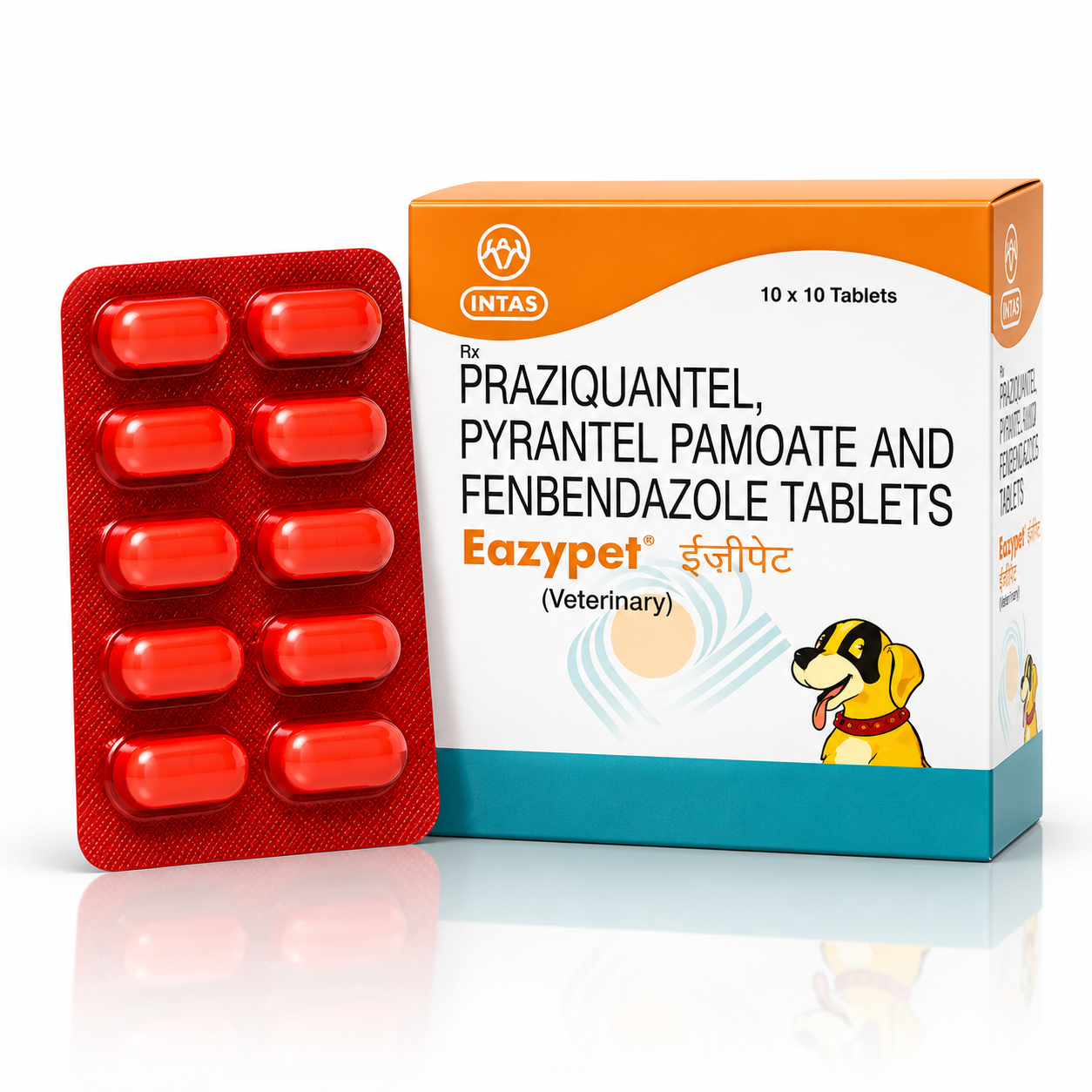
Eazypet Tablet
$2.00 / unit
Available Options
| Pack Size | Price | Price / Unit | Quantity | Action |
|---|---|---|---|---|
| 180 Tablets | $273.00 | $1.52/unit | ||
| 150 Tablets | $234.00 | $1.56/unit | ||
| 120 Tablets | $191.00 | $1.59/unit | ||
| 90 Tablets | $152.00 | $1.69/unit | ||
| 60 Tablets | $108.00 | $1.80/unit | ||
| 30 Tablets | $60.00 | $2.00/unit |
Product Description
Eazypet Tablet
Brand Name: Eazypet Tablet
Generic Name: Praziquantel + Pyrantel Pamoate + Fenbendazole
Dosage Form: Oral Veterinary Tablet
Therapeutic Class: Broad-Spectrum Anthelmintic / Veterinary Deworming Medicine Manufacturer / Marketer: Intas Pharmaceuticals Limited
Pack Size: 1 × 10 Tablets
Country of Origin: India Target Species: Dogs
Prescription Status: Veterinary Medicine — prescription requirements vary by supplier and jurisdiction Human Use: Not for human consumption
Composition per Tablet
Active Ingredient | Strength |
|---|---|
Praziquantel | 50 mg |
Pyrantel Pamoate | 144 mg |
Fenbendazole | 500 mg |
Important Composition Clarification: Apollo Pharmacy and several veterinary retailers identify
What is this medicine?
EAZYPET TABLET is a broad-spectrum veterinary anthelmintic used to treat and control susceptible intestinal worm infestations in dogs.
It combines medicines targeting several types of gastrointestinal parasites, including:
Roundworms
Hookworms
Whipworms
Tapeworms
Intestinal worms may affect dogs of different ages and breeds. Infected dogs may show digestive symptoms, lose weight or become anaemic, although some have no obvious symptoms.
How does Eazypet work?
1. Praziquantel
Praziquantel is an anthelmintic primarily active against tapeworms.
It disrupts parasite function, affecting calcium regulation and causing muscular contraction and damage to the worm's outer surface.
This allows the parasite to be broken down and eliminated from the animal's digestive tract.
Praziquantel helps treat susceptible tapeworm infections, including certain Dipylidium and Taenia species.
2. Pyrantel Pamoate
Pyrantel is an anthelmintic that acts primarily on susceptible intestinal roundworms and hookworms.
It causes neuromuscular paralysis in the parasites.
The affected worms lose their ability to remain attached within the intestine and are eliminated through normal intestinal movement.
3. Fenbendazole
Fenbendazole belongs to the benzimidazole class of antiparasitic medicines.
It interferes with parasite microtubule formation and essential metabolic functions.
Depending on the parasite and treatment schedule, it is active against several gastrointestinal nematodes, including some roundworms, hookworms and whipworms.
Alternative Ingredient — Febantel: If the supplied Eazypet tablet instead contains febantel, its effect involves conversion into active benzimidazole metabolites, including fenbendazole and oxfendazole. This is not equivalent to saying that the tablet directly contains fenbendazole.
Why are these ingredients combined?
The different active ingredients target different groups of intestinal worms.
The combination broadens antiparasitic coverage compared with a medicine containing a single active ingredient.
It helps veterinarians address certain mixed intestinal worm infestations.
Veterinary Uses
Eazypet may be used for:
Treatment of susceptible roundworm infections
Treatment of certain hookworm infections
Treatment of certain whipworm infections
Treatment of susceptible tapeworm infections
Management of mixed intestinal worm infestations
Routine deworming when recommended by a veterinarian
Intestinal parasite control as part of a preventive veterinary healthcare programme
NOTE: Eazypet does not protect dogs from every intestinal parasite and does not provide reliable protection against fleas, ticks or heartworm.
It is not an antibiotic and should not be used as a substitute for vaccines.
The product is listed by Indian veterinary retailers as a broad-spectrum dewormer for dogs.
What should I tell my veterinarian before giving this medicine?
Inform your veterinarian if your dog has any of these conditions:
Previous allergic reaction to a deworming medicine
Known allergy to praziquantel
Known allergy to pyrantel
Known allergy to fenbendazole or related medicines
Liver disease
Severe kidney disease
Persistent vomiting
Severe diarrhoea
Dehydration
Significant weight loss
Severe weakness
Suspected intestinal obstruction
History of seizures
Other serious medical conditions
Current pregnancy
Nursing puppies
Very young age
Low body weight
Poor appetite
Recent administration of another dewormer
Tell the veterinarian about all medicines and supplements the dog is receiving.
Important Contraindications
Eazypet should not be administered to an animal with a known serious allergy to its active ingredients.
The safety of administration to very young puppies, pregnant dogs or seriously ill dogs must be evaluated according to the specific formulation and veterinary instructions.
Important Puppy Precaution
Puppies are particularly vulnerable to intestinal worms but also require accurate age- and weight-appropriate treatment.
Do not assume that the adult Eazypet tablet can be safely used in every puppy.
Intas also markets a separate Eazypet suspension intended for young dogs. The appropriate product should be selected by a veterinarian.
Important Pregnancy Precaution
Deworming during canine pregnancy requires veterinary advice.
Safety recommendations differ according to the ingredient, dosage, stage of pregnancy and product formulation.
Do not independently administer Eazypet to a pregnant dog.
Important Nursing Precaution
A nursing dog may need parasite control, but the veterinarian should determine whether this combination is appropriate.
How should I use this medicine?
Give Eazypet Tablet orally according to the directions provided by a veterinarian and the verified product label.
Instructions for Oral Administration
Confirm that the medicine is Eazypet intended for dogs.
Read the original label and verify the exact active ingredients.
Weigh the dog accurately.
Confirm the prescribed number of tablets with the veterinarian.
Give the tablet directly by mouth or with a small amount of food if the specific product instructions allow it.
Ensure that the complete intended dose is swallowed.
Observe the dog for vomiting, diarrhoea or unusual behaviour.
Follow the veterinarian's instructions about repeat treatment.
Clean up faeces promptly to help reduce environmental contamination.
Maintain appropriate flea control if the dog has flea-transmitted tapeworms.
Dosage Information
Usual Veterinary Dosage: Based on body weight, the exact formulation and the parasite being treated.
Several Eazypet retailers state a reference administration rate of one tablet per 10 kg of dog body weight, given as a single treatment.
However, because published Eazypet listings disagree about the third active ingredient, this should not be considered a confirmed universal dose for every product bearing the name.
Administration Frequency: Some deworming regimens involve a single treatment, while others require repeat dosing or multi-day treatment according to the parasite.
Routine Deworming: Adult dogs may be placed on a periodic deworming schedule, often around every three months, but the appropriate interval depends on the dog's exposure risk, location and veterinary recommendations.
For Puppies: Use a veterinarian-approved puppy deworming schedule and age-appropriate formulation.
Maximum Recommended Dose: Do not exceed the dose established by the veterinarian or confirmed product instructions.
Onset of Action: The antiparasitic components begin working after administration, but the time required to clear infection depends on the parasites and treatment regimen.
Treatment Duration: Determined by the type of intestinal worm and the prescribing veterinarian.
Route of Administration: Oral.
Overdosage: Excessive administration may cause vomiting, diarrhoea, weakness, loss of appetite or other adverse effects.
Seek veterinary advice promptly if an overdose is suspected.
Important: Do not calculate a tablet dose solely from a retailer chart without verifying the actual ingredients and the animal's weight.
What if I miss a dose?
If a scheduled deworming treatment is missed, contact the veterinarian for advice on rescheduling.
Do not double the dose.
Do not give several tablets to compensate for a missed treatment.
If the dog spits out or vomits the tablet, ask the veterinarian whether a replacement dose is necessary.
Follow the recommended parasite-control schedule.
What may interact with this medicine?
Potentially important medicines or treatments include:
Other pyrantel-containing dewormers
Piperazine-containing dewormers
Other benzimidazole antiparasitic medicines
Other praziquantel-containing products
Certain additional veterinary antiparasitic medicines
Medicines prescribed for significant liver or neurological conditions
Important Drug Interaction Considerations
Piperazine: Pyrantel and piperazine have potentially opposing neuromuscular actions against some parasites. Their concurrent use should be avoided unless specifically directed by a veterinarian.
Other Dewormers: Combining several antiparasitic medicines without veterinary advice may result in unnecessary duplicate treatment or increased adverse effects.
Other Praziquantel Products: Additional praziquantel can result in duplicate dosing.
Other Benzimidazoles: Additional fenbendazole or related agents may duplicate the treatment.
Important: The risk of interactions depends on the exact Eazypet formulation and other medicines being administered.
What should I watch for while using this medicine?
Seek urgent veterinary attention if your dog experiences:
Severe or persistent vomiting
Bloody diarrhoea
Significant weakness or collapse
Difficulty breathing
Facial swelling
Seizures
Severe abdominal pain
Marked dehydration
Inability to pass stool with abdominal swelling
While administering Eazypet:
Monitor appetite and energy levels.
Observe bowel movements.
Ensure access to clean drinking water.
Follow recommended hygiene practices.
Dispose of infected faeces promptly.
Maintain regular flea prevention.
Follow the veterinarian's deworming schedule.
Seek reassessment if worm-related symptoms persist.
Important Warning: Worms May Not Be Visible After Treatment
Dogs may not pass visible whole worms after deworming.
Some worms are digested or broken into smaller fragments before being eliminated.
The absence of visible worms does not necessarily mean treatment has failed or succeeded.
Important Warning: Reinfection
Dogs can become reinfected through contaminated soil, faeces, infected fleas or contact with infected animals.
Deworming does not provide permanent immunity.
Proper waste disposal, hygiene and appropriate parasite prevention help reduce reinfection risk.
Important Warning: Tapeworms and Fleas
Certain tapeworm infections, particularly Dipylidium caninum, are associated with fleas.
Treating tapeworms without managing an existing flea infestation may allow reinfection.
Important Warning: Persistent Symptoms
If the dog continues experiencing diarrhoea, weight loss, vomiting or a swollen abdomen, consult a veterinarian.
A faecal examination may be required to identify other parasites or gastrointestinal conditions.
What side effects may I notice from this medicine?
Side effects that should be reported immediately:
Severe allergic reactions
Difficulty breathing
Facial swelling
Persistent vomiting
Severe or bloody diarrhoea
Severe weakness
Collapse
Seizures
Significant changes in behaviour or coordination
Side effects that usually do not require immediate veterinary attention:
Mild vomiting
Temporary soft stools
Mild diarrhoea
Reduced appetite
Temporary gastrointestinal discomfort
Mild lethargy
These are potential reactions associated with veterinary deworming treatments, not verified frequency estimates from brand-specific Eazypet clinical trials.
If symptoms persist or worsen, consult a veterinarian.
Where should I keep my medicine?
Keep out of the reach of children and pets.
Store below 25°C, as listed by Tata 1mg.
Keep tablets in their original blister packaging.
Protect from direct sunlight.
Protect from excessive heat and moisture.
Do not use after the expiry date.
Do not administer tablets from damaged packaging.
Dispose of unused or expired medicines according to veterinary or pharmacy guidance.
Manufacturer Details
Field | Information |
|---|---|
Brand Name | Eazypet Tablet |
Generic Name | Praziquantel + Pyrantel Pamoate + Fenbendazole (Retailer-Listed Formulation) |
Praziquantel Strength | 50 mg |
Pyrantel Pamoate Strength | 144 mg |
Fenbendazole Strength | 500 mg |
Alternative Reported Formulation | Praziquantel 50 mg + Pyrantel Embonate 144 mg + Febantel 150 mg |
Dosage Form | Oral Tablet |
Therapeutic Class | Broad-Spectrum Veterinary Anthelmintic |
Primary Indication | Intestinal Worm Infestations in Dogs |
Parasites Targeted | Roundworms, Hookworms, Whipworms and Tapeworms |
Manufacturer / Marketer | Intas Pharmaceuticals Limited |
Manufacturer Address | Chinubhai Centre, Ashram Road, Ahmedabad, Gujarat 380009 |
Actual Manufacturing Facility | Verify Original Product Carton |
Veterinary Status | Animal-Use Product; Follow Veterinary Advice |
Target Species | Dogs |
Human Use | Not for Humans |
Pack Size | 1 × 10 Tablets |
Additional Trade Packaging | 10 × 10 Tablets |
Storage | Below 25°C (Pharmacy-Listed) |
Route of Administration | Oral |
Country of Origin | India |
Reference Dose | One Tablet per 10 kg in Some Listings; Verify Exact Formulation |
Major Safety Concerns | Incorrect Dosing, Gastrointestinal Effects, Allergy and Special Precautions in Puppies or Pregnant Dogs |