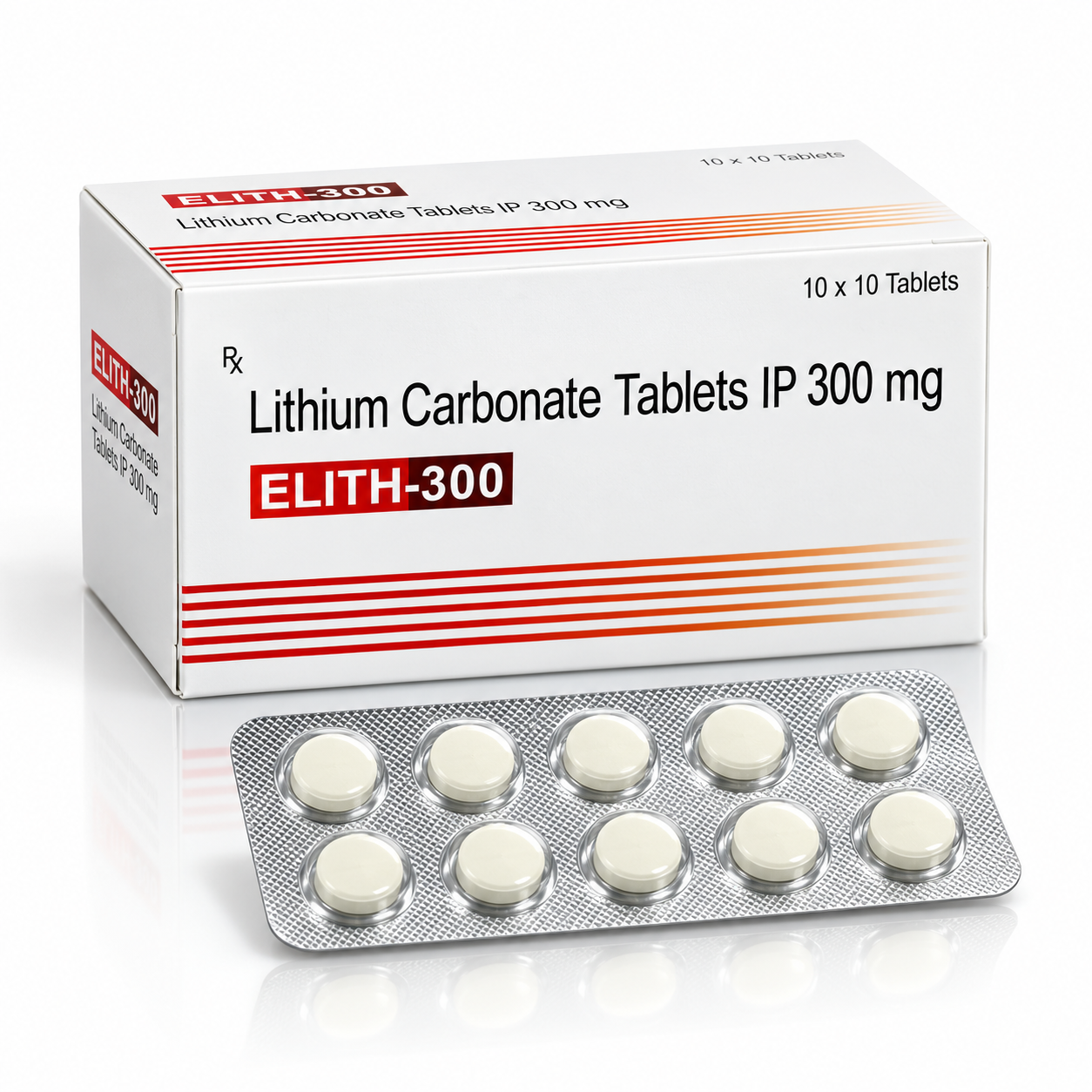
Elith 300 MG Tablet
$0.10 / unit
Available Options
| Pack Size | Price | Price / Unit | Quantity | Action |
|---|---|---|---|---|
| 180 Tablets | $13.00 | $0.07/unit | ||
| 150 Tablets | $11.00 | $0.07/unit | ||
| 120 Tablets | $9.00 | $0.08/unit | ||
| 90 Tablets | $7.00 | $0.08/unit | ||
| 60 Tablets | $5.00 | $0.08/unit | ||
| 30 Tablets | $3.00 | $0.10/unit |
Product Description
ELITH 300 MG Tablet
Brand Name: ELITH 300 MG Tablet
Generic Name: Lithium Carbonate
Active Ingredient: Lithium Carbonate IP 300 mg
Strength: 300 mg
Dosage Form: Oral Tablet
Release Type: Immediate-Release / Conventional Tablet
Therapeutic Class: Mood Stabilizer / Antimanic Medicine
Manufacturer / Marketer: Elikem Pharmaceuticals Pvt. Ltd.
Pack Size: 1 × 10 Tablets
Bulk Packaging: 10 × 10 Tablets
Country of Origin: India
Route of Administration: Oral
Prescription Status: Prescription Medicine
Composition
Active Ingredient | Strength |
|---|---|
Lithium Carbonate IP | 300 mg |
Inactive Ingredients | As specified on the original manufacturer label |
What is this medicine?
ELITH 300 MG TABLET contains lithium carbonate, a mood-stabilizing medicine primarily prescribed for bipolar I disorder.
Bipolar disorder is a mental health condition involving significant changes in mood, energy, activity and functioning.
Patients may experience episodes of mania, depression or mixed mood symptoms.
Lithium helps reduce the severity of manic symptoms and can decrease the likelihood of future mood episodes when used as maintenance treatment.
How does ELITH 300 work?
Lithium affects several biochemical signalling systems in the brain.
Its exact mood-stabilizing mechanism has not been fully established.
Research suggests that lithium influences:
Intracellular signalling pathways
Neurotransmitter regulation
Inositol-related signalling
Glycogen synthase kinase-3 (GSK-3) activity
Neuronal stress responses
Processes involved in neuronal plasticity
Unlike antidepressants that primarily target individual neurotransmitter transporters, lithium influences several cellular systems involved in mood regulation.
Main Effects
1. Helps Control Acute Mania
Lithium can reduce symptoms associated with manic episodes, including excessive energy, agitation, unusually elevated mood and increased activity.
2. Helps Stabilize Mood
It reduces the intensity of abnormal mood fluctuations in appropriately selected patients.
3. Helps Prevent Recurrent Mood Episodes
Long-term lithium maintenance treatment can reduce the frequency of manic episodes and may reduce depressive relapses in bipolar disorder.
4. Supports Long-Term Bipolar Disorder Management
Lithium is one of the established maintenance treatments for bipolar I disorder.
5. May Reduce Suicide Risk in Mood Disorders
Some long-term clinical studies associate lithium treatment with a reduced risk of suicide and suicidal behaviour in people with mood disorders.
However, this does not mean lithium immediately eliminates suicidal thoughts or replaces emergency psychiatric care.
Medical Uses
ELITH 300 MG Tablet may be prescribed for:
Acute manic episodes associated with bipolar I disorder
Mixed episodes associated with bipolar I disorder
Maintenance treatment of bipolar I disorder
Prevention of recurrent manic episodes
Long-term mood stabilization
Selected other psychiatric conditions under specialist supervision
What Is a Manic Episode?
Mania may involve:
Unusually elevated or irritable mood
Excessive energy
Reduced need for sleep
Rapid speech
Racing thoughts
Increased confidence or grandiosity
Impulsive behaviour
Excessive spending
Risk-taking behaviour
Severe agitation
Occasionally psychotic symptoms
Severe mania may require urgent psychiatric assessment or hospital treatment.
Is ELITH Used for Bipolar Depression?
Lithium is an established maintenance treatment that can help reduce the risk of future mood episodes.
However, it is not necessarily sufficient as a stand-alone treatment for every acute bipolar depressive episode.
The treatment plan depends on the patient's symptoms, previous episodes and overall medical condition.
Can ELITH Treat Ordinary Depression?
Lithium is sometimes used as an augmentation treatment for difficult-to-treat depression under specialist supervision.
However, it is not a routine first-choice treatment for uncomplicated depression.
Is ELITH an Antidepressant?
Lithium is primarily classified as a mood stabilizer, not a conventional antidepressant.
Is ELITH a Sleeping Tablet?
No.
Lithium is not a sleeping medicine or sedative.
Although improving manic symptoms may help restore a normal sleep pattern, lithium should not be used solely to induce sleep.
Does ELITH Cure Bipolar Disorder?
No.
Lithium can effectively manage symptoms and reduce relapse risk, but it does not permanently cure bipolar disorder.
Long-term treatment and regular follow-up may be necessary.
Official lithium prescribing information confirms its use for acute manic or mixed episodes and maintenance treatment in bipolar I disorder.
What should I tell my health care provider before I take this medicine?
Tell your healthcare provider if you have any of these conditions:
Allergy to lithium preparations or tablet ingredients
Kidney disease
Reduced kidney function
Frequent dehydration
Persistent vomiting or diarrhoea
Low sodium levels
Thyroid disease
Hypothyroidism
Hyperthyroidism
Heart disease
Heart rhythm abnormalities
Brugada syndrome
High calcium levels
Hyperparathyroidism
Excessive thirst or urination
Diabetes insipidus
History of seizures
Significant neurological disease
Pregnancy or plans to become pregnant
Breastfeeding
Current use of diuretics
Current use of ACE inhibitors or angiotensin receptor blockers
Current use of NSAID painkillers
Current use of antidepressants or antipsychotics
Tell your doctor about all prescription medicines, over-the-counter medicines, herbal products and supplements.
Important Contraindications and Restrictions
Lithium should not be used in patients with known serious hypersensitivity to relevant formulation ingredients.
Lithium is also generally avoided or requires specialist assessment in patients with:
Severe kidney impairment
Serious untreated sodium or fluid imbalance
Significant dehydration
Certain serious cardiac conditions
A history of severe lithium toxicity
Under current US prescribing information, lithium is not recommended when creatinine clearance is below 30 mL/min.
Important Kidney Precaution
Lithium is eliminated primarily through the kidneys.
If kidney function decreases, lithium may accumulate in the blood and cause toxicity.
Kidney function must be checked before treatment and periodically during therapy.
Long-term lithium treatment can also affect the kidneys.
Important Thyroid Precaution
Lithium may interfere with thyroid function.
Some patients develop hypothyroidism, which can cause:
Fatigue
Weight gain
Cold intolerance
Constipation
Dry skin
Slowed thinking
Thyroid function should be monitored regularly.
Important Calcium Precaution
Long-term lithium use may increase calcium levels and contribute to hyperparathyroidism.
Patients may require periodic serum calcium testing.
Important Heart Precaution
Lithium can affect cardiac electrical conduction, particularly at toxic concentrations or in susceptible patients.
Patients with known rhythm disorders or Brugada syndrome should inform their clinician.
Important Dehydration Precaution
Dehydration can increase lithium concentrations.
Risk may rise during:
Fever
Heavy sweating
Persistent vomiting
Diarrhoea
Intense exercise
Hot weather
Reduced fluid intake
Seek prompt medical advice during significant dehydrating illness.
Important Sodium Precaution
Changes in sodium balance can alter lithium handling by the kidneys.
A sudden reduction in salt intake may increase lithium retention and toxicity risk.
Patients should maintain a reasonably consistent salt intake unless a healthcare professional provides a specific alternative plan.
Pregnancy Precautions
Lithium exposure during pregnancy may increase the risk of certain fetal complications, including cardiac malformations.
However, untreated bipolar disorder may also pose serious risks.
Patients who are pregnant or planning pregnancy should discuss the benefits and risks with their psychiatrist and obstetrician.
Do not stop lithium abruptly upon discovering a pregnancy without prompt medical advice.
Breastfeeding Precautions
Lithium can pass into breast milk and expose the infant to clinically significant amounts.
Breastfeeding during lithium treatment generally requires specialist risk assessment and, in selected circumstances, monitoring of the infant.
It should not be undertaken without professional guidance.
Paediatric Precaution
Some lithium carbonate formulations are approved in the United States for bipolar I disorder in patients aged seven years and older.
However, the locally approved age range and appropriate dose for ELITH 300 must be confirmed.
Children must not receive adult lithium doses without specialist prescribing and laboratory monitoring.
These precautions are supported by official lithium carbonate prescribing information.
How should I use this medicine?
Take ELITH 300 MG Tablet exactly as prescribed by your psychiatrist or another qualified healthcare professional.
Instructions for Oral Administration
Confirm the prescribed tablet strength and release type.
Swallow the tablet with water.
Take it at the same prescribed times each day.
It may be taken with food if stomach discomfort occurs.
Maintain adequate fluid intake.
Keep dietary salt intake reasonably consistent.
Attend all scheduled lithium blood tests.
Do not increase or decrease the dose independently.
Tell your doctor before starting another medicine.
Report possible lithium toxicity immediately.
Dosage Information
Strength per Tablet: Lithium Carbonate 300 mg.
Dosage Form: Immediate-Release Oral Tablet.
Usual Adult Reference Starting Dose: Some US immediate-release lithium carbonate prescribing information recommends 300 mg three times daily for adults with bipolar I disorder.
Important: This is a reference regimen, not a universal starting dose. Older adults, patients with kidney impairment and other susceptible patients may need considerably lower doses.
Dose Frequency: Commonly divided into two or three daily doses for immediate-release lithium, depending on the prescription.
Maintenance Dose: Individualised according to serum lithium concentrations, response and adverse effects.
Route: Oral.
Administration With Food: May be taken with or without food.
Treatment Duration: Often long-term for bipolar disorder maintenance.
Dose Adjustment: Must be guided by clinical response and lithium blood levels.
Overdosage: Lithium overdose is a medical emergency and may be life-threatening.
Reference Serum Lithium Concentrations
Treatment Phase | Reference Serum Lithium Concentration |
|---|---|
Acute mania | 0.8–1.2 mEq/L |
Maintenance treatment | 0.8–1.0 mEq/L |
Older or medically vulnerable patients | Lower individualised targets may be appropriate |
These ranges come from current US immediate-release lithium prescribing information. Other professional guidelines may use lower maintenance targets in suitable patients.
Important: Lithium blood concentration targets are not the same as tablet doses. The clinician must interpret results in relation to timing, symptoms, kidney function and other factors.
How Is Lithium Blood Monitoring Performed?
A serum lithium test measures the concentration of lithium in the blood.
For conventional 12-hour monitoring, the sample is drawn approximately 12 hours after the previous dose, according to the clinician's instructions.
Monitoring is especially important:
Soon after starting treatment
After a dose change
After adding or stopping an interacting medicine
During illness or dehydration
When kidney function changes
When toxicity is suspected
The US label recommends checking a lithium level approximately three days after treatment initiation and monitoring until the patient stabilises.
Stable patients may then undergo testing every three to six months or more frequently according to clinical risk and local guidance.
Laboratory Monitoring
Test | Purpose |
|---|---|
Serum lithium concentration | Ensure effective and safer treatment levels |
Serum creatinine and eGFR | Assess kidney function |
Sodium and other electrolytes | Check fluid and electrolyte balance |
Thyroid function tests | Detect thyroid dysfunction |
Serum calcium | Assess possible lithium-associated hypercalcaemia |
Weight and clinical assessment | Monitor general health and adverse effects |
ECG, when indicated | Assess heart rhythm concerns |
How Long Does ELITH Take to Work?
Lithium can begin improving manic symptoms during the first several days of treatment.
However, fuller improvement may take one to several weeks.
Maintenance benefits depend on continued treatment over time.
Can ELITH Be Taken With Food?
Yes.
Taking lithium with food may help reduce nausea and stomach discomfort.
Can ELITH Tablets Be Crushed?
The exact Elikem tablet instructions should be checked before crushing or splitting.
ELITH 300 immediate-release and ELITH SR sustained-release products must not be treated as interchangeable. Sustained-release tablets should not be crushed.
Important Kidney Dose Adjustment
Patients with reduced kidney function may require lower doses and more frequent monitoring.
Current US lithium carbonate guidance recommends avoiding lithium in severe renal impairment, defined in that reference as creatinine clearance below 30 mL/min.
Dose adjustments must be determined by the prescribing clinician.
What if I miss a dose?
Follow the specific missed-dose instructions provided by your prescriber.
If the next scheduled dose is near, skip the missed dose.
Do not take two doses together.
Do not double the next dose.
Contact your healthcare professional if several doses are missed.
Ask for medical advice before restarting after a prolonged interruption.
Important: Taking extra lithium can cause serious toxicity.
What may interact with this medicine?
Lithium has several clinically important drug interactions.
Potentially relevant medicines include:
Ibuprofen
Naproxen
Diclofenac
Indomethacin
Hydrochlorothiazide
Chlorthalidone
Furosemide
Spironolactone
Enalapril
Lisinopril
Ramipril
Losartan
Telmisartan
Valsartan
Metronidazole
Fluoxetine
Sertraline
Escitalopram
Venlafaxine
Tramadol
Certain antipsychotics
Carbamazepine
Important Drug Interaction Considerations
NSAID Painkillers
Ibuprofen, diclofenac and naproxen may reduce lithium elimination and increase its blood concentration.
This can lead to toxicity.
Patients should not routinely take NSAIDs with lithium without professional advice.
Thiazide Diuretics
Hydrochlorothiazide and chlorthalidone can substantially increase lithium concentrations.
The combination may require an alternative medicine, dose adjustment or close laboratory monitoring.
Other Diuretics
Loop diuretics and potassium-sparing diuretics may also affect fluid balance or lithium handling.
ACE Inhibitors
Medicines such as enalapril, lisinopril and ramipril may increase lithium levels and toxicity risk.
Angiotensin Receptor Blockers
Losartan, telmisartan and valsartan can also increase lithium exposure in susceptible patients.
Metronidazole
Metronidazole may increase lithium concentrations and cause toxicity.
SSRIs and SNRIs
Antidepressants such as fluoxetine, sertraline and venlafaxine may increase the risk of serotonin syndrome when combined with lithium.
Antipsychotic Medicines
Certain lithium-antipsychotic combinations have been associated with neurological adverse effects, including encephalopathic reactions and symptoms resembling neuroleptic malignant syndrome.
These combinations are sometimes clinically appropriate but require monitoring.
Carbamazepine
Combined treatment may increase neurological side effects such as dizziness, unsteadiness or confusion.
Important Interaction Warning
Lithium concentrations can increase after a newly prescribed medicine is started, even when the lithium dose itself has not changed.
Always tell doctors, dentists and pharmacists that you take lithium.
Official prescribing information specifically highlights diuretics, NSAIDs, renin-angiotensin system medicines, metronidazole, serotonergic agents and antipsychotics.
What should I watch for while using this medicine?
Seek immediate medical attention if you experience:
Severe or worsening tremor
Repeated vomiting or severe diarrhoea
Marked muscle weakness
Difficulty walking
Unsteady movements
Slurred speech
Severe confusion
Unusual drowsiness
Muscle twitching
Seizures
Fainting or loss of consciousness
These may indicate lithium toxicity.
Important Warning: Lithium Toxicity
Lithium toxicity is a medical emergency.
It may develop because of:
Excessive dosing
Dehydration
Reduced kidney function
Significant sodium loss
Interacting medicines
Changes in illness or fluid intake
Symptoms may include nausea, vomiting, diarrhoea, increasing tremor, confusion, unsteady walking and severe neurological impairment.
If lithium toxicity is suspected, do not take another dose. Seek emergency medical attention for assessment and a lithium blood test.
Toxicity can occasionally occur even when a measured serum concentration appears near a usual therapeutic range.
Important Warning: Kidney Damage
Long-term lithium treatment can cause:
Reduced ability to concentrate urine
Excessive urination
Persistent thirst
Nephrogenic diabetes insipidus
Chronic kidney dysfunction in some patients
Regular kidney-function monitoring is important.
Important Warning: Thyroid Dysfunction
Lithium may cause hypothyroidism or other thyroid abnormalities.
Symptoms such as fatigue, unexplained weight gain or cold intolerance should be assessed.
Important Warning: Dehydration and Heat Exposure
Heavy sweating, high temperatures, fever, vomiting or diarrhoea can alter lithium concentrations.
Maintain appropriate hydration and seek advice during significant illness.
Important Warning: Sudden Dietary Changes
Avoid sudden major changes in dietary salt intake unless directed by your healthcare professional.
Restricting sodium unexpectedly can increase lithium concentrations.
Important Warning: Hypercalcaemia
Lithium may increase calcium levels, sometimes through effects on the parathyroid glands.
Possible symptoms include:
Increased thirst
Frequent urination
Constipation
Fatigue
Kidney stones
Important Warning: Neurological Effects
Lithium can cause tremor, dizziness and reduced coordination.
Avoid driving or operating machinery if affected.
What side effects may I notice from this medicine?
Side effects requiring immediate medical attention
Lithium toxicity
Severe confusion
Seizures
Significant loss of coordination
Severe dehydration
Serious kidney problems
Abnormal heart rhythm
Severe allergic reactions
Symptoms of serotonin syndrome
Significant neurological deterioration
Common or Other Reported Side Effects
Fine hand tremor
Nausea
Mild diarrhoea
Increased thirst
Frequent urination
Mild stomach discomfort
Weight gain
Fatigue
Headache
Changes in taste
Mild dizziness
Acne or worsening of certain skin conditions
Thyroid dysfunction during long-term treatment
Can ELITH Cause Hand Tremors?
Yes.
A fine hand tremor can occur during lithium treatment.
However, a new, coarse or worsening tremor, especially with vomiting, confusion or poor coordination, may indicate lithium toxicity.
Can ELITH Cause Weight Gain?
Yes.
Some patients experience weight gain during long-term lithium therapy.
Weight, dietary habits and thyroid function may need monitoring.
Can ELITH Cause Excessive Thirst?
Yes.
Increased thirst and urination are recognised effects of lithium.
Persistent or excessive symptoms may indicate impaired kidney concentrating function and require assessment.
Can ELITH Affect Thyroid Hormones?
Yes.
Lithium can cause hypothyroidism and occasionally other thyroid disorders.
Regular thyroid-function testing is recommended.
Where should I keep my medicine?
Keep out of the reach of children.
Store in the original blister packaging.
Protect from moisture.
Protect from excessive heat.
Avoid direct sunlight.
Do not use after the expiry date.
Do not use damaged tablets.
Keep the medicine in a secure location.
Storage Note: A manufacturer-specific storage temperature for ELITH 300 was not independently confirmed. Follow the storage conditions printed on the original Elikem carton or strip.
Manufacturer Details
Field | Information |
|---|---|
Brand Name | ELITH 300 MG Tablet |
Generic Name | Lithium Carbonate |
Active Ingredient | Lithium Carbonate IP |
Strength | 300 mg |
Dosage Form | Oral Tablet |
Release Type | Immediate Release |
Therapeutic Class | Mood Stabilizer / Antimanic |
Primary Indication | Acute Mania in Bipolar I Disorder |
Additional Indication | Maintenance Treatment of Bipolar I Disorder |
Manufacturer / Marketer | Elikem Pharmaceuticals Pvt. Ltd. |
Manufacturer Location | Ahmedabad Region, Gujarat, India |
Actual Manufacturing Facility | Verify Original Product Carton |
Prescription Status | Prescription Medicine |
Route of Administration | Oral |
Retail Pack Size | 1 × 10 Tablets |
Bulk Trade Pack | 10 × 10 Tablets |
Country of Origin | India |
Dose Frequency | As Prescribed and Guided by Lithium Blood Levels |
Treatment Duration | Often Long-Term |
Monitoring Requirements | Serum Lithium, Kidney Function, Thyroid Function, Electrolytes and Calcium |
Storage | Follow Original Manufacturer Label |
Major Safety Concerns | Lithium Toxicity, Kidney Injury, Thyroid Dysfunction, Dehydration and Drug Interactions |