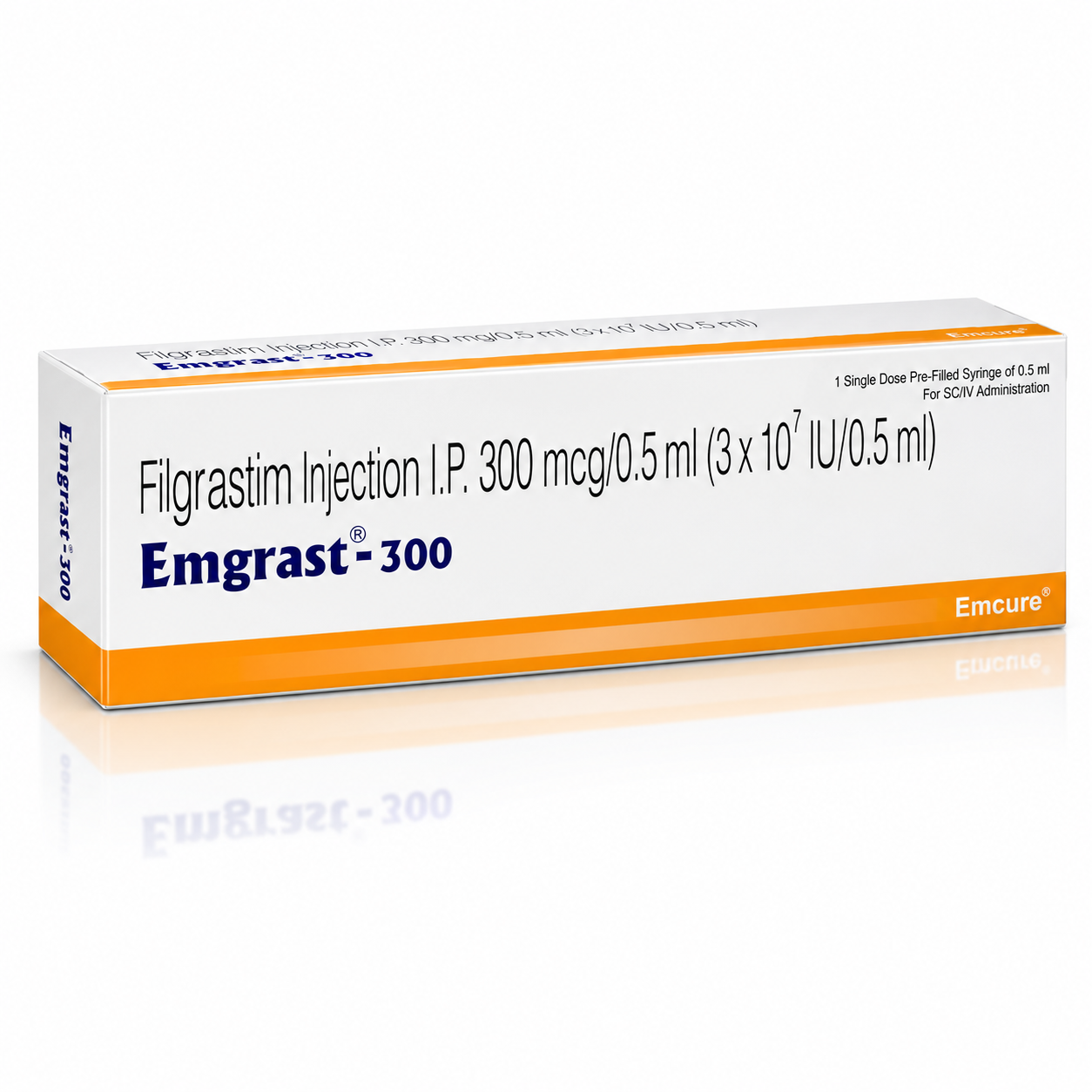
Emgrast 300 MCG Injection
$60.98 / unit
Available Options
| Pack Size | Price | Price / Unit | Quantity | Action |
|---|---|---|---|---|
| 10 Injections | $457.00 | $45.70/unit | ||
| 8 Injections | $365.00 | $45.63/unit | ||
| 6 Injections | $277.00 | $46.17/unit | ||
| 4 Injections | $193.00 | $48.25/unit | ||
| 2 Injections | $110.00 | $55.00/unit | ||
| 1 Injections | $61.00 | $61.00/unit |
Product Description
EMGRAST 300 MCG INJECTION
What is this medicine?
EMGRAST 300 MCG INJECTION contains Filgrastim 300 mcg and is marketed by Emcure Pharmaceuticals Ltd. It is available as an injectable formulation, including a 300 mcg/0.5 mL prefilled syringe. The exact presentation should be checked on the product packaging.
Filgrastim belongs to a group of medicines called granulocyte colony-stimulating factors (G-CSF), also known as white blood cell growth factors. It is used to stimulate the bone marrow to produce neutrophils, a type of white blood cell that helps the body fight bacterial and fungal infections.
This medicine works by mimicking a naturally occurring protein called granulocyte colony-stimulating factor. It stimulates the production, maturation, and release of neutrophils from the bone marrow into the bloodstream.
This medicine is commonly used for:
prevention and management of chemotherapy-induced neutropenia
reducing the risk of infection in patients receiving certain cancer chemotherapy treatments
reducing the duration of severe neutropenia after bone marrow transplantation
treatment of severe chronic neutropenia in selected patients
increasing neutrophil production in patients with certain blood cell disorders
mobilization of peripheral blood stem cells for collection and transplantation
management of certain other conditions involving low neutrophil counts under specialist supervision
Emgrast 300 mcg Injection is a prescription biological medicine. It helps increase neutrophil counts but does not directly kill bacteria, viruses, or fungi and is not a substitute for antibiotics when an infection requires treatment.
Treatment should be prescribed and monitored by a qualified healthcare professional experienced in managing neutropenia and related blood disorders.
What should I tell my health care provider before I take this medicine?
They need to know if you have any of these conditions:
sickle cell disease or sickle cell trait
a history of sickle cell crisis
leukemia or another blood-related cancer
myelodysplastic syndromes
chronic myeloid leukemia
bone marrow disorders
an enlarged spleen
previous splenic injury
kidney disease
inflammation of the kidneys
liver disease
lung disease
a history of acute respiratory distress syndrome
unexplained breathing difficulties
capillary leak syndrome
inflammation of blood vessels
a history of aortitis
autoimmune disorders
osteoporosis or other significant bone disorders
unexplained fever or infections
a history of low platelet counts
a history of unusual bleeding or bruising
an unusual or allergic reaction to filgrastim
an allergic reaction to pegfilgrastim or another G-CSF medicine
an allergy to any ingredient in the injection
if you are pregnant or planning to become pregnant
if you are breastfeeding
if you are receiving chemotherapy
if you are receiving radiation therapy
if you are taking medicines that affect blood cell production
if you have previously experienced severe reactions to injectable biological medicines
Filgrastim should not be used in patients with a history of serious allergic reactions to filgrastim, pegfilgrastim, or related human granulocyte colony-stimulating factors.
Patients with sickle cell disorders require special caution because filgrastim has been associated with serious, sometimes fatal, sickle cell crises.
Patients with certain blood cancers or bone marrow disorders may require additional assessment because G-CSF can stimulate the growth of some myeloid cells. It is not appropriate for every type of blood disorder.
Tell your healthcare professional about all existing medical conditions before receiving Emgrast Injection.
How should I use this medicine?
Emgrast 300 mcg Injection should be used exactly as directed by your doctor or healthcare professional.
It is generally administered by subcutaneous injection (under the skin). Certain filgrastim formulations and treatment regimens may also permit intravenous administration, but the route must be confirmed from the specific product instructions.
The dosage depends on the patient's body weight, medical condition, neutrophil count, chemotherapy schedule, and response to treatment.
General dosing information:
For chemotherapy-induced neutropenia:
A commonly recommended starting dose of filgrastim is 5 mcg/kg of body weight per day.
Treatment usually begins at least 24 hours after cytotoxic chemotherapy and continues according to blood count recovery and the prescribed regimen.
Filgrastim should generally not be administered during the 24 hours before or after cytotoxic chemotherapy.
For patients undergoing bone marrow transplantation:
A commonly recommended starting dose is 10 mcg/kg/day for certain myeloablative treatment regimens, with subsequent adjustments based on neutrophil recovery.
For severe chronic neutropenia:
The starting dose varies according to whether the condition is congenital, cyclic, or idiopathic. Treatment is individualized and requires regular blood cell monitoring.
For peripheral blood stem cell mobilization:
A commonly used dose is 10 mcg/kg/day, although the actual regimen depends on the transplant protocol.
For children:
Dosage is calculated according to body weight, indication, and the child's medical condition. Treatment must be supervised by an appropriate specialist.
Important administration instructions:
The injection should be administered by a healthcare professional or by a patient or caregiver who has received proper injection training.
Do not administer the medicine without appropriate instructions.
Do not change the prescribed dose or injection schedule yourself.
Do not shake the syringe.
Use the injection only if the solution meets the manufacturer's appearance requirements.
Do not use the injection if it contains visible particles or appears damaged.
Follow the prescribed injection-site rotation instructions.
Do not use the same syringe more than once.
Dispose of used needles and syringes in an approved sharps container.
Overdosage: If you believe too much filgrastim has been administered, contact your healthcare professional immediately.
Excessive dosing may cause an abnormally high white blood cell count and increase the risk of adverse reactions.
NOTE: This medicine is only for the person for whom it has been prescribed. Do not share this medicine with others.
What if I miss a dose?
If you miss a scheduled dose of Emgrast 300 mcg Injection, contact your doctor or healthcare professional for instructions.
The timing of filgrastim is particularly important for patients receiving chemotherapy or undergoing stem cell mobilization.
Do not take a double dose to make up for a missed dose.
Do not administer an extra injection or change your treatment schedule without medical advice.
If you are receiving filgrastim regularly, follow the injection schedule provided by your healthcare team.
What may interact with this medicine?
Important treatment-related interactions and precautions include:
cytotoxic chemotherapy medicines
cyclophosphamide
doxorubicin
paclitaxel
docetaxel
cisplatin
carboplatin
other medicines that suppress bone marrow activity
radiation therapy
lithium
other granulocyte colony-stimulating factors
pegfilgrastim
other filgrastim-containing medicines
medicines that affect white blood cell production
other biological medicines used in cancer treatment
Chemotherapy medicines:
Filgrastim should generally not be administered within 24 hours before or after cytotoxic chemotherapy because the safety and effectiveness of concurrent administration have not been established.
Radiation therapy:
Concomitant use of filgrastim with radiation therapy has not been adequately evaluated. The treatment schedule must be determined by the oncology team.
Lithium:
Lithium can stimulate neutrophil release and may potentially enhance the effects of filgrastim. The clinical significance of this interaction is uncertain.
Other G-CSF medicines:
Do not combine Emgrast with pegfilgrastim or another G-CSF medicine unless specifically instructed by your specialist.
Other filgrastim-containing medicines:
Avoid duplicate treatment with another filgrastim product because this could result in unintended additional dosing.
Not every medicine listed above has a direct drug interaction with filgrastim. Some require special attention because of the timing of cancer treatment or their effects on blood cell production.
This list may not describe all possible interactions.
Give your healthcare provider a complete list of all prescription medicines, non-prescription drugs, herbal products, vitamins, and dietary supplements you use.
Also tell your healthcare professional if you drink alcohol or use recreational drugs.
What should I watch for while using this medicine?
Emgrast 300 mcg Injection requires regular medical monitoring, especially in patients undergoing chemotherapy or treatment for severe neutropenia.
Your doctor may recommend complete blood count (CBC) testing, including absolute neutrophil count (ANC) and platelet measurements, to monitor your response.
Blood cell monitoring:
Filgrastim increases neutrophil production. Blood tests help your healthcare professional determine whether treatment should continue, be adjusted, or be stopped.
An excessively high white blood cell count, known as leukocytosis, may occur.
Bone pain:
Bone pain is one of the most frequently reported side effects of filgrastim.
It may occur in the back, pelvis, arms, legs, or other bones because the medicine stimulates bone marrow activity.
Tell your doctor if the pain is persistent or severe.
Splenic enlargement or rupture:
Filgrastim can occasionally cause enlargement of the spleen. Rare cases of splenic rupture, including fatal cases, have been reported.
Seek immediate medical attention if you develop:
pain in the upper left side of the abdomen
pain near the left shoulder
sudden severe abdominal pain
dizziness or fainting associated with abdominal pain
Breathing problems:
Rare but serious lung-related reactions, including acute respiratory distress syndrome (ARDS), have been reported.
Seek urgent medical attention if you develop fever, worsening shortness of breath, difficulty breathing, or symptoms of respiratory distress.
Serious allergic reactions:
Severe allergic reactions, including anaphylaxis, may occur.
Seek emergency medical attention if you experience swelling of the face or throat, breathing difficulty, widespread hives, or fainting.
Capillary leak syndrome:
Filgrastim has been associated with capillary leak syndrome, which can cause fluid to move from the bloodstream into surrounding tissues.
Symptoms may include:
sudden swelling
rapid weight gain
low blood pressure
dizziness
breathing difficulties
This condition requires immediate medical evaluation.
Sickle cell disorders:
Patients with sickle cell disease may experience serious sickle cell crises during treatment.
Inform your doctor immediately if you develop severe pain, breathing difficulty, or other symptoms of a sickle cell crisis.
Kidney problems:
Glomerulonephritis, a type of kidney inflammation, has been reported with filgrastim.
Contact your doctor if you notice:
blood in the urine
dark or discolored urine
swelling of the face or legs
reduced urine output
Aortitis:
Rare cases of inflammation of the aorta have been reported.
Seek medical attention if you develop unexplained fever, abdominal pain, back pain, fatigue, or elevated inflammatory markers.
Pregnancy and breastfeeding:
Tell your doctor if you are pregnant, planning pregnancy, or breastfeeding.
Filgrastim may pose risks during pregnancy, and treatment requires an individualized assessment of potential benefits and risks.
Information about transfer into human breast milk is limited.
Infection precautions:
Although filgrastim helps restore neutrophil counts, patients undergoing chemotherapy can still develop serious infections.
Contact your oncology team promptly if you experience fever, chills, sore throat, persistent cough, or other signs of infection. A temperature of 38°C or higher during chemotherapy-related neutropenia warrants immediate medical assessment.
What side effects may I notice from this medicine?
Side effects that you should report to your doctor or healthcare professional as soon as possible:
severe allergic reaction
swelling of the face, lips, tongue, or throat
difficulty breathing or swallowing
severe or persistent shortness of breath
chest pain
severe abdominal pain
pain in the upper left abdomen or left shoulder
sudden dizziness or fainting
severe swelling or rapid weight gain
severe bone pain
symptoms of sickle cell crisis
blood in the urine
reduced urine output
unusual bleeding or bruising
severe headache with neurological symptoms
persistent fever
severe back or abdominal pain with unexplained fever
signs of acute respiratory distress syndrome
symptoms of capillary leak syndrome
serious skin reactions
unusual inflammation or pain affecting blood vessels
Side effects that usually do not require immediate medical attention (report them if they continue or are bothersome):
bone pain
muscle pain
joint pain
headache
fatigue
weakness
nausea
vomiting
diarrhea
constipation
reduced appetite
mild fever
hair loss, which may also be associated with chemotherapy
mild skin rash
injection-site pain
redness or swelling at the injection site
mild back pain
discomfort in the arms or legs
Bone pain is one of the most commonly reported side effects of filgrastim. Other possible adverse effects include fatigue, headache, muscle pain, nausea, and injection-site reactions.
Changes in blood test results, including increased white blood cell counts and elevations in certain laboratory markers, may also occur.
Some symptoms experienced during filgrastim treatment may be caused by chemotherapy or the underlying medical condition rather than filgrastim itself.
This list may not describe all possible side effects.
Contact your healthcare professional if any side effect becomes persistent, severe, or unusual.
Where should I keep my medicine?
Keep out of the reach of children and pets.
Store Emgrast 300 mcg Injection in a refrigerator at 2°C to 8°C. Do not freeze.
Keep the injection in its original packaging to protect it from light and physical damage.
Protect the medicine from:
excessive heat
direct sunlight
freezing temperatures
vigorous shaking
contamination
physical damage
accidental exposure to children
Do not shake the prefilled syringe, as excessive agitation may damage the protein-based medicine.
Do not use the injection if the solution is discolored, cloudy, or contains visible particles, unless the specific product instructions state otherwise.
Do not use a syringe or ampoule if its packaging is damaged or the expiration date has passed.
Prefilled syringes are intended for single use. Do not reuse needles or syringes.
Follow the manufacturer's product-specific instructions for handling accidental freezing or temporary exposure outside refrigerated conditions. Do not assume that storage allowances for other filgrastim brands apply to Emgrast.
Used needles and syringes should be disposed of immediately in an approved sharps disposal container.
Do not dispose of used needles in ordinary household waste.
Expired or unused injections should be returned to a pharmacy or healthcare facility for appropriate disposal.