Empaone 25 MG Tablet
$0.40 / unit
Available Options
| Pack Size | Price | Price / Unit | Quantity | Action |
|---|---|---|---|---|
| 180 Tablets | $72.00 | $0.40/unit | ||
| 150 Tablets | $60.00 | $0.40/unit | ||
| 120 Tablets | $48.00 | $0.40/unit | ||
| 90 Tablets | $36.00 | $0.40/unit | ||
| 60 Tablets | $24.00 | $0.40/unit | ||
| 30 Tablets | $12.00 | $0.40/unit |
Product Description
EMPAONE 25 MG TABLET
What is this medicine?
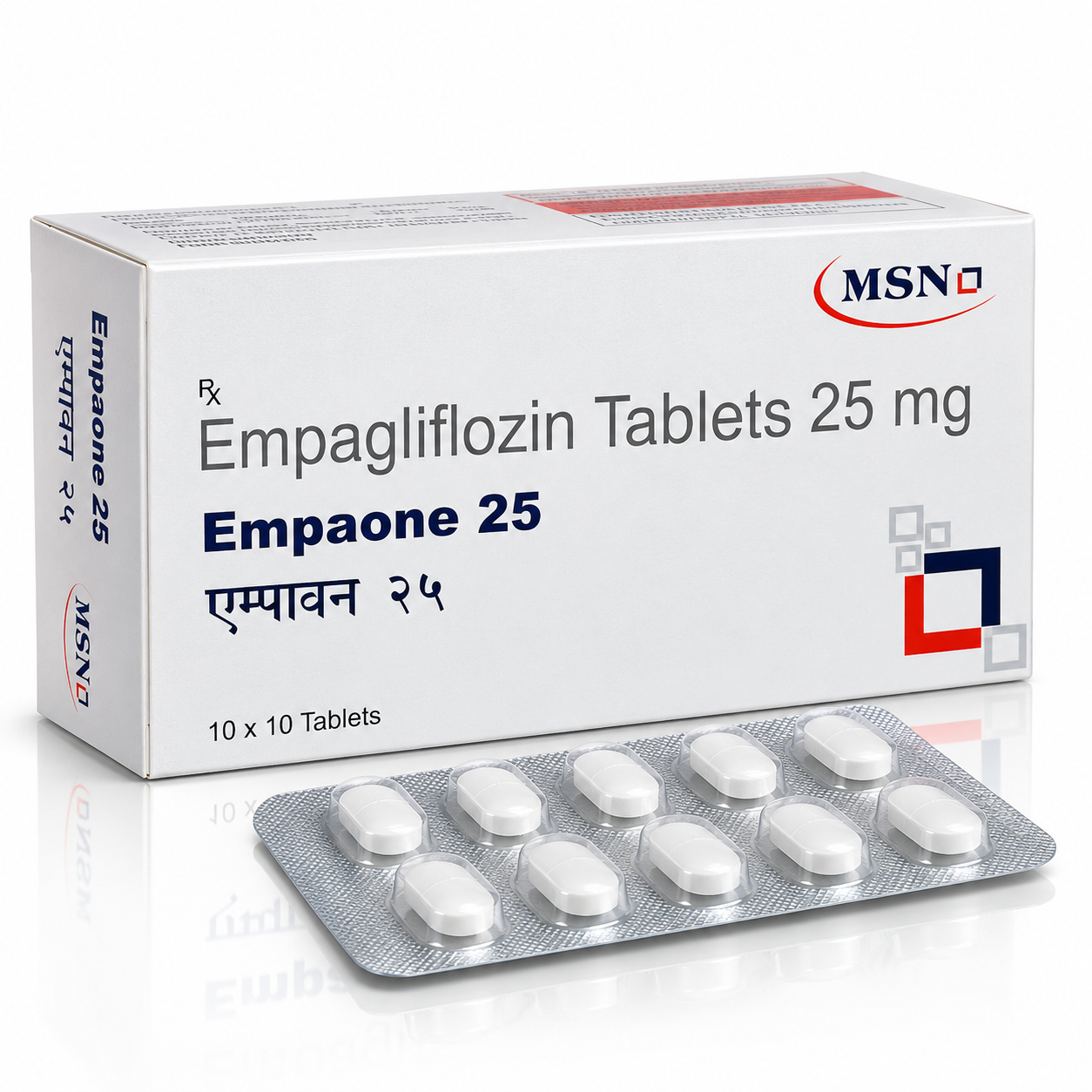
EMPAONE 25 MG TABLET contains Empagliflozin 25 mg and is manufactured and marketed by MSN Laboratories Pvt. Ltd. It is available as a film-coated oral tablet, commonly supplied in a strip of 10 tablets.
Empagliflozin belongs to a group of medicines called sodium-glucose co-transporter 2 (SGLT2) inhibitors, also known as oral antidiabetic medicines. It is primarily used to help control blood sugar levels in patients with type 2 diabetes mellitus.
This medicine works by blocking SGLT2 proteins in the kidneys, which normally help reabsorb glucose into the bloodstream. By blocking these proteins, empagliflozin increases the amount of glucose eliminated through urine, helping to reduce blood sugar levels.
Empagliflozin also provides cardiovascular and kidney-related benefits in certain eligible patients.
This medicine is commonly used for:
management of type 2 diabetes mellitus
improving blood sugar control alongside diet and exercise
reducing the risk of cardiovascular death in adults with type 2 diabetes and established cardiovascular disease
reducing the risk of cardiovascular death and hospitalization in eligible patients with heart failure
reducing the risk of kidney disease progression in certain patients with chronic kidney disease
combination treatment with other antidiabetic medicines when prescribed by a healthcare professional
Empaone 25 mg is the higher standard strength of empagliflozin. The usual starting dose for improving blood sugar control is 10 mg once daily. The dose may be increased to 25 mg once daily when additional blood sugar reduction is needed and the medicine is well tolerated.
For heart failure and chronic kidney disease, the usual recommended empagliflozin dose is 10 mg once daily. The 25 mg strength is not routinely needed for those indications.
Empaone 25 mg is a prescription medicine and should be used according to the dosage and treatment schedule recommended by a qualified healthcare professional.
What should I tell my health care provider before I take this medicine?
They need to know if you have any of these conditions:
type 1 diabetes mellitus
a history of diabetic ketoacidosis
kidney disease
reduced kidney function
if you are receiving dialysis
liver disease
heart disease
heart failure
low blood pressure
dehydration
frequent dizziness or fainting
recurrent urinary tract infections
kidney infections
recurrent genital fungal infections
a history of severe genital or perineal infections
difficulty urinating
bladder problems
previous foot ulcers
previous lower-limb amputations
peripheral vascular disease
diabetic nerve damage
pancreatic disease or previous pancreatitis
recent major surgery
prolonged fasting
persistent vomiting or diarrhea
poor food or fluid intake
excessive alcohol consumption
if you follow a ketogenic or very-low-carbohydrate diet
if you are taking insulin
if you are taking sulfonylurea medicines
if you are taking diuretics or water tablets
if you are taking medicines for high blood pressure
if you are pregnant or planning to become pregnant
if you are breastfeeding
an unusual or allergic reaction to empagliflozin or any ingredient in the tablet
Empagliflozin is not recommended for improving blood sugar control in patients with type 1 diabetes mellitus because it increases the risk of diabetic ketoacidosis.
Patients with reduced kidney function may require additional monitoring. Empagliflozin's blood-sugar-lowering effectiveness decreases when kidney function is significantly impaired.
Patients with a history of dehydration, recurrent infections, or diabetic ketoacidosis should discuss these conditions with their healthcare provider before beginning treatment.
Do not take Empaone 25 mg if you have a known serious allergic reaction to empagliflozin or another ingredient in the tablet.
Patients receiving dialysis should not start this medicine without specialist assessment, as clinical evidence is limited in this population.
How should I use this medicine?
Take Empaone 25 mg Tablet by mouth exactly as directed by your doctor or healthcare professional.
The medicine is generally taken once daily in the morning, with or without food.
Swallow the tablet with water.
The dose depends on your medical condition, kidney function, response to treatment, and other medicines you are taking.
General dosing information:
For type 2 diabetes mellitus:
The usual recommended starting dose of empagliflozin is 10 mg once daily.
For patients who tolerate 10 mg but require additional blood sugar control, the dose may be increased to 25 mg once daily.
The maximum recommended daily dose is 25 mg.
For heart failure:
Empagliflozin may be prescribed to reduce the risk of cardiovascular death and hospitalization in eligible adults with heart failure.
The usual recommended dose for this indication is 10 mg once daily.
For chronic kidney disease:
Empagliflozin may be prescribed to reduce the risk of sustained kidney function decline and certain cardiovascular complications in eligible patients.
The usual recommended dose is 10 mg once daily.
For patients with reduced kidney function:
Kidney function should be assessed before starting treatment and periodically thereafter.
For improving glycemic control, empagliflozin is not recommended when the estimated glomerular filtration rate (eGFR) is below 30 mL/min/1.73 m².
Different prescribing considerations apply when empagliflozin is used for heart failure or chronic kidney disease.
For children:
Empagliflozin is approved in some jurisdictions for improving glycemic control in patients aged 10 years and older with type 2 diabetes.
Pediatric dosing must follow applicable local prescribing information and specialist recommendations.
Important administration instructions:
Take the tablet at approximately the same time each day.
Swallow the tablet with water.
It may be taken with or without meals.
Do not exceed the prescribed dose.
Maintain adequate hydration unless your doctor has advised fluid restriction.
Continue your recommended diabetes diet and physical activity.
Monitor blood sugar levels as directed.
Do not stop or change the medicine without consulting your doctor.
Before surgery:
Empagliflozin should generally be withheld for at least 3 days before major surgery or procedures involving prolonged fasting, when possible.
Your healthcare professional will determine when treatment can safely be restarted.
Overdosage: If you think you have taken too much of this medicine, contact a doctor, poison control center, or emergency medical service immediately.
Possible complications include dehydration, low blood pressure, and disturbances in blood sugar control. Hypoglycemia may occur, particularly when the medicine is combined with insulin or sulfonylureas.
NOTE: This medicine is only for you. Do not share it with others.
What if I miss a dose?
If you miss a scheduled dose of Empaone 25 mg Tablet, take it as soon as you remember.
If it is almost time for your next scheduled dose, skip the missed dose and continue your regular dosing schedule.
Do not take a double dose to make up for a missed dose.
Do not exceed the prescribed daily amount.
If you regularly forget your medicine, consult your healthcare professional about establishing a consistent treatment routine.
Regular use helps maintain blood sugar control and supports the long-term benefits of treatment.
What may interact with this medicine?
Important interactions and treatment considerations include:
insulin
glimepiride
gliclazide
glipizide
glibenclamide
other sulfonylurea medicines
furosemide
torsemide
hydrochlorothiazide
other diuretic medicines
medicines used to lower blood pressure
other antidiabetic medicines
lithium
medicines that may contribute to dehydration
excessive alcohol consumption
Insulin and sulfonylureas:
Combining empagliflozin with insulin or sulfonylurea medicines such as glimepiride, gliclazide, or glipizide may increase the risk of hypoglycemia.
Your doctor may adjust the dose of insulin or the sulfonylurea to reduce this risk.
Diuretics:
Medicines such as furosemide, torsemide, and hydrochlorothiazide increase urine production.
When combined with empagliflozin, they may increase the risk of dehydration, low blood pressure, and dizziness.
Blood pressure medicines:
Empagliflozin may lower blood pressure.
Patients taking antihypertensive medicines may require additional monitoring, especially if dizziness, fainting, or dehydration occurs.
Lithium:
SGLT2 inhibitors may increase lithium elimination through urine, potentially lowering blood lithium levels.
Your healthcare professional may recommend monitoring lithium concentrations when empagliflozin is started, adjusted, or stopped.
Other antidiabetic medicines:
Empagliflozin may be prescribed alongside metformin, DPP-4 inhibitors, GLP-1 receptor agonists, or other diabetes medicines when clinically appropriate.
The treatment combination should be determined by your healthcare professional.
Alcohol:
Excessive alcohol consumption, particularly with inadequate food intake, may increase the risk of ketoacidosis and dehydration.
Urine glucose tests:
Empagliflozin increases glucose elimination through urine, so urine glucose tests are not reliable for monitoring diabetes control in patients taking this medicine.
This list may not describe all possible interactions.
Give your healthcare provider a complete list of all prescription medicines, non-prescription drugs, herbs, vitamins, and dietary supplements you use.
Also tell your doctor if you drink alcohol or use recreational drugs.
What should I watch for while using this medicine?
Empaone 25 mg Tablet helps control blood sugar levels, but regular monitoring and appropriate medical follow-up are essential during treatment.
Blood sugar monitoring:
Monitor your blood glucose levels as recommended by your healthcare professional.
Your doctor may also recommend periodic HbA1c testing to evaluate long-term blood sugar control.
Diabetic ketoacidosis:
Empagliflozin can cause a rare but potentially life-threatening condition called diabetic ketoacidosis (DKA).
Ketoacidosis can occur even when blood sugar levels are not significantly elevated.
Seek immediate medical attention if you experience:
nausea or vomiting
severe stomach pain
unusual tiredness
rapid or deep breathing
difficulty breathing
confusion
unusual drowsiness
Stop taking empagliflozin and seek emergency medical assessment if ketoacidosis is suspected.
Dehydration and low blood pressure:
Empagliflozin increases glucose and fluid excretion through urine.
This may cause:
increased urination
increased thirst
dizziness
light-headedness
low blood pressure
dehydration
Older adults, patients with kidney problems, and individuals taking diuretics may have an increased risk.
Urinary tract infections:
Serious urinary tract infections, including kidney infections and urosepsis, have been reported with SGLT2 inhibitors.
Contact your healthcare professional if you experience:
pain or burning during urination
frequent urination accompanied by discomfort
cloudy or bloody urine
fever or chills
lower back or side pain
Genital fungal infections:
Empagliflozin increases glucose excretion in urine, which can increase the risk of genital yeast infections.
Symptoms may include itching, redness, irritation, discharge, swelling, or discomfort.
Consult your doctor if these symptoms develop.
Fournier's gangrene:
A rare but serious infection affecting the tissues around the genital and perineal area has been reported with SGLT2 inhibitors.
Seek emergency medical attention if you experience genital or perineal pain, swelling, redness, or tenderness accompanied by fever or feeling generally unwell.
Kidney function monitoring:
Your doctor may assess kidney function before and during treatment.
Persistent vomiting, diarrhea, severe dehydration, or reduced fluid intake may increase the risk of kidney complications.
Low blood sugar:
Empagliflozin alone has a relatively low risk of causing hypoglycemia.
However, the risk may increase when taken with insulin or sulfonylureas.
Symptoms of low blood sugar include:
sweating
shaking
sudden hunger
dizziness
confusion
headache
rapid heartbeat
Foot care:
Patients with diabetes should inspect their feet regularly for blisters, cuts, wounds, or signs of infection.
Seek medical attention if a wound does not heal or becomes painful, swollen, or infected.
Pregnancy and breastfeeding:
Empagliflozin is not recommended during the second and third trimesters of pregnancy because of potential effects on fetal kidney development.
Breastfeeding is not recommended during empagliflozin treatment.
Tell your doctor if you are pregnant, planning pregnancy, or breastfeeding.
Surgery, fasting, and illness:
Your healthcare provider may recommend temporarily stopping empagliflozin during major surgery, prolonged fasting, severe illness, or dehydration.
Follow your doctor's instructions about when to restart treatment.
Do not stop or change the prescribed dose without medical advice, except when urgent symptoms such as suspected ketoacidosis require immediate discontinuation and emergency assessment.
What side effects may I notice from this medicine?
Side effects that you should report to your doctor or healthcare professional as soon as possible:
severe allergic reaction
rash, itching, or hives associated with an allergic reaction
swelling of the face, lips, tongue, or throat
difficulty breathing or swallowing
severe dizziness or fainting
symptoms of diabetic ketoacidosis
severe nausea or vomiting with abdominal pain
rapid or difficult breathing
severe dehydration
unusually low blood pressure
severe urinary tract infection
fever with back or side pain
blood in the urine
severe genital pain or swelling
signs of Fournier's gangrene
severe hypoglycemia, particularly when combined with insulin or sulfonylureas
markedly reduced urine output
severe weakness or confusion
serious infections or non-healing ulcers of the feet
Side effects that usually do not require immediate medical attention (report them if they continue or are bothersome):
increased urination
increased thirst
mild dizziness
mild light-headedness
mild genital itching
genital fungal infections
mild urinary symptoms
changes in urination frequency
mild changes in blood pressure
Urinary tract infections and genital fungal infections should be assessed by a healthcare professional, especially if symptoms persist, recur, or worsen.
The commonly reported adverse effects of empagliflozin include genital fungal infections, urinary tract infections, and increased urination.
Hypoglycemia is more likely when empagliflozin is used with insulin or insulin-releasing medicines.
Empagliflozin may also cause changes in laboratory results, including increased hematocrit and modest increases in LDL cholesterol in some patients.
The frequency and severity of side effects may vary according to age, kidney function, existing medical conditions, and other medicines being taken.
This list may not describe all possible side effects.
Contact your healthcare provider if any side effect becomes persistent, severe, or unusual.
Where should I keep my medicine?
Keep out of the reach of children and pets.
Store Empaone 25 mg Tablet below 30°C and protect it from moisture, according to the product packaging information.
Keep the tablets in their original blister packaging until needed.
Protect the medicine from:
excessive heat
direct sunlight
moisture
humid environments
accidental exposure to children
Do not store the tablets in a bathroom or near a kitchen sink where humidity and temperature may fluctuate.
Keep the medicine in a cool, dry location away from direct sunlight.
Do not use Empaone 25 mg Tablet after the expiration date printed on the package.
Do not use tablets if the packaging is damaged or the tablets appear discolored or deteriorated.
Dispose of expired or unused medicines according to local pharmacy or healthcare disposal recommendations.