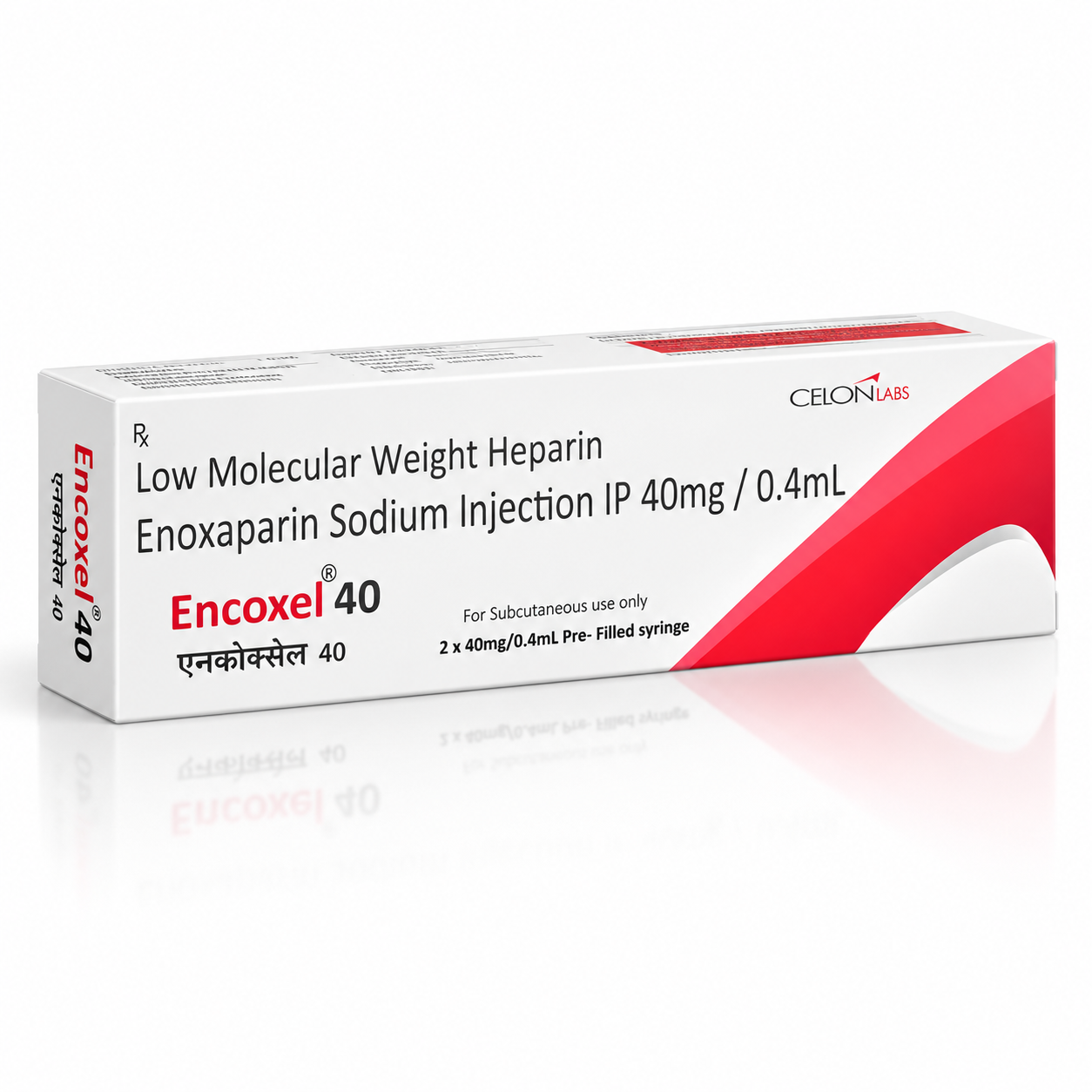
Encoxel 40 MG Injection
$26.00 / unit
Available Options
| Pack Size | Price | Price / Unit | Quantity | Action |
|---|---|---|---|---|
| 10 Injections | $194.00 | $19.40/unit | ||
| 8 Injections | $155.00 | $19.38/unit | ||
| 6 Injections | $117.00 | $19.50/unit | ||
| 4 Injections | $82.00 | $20.50/unit | ||
| 2 Injection | $46.00 | $23.00/unit | ||
| 1 Injection | $26.00 | $26.00/unit |
Product Description
ENCOXEL 40 MG INJECTION
What is this medicine?
ENCOXEL 40 MG INJECTION contains Enoxaparin Sodium 40 mg/0.4 mL (equivalent to 4,000 IU anti-factor Xa activity) and is manufactured and marketed by Celon Laboratories Pvt. Ltd. It is available as a sterile injectable solution, commonly supplied in a 0.4 mL prefilled syringe (PFS). Some suppliers list packs containing two prefilled syringes.
Enoxaparin belongs to a group of medicines called low-molecular-weight heparins (LMWHs), also known as anticoagulants. It is used to prevent and treat harmful blood clots in the blood vessels.
This medicine works by enhancing the activity of antithrombin, a naturally occurring substance that helps regulate blood clotting. It mainly inhibits activated clotting factor Xa and, to a lesser extent, thrombin (factor IIa).
By reducing clot formation, enoxaparin helps prevent new blood clots and stops existing clots from becoming larger while the body gradually breaks them down.
This medicine is commonly used for:
prevention of deep vein thrombosis (DVT)
prevention of blood clots after certain surgical procedures
prevention of venous thromboembolism in hospitalized patients with reduced mobility
prevention of blood clots following hip or knee replacement surgery
prevention of pulmonary embolism (PE) in patients at risk
treatment of DVT and pulmonary embolism using an appropriate weight-based regimen
management of unstable angina
treatment of certain types of heart attack, including non-ST-elevation myocardial infarction (NSTEMI)
treatment of ST-elevation myocardial infarction (STEMI) as part of a prescribed medical protocol
Encoxel 40 mg is a commonly used preventive-strength enoxaparin injection. The 40 mg dose is frequently prescribed once daily for clot prevention in eligible adults.
However, treatment of an existing blood clot generally requires weight-based dosing, which may differ substantially from 40 mg.
Encoxel 40 mg is a prescription anticoagulant medicine and should be used only under appropriate medical supervision.
What should I tell my health care provider before I take this medicine?
They need to know if you have any of these conditions:
active bleeding
a history of serious bleeding
bleeding disorders
low platelet counts
thrombocytopenia
heparin-induced thrombocytopenia (HIT)
a history of HIT associated with blood clots
stomach ulcers
gastrointestinal bleeding
recent brain hemorrhage
previous hemorrhagic stroke
uncontrolled high blood pressure
kidney disease
severe kidney impairment
if you are receiving dialysis
liver disease
heart disease
artificial or mechanical heart valves
recent major surgery
recent brain or spinal surgery
spinal cord disorders
a history of spinal injuries
if you have an epidural catheter
if you are undergoing spinal or epidural anesthesia
if you are scheduled for a lumbar puncture
diabetic retinopathy
blood vessel abnormalities
recent serious injury or trauma
a history of frequent bruising
unexplained bleeding
if you are taking blood-thinning medicines
if you are taking aspirin
if you are taking anti-inflammatory pain medicines
if you are taking antiplatelet medicines
if you are pregnant or planning to become pregnant
if you are breastfeeding
an unusual or allergic reaction to enoxaparin
an allergy to heparin
an allergy to pork-derived products
an allergy to any ingredient in the injection
Do not use Encoxel 40 mg if you have active major bleeding or a known serious allergy to enoxaparin, heparin, or relevant pork-derived products.
Enoxaparin is also contraindicated in patients who have experienced immune-mediated heparin-induced thrombocytopenia within the previous 100 days or who have circulating HIT antibodies.
Important spinal bleeding warning: Patients receiving enoxaparin who undergo spinal or epidural anesthesia or spinal puncture may develop spinal or epidural hematomas. These can cause long-term or permanent paralysis.
Tell your healthcare professional if you have any history of spinal procedures, recent surgery, or bleeding complications before receiving Encoxel.
How should I use this medicine?
Encoxel 40 mg Injection should be administered exactly as directed by your doctor or healthcare professional.
It is generally given as a subcutaneous injection (under the skin), usually into the abdominal area.
A healthcare professional may administer the injection or train a patient or caregiver to administer it safely at home.
Do not inject Encoxel into a muscle.
Certain enoxaparin regimens for acute coronary syndromes involve intravenous administration by healthcare professionals, but the usual 40 mg prefilled syringe is primarily used for subcutaneous treatment.
General dosing information:
For prevention of deep vein thrombosis in medical patients:
A commonly recommended adult dose is 40 mg subcutaneously once daily for patients with severely restricted mobility during an acute illness, when anticoagulant prevention is appropriate.
For prevention of blood clots after abdominal surgery:
A commonly recommended regimen is 40 mg subcutaneously once daily, with the first dose and duration determined by the surgical protocol.
For prevention of blood clots after hip or knee replacement surgery:
Enoxaparin may be prescribed in different preventive regimens, including 30 mg twice daily or 40 mg once daily in selected circumstances.
The correct regimen depends on the surgical procedure, treatment timing, kidney function, and patient-specific risk factors.
For treatment of DVT or pulmonary embolism:
Treatment doses are generally calculated according to body weight.
Common adult treatment regimens include 1 mg/kg every 12 hours or 1.5 mg/kg once daily in selected circumstances.
A 40 mg syringe should not be assumed to provide adequate treatment for an existing blood clot.
For unstable angina or NSTEMI:
Enoxaparin is generally prescribed according to a weight-based treatment protocol, often alongside appropriate antiplatelet treatment.
For STEMI:
Treatment depends on age, kidney function, weight, and the specific heart attack management protocol.
For patients with severe kidney impairment:
Dose adjustment is required for certain indications when creatinine clearance is below 30 mL/min.
For example, a common preventive regimen may be reduced to 30 mg once daily in severe renal impairment.
For older adults:
Dosage depends on the indication, body weight, kidney function, and bleeding risk.
For children:
Pediatric use requires specialist supervision and appropriate weight-based dosing. The 40 mg prefilled syringe is not suitable for every pediatric patient.
How to administer Encoxel Injection
If a healthcare professional has trained you to self-administer it:
Wash your hands thoroughly.
Check the syringe label, strength, expiration date, and solution.
Select an appropriate injection site on the abdomen, avoiding the area close to the navel, bruises, scars, or irritated skin.
Clean the injection area according to your healthcare professional's instructions.
Carefully remove the needle cap without touching the needle.
Do not expel the air bubble from a standard prefilled syringe unless the specific product instructions or your healthcare professional direct otherwise.
Gently pinch a fold of skin.
Insert the needle as demonstrated by your healthcare professional, usually at a 90-degree angle for a suitable skin fold.
Inject the prescribed dose slowly and steadily.
Withdraw the needle and activate the safety mechanism if present.
Do not rub or massage the injection site.
Dispose of the syringe immediately in an approved sharps container.
Important administration instructions:
Use the injection at the prescribed time.
Do not change the dose yourself.
Do not inject into a muscle.
Do not reuse a prefilled syringe.
Rotate injection sites as instructed.
Avoid rubbing the injection area after administration.
Do not stop treatment without medical advice.
Attend recommended blood tests and medical reviews.
Report unusual bleeding or bruising promptly.
Overdosage: Excessive enoxaparin can cause serious or life-threatening bleeding.
Seek emergency medical attention if you believe too much has been administered.
Possible symptoms include:
uncontrolled bleeding
severe bruising
blood in urine
black or bloody stools
vomiting blood
severe headache
dizziness or fainting
sudden weakness
severe abdominal pain
In medical settings, protamine sulfate may be used to partially reverse enoxaparin's anticoagulant effects. It does not completely neutralize anti-factor Xa activity.
NOTE: This medicine is only for you. Do not share it with others.
What if I miss a dose?
If you miss a scheduled dose of Encoxel 40 mg Injection, contact your healthcare professional for advice.
If you have been trained to self-administer enoxaparin, your doctor may provide instructions on how to handle a missed dose.
Take or administer the missed dose only according to those instructions.
If it is nearly time for your next scheduled injection, do not automatically take an additional dose.
Do not administer two injections together to make up for a missed dose.
The correct action depends on whether Encoxel is being used to prevent blood clots or treat an existing clot.
If you miss a dose during treatment for DVT, pulmonary embolism, or a heart-related condition, contact your healthcare professional promptly.
Do not discontinue anticoagulant treatment without medical advice.
What may interact with this medicine?
Important interactions include:
warfarin
apixaban
rivaroxaban
dabigatran
edoxaban
unfractionated heparin
other low-molecular-weight heparins
fondaparinux
aspirin
clopidogrel
prasugrel
ticagrelor
ibuprofen
diclofenac
naproxen
ketorolac
other nonsteroidal anti-inflammatory drugs (NSAIDs)
alteplase
tenecteplase
other thrombolytic medicines
certain selective serotonin reuptake inhibitors (SSRIs)
certain serotonin-norepinephrine reuptake inhibitors (SNRIs)
certain herbal supplements that may affect bleeding
Other anticoagulants:
Combining enoxaparin with medicines such as warfarin, apixaban, rivaroxaban, or heparin may increase bleeding risk.
Some combinations are deliberately used for short periods during anticoagulant transitions, but they require careful medical supervision.
Antiplatelet medicines:
Medicines such as aspirin, clopidogrel, prasugrel, and ticagrelor may increase the risk of bleeding when combined with enoxaparin.
These combinations may be necessary in certain cardiovascular conditions but should only be used as prescribed.
NSAID pain relievers:
Medicines such as ibuprofen, diclofenac, naproxen, and ketorolac may increase the risk of gastrointestinal and other bleeding complications.
Do not take these medicines with Encoxel without medical advice.
Thrombolytic medicines:
Medicines used to dissolve blood clots, such as alteplase or tenecteplase, may significantly increase bleeding risk when used with enoxaparin.
Such treatment requires hospital supervision.
Antidepressants:
Certain SSRIs and SNRIs may increase bleeding risk by affecting platelet function.
Herbal supplements:
Some herbal products may affect blood clotting or increase bleeding risk, particularly when combined with anticoagulants.
Tell your healthcare professional about all supplements you use.
Other injectable anticoagulants:
Do not substitute enoxaparin with another low-molecular-weight heparin on a unit-for-unit basis unless a qualified healthcare professional specifically directs the change.
Different anticoagulants are not automatically interchangeable.
This list may not describe all possible interactions.
Give your healthcare provider a complete list of all prescription medicines, non-prescription drugs, herbs, vitamins, and dietary supplements you use.
Also tell your doctor if you drink alcohol or use recreational drugs.
What should I watch for while using this medicine?
Encoxel 40 mg Injection helps prevent and treat harmful blood clots, but careful monitoring is essential because anticoagulants can increase the risk of bleeding.
Bleeding precautions:
Enoxaparin reduces the blood's ability to form clots.
Contact your healthcare professional immediately if you experience:
unusual or excessive bruising
prolonged bleeding from cuts
frequent nosebleeds
bleeding gums
unusually heavy menstrual bleeding
blood in the urine
black or bloody stools
vomiting blood
Seek emergency medical care for severe or uncontrolled bleeding.
Internal bleeding:
Internal bleeding may occur without obvious external symptoms.
Seek urgent medical attention if you develop severe headache, sudden weakness, fainting, severe abdominal pain, or unexplained shortness of breath.
Spinal or epidural hematoma:
Patients undergoing spinal anesthesia, epidural anesthesia, or lumbar puncture while receiving enoxaparin are at risk of serious bleeding around the spinal cord.
Seek emergency medical attention if you develop:
severe back pain
numbness or tingling in the legs
muscle weakness
difficulty walking
loss of bladder control
loss of bowel control
These symptoms may indicate spinal cord compression and require immediate treatment to prevent permanent paralysis.
Heparin-induced thrombocytopenia:
Enoxaparin may rarely cause heparin-induced thrombocytopenia (HIT), a serious immune reaction that reduces platelet counts and can paradoxically cause blood clots.
Your healthcare professional may monitor platelet counts during treatment.
Contact your doctor if you develop unusual bruising, new leg swelling, chest pain, or signs of clot formation.
Kidney function:
Enoxaparin is partly eliminated through the kidneys.
Patients with reduced kidney function may have higher drug exposure and an increased bleeding risk.
Kidney function should be assessed before treatment and monitored when appropriate.
Blood tests:
Your healthcare professional may recommend:
complete blood count (CBC)
platelet count
hemoglobin
hematocrit
kidney function tests
anti-factor Xa testing in selected patients
Routine INR testing is not used to measure the anticoagulant effect of enoxaparin.
Injection-site reactions:
Mild bruising, redness, or discomfort may occur after subcutaneous administration.
Avoid rubbing the injection site.
Report severe swelling, persistent pain, skin discoloration, or skin damage.
Surgery and dental procedures:
Tell your surgeon, dentist, or anesthetist that you are receiving enoxaparin before any procedure.
Your doctor will decide whether treatment needs to be temporarily interrupted.
Pregnancy:
Enoxaparin may be prescribed during pregnancy when anticoagulation is medically necessary.
It does not significantly cross the placenta, but treatment requires specialist monitoring.
Pregnant patients with mechanical prosthetic heart valves require particular caution because serious clotting complications have been reported despite anticoagulant treatment.
Breastfeeding:
Enoxaparin is generally considered compatible with breastfeeding because meaningful absorption by the infant is unlikely. Discuss your individual circumstances with your healthcare professional.
Prevention of injuries:
Avoid activities that could cause significant injuries or bleeding.
Use a soft toothbrush and take care when shaving.
Do not stop Encoxel without medical advice. Prematurely stopping anticoagulant treatment may increase the risk of dangerous blood clots.
What side effects may I notice from this medicine?
Side effects that you should report to your doctor or healthcare professional as soon as possible:
severe or uncontrolled bleeding
coughing or vomiting blood
black or bloody stools
blood in the urine
severe or persistent nosebleeds
unusual or extensive bruising
severe headache
sudden confusion or weakness
severe dizziness or fainting
difficulty breathing
chest pain
severe abdominal pain
new or worsening leg swelling
symptoms of heparin-induced thrombocytopenia
severe back pain after spinal or epidural procedures
numbness or weakness in the legs
loss of bladder or bowel control
severe allergic reaction
swelling of the face, lips, tongue, or throat
difficulty swallowing
severe skin rash
skin necrosis or significant discoloration around the injection site
severe reduction in platelet counts
Side effects that usually do not require immediate medical attention (report them if they continue or are bothersome):
mild injection-site pain
mild redness at the injection site
small bruises around the injection area
minor swelling at the injection site
mild irritation
headache
nausea
mild changes in liver enzyme levels
The commonly reported adverse effects of enoxaparin include bleeding, anemia, thrombocytopenia, and injection-site reactions.
Some patients may also experience increases in liver enzymes during treatment.
Rare but serious adverse reactions include major hemorrhage, HIT, spinal or epidural hematomas, and severe allergic reactions.
The risk of adverse effects depends on kidney function, body weight, medical conditions, dosage, and the use of other medicines that affect blood clotting.
This list may not describe all possible side effects.
Contact your healthcare professional if any side effect becomes persistent, severe, or unusual.
Where should I keep my medicine?
Keep out of the reach of children and pets.
Store Encoxel 40 mg Injection according to the instructions printed on the original packaging. Product-specific suppliers list storage at 15°C to 25°C or below 25°C, while another Indian pharmacy listing advises refrigeration. Because these instructions differ, confirm the requirements for the exact supplied pack with the manufacturer or pharmacist. Do not freeze.
Keep the prefilled syringe in its original protective packaging until ready for use.
Protect the injection from:
excessive heat
direct sunlight
freezing temperatures
moisture
contamination
physical damage
accidental exposure to children
Do not use the injection if the syringe is cracked, leaking, or damaged.
Inspect the solution before use. It should normally be clear and colorless to pale yellow.
Do not use the injection if it contains visible particles or shows unusual discoloration.
Each prefilled syringe is intended for single use only.
Do not reuse needles or syringes.
Dispose of used syringes immediately in an approved puncture-resistant sharps container.
Do not place exposed needles in ordinary household waste.
Do not use Encoxel 40 mg Injection after the expiration date printed on the packaging.
Expired or unused injections should be disposed of according to local pharmacy or healthcare-waste disposal recommendations.