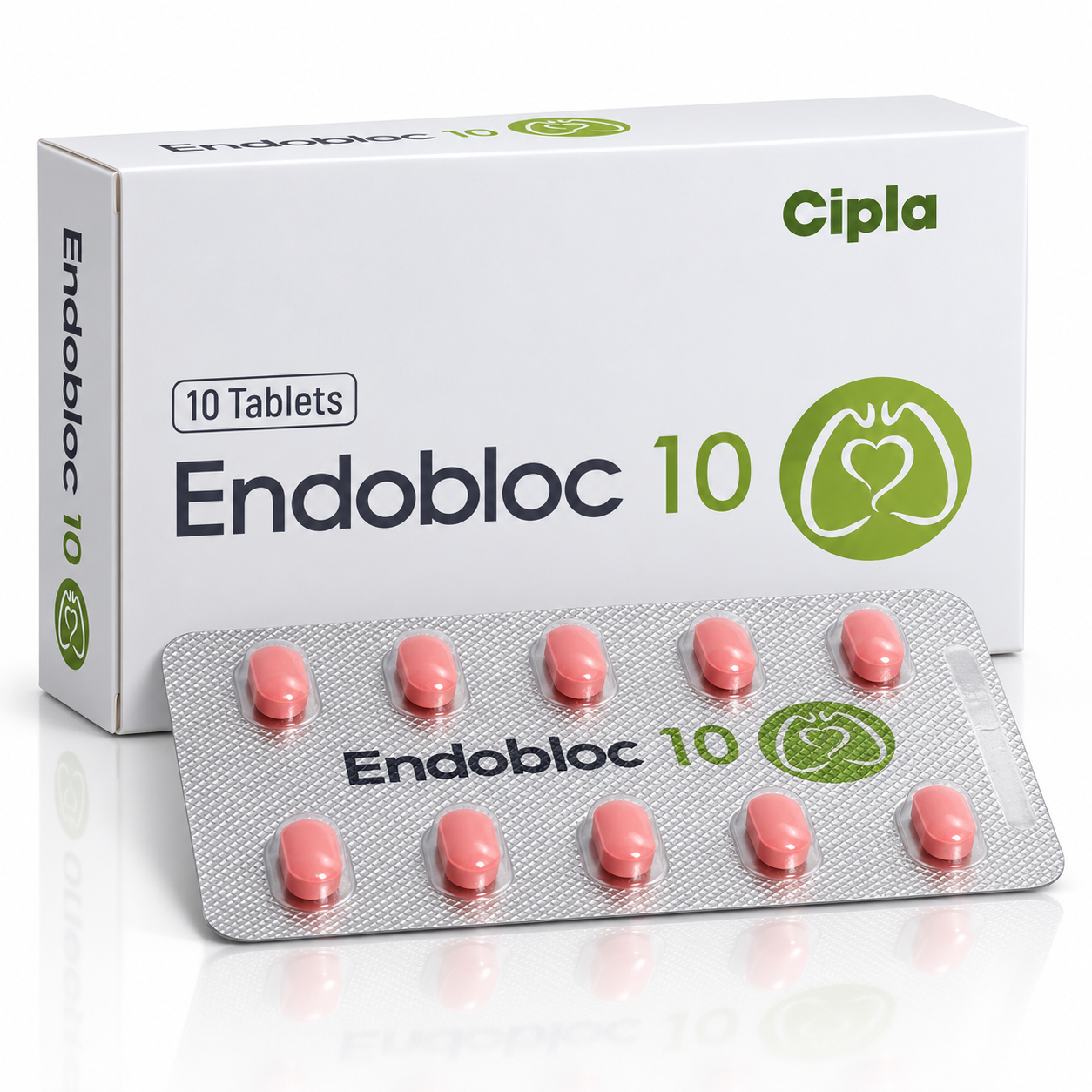
Endobloc 10 MG Tablet
$18.20 / unit
Available Options
| Pack Size | Price | Price / Unit | Quantity | Action |
|---|---|---|---|---|
| 180 Tablets | $2483.00 | $13.79/unit | ||
| 150 Tablets | $2128.00 | $14.19/unit | ||
| 120 Tablets | $1733.00 | $14.44/unit | ||
| 90 Tablets | $1378.00 | $15.31/unit | ||
| 60 Tablets | $982.00 | $16.37/unit | ||
| 30 Tablets | $546.00 | $18.20/unit |
Product Description
ENDOBLOC 10 MG TABLET
What is this medicine?
ENDOBLOC 10 MG TABLET contains Ambrisentan 10 mg and is manufactured and marketed by Cipla Ltd. It is available as an oral tablet used to treat pulmonary arterial hypertension (PAH).
Ambrisentan belongs to a group of medicines called endothelin receptor antagonists (ERAs). It is primarily used to treat pulmonary arterial hypertension, a condition in which blood pressure becomes abnormally high in the blood vessels supplying the lungs.
This medicine works by blocking the action of endothelin-1, a naturally occurring substance that causes blood vessels to narrow. By blocking endothelin type A (ETA) receptors, ambrisentan helps relax and widen the blood vessels in the lungs.
This reduces pulmonary vascular resistance, improves blood flow, and may reduce the workload on the right side of the heart.
This medicine is commonly used for:
treatment of pulmonary arterial hypertension (WHO Group 1)
improving exercise capacity in patients with PAH
reducing symptoms associated with pulmonary arterial hypertension
delaying clinical worsening of PAH
management of idiopathic pulmonary arterial hypertension
management of hereditary pulmonary arterial hypertension
treatment of PAH associated with certain connective tissue diseases
combination therapy with tadalafil in eligible patients to reduce disease progression and hospitalization
Endobloc 10 mg is the higher standard strength of ambrisentan. The usual starting dose is 5 mg once daily, which may be increased to 10 mg once daily according to effectiveness and tolerability.
Endobloc is a prescription medicine for pulmonary arterial hypertension and should be used under the supervision of a healthcare professional experienced in treating this condition.
Important: Ambrisentan can cause serious harm to an unborn baby and must not be used during pregnancy.
What should I tell my health care provider before I take this medicine?
They need to know if you have any of these conditions:
pulmonary arterial hypertension
heart disease
heart failure
low blood pressure
fluid retention
swelling of the legs or ankles
kidney disease
severe kidney impairment
liver disease
elevated liver enzymes
a history of liver injury
anemia
low hemoglobin levels
a history of blood disorders
idiopathic pulmonary fibrosis
pulmonary veno-occlusive disease
unexplained pulmonary edema
persistent shortness of breath
chronic lung disease
a history of severe allergic reactions
if you are taking cyclosporine
if you are taking other pulmonary hypertension medicines
if you are taking tadalafil or sildenafil
if you are taking diuretics
if you are pregnant or planning to become pregnant
if you are breastfeeding
if you could become pregnant and are not using reliable contraception
an unusual or allergic reaction to ambrisentan
an allergy to any other ingredient in the tablet
Do not take Endobloc 10 mg if you are pregnant. Ambrisentan can cause serious fetal abnormalities and pregnancy loss.
Patients who could become pregnant must receive appropriate pregnancy testing and use effective contraception before, during, and for at least one month after stopping treatment.
Do not use ambrisentan for idiopathic pulmonary fibrosis. It is contraindicated because of evidence of harm in this condition.
Patients with moderate or severe liver impairment generally should not receive ambrisentan.
Tell your healthcare professional if you have anemia, worsening heart failure, or unexplained fluid retention because additional assessment may be necessary.
Patients taking cyclosporine require particular caution because it increases exposure to ambrisentan.
How should I use this medicine?
Take Endobloc 10 mg Tablet by mouth exactly as directed by your doctor or healthcare professional.
The medicine is generally taken once daily, with or without food.
Swallow the tablet whole with water.
Do not split, crush, or chew the tablet.
The dosage depends on your pulmonary arterial hypertension symptoms, treatment response, other medicines, and ability to tolerate treatment.
General dosing information:
For pulmonary arterial hypertension:
The usual recommended starting dose of ambrisentan is 5 mg once daily.
If additional treatment benefit is required and the medicine is well tolerated, your healthcare professional may increase the dose to 10 mg once daily.
The maximum recommended daily dose is 10 mg.
For patients receiving combination therapy:
Ambrisentan may be prescribed together with tadalafil for certain patients with pulmonary arterial hypertension.
A commonly used combination regimen begins with ambrisentan 5 mg once daily and tadalafil 20 mg once daily.
At intervals of approximately four weeks, a specialist may increase the doses, when appropriate, to ambrisentan 10 mg daily and tadalafil 40 mg daily.
The combination should only be used under specialist supervision.
For patients taking cyclosporine:
The maximum recommended ambrisentan dose is 5 mg once daily.
Patients taking cyclosporine should not use Endobloc 10 mg unless the interacting treatment has been appropriately reviewed and changed.
For patients with liver impairment:
Ambrisentan is generally not recommended for patients with moderate or severe hepatic impairment.
For patients with kidney impairment:
Dose adjustment is not routinely required for mild or moderate kidney impairment. Experience in severe kidney impairment is limited, so specialist assessment is necessary.
For older adults:
Treatment should be individualized according to the patient's condition, response, and risk of adverse effects.
For children:
Pediatric approval and dosing vary by country and product. Endobloc 10 mg should not be given to a child unless prescribed by an appropriate specialist in accordance with local product information.
Important administration instructions:
Take the medicine at approximately the same time each day.
Swallow the tablet whole with water.
It may be taken with or without food.
Do not exceed the prescribed dose.
Do not stop treatment without consulting your specialist.
Attend regular medical appointments.
Complete recommended blood tests.
Monitor for unusual swelling or weight gain.
Follow pregnancy-prevention requirements when applicable.
Do not combine it with other pulmonary hypertension medicines without medical advice.
Overdosage: If you think you have taken too much of this medicine, contact a doctor, poison control center, or emergency medical service immediately.
Possible symptoms include:
severe headache
dizziness
flushing
unusually low blood pressure
fainting
rapid heartbeat
weakness
nausea
NOTE: This medicine is only for you. Do not share it with others.
What if I miss a dose?
If you miss a scheduled dose of Endobloc 10 mg Tablet, take it as soon as you remember.
If it is almost time for your next scheduled dose, skip the missed dose and continue your regular dosing schedule.
Do not take a double dose to make up for a missed dose.
Do not take additional tablets to compensate for a missed dose.
If you frequently forget your medicine, speak with your healthcare professional about maintaining a consistent treatment routine.
Regular use is important for managing pulmonary arterial hypertension and helping prevent clinical worsening.
Do not stop taking Endobloc without consulting your pulmonary hypertension specialist.
What may interact with this medicine?
Important interactions and treatment considerations include:
cyclosporine
rifampicin
tadalafil
sildenafil
other phosphodiesterase type-5 (PDE5) inhibitors
bosentan
macitentan
other endothelin receptor antagonists
nitrates when used alongside PDE5 inhibitors
medicines used to lower blood pressure
diuretics
certain other medicines used for pulmonary arterial hypertension
Cyclosporine:
Cyclosporine significantly increases ambrisentan exposure.
When these medicines are used together, the maximum recommended ambrisentan dose is 5 mg once daily.
Rifampicin:
Rifampicin can affect ambrisentan exposure, particularly when treatment begins.
Additional monitoring may be required.
Tadalafil:
Ambrisentan and tadalafil may be prescribed together for eligible patients with pulmonary arterial hypertension.
This combination can improve exercise capacity and reduce the risk of clinical worsening.
However, the combination must be managed by a specialist because patients may experience adverse effects such as headache, low blood pressure, or fluid retention.
Sildenafil:
Sildenafil is another medicine used for pulmonary arterial hypertension.
Its use with ambrisentan should be evaluated by a pulmonary hypertension specialist.
Other endothelin receptor antagonists:
Combining ambrisentan with medicines such as bosentan or macitentan is generally not recommended because they act through similar pathways and may increase adverse effects without established additional benefit.
Blood pressure medicines:
Ambrisentan may contribute to lowering blood pressure.
Patients receiving antihypertensive treatment may need additional monitoring.
Diuretics:
Diuretics may be prescribed to manage fluid retention in patients with pulmonary arterial hypertension.
Your healthcare professional may adjust diuretic treatment according to swelling, body weight, kidney function, and other clinical findings.
Nitrate medicines:
Nitrates are not a direct contraindication to ambrisentan alone. However, they must not be combined with PDE5 inhibitors such as tadalafil or sildenafil, which may be part of a PAH treatment regimen, because of the risk of dangerous hypotension.
This list may not describe all possible interactions.
Give your healthcare provider a complete list of all prescription medicines, non-prescription drugs, herbs, vitamins, and dietary supplements you use.
Also tell your doctor if you drink alcohol or use recreational drugs.
What should I watch for while using this medicine?
Endobloc 10 mg Tablet helps manage pulmonary arterial hypertension, but regular monitoring is essential to evaluate treatment effectiveness and detect possible adverse reactions.
Pulmonary arterial hypertension monitoring:
Your healthcare professional may regularly assess your breathing, exercise tolerance, symptoms, and heart function.
Monitoring may include echocardiography, exercise capacity testing, and blood tests.
Pregnancy warning:
Ambrisentan can cause serious birth defects and must not be used during pregnancy.
Patients who could become pregnant should:
Have pregnancy excluded before starting treatment.
Use effective contraception throughout treatment.
Continue effective contraception for at least one month after stopping treatment.
Undergo pregnancy testing as recommended by their specialist.
If pregnancy occurs or is suspected, stop taking ambrisentan and contact your healthcare professional immediately.
Fluid retention and swelling:
Ambrisentan may cause fluid retention, particularly in patients with underlying heart disease.
Symptoms may include:
swelling of the feet or ankles
swelling of the legs
rapid weight gain
worsening shortness of breath
unusual tiredness
Contact your doctor promptly if these symptoms develop.
Anemia and reduced hemoglobin:
Ambrisentan may reduce hemoglobin levels.
Your healthcare professional should check hemoglobin before starting treatment, approximately one month after starting, and periodically thereafter.
Report unusual tiredness, pale skin, persistent weakness, or worsening breathlessness.
Liver function:
Ambrisentan should be used cautiously in patients with liver disease.
Your doctor may recommend liver function tests if symptoms or medical history indicate a concern.
Seek medical evaluation if you develop:
yellowing of the skin or eyes
dark urine
persistent nausea
loss of appetite
upper abdominal pain
unusual fatigue
Pulmonary edema:
Patients with underlying pulmonary veno-occlusive disease may develop pulmonary edema after starting vasodilator therapy.
Seek urgent medical attention if you develop sudden or worsening breathing difficulties, particularly when accompanied by coughing or low oxygen levels.
Low blood pressure:
Ambrisentan may contribute to low blood pressure in some patients, especially when combined with other pulmonary hypertension medicines.
Contact your doctor if you experience severe dizziness, fainting, or unusual weakness.
Effects on fertility:
Medicines in the endothelin receptor antagonist class have been associated with reduced sperm counts.
Male patients who have concerns about fertility should discuss these risks with their healthcare professional.
Breastfeeding:
Breastfeeding is not recommended during treatment with ambrisentan because of potential risks to the infant and insufficient safety information.
Driving and operating machinery:
Avoid driving or operating machinery if you experience dizziness, headache, or symptoms affecting your alertness.
Exercise and physical activity:
Patients with pulmonary arterial hypertension should follow an individualized physical activity plan provided by their specialist.
Avoid strenuous activity that produces severe breathlessness, chest discomfort, or faintness.
Do not stop Endobloc suddenly without medical advice, except when serious reactions or pregnancy require immediate discontinuation and urgent medical evaluation.
What side effects may I notice from this medicine?
Side effects that you should report to your doctor or healthcare professional as soon as possible:
severe allergic reaction
swelling of the face, lips, tongue, or throat
difficulty breathing or swallowing
severe or worsening shortness of breath
sudden chest pain
severe dizziness or fainting
unusually low blood pressure
rapid or irregular heartbeat
severe swelling of the legs or ankles
sudden or unexplained weight gain
symptoms of pulmonary edema
severe weakness or unusual fatigue
signs of significant anemia
yellowing of the skin or eyes
dark-colored urine
persistent upper abdominal pain
symptoms suggesting significant liver dysfunction
sudden worsening of pulmonary arterial hypertension symptoms
Side effects that usually do not require immediate medical attention (report them if they continue or are bothersome):
headache
nasal congestion
blocked or stuffy nose
sinusitis
flushing
mild dizziness
mild swelling of the feet or ankles
mild tiredness
nausea
abdominal discomfort
palpitations
The most commonly reported adverse effects of ambrisentan include peripheral edema, nasal congestion, sinusitis, and flushing.
When ambrisentan is used with tadalafil, additional commonly reported effects include headache, cough, anemia, indigestion, and bronchitis.
Fluid retention and anemia may require medical assessment even when symptoms initially appear mild.
Rare but serious complications include severe fluid retention, pulmonary edema, significant reduction in hemoglobin, and serious allergic reactions.
The frequency and severity of side effects may vary according to age, underlying pulmonary hypertension, heart function, other medical conditions, and medicines being taken.
This list may not describe all possible side effects.
Contact your healthcare provider if any side effect becomes persistent, severe, or unusual.
Where should I keep my medicine?
Keep out of the reach of children and pets.
Store Endobloc 10 mg Tablet below 30°C, according to available Indian product information. Always follow the storage instructions on the original packaging.
Keep the tablets in their original blister packaging until needed.
Protect the medicine from:
excessive heat
direct sunlight
moisture
humid environments
accidental exposure to children
Do not store the tablets in a bathroom or near a kitchen sink where humidity and temperature may fluctuate.
Keep the medicine in a secure location, particularly because accidental exposure during pregnancy may pose serious risks.
Do not use Endobloc 10 mg Tablet after the expiration date printed on the packaging.
Do not use tablets if the blister pack is damaged or the tablets appear discolored or deteriorated.
Dispose of expired or unused medicines according to local pharmacy or healthcare disposal recommendations.