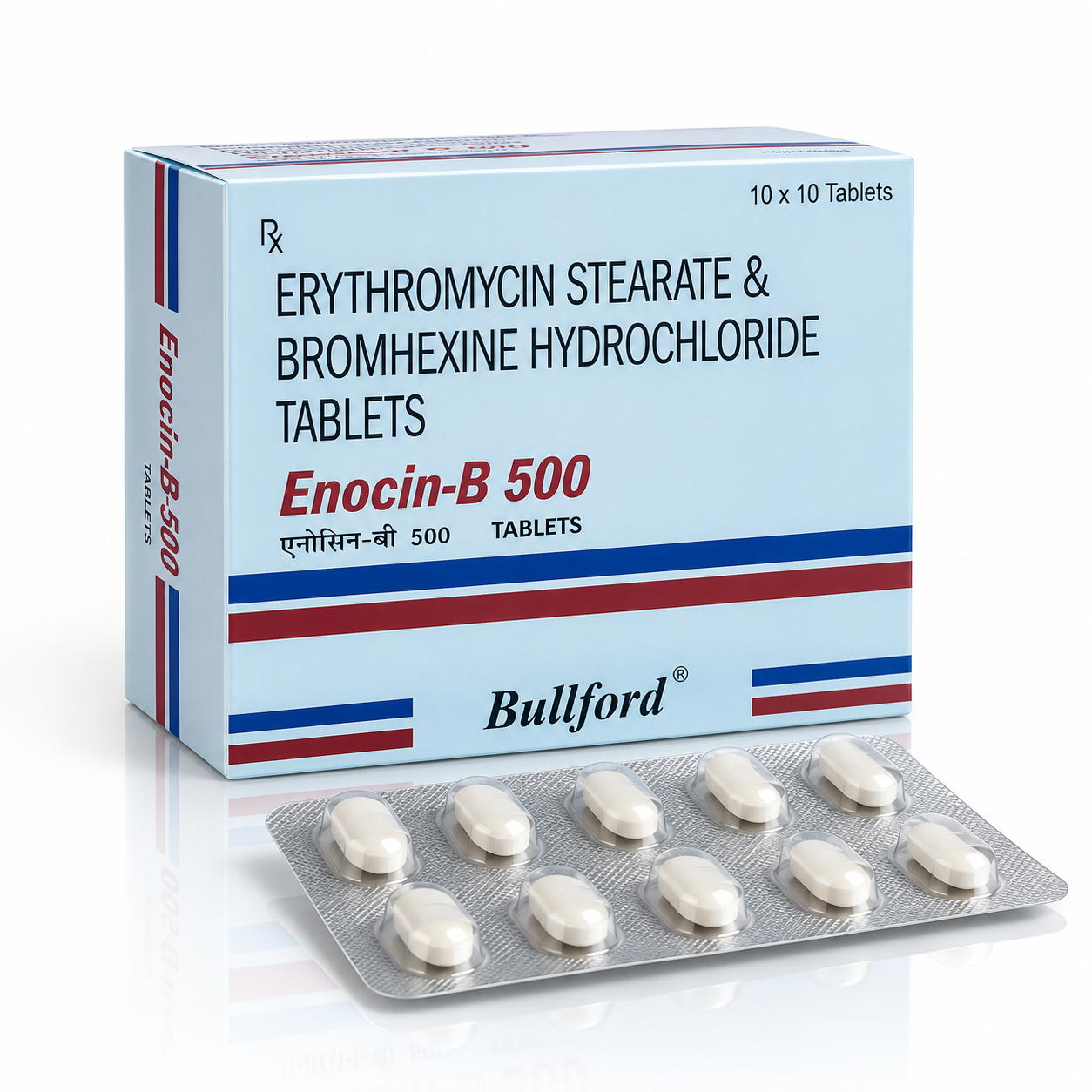
Enocin-B 500 MG Tablet
$0.43 / unit
Available Options
| Pack Size | Price | Price / Unit | Quantity | Action |
|---|---|---|---|---|
| 180 Tablets | $57.00 | $0.32/unit | ||
| 150 Tablets | $49.00 | $0.33/unit | ||
| 120 Tablets | $40.00 | $0.33/unit | ||
| 90 Tablets | $32.00 | $0.36/unit | ||
| 60 Tablets | $23.00 | $0.38/unit | ||
| 30 Tablets | $13.00 | $0.43/unit |
Product Description
ENOCIN-B 500 MG TABLET
What is this medicine?
ENOCIN-B 500 MG TABLET is listed by major Indian pharmacies as containing Erythromycin 500 mg and is marketed by Bullford Pharmaceuticals. It is commonly listed in a strip of 10 tablets
Erythromycin belongs to a group of medicines called macrolide antibiotics. It is used to treat infections caused by bacteria susceptible to erythromycin.
This medicine works by binding to the 50S subunit of bacterial ribosomes and inhibiting bacterial protein synthesis. This prevents susceptible bacteria from growing and multiplying, allowing the body's immune system to clear the infection.
If the supplied product also contains bromhexine, that ingredient is a mucolytic, which helps thin mucus and makes respiratory secretions easier to clear.
This medicine is commonly used for:
treatment of susceptible bacterial respiratory tract infections
management of certain bacterial throat infections
treatment of bacterial ear, nose, and throat infections
treatment of certain bacterial skin and soft tissue infections
management of certain bacterial chest infections
treatment of selected bacterial infections in patients who cannot use particular alternative antibiotics
treatment of certain susceptible genital tract infections
management of other infections when prescribed by a healthcare professional
Erythromycin does not treat viral infections such as the common cold or influenza.
What should I tell my health care provider before I take this medicine?
They need to know if you have any of these conditions:
liver disease
hepatitis
a history of jaundice
kidney disease
severe kidney impairment
heart disease
irregular heartbeat
prolonged QT interval
congenital long QT syndrome
unusually slow heartbeat
heart failure
low potassium levels
low magnesium levels
myasthenia gravis
a history of antibiotic-associated colitis
severe or persistent diarrhea
gastrointestinal disorders
a history of hearing problems
previous hearing loss associated with antibiotics
an allergy to erythromycin
an allergy to azithromycin or clarithromycin
an allergy to another macrolide antibiotic
an allergy to bromhexine, if included in the formulation
a history of severe allergic reactions
if you are taking medicines for heart rhythm disorders
if you are taking blood-thinning medicines
if you are taking cholesterol-lowering medicines
if you are taking epilepsy medicines
if you are taking colchicine
if you are taking ergotamine or dihydroergotamine
if you are taking pimozide
if you are pregnant or planning to become pregnant
if you are breastfeeding
an unusual or allergic reaction to any ingredient in the tablet
Do not take Enocin-B if you have a known serious allergic reaction to erythromycin or another ingredient in the confirmed formulation.
Erythromycin may increase the risk of abnormal heart rhythms, especially in patients with QT prolongation, electrolyte disturbances, or those taking interacting medicines.
Patients with liver disease may require additional monitoring because erythromycin can occasionally cause liver injury.
Tell your doctor about all existing medical conditions and medicines before starting treatment.
How should I use this medicine?
Take Enocin-B 500 mg Tablet by mouth exactly as directed by your doctor or healthcare professional.
The appropriate dose depends on the infection being treated, its severity, the patient's age, medical condition, and the exact formulation.
General dosing information:
For bacterial infections in adults:
Erythromycin may be prescribed in divided doses throughout the day.
Depending on the formulation and infection, adult regimens may include 250 mg every 6 hours or 500 mg every 12 hours. Some infections require different doses or dosing intervals.
The dose and duration must be determined by a healthcare professional.
For respiratory tract infections:
The doctor will prescribe the dose and treatment duration according to the suspected or confirmed bacteria and the severity of infection.
Erythromycin should not automatically be used for every cough, sore throat, or respiratory infection.
For skin and soft tissue infections:
The dosage depends on the organism involved, severity of infection, and individual patient factors.
For children:
Erythromycin dosing is generally calculated according to body weight, age, and the type of infection.
A 500 mg tablet may not be suitable for younger children.
For patients with liver or kidney disease:
Medical monitoring or treatment adjustments may be required, especially in patients with significant impairment.
Important administration instructions:
Take the medicine at evenly spaced intervals as prescribed.
Swallow the tablet with water.
Follow the product-specific instructions regarding meals.
Some erythromycin formulations are best taken on an empty stomach, while others may be taken with food.
Do not crush or chew the tablet unless the manufacturer or pharmacist confirms that it is appropriate.
Do not skip scheduled doses.
Complete the prescribed antibiotic course unless your healthcare professional advises stopping or changing treatment.
Do not increase the prescribed dose.
Do not use leftover antibiotics to treat another illness.
Do not share the medicine with others.
Overdosage: If you think you have taken too much of this medicine, seek immediate medical attention.
Possible symptoms include:
severe nausea
vomiting
abdominal pain
severe diarrhea
dizziness
hearing disturbances
abnormal heart rhythm
severe weakness
NOTE: This medicine is only for you. Do not share this medicine with others.
What if I miss a dose?
If you miss a scheduled dose of Enocin-B 500 mg Tablet, take it as soon as you remember.
However, if it is almost time for your next scheduled dose, skip the missed dose and continue your usual dosing schedule.
Do not take a double dose to make up for a missed dose.
Taking antibiotic doses at the recommended intervals helps maintain appropriate drug concentrations during treatment.
If you miss several doses, contact your healthcare professional for advice.
Do not extend, repeat, or restart an antibiotic course without medical guidance.
What may interact with this medicine?
Erythromycin can interact with several medicines because it inhibits certain drug-metabolizing enzymes and may affect heart rhythm.
Important interactions include:
simvastatin
lovastatin
atorvastatin
warfarin
colchicine
carbamazepine
phenytoin
theophylline
cyclosporine
tacrolimus
digoxin
pimozide
ergotamine
dihydroergotamine
quinidine
procainamide
amiodarone
sotalol
certain other QT-prolonging medicines
certain antipsychotic medicines
certain antidepressants
certain antifungal medicines
certain antiviral medicines
midazolam
triazolam
other medicines metabolized by CYP3A4
Cholesterol-lowering medicines:
Erythromycin can substantially increase exposure to certain statins, particularly simvastatin and lovastatin, increasing the risk of severe muscle injury, including rhabdomyolysis.
These combinations should generally be avoided.
Blood-thinning medicines:
Erythromycin may increase the anticoagulant effects of warfarin and increase bleeding risk.
Additional INR monitoring may be necessary.
Heart rhythm medicines:
Combining erythromycin with certain medicines that prolong the QT interval may increase the risk of serious ventricular arrhythmias.
Colchicine:
Erythromycin can increase colchicine exposure and cause serious toxicity. The combination should generally be avoided, particularly in patients with kidney or liver impairment.
Ergotamine and dihydroergotamine:
These combinations can cause serious ergot toxicity, including excessive narrowing of blood vessels, and are contraindicated.
Theophylline:
Erythromycin may increase theophylline concentrations in some patients, increasing the risk of adverse effects.
Carbamazepine:
Erythromycin may increase carbamazepine concentrations, potentially causing dizziness, double vision, or other symptoms of toxicity.
Digoxin:
Erythromycin may increase digoxin exposure in certain patients, requiring clinical monitoring.
Cyclosporine and tacrolimus:
Erythromycin can increase concentrations of these immunosuppressant medicines, potentially increasing toxicity.
Other antibiotics:
Do not combine antibiotics without medical advice. Certain combinations may be inappropriate or require additional monitoring.
This list may not describe all possible interactions.
Give your healthcare provider a complete list of all prescription medicines, non-prescription drugs, herbs, vitamins, and dietary supplements you use.
Also tell your doctor if you drink alcohol or use recreational drugs.
What should I watch for while using this medicine?
Enocin-B 500 mg Tablet is used to treat susceptible bacterial infections. Appropriate antibiotic use and monitoring are important to reduce complications and antibiotic resistance.
Response to treatment:
Symptoms may begin improving within a few days, depending on the infection.
Contact your healthcare professional if symptoms worsen, persist, or fail to improve within the expected treatment period.
Antibiotic resistance:
Taking antibiotics unnecessarily or using an incorrect regimen can contribute to antimicrobial resistance.
Use Enocin-B only for an infection for which a healthcare professional has prescribed it.
Liver problems:
Erythromycin can occasionally cause liver inflammation, including cholestatic hepatitis.
Seek medical evaluation if you develop:
yellowing of the skin or eyes
dark-colored urine
persistent nausea
severe abdominal discomfort
unusual tiredness
loss of appetite
Heart rhythm disturbances:
Erythromycin can prolong the QT interval and, rarely, cause serious abnormal heart rhythms.
Seek urgent medical attention if you experience:
rapid or irregular heartbeat
palpitations
severe dizziness
fainting
unexplained chest discomfort
Patients with existing heart rhythm disorders or electrolyte disturbances may require additional precautions.
Severe diarrhea:
Antibiotic treatment can sometimes lead to an intestinal infection caused by Clostridioides difficile.
Contact your doctor if you experience:
severe or persistent diarrhea
watery stools occurring repeatedly
bloody stools
severe abdominal cramps
fever associated with diarrhea
Do not take anti-diarrheal medicines without medical advice if severe antibiotic-associated diarrhea is suspected.
Allergic reactions:
Seek emergency medical attention if you develop swelling of the face or throat, severe rash, or difficulty breathing.
Hearing changes:
Temporary hearing impairment has been reported with erythromycin, particularly with higher doses or in certain patients with kidney or liver impairment.
Contact your doctor if you notice ringing in the ears or reduced hearing.
Myasthenia gravis:
Erythromycin may worsen muscle weakness in patients with myasthenia gravis.
Seek medical attention if you experience worsening weakness, difficulty swallowing, or breathing problems.
Pregnancy and breastfeeding:
Erythromycin may be prescribed during pregnancy when clinically appropriate, but the choice of formulation and treatment should be assessed by a healthcare professional.
Certain erythromycin formulations have specific pregnancy-related precautions.
Erythromycin passes into breast milk in small amounts. Breastfeeding patients should consult their doctor, particularly when treating very young infants.
Driving and operating machinery:
Erythromycin does not usually cause significant impairment, but avoid driving if you experience dizziness or other symptoms affecting alertness.
Important: If your Enocin-B pack also contains bromhexine, additional precautions and possible adverse effects associated with bromhexine must be considered.
What side effects may I notice from this medicine?
Side effects that you should report to your doctor or healthcare professional as soon as possible:
severe allergic reaction
swelling of the face, lips, tongue, or throat
difficulty breathing or swallowing
severe skin rash
blistering or peeling of the skin
severe or persistent diarrhea
bloody stools
severe abdominal pain
yellowing of the skin or eyes
dark-colored urine
severe dizziness or fainting
fast, pounding, or irregular heartbeat
chest pain
hearing loss or significant hearing changes
severe muscle weakness
unexplained muscle pain or tenderness, particularly when taking interacting medicines
signs of severe liver dysfunction
severe vomiting or dehydration
Side effects that usually do not require immediate medical attention (report them if they continue or are bothersome):
nausea
vomiting
mild diarrhea
abdominal pain
stomach cramps
loss of appetite
indigestion
mild stomach discomfort
temporary changes in taste
The commonly reported adverse effects of erythromycin include nausea, vomiting, abdominal discomfort, and diarrhea. These effects are often related to its action on the digestive system.
Rare but serious adverse reactions include liver injury, significant allergic reactions, QT prolongation, abnormal heart rhythms, and severe antibiotic-associated diarrhea.
If the supplied product also contains bromhexine, nausea, gastrointestinal discomfort, allergic reactions, and rare serious skin reactions may additionally be relevant.
This list may not describe all possible side effects.
Contact your healthcare professional if any side effect becomes persistent, severe, or unusual.
Where should I keep my medicine?
Keep out of the reach of children and pets.
Store Enocin-B 500 mg Tablet below 30°C, according to available Indian pharmacy product information. Follow the instructions on the supplied packaging if they differ.
Keep the tablets in their original blister packaging until needed.
Protect the medicine from:
excessive heat
direct sunlight
moisture
humid environments
accidental exposure to children
Do not store tablets in a bathroom or near a kitchen sink where humidity and temperature may fluctuate.
Keep the medicine in a cool, dry location away from direct sunlight.
Do not use Enocin-B 500 mg Tablet after the expiration date printed on the packaging.
Do not use tablets if the blister pack is damaged or the tablets appear discolored or deteriorated.
Do not save unused antibiotics for future infections.
Dispose of expired or unused medicine according to local pharmacy or healthcare disposal recommendations.