Entavir 0.5 MG Tablet
$4.30 / unit
Available Options
| Pack Size | Price | Price / Unit | Quantity | Action |
|---|---|---|---|---|
| 180 Tablets | $589.00 | $3.27/unit | ||
| 150 Tablets | $505.00 | $3.37/unit | ||
| 120 Tablets | $411.00 | $3.43/unit | ||
| 90 Tablets | $327.00 | $3.63/unit | ||
| 60 Tablets | $233.00 | $3.88/unit | ||
| 30 Tablets | $129.00 | $4.30/unit |
Product Description
ENTAVIR 0.5 MG TABLET
What is this medicine?
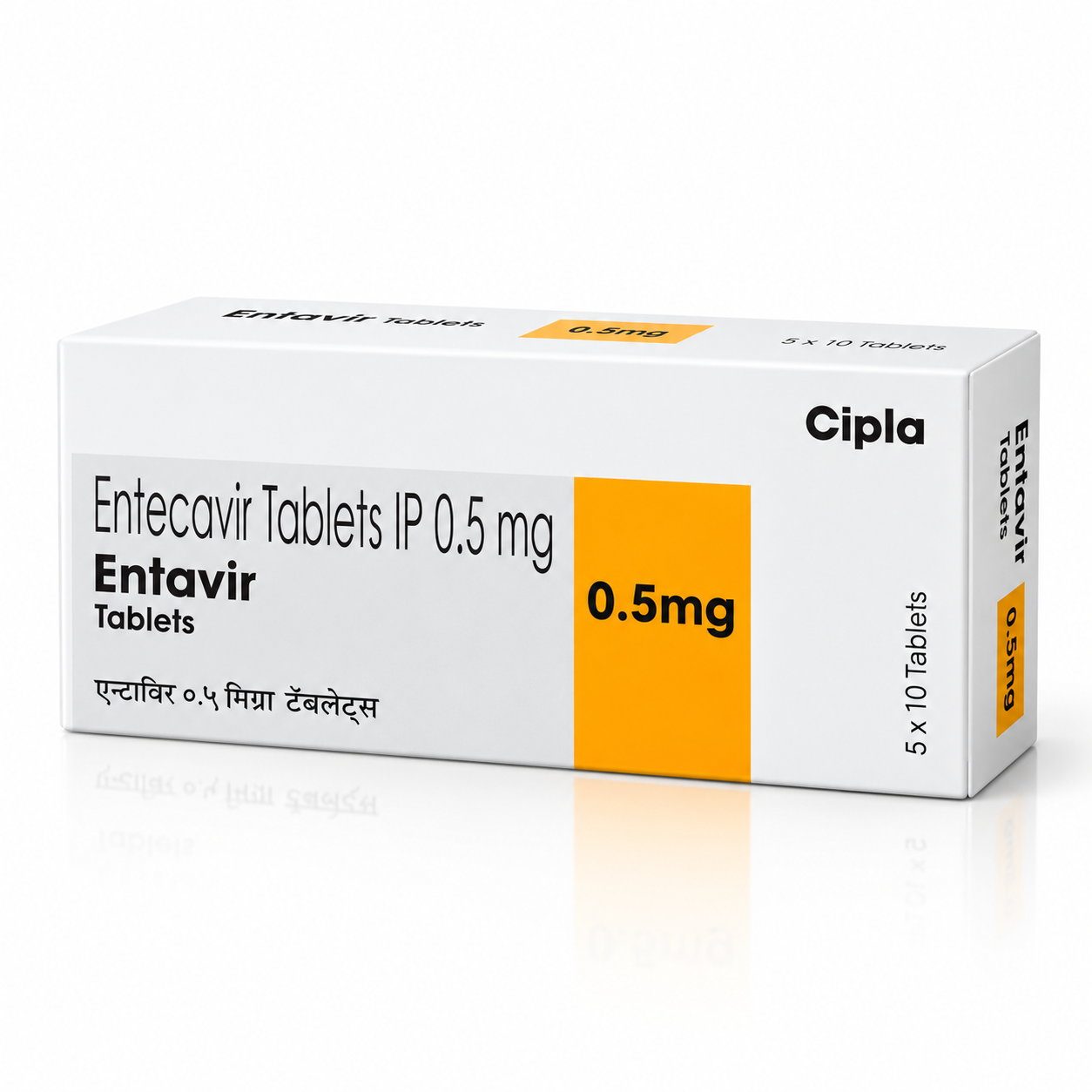
ENTAVIR 0.5 MG TABLET contains Entecavir 0.5 mg and is manufactured and marketed by Cipla Ltd. It is available as an oral tablet, commonly supplied in a strip of 10 tablets.
Entecavir belongs to a group of medicines called nucleoside analogue antiviral medicines, specifically hepatitis B virus polymerase inhibitors. It is used to treat chronic hepatitis B virus (HBV) infection in patients who have active viral replication and evidence of liver disease.
This medicine works by inhibiting hepatitis B virus DNA polymerase, an enzyme essential for viral replication. By interfering with viral DNA production, entecavir reduces the multiplication of hepatitis B virus in the body.
This helps lower the amount of virus in the bloodstream and may reduce ongoing liver inflammation and damage.
This medicine is commonly used for:
treatment of chronic hepatitis B virus infection
reducing hepatitis B viral load
suppressing hepatitis B virus replication
improving liver inflammation associated with chronic hepatitis B
management of chronic hepatitis B in eligible adults
treatment of chronic hepatitis B in eligible children and adolescents
reducing the risk of liver disease progression through sustained viral suppression
management of hepatitis B in selected patients with compensated liver disease
treatment of hepatitis B in certain patients with decompensated liver disease using the appropriate dose
Entavir 0.5 mg is a standard starting strength of entecavir for many adults with chronic hepatitis B who have compensated liver disease and have not previously received nucleoside analogue treatment.
Patients with lamivudine-resistant hepatitis B or decompensated liver disease may require a different dosing regimen, commonly 1 mg once daily.
Entavir helps control hepatitis B but does not cure the infection. It does not guarantee prevention of cirrhosis, liver failure, or liver cancer, and it does not prevent transmission of hepatitis B to other people.
Entavir 0.5 mg is a prescription antiviral medicine and should be used under the supervision of a healthcare professional experienced in treating hepatitis B.
What should I tell my health care provider before I take this medicine?
They need to know if you have any of these conditions:
chronic hepatitis B infection
liver disease
liver cirrhosis
compensated liver disease
decompensated liver disease
a history of liver failure
previous hepatitis B treatment
a history of resistance to lamivudine
a history of resistance to other antiviral medicines
kidney disease
reduced kidney function
if you are receiving dialysis
HIV infection
possible HIV and hepatitis B co-infection
hepatitis C infection
hepatitis D infection
a history of lactic acidosis
severe metabolic disorders
unexplained muscle weakness
a history of pancreatitis
liver transplantation
if you are taking immunosuppressant medicines
if you are receiving chemotherapy
if you have recently stopped hepatitis B treatment
if you are taking tenofovir
if you are taking lamivudine
if you are taking other antiviral medicines
if you are taking medicines that affect kidney function
if you are pregnant or planning to become pregnant
if you are breastfeeding
an unusual or allergic reaction to entecavir
an allergy to any ingredient in the tablet
Do not take Entavir 0.5 mg if you have a known serious allergic reaction to entecavir or another ingredient in the tablet.
HIV and hepatitis B co-infection:
Tell your healthcare professional if you have HIV or if your HIV status is unknown.
Entecavir should not be used as the only antiviral treatment in patients with HIV/HBV co-infection who are not receiving an effective antiretroviral therapy regimen.
Using entecavir without appropriate HIV treatment may contribute to the development of HIV drug resistance.
Kidney disease:
Patients with reduced kidney function may require dose adjustments because entecavir is eliminated mainly through the kidneys.
Previous hepatitis B treatment:
Tell your doctor if you have previously taken lamivudine, telbivudine, tenofovir, or another hepatitis B medicine.
Previous antiviral resistance can influence the choice and dosage of treatment.
Important warning: Stopping entecavir may cause a severe worsening of hepatitis B. Do not discontinue treatment without medical advice.
How should I use this medicine?
Take Entavir 0.5 mg Tablet by mouth exactly as directed by your doctor or healthcare professional.
The medicine is generally taken once daily on an empty stomach.
Swallow the tablet with water.
Take entecavir at least 2 hours after a meal and at least 2 hours before the next meal.
The dosage depends on the patient's age, body weight, kidney function, liver condition, previous antiviral treatment, and response to therapy.
General dosing information:
For chronic hepatitis B in treatment-naïve adults:
The usual recommended dose is:
Entecavir 0.5 mg once daily.
This is commonly used in adults with compensated liver disease who have not previously received nucleoside analogue treatment.
For patients with lamivudine-resistant hepatitis B:
The recommended adult dose is commonly 1 mg once daily.
A different antiviral treatment may be preferred in some patients because previous lamivudine resistance can reduce the effectiveness of entecavir and increase the risk of additional resistance.
For patients with decompensated liver disease:
The commonly recommended adult dose is 1 mg once daily, with specialist monitoring.
For patients with kidney impairment:
Dose adjustment is recommended when creatinine clearance is below 50 mL/min.
The doctor may reduce the dose or extend the dosing interval according to kidney function.
For patients receiving hemodialysis:
Dose adjustment is necessary.
On dialysis days, entecavir is generally administered after the hemodialysis session according to the prescribed regimen.
For children:
Entecavir may be prescribed for chronic hepatitis B in eligible children aged 2 years and older, depending on local regulatory approval.
Pediatric dosing is based on body weight, previous antiviral treatment, and the available dosage forms.
An oral solution or another tablet strength may be more suitable for some children.
For older adults:
The dose should be selected according to kidney function, existing medical conditions, and other medicines.
Important administration instructions:
Take the medicine at approximately the same time every day.
Take it on an empty stomach.
Swallow the tablet with water.
Do not exceed the prescribed dose.
Do not change the dosing interval without medical advice.
Do not stop treatment simply because symptoms improve.
Attend regular liver function and viral-load monitoring appointments.
Inform your healthcare professional about any previous hepatitis B treatment.
Do not combine antiviral medicines without medical advice.
Continue treatment for the duration recommended by your liver specialist.
Overdosage: If you think you have taken too much Entavir, contact a doctor, poison control center, or emergency medical service immediately.
There is limited information about entecavir overdose in humans.
Medical assessment and supportive treatment may be necessary, particularly in patients with kidney impairment.
NOTE: This medicine is only for you. Do not share it with others.
What if I miss a dose?
If you miss a scheduled dose of Entavir 0.5 mg Tablet, take it as soon as you remember, provided it is not almost time for your next scheduled dose.
If the next dose is due soon, skip the missed dose and continue your normal dosing schedule.
Do not take a double dose to make up for a missed dose.
Maintain the recommended empty-stomach administration instructions.
If you miss several doses or are uncertain about your schedule, contact your healthcare professional.
Regular daily use is important for maintaining viral suppression.
Do not stop taking Entavir without medical advice, because interruption of hepatitis B treatment can lead to a significant increase in viral replication and worsening liver inflammation.
What may interact with this medicine?
Entecavir has relatively few established clinically significant drug interactions because it is not substantially metabolized through the cytochrome P450 enzyme system.
However, interactions and treatment considerations may arise with medicines that affect kidney function or are eliminated through the kidneys.
Important medicines and treatment considerations include:
tenofovir disoproxil fumarate
tenofovir alafenamide
lamivudine
telbivudine
adefovir
other hepatitis B antiviral medicines
certain HIV antiretroviral medicines
aminoglycoside antibiotics
gentamicin
amikacin
certain medicines that affect kidney function
tacrolimus
cyclosporine
certain nonsteroidal anti-inflammatory drugs (NSAIDs)
other potentially nephrotoxic medicines
Tenofovir:
Tenofovir is another antiviral medicine used to treat hepatitis B and HIV.
The treatment choice depends on previous antiviral exposure, resistance patterns, kidney function, and other clinical factors.
Combining entecavir and tenofovir is not routinely necessary for every patient.
Lamivudine:
Previous lamivudine treatment and resistance can influence the effectiveness of entecavir.
Tell your doctor if you have previously taken lamivudine for hepatitis B.
Telbivudine and adefovir:
These medicines have been used to treat hepatitis B.
They should not be combined with or substituted for entecavir without specialist guidance.
HIV antiretroviral medicines:
Patients with HIV/HBV co-infection generally require an effective antiretroviral regimen that appropriately treats both infections.
Entecavir should not be used as HIV treatment by itself.
Medicines affecting kidney function:
Because entecavir is eliminated mainly through the kidneys, medicines that reduce kidney function may increase entecavir exposure.
Your healthcare professional may recommend additional kidney function monitoring.
Tacrolimus and cyclosporine:
Patients taking these immunosuppressants, particularly after liver transplantation, may have impaired kidney function.
Monitoring may be necessary, although a specific direct interaction is not established for every combination.
NSAID pain relievers:
Frequent or high-dose use of certain NSAIDs can affect kidney function, particularly in susceptible patients.
This may be relevant when taking entecavir because reduced kidney function can affect its elimination.
Important: The medicines listed above are not all prohibited combinations or confirmed direct drug interactions. Some are included because they may influence kidney function, antiviral selection, or treatment monitoring.
This list may not describe all possible interactions.
Give your healthcare provider a complete list of all prescription medicines, non-prescription drugs, herbal products, vitamins, and dietary supplements you use.
Also tell your doctor if you drink alcohol or use recreational drugs.
What should I watch for while using this medicine?
Entavir 0.5 mg Tablet helps suppress hepatitis B virus replication, but regular medical monitoring is essential to assess treatment effectiveness and detect possible complications.
Hepatitis B viral-load monitoring:
Your healthcare professional may recommend regular testing to measure the amount of hepatitis B virus in your blood.
Monitoring may include:
hepatitis B viral DNA (HBV DNA)
liver function tests
alanine aminotransferase (ALT)
aspartate aminotransferase (AST)
hepatitis B surface antigen (HBsAg)
hepatitis B e antigen (HBeAg), when appropriate
kidney function tests
These tests help determine whether treatment is controlling viral replication and whether further evaluation is necessary.
Severe worsening of hepatitis B after stopping treatment:
Stopping entecavir may cause a serious flare or reactivation of hepatitis B.
Symptoms may include:
unusual tiredness
nausea or vomiting
loss of appetite
abdominal pain
yellowing of the skin or eyes
dark urine
Do not stop Entavir without consulting your healthcare professional.
If treatment is discontinued, your doctor should monitor liver function closely for at least several months.
Lactic acidosis:
Rare cases of lactic acidosis, a potentially life-threatening buildup of lactic acid in the blood, have been reported with nucleoside analogue antiviral medicines.
Seek emergency medical attention if you experience:
severe weakness
unusual muscle pain
rapid or difficult breathing
persistent nausea or vomiting
severe abdominal discomfort
unusual sleepiness
feeling unusually cold
dizziness or fainting
If lactic acidosis is suspected, treatment requires urgent medical evaluation.
Severe liver enlargement with fatty changes:
Serious liver complications, including severe hepatomegaly with steatosis, have been reported with nucleoside analogue medicines.
Contact your healthcare professional immediately if you develop unexplained abdominal swelling, persistent vomiting, severe weakness, or jaundice.
Kidney function monitoring:
Entecavir is primarily eliminated through the kidneys.
Patients with reduced kidney function may require a lower dose or longer dosing interval.
Regular monitoring is particularly important in patients with kidney disease or those taking medicines that may affect kidney function.
HIV and hepatitis B co-infection:
Patients should be tested for HIV before beginning entecavir treatment.
Entavir does not provide an adequate treatment regimen for HIV infection.
Using entecavir alone in patients with untreated HIV may contribute to antiviral resistance.
Risk of hepatitis B transmission:
Entavir reduces hepatitis B viral replication but does not guarantee prevention of transmission.
Patients should continue appropriate preventive measures, including:
using condoms when appropriate
avoiding sharing needles
avoiding sharing razors and toothbrushes
ensuring household and sexual contacts are assessed for hepatitis B vaccination
following infection-control precautions
Liver cancer monitoring:
Patients with chronic hepatitis B may remain at risk of hepatocellular carcinoma even when viral replication is well controlled.
Your doctor may recommend periodic liver ultrasound examinations and other investigations according to your individual risk.
Pregnancy:
Human pregnancy safety data for entecavir are limited.
Tell your doctor if you are pregnant or planning pregnancy.
A healthcare professional may recommend an antiviral with more established pregnancy safety data, such as tenofovir, when appropriate.
Do not change antiviral treatment without specialist guidance.
Breastfeeding:
It is not known whether entecavir passes into human breast milk in clinically significant amounts.
Breastfeeding decisions should be made with a healthcare professional, considering maternal treatment needs, the infant's health, and available alternatives.
Alcohol consumption:
Avoid or limit alcohol according to your liver specialist's advice.
Alcohol can worsen liver injury in patients with chronic hepatitis B.
Driving and operating machinery:
Entavir may cause dizziness, headache, or tiredness.
Avoid driving or operating machinery if these symptoms affect your alertness.
Long-term treatment:
Chronic hepatitis B treatment may continue for several years, and some patients require prolonged or indefinite antiviral therapy.
Do not stop taking Entavir because your symptoms have improved or your viral load has become undetectable.
Treatment duration must be determined by your liver specialist.
What side effects may I notice from this medicine?
Side effects that you should report to your doctor or healthcare professional as soon as possible:
severe allergic reaction
swelling of the face, lips, tongue, or throat
difficulty breathing or swallowing
severe dizziness or fainting
persistent or severe vomiting
severe abdominal pain
yellowing of the skin or eyes
dark-colored urine
severe or unusual tiredness
loss of appetite accompanied by worsening liver symptoms
severe muscle weakness
unusual muscle pain
rapid or difficult breathing
symptoms of lactic acidosis
severe abdominal swelling
symptoms of worsening hepatitis B
confusion or significant changes in consciousness
markedly reduced urine output
signs of serious liver dysfunction
Side effects that usually do not require immediate medical attention (report them if they continue or are bothersome):
headache
tiredness
dizziness
nausea
mild abdominal discomfort
diarrhea
indigestion
sleep disturbances
The most commonly reported side effects of entecavir in adult clinical studies include headache, fatigue, dizziness, and nausea.
Some patients may also experience digestive discomfort or changes in liver enzyme levels.
Rare but potentially serious reactions include lactic acidosis, severe liver complications, and significant worsening of hepatitis B following treatment discontinuation.
Not every symptom occurring during treatment is necessarily caused by entecavir. Chronic hepatitis B and other medical conditions may also contribute to fatigue, nausea, or abnormal blood test results.
The frequency and severity of side effects may vary according to kidney function, liver disease severity, previous antiviral treatment, and other medicines being used.
This list may not describe all possible side effects.
Contact your healthcare professional if any side effect becomes persistent, severe, or unusual.
Where should I keep my medicine?
Keep out of the reach of children and pets.
Store Entavir 0.5 mg Tablet below 30°C, according to current Indian pharmacy product information. Always follow the storage instructions printed on the original packaging.
Keep the tablets in their original blister packaging until needed.
Protect the medicine from:
excessive heat
direct sunlight
moisture
humid environments
accidental exposure to children
Do not store the tablets in a bathroom or near a kitchen sink where humidity and temperature may fluctuate.
Keep the medicine in a cool, dry location away from direct sunlight.
Do not use Entavir 0.5 mg Tablet after the expiration date printed on the packaging.
Do not use tablets if the blister pack is damaged or the tablets appear discolored or deteriorated.
Keep the medicine in a secure place and do not share it with others.
Do not save leftover antiviral medicines for use by another person.
Dispose of expired or unused medicines according to local pharmacy or healthcare disposal recommendations.