Eptoheal 100 MG Tablet
$1.23 / unit
Available Options
| Pack Size | Price | Price / Unit | Quantity | Action |
|---|---|---|---|---|
| 720 Tablets | $667.00 | $0.93/unit | ||
| 600 Tablets | $571.00 | $0.95/unit | ||
| 480 Tablets | $0.00 | $0.97/unit | ||
| 360 Tablets | $370.00 | $1.03/unit | ||
| 240 Tablets | $264.00 | $1.10/unit | ||
| 120 Tablets | $147.00 | $1.23/unit |
Product Description
EPTOHEAL 100 MG TABLET
What is this medicine?
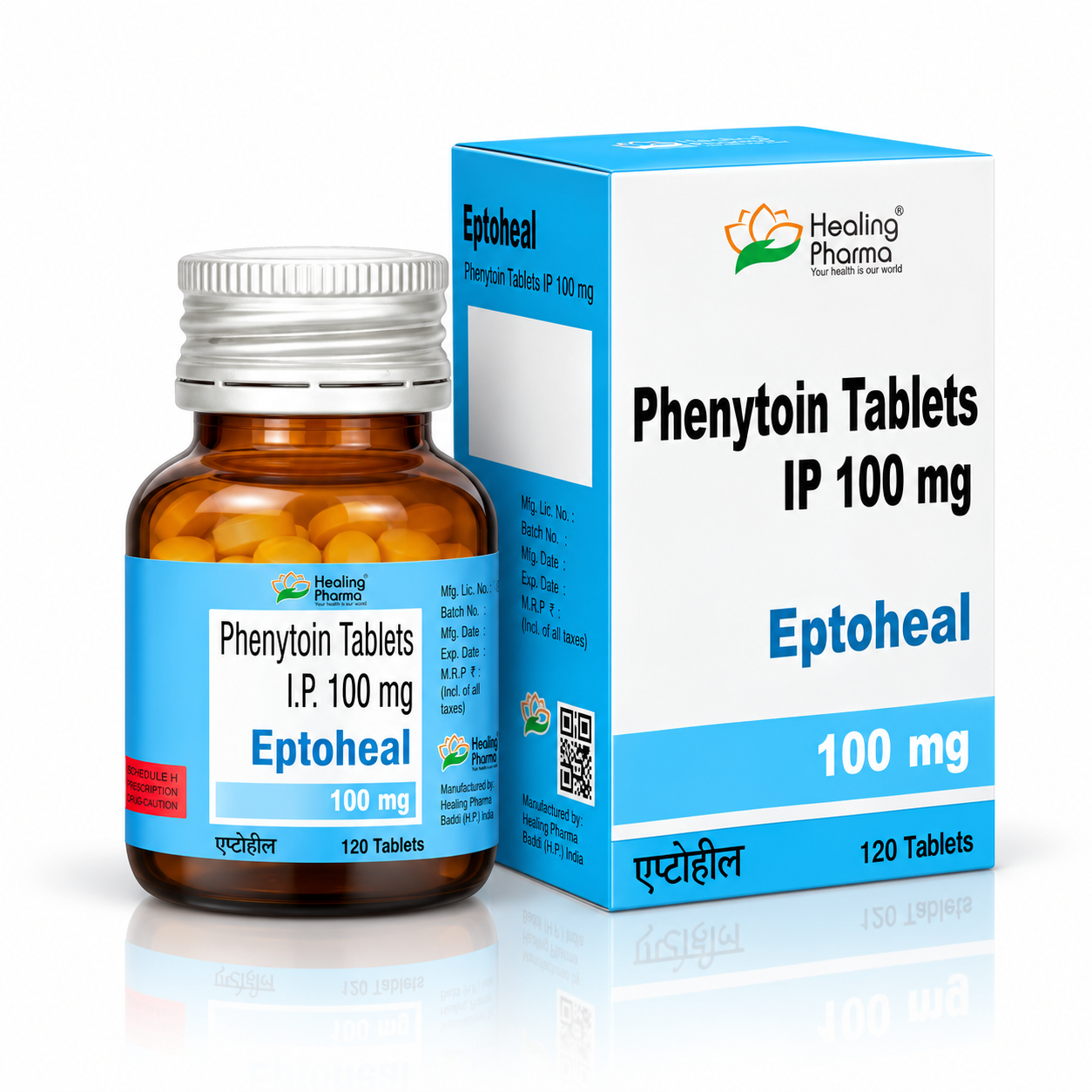
EPTOHEAL 100 MG TABLET contains Phenytoin Sodium 100 mg and is manufactured and marketed by Healing Pharma India Pvt. Ltd. It is an oral antiepileptic medicine, commonly supplied in a bottle of 120 tablets.
Manufacturer Details
Brand Name: Eptoheal 100 mg Tablet
Generic Name: Phenytoin Sodium
Strength: 100 mg
Dosage Form: Oral tablet
Therapeutic Class: Antiepileptic / Anticonvulsant
Manufacturer/Marketer: Healing Pharma India Pvt. Ltd.
Pack Size: 1 × 120 tablets (bottle)
Route of Administration: Oral
Phenytoin belongs to a group of medicines called antiepileptic drugs (AEDs) or anticonvulsants. It is used to prevent and control certain types of seizures in patients with epilepsy.
This medicine works by stabilizing electrical activity in the brain. It primarily blocks voltage-dependent sodium channels in nerve cells, reducing the excessive and repetitive firing of electrical signals responsible for seizures.
By controlling abnormal electrical activity, phenytoin helps prevent seizures and reduce their frequency.
This medicine is commonly used for:
treatment of generalized tonic-clonic seizures
management of focal-onset seizures
treatment of focal seizures with impaired awareness
prevention of certain recurrent epileptic seizures
prevention and treatment of seizures associated with neurosurgery
long-term seizure control in eligible adults
management of selected seizure disorders in children under specialist supervision
combination treatment with other antiepileptic medicines when prescribed
Eptoheal 100 mg helps control epilepsy but does not cure the condition.
It is not effective for every type of seizure and may worsen certain seizure disorders, including some absence or myoclonic epilepsies.
Eptoheal is a prescription medicine that requires careful medical supervision because phenytoin has a narrow therapeutic index. This means the difference between an effective concentration and a potentially toxic concentration can be relatively small.
Important: The exact release characteristics of Eptoheal tablets should be verified on the supplied packaging. Dosage schedules for extended-release phenytoin sodium capsules must not automatically be applied to phenytoin tablets because different formulations may not be interchangeable on a milligram-for-milligram basis.
What should I tell my health care provider before I take this medicine?
They need to know if you have any of these conditions:
epilepsy or another seizure disorder
a history of prolonged seizures
frequent or uncontrolled seizures
liver disease
hepatitis
a history of abnormal liver function
kidney disease
reduced kidney function
low blood albumin levels
heart disease
slow heartbeat
heart rhythm disorders
diabetes mellitus
thyroid disorders
porphyria
a history of severe skin reactions
Stevens-Johnson syndrome (SJS)
toxic epidermal necrolysis (TEN)
a history of drug reaction with eosinophilia and systemic symptoms (DRESS)
a history of allergic reactions to antiepileptic medicines
depression
suicidal thoughts or behavior
a history of mood disorders
blood disorders
low white blood cell counts
low platelet counts
a history of anemia
vitamin D deficiency
osteoporosis
a history of fractures
gum disease
dental problems
difficulty walking or maintaining balance
a history of medication-related dizziness
if you are taking other antiepileptic medicines
if you are taking blood-thinning medicines
if you are using hormonal contraceptives
if you are taking medicines for tuberculosis
if you are taking medicines for fungal infections
if you consume alcohol
if you are pregnant or planning to become pregnant
if you are breastfeeding
an unusual or allergic reaction to phenytoin
an allergy to other hydantoin medicines
an allergy to any ingredient in the tablet
Do not take Eptoheal 100 mg if you have a known serious allergic reaction to phenytoin or another hydantoin medicine.
Phenytoin should also not be used in patients with a history of acute liver toxicity caused by phenytoin.
Serious skin reactions:
Phenytoin can cause severe skin reactions, including Stevens-Johnson syndrome and toxic epidermal necrolysis.
Patients with certain genetic variants, especially **HLA-B*15:02**, may have an increased risk of severe skin reactions. Genetic testing may be considered for patients with relevant ancestry or clinical risk factors.
Liver disease and low albumin:
Phenytoin is strongly bound to blood proteins and is metabolized mainly in the liver.
Patients with liver impairment, kidney disease, or low albumin may have increased levels of active, unbound phenytoin.
Pregnancy:
Phenytoin exposure during pregnancy can increase the risk of birth defects and other developmental complications.
Tell your healthcare professional if you are pregnant or planning pregnancy.
Do not stop Eptoheal suddenly without medical advice, because abrupt discontinuation may cause prolonged or repeated seizures, including status epilepticus.
How should I use this medicine?
Take Eptoheal 100 mg Tablet by mouth exactly as prescribed by your doctor or neurologist.
Swallow the tablet with water.
Eptoheal may be taken with or without food, but it is best to take it consistently under similar conditions each day.
The dosage depends on:
the type of seizures
age
body weight
liver function
kidney function
albumin level
blood phenytoin concentration
response to treatment
other medicines being taken
the exact phenytoin formulation
General dosing information
For epilepsy in adults:
Adult phenytoin maintenance treatment commonly requires a total of approximately 200–400 mg per day, individualized according to seizure control, blood concentrations, and tolerability.
Some patients require doses outside this range.
The dose may be divided into multiple administrations depending on the formulation and prescription.
Important: Reference prescribing information for extended-release phenytoin sodium capsules describes an initial adult regimen of 100 mg three times daily. This does not establish the appropriate starting schedule for Eptoheal tablets, whose release characteristics must be confirmed.
Phenytoin dosing should always be determined by the prescribing clinician.
For generalized tonic-clonic seizures:
Phenytoin may be used to prevent recurrent generalized tonic-clonic seizures.
The dosage is adjusted according to clinical response and, when indicated, blood phenytoin levels.
For focal-onset seizures:
Phenytoin may be prescribed to control focal seizures, including those that develop into bilateral tonic-clonic seizures.
For prevention of seizures around neurosurgery:
Phenytoin may be used in selected neurosurgical situations under specialist supervision.
The dose and duration depend on the procedure and clinical indication.
Routine long-term preventive treatment is not necessary for every patient undergoing brain surgery.
For children:
Pediatric treatment requires weight-based dosing.
Reference oral phenytoin regimens commonly begin at approximately 5 mg/kg/day, divided into two or three doses, with further adjustment based on seizure control and tolerability.
The maximum starting dose and maintenance schedule depend on age, formulation, and specialist guidance.
Eptoheal 100 mg tablets may not be suitable for children requiring smaller doses.
For older adults:
Older patients may need lower doses or slower adjustments because phenytoin metabolism and protein binding can be affected by age and other medical conditions.
For patients with liver or kidney impairment:
Dose selection requires special caution.
The healthcare professional may measure free (unbound) phenytoin concentrations instead of relying only on total blood levels.
Phenytoin blood-level monitoring
Phenytoin has nonlinear metabolism, meaning a small increase in dose can sometimes cause a disproportionately large increase in its blood concentration.
A commonly used reference range for total phenytoin is:
10–20 micrograms/mL (mcg/mL).
The commonly used reference range for free phenytoin is approximately:
1–2 mcg/mL.
These ranges guide treatment but do not replace individual clinical assessment.
Some patients achieve seizure control at concentrations outside these ranges.
Important administration instructions
Take Eptoheal at the prescribed times.
Swallow the tablet with water.
Do not change the dosage yourself.
Do not take additional tablets after a seizure unless specifically instructed.
Do not stop the medicine abruptly.
Do not switch brands or formulations without medical advice.
Avoid missing doses.
Attend regular neurological reviews.
Attend recommended blood tests.
Tell your doctor about all new medicines.
Maintain regular dental hygiene.
Avoid excessive alcohol consumption.
Do not crush or split the tablet unless the product instructions and pharmacist confirm this is appropriate.
Overdosage:
Excessive phenytoin may cause serious neurological and cardiovascular toxicity.
Possible symptoms include:
abnormal eye movements
severe dizziness
slurred speech
unsteady walking
confusion
tremors
nausea and vomiting
severe drowsiness
low blood pressure
reduced consciousness
coma
Seek emergency medical attention immediately if an overdose is suspected.
NOTE: This medicine is only for you. Do not share it with others.
What if I miss a dose?
If you miss a dose of Eptoheal 100 mg Tablet, take it when you remember unless it is almost time for your next scheduled dose.
If your next dose is due soon, skip the missed dose and continue your regular schedule.
Do not take a double dose to make up for a missed dose.
If you miss several doses, contact your healthcare professional for instructions.
Missing doses can reduce seizure protection and increase the risk of breakthrough seizures.
Do not restart treatment with additional tablets or a loading dose unless instructed by a healthcare professional.
Do not stop Eptoheal abruptly, even if your seizures have been controlled for a long time.
What may interact with this medicine?
Phenytoin has numerous clinically important drug interactions.
It affects liver enzymes that metabolize other medicines, and other medicines can also increase or decrease phenytoin concentrations.
Important interactions include:
warfarin
apixaban
rivaroxaban
dabigatran
hormonal contraceptives
oral contraceptive pills
contraceptive patches and implants
carbamazepine
phenobarbital
valproic acid
lamotrigine
topiramate
other antiepileptic medicines
fluconazole
voriconazole
itraconazole
ketoconazole
rifampicin
isoniazid
certain HIV antiviral medicines
certain hepatitis C antiviral medicines
amiodarone
methotrexate
certain chemotherapy medicines
corticosteroids
doxycycline
folic acid
calcium supplements
magnesium-containing antacids
aluminum-containing antacids
alcohol
St. John's wort
Warfarin:
Phenytoin can alter the anticoagulant effects of warfarin, and warfarin may also influence phenytoin levels.
Regular INR testing and clinical monitoring may be necessary.
Direct oral anticoagulants:
Phenytoin may reduce exposure to anticoagulants such as apixaban and rivaroxaban, potentially reducing their effectiveness.
Some combinations should be avoided.
Hormonal contraceptives:
Phenytoin may reduce the effectiveness of certain hormonal contraceptives by increasing their metabolism.
This can increase the risk of unintended pregnancy.
Discuss suitable contraception with your healthcare professional.
Other antiepileptic medicines:
Medicines such as carbamazepine, phenobarbital, and valproic acid may affect phenytoin concentrations or contribute to adverse effects.
Dose adjustment and blood-level monitoring may be necessary.
Valproic acid:
Valproate may alter phenytoin protein binding, resulting in changes to the free, active phenytoin concentration.
Specialized monitoring may be necessary.
Antifungal medicines:
Medicines such as fluconazole and voriconazole may increase phenytoin concentrations, while phenytoin can also reduce the effectiveness of certain antifungals.
Some combinations require avoidance or careful dose adjustment.
Rifampicin:
Rifampicin may increase phenytoin metabolism and reduce its blood concentration.
This may increase seizure risk.
Isoniazid:
Isoniazid may increase phenytoin concentrations and the risk of toxicity in some patients.
HIV and hepatitis C antiviral medicines:
Phenytoin can reduce concentrations of certain antiviral medicines.
Some combinations are contraindicated or should be avoided.
Antacids and mineral supplements:
Calcium-, aluminum-, and magnesium-containing products may interfere with phenytoin absorption.
Your pharmacist may recommend separating administration times.
Folic acid:
Folic acid supplementation may influence phenytoin concentrations in some patients.
However, folic acid is particularly important for people who may become pregnant. Do not avoid prescribed folic acid because of this interaction; let your clinician coordinate appropriate treatment and monitoring.
Alcohol:
Alcohol can affect phenytoin metabolism and increase dizziness or impaired coordination.
Heavy alcohol use or withdrawal may also increase seizure risk.
Enteral nutrition:
Tube feeding preparations may reduce phenytoin absorption.
Patients receiving enteral nutrition may require a specific administration schedule and blood-level monitoring.
Important: Do not begin, stop, or change another medicine without informing your doctor or pharmacist that you take phenytoin.
This list may not describe all possible interactions.
What should I watch for while using this medicine?
Eptoheal 100 mg Tablet helps prevent certain types of seizures, but regular medical monitoring is essential because phenytoin has a narrow therapeutic index and may cause serious adverse reactions.
Seizure monitoring:
Your neurologist may recommend recording the frequency, duration, and severity of seizures.
Keeping a seizure diary may help identify changes in seizure control and possible triggers.
Contact your healthcare professional if seizures become more frequent or change in pattern.
Phenytoin blood concentrations:
Regular blood testing may be necessary to make sure phenytoin concentrations remain within an appropriate therapeutic range.
Symptoms of excessive phenytoin exposure may include:
unusual eye movements
slurred speech
difficulty walking
dizziness
confusion
severe drowsiness
poor coordination
Contact your healthcare professional promptly if these symptoms develop.
Serious skin reactions:
Phenytoin can cause potentially life-threatening skin reactions, including Stevens-Johnson syndrome (SJS) and toxic epidermal necrolysis (TEN).
Seek urgent medical attention if you experience:
a spreading skin rash
blistering or peeling skin
painful sores in the mouth or eyes
fever with a rash
facial swelling
A new rash during treatment must be assessed promptly. Do not take another dose until a healthcare professional has assessed a suspected serious reaction.
Drug reaction with eosinophilia and systemic symptoms (DRESS):
DRESS is a serious drug reaction that can affect the skin, liver, kidneys, and other organs.
Symptoms may include fever, rash, swollen lymph nodes, facial swelling, and signs of internal organ injury.
Seek urgent medical attention if these symptoms occur.
Liver problems:
Phenytoin may rarely cause serious liver injury.
Contact your healthcare professional immediately if you experience:
yellowing of the skin or eyes
dark-colored urine
persistent nausea or vomiting
significant abdominal pain
severe or unexplained tiredness
Gum enlargement:
Long-term phenytoin treatment may cause gingival hyperplasia, also called gum overgrowth.
Maintain good oral hygiene and attend regular dental examinations.
Bone health:
Long-term phenytoin use may affect vitamin D metabolism and increase the risk of reduced bone density.
Your healthcare professional may recommend monitoring vitamin D levels and bone health, particularly during prolonged treatment.
Blood disorders:
Rare changes in blood cell counts may occur.
Report unexplained fever, frequent infections, unusual bruising, or persistent bleeding.
Mood and behavioral changes:
Antiepileptic medicines, including phenytoin, may increase the risk of suicidal thoughts or behavior.
Seek prompt medical attention if you experience new or worsening depression, significant mood changes, or thoughts of self-harm.
Pregnancy:
Phenytoin can increase the risk of congenital malformations and adverse developmental outcomes.
Patients who may become pregnant should receive counseling about contraception, folic acid, and treatment planning.
Do not stop treatment independently during pregnancy because uncontrolled seizures may also pose serious risks.
Breastfeeding:
Phenytoin passes into breast milk in relatively small amounts.
Breastfeeding may be possible with medical guidance and appropriate monitoring of the infant.
Driving and operating machinery:
Eptoheal may cause dizziness, drowsiness, or impaired coordination.
Avoid driving or operating machinery until you understand how the medicine affects you.
Follow applicable driving restrictions for people with epilepsy.
Long-term treatment:
Continue taking Eptoheal for the duration recommended by your neurologist.
Stopping phenytoin abruptly can cause withdrawal seizures or status epilepticus, a potentially life-threatening emergency.
What side effects may I notice from this medicine?
Side effects that you should report to your doctor or healthcare professional as soon as possible:
severe allergic reaction
swelling of the face, lips, tongue, or throat
difficulty breathing or swallowing
severe or widespread skin rash
skin blistering or peeling
fever accompanied by a rash
symptoms of DRESS
yellowing of the skin or eyes
severe liver problems
unusual bleeding or bruising
persistent fever or infections
severe dizziness
marked difficulty walking
severe confusion
slurred speech
abnormal eye movements
severe drowsiness
worsening seizures
suicidal thoughts or behavior
severe mood or behavioral changes
persistent vomiting
severe weakness or reduced consciousness
Side effects that usually do not require immediate medical attention (report them if they continue or are bothersome):
mild dizziness
headache
nausea
vomiting
mild drowsiness
difficulty sleeping
mild tremors
gum enlargement
increased hair growth
mild changes in coordination
The commonly reported adverse effects of phenytoin include dizziness, nausea, headache, abnormal eye movements, impaired coordination, and gum overgrowth.
Some adverse effects are related to blood phenytoin concentrations and may become more noticeable as the dose increases.
Long-term treatment may also contribute to reduced bone density, vitamin D deficiency, and peripheral neuropathy in some patients.
Rare but serious reactions include severe skin disorders, DRESS, liver injury, blood disorders, and serious allergic reactions.
Important: Phenytoin toxicity can occur even after relatively small dose increases because of its nonlinear metabolism.
Contact your healthcare professional if any adverse effect becomes persistent, severe, or unusual.
Where should I keep my medicine?
Keep out of the reach of children and pets.
Store Eptoheal 100 mg Tablet below 30°C, according to available pharmacy product information. Follow any additional instructions printed on the original bottle or carton.
Keep the tablets in their original, tightly closed container.
Protect the medicine from:
excessive heat
direct sunlight
moisture
humid environments
accidental exposure to children
physical damage
Do not store the tablets in a bathroom or near a kitchen sink where temperature and humidity may fluctuate.
Keep the bottle tightly closed after each use.
Do not use Eptoheal 100 mg Tablet after the expiration date printed on the packaging.
Do not use tablets if they appear discolored, damaged, or deteriorated.
Do not transfer tablets into an unlabeled container.
Keep the medicine in a secure location and do not share it with others.
Dispose of expired or unused medicines according to local pharmacy or healthcare disposal recommendations.