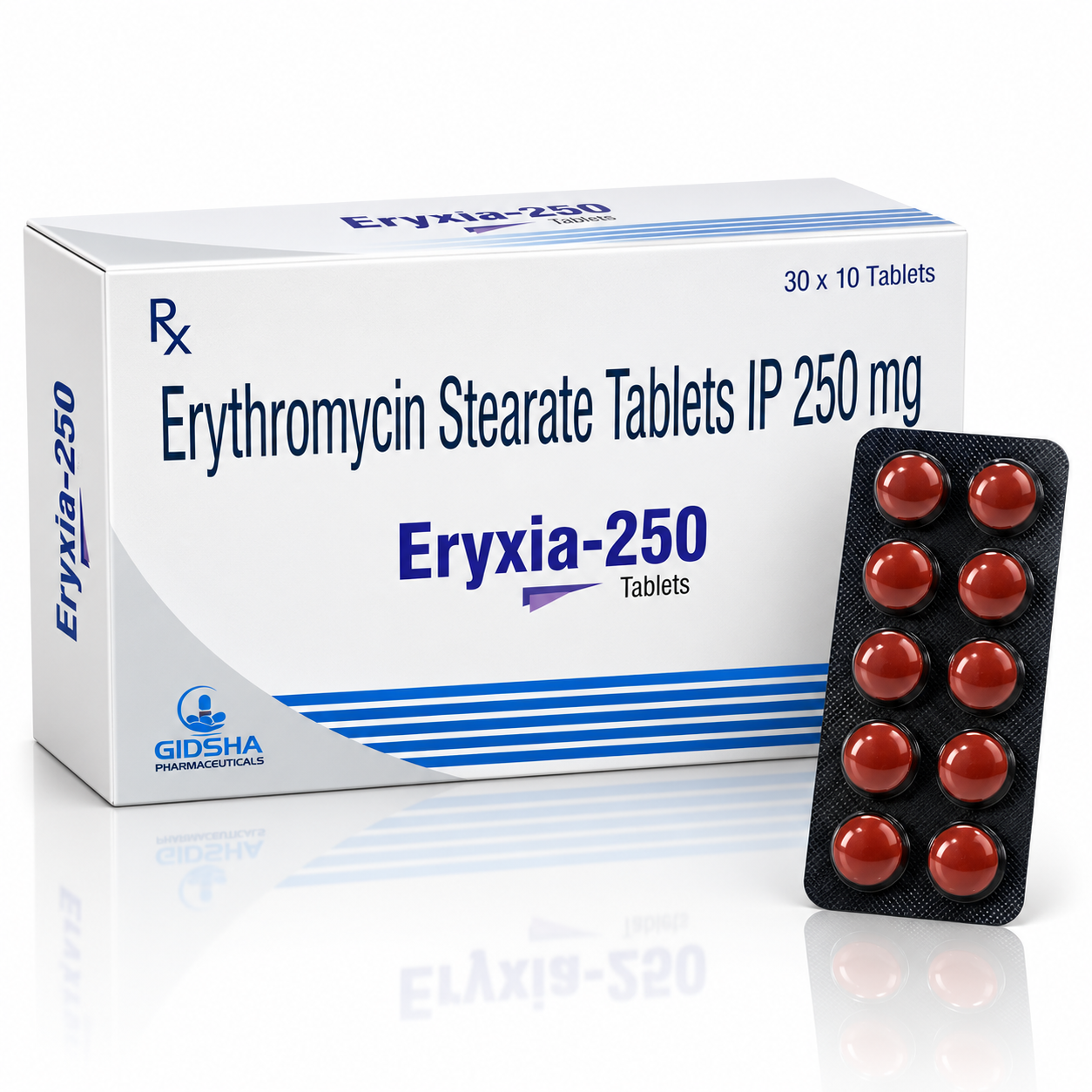
Eryxia 250 MG Tablet
$0.15 / unit
Available Options
| Pack Size | Price | Price / Unit | Quantity | Action |
|---|---|---|---|---|
| 180 Tablets | $26.64 | $0.15/unit | ||
| 150 Tablets | $22.20 | $0.15/unit | ||
| 120 Tablets | $17.76 | $0.15/unit | ||
| 90 Tablets | $13.32 | $0.15/unit | ||
| 60 Tablets | $8.88 | $0.15/unit | ||
| 30 Tablets | $4.44 | $0.15/unit |
Product Description
ERYXIA 250 MG TABLET
Brand Name: Eryxia 250 MG Tablet
Generic Name: Erythromycin Stearate
Strength: 250 mg
Dosage Form: Oral Film-Coated Tablet
Therapeutic Class: Macrolide Antibiotic / Antibacterial Medicine
Manufacturer / Marketer: Gidsha Pharmaceuticals
Pack Size: 1 × 10 Tablets
What is this medicine?
ERYXIA 250 MG TABLET contains Erythromycin Stearate equivalent to Erythromycin 250 mg, a macrolide antibiotic used to treat bacterial infections caused by susceptible microorganisms.
Erythromycin works by binding to the 50S subunit of bacterial ribosomes and inhibiting bacterial protein synthesis. This prevents susceptible bacteria from producing proteins needed for their growth and multiplication.
By reducing bacterial growth, erythromycin helps the body's immune system control and eliminate bacterial infections.
This medicine is commonly used for:
Upper respiratory tract infections, including certain bacterial throat and tonsil infections
Lower respiratory tract infections, including certain types of pneumonia
Bacterial ear, nose, and throat infections
Skin and soft tissue infections caused by susceptible bacteria
Acne vulgaris when oral antibiotic treatment is appropriate
Whooping cough (pertussis)
Certain chlamydial infections
Certain other sexually transmitted bacterial infections when erythromycin is an appropriate treatment
Diphtheria treatment as part of appropriate medical management
Prevention of recurrent rheumatic fever in selected patients when suitable alternatives cannot be used
NOTE: Eryxia 250 MG Tablet treats susceptible bacterial infections. It does not treat viral infections such as the common cold, influenza, or other viral respiratory illnesses.
Unnecessary or inappropriate antibiotic use may increase bacterial resistance and reduce the effectiveness of antibiotic treatments.
What should I tell my health care provider before I take this medicine?
They need to know if you have any of these conditions:
Allergy to erythromycin or other macrolide antibiotics
Previous allergic reactions to azithromycin or clarithromycin
Liver disease or abnormal liver function
Kidney disease
Heart disease or irregular heartbeat
History of QT interval prolongation
Congenital long QT syndrome
History of serious ventricular arrhythmias
Low potassium or magnesium levels
History of unexplained fainting
Myasthenia gravis
History of antibiotic-associated colitis
Severe or persistent diarrhoea
Hearing impairment
Previous severe reactions to antibiotics
Pregnancy or planning pregnancy
Breastfeeding
Use of medicines that may affect heart rhythm
Use of medicines that interact with erythromycin
Inform your healthcare provider about all prescription medicines, nonprescription medicines, vitamins, supplements, and herbal products you are currently taking.
Important: Erythromycin can prolong the QT interval and increase the risk of serious heart rhythm disturbances, especially in people with certain heart conditions, electrolyte abnormalities, or those taking interacting medicines.
How should I use this medicine?
Take this medicine exactly as prescribed by your healthcare provider.
Swallow the tablet whole with a glass of water.
Do not crush or chew the film-coated tablet unless your pharmacist confirms that this is appropriate.
Erythromycin stearate is generally taken on an empty stomach for better absorption, unless the product instructions or prescriber advise otherwise.
Take the medicine at approximately the same time each day.
Space multiple daily doses evenly.
Follow the prescribed dosage and duration.
Do not increase or decrease the dose without medical advice.
Complete the prescribed course unless your healthcare provider advises stopping or changing treatment.
Do not share the medicine with another person.
Avoid using leftover antibiotics for future infections.
Contact your healthcare provider if your symptoms worsen or fail to improve.
Usual Adult Dose: For certain bacterial infections, erythromycin may be prescribed at 250 mg every 6 hours or 500 mg every 12 hours. The appropriate regimen depends on the infection and the prescribed formulation.
Severe Infections: Higher daily doses may be prescribed under medical supervision when clinically necessary.
Duration of Treatment: Depends on the infection, its severity, bacterial susceptibility, and the patient's response to treatment. Certain streptococcal infections require at least 10 days of appropriate antibiotic therapy.
Overdosage: Seek immediate medical attention if an overdose is suspected. Symptoms may include severe nausea, vomiting, abdominal pain, diarrhoea, or other serious adverse reactions.
NOTE: Eryxia 250 MG Tablet contains 250 mg of erythromycin per tablet. The number of tablets and dosing frequency must be determined by a qualified healthcare professional.
What if I miss a dose?
Take the missed dose as soon as you remember.
If it is almost time for your next scheduled dose, skip the missed dose.
Continue with your normal dosing schedule.
Do not take a double dose to compensate for a missed dose.
Avoid taking additional tablets without medical advice.
Contact your healthcare provider if you have missed multiple doses or are unsure how to continue treatment.
Important: Irregular antibiotic use may reduce treatment effectiveness. Follow the prescribed dosing schedule as closely as possible.
What may interact with this medicine?
Erythromycin can interact with several medications because it inhibits the CYP3A4 enzyme involved in drug metabolism and may affect cardiac electrical activity.
Potential interactions include:
Simvastatin and lovastatin
Warfarin and certain other anticoagulants
Digoxin
Carbamazepine
Theophylline
Cyclosporine
Tacrolimus
Colchicine
Ergotamine and dihydroergotamine
Pimozide
Domperidone
Cisapride
Certain antiarrhythmic medicines, including amiodarone and quinidine
Other QT-prolonging antibiotics
Certain calcium channel blockers, including verapamil and diltiazem
Midazolam and triazolam
Other medicines metabolized by CYP3A4
Important Drug Interaction Considerations
Statins: Combining erythromycin with simvastatin or lovastatin may significantly increase the risk of muscle injury, including rhabdomyolysis. These combinations should be avoided.
Heart Rhythm Medicines: Combining erythromycin with medicines that prolong the QT interval can increase the risk of serious heart rhythm disturbances.
Anticoagulants: Erythromycin may increase the anticoagulant effects of warfarin. Additional INR monitoring may be required.
Colchicine: Erythromycin can increase colchicine exposure and cause serious or potentially fatal toxicity, particularly in patients with kidney or liver impairment.
Digoxin: Erythromycin may increase digoxin concentrations in some patients and raise the risk of digoxin toxicity.
Ergot Medicines: Combining erythromycin with ergotamine or dihydroergotamine may cause severe blood vessel constriction and should be avoided.
Important: Some medication combinations are contraindicated, while others require dosage adjustments or careful monitoring. Inform your healthcare provider about all medicines you take before starting Eryxia 250 MG Tablet.
What should I watch for while using this medicine?
Seek immediate medical attention if you experience:
Severe allergic reactions
Swelling of the face, lips, tongue, or throat
Difficulty breathing
Severe skin rash, blistering, or peeling
Persistent or bloody diarrhoea
Severe abdominal pain
Yellowing of the skin or eyes
Dark urine or pale stools
Rapid or irregular heartbeat
Severe dizziness or fainting
Significant hearing changes
Severe muscle weakness
While using this medicine:
Monitor whether infection symptoms improve.
Report persistent fever or worsening symptoms.
Follow the complete prescribed treatment schedule.
Maintain adequate hydration.
Report persistent nausea, vomiting, or diarrhoea.
Avoid taking additional antibiotics without medical advice.
Inform your doctor if you have existing heart rhythm problems.
Follow recommended liver function monitoring if you have liver disease or require prolonged therapy.
Report new or worsening muscle weakness, especially if you have myasthenia gravis.
Inform your healthcare provider if you develop severe diarrhoea during treatment or after treatment has ended.
Attend follow-up appointments when necessary.
Do not share antibiotics with others.
Avoid unnecessary antibiotic use.
NOTE: Erythromycin may occasionally cause Clostridioides difficile-associated diarrhoea, a potentially serious intestinal infection that can develop during antibiotic treatment or several weeks after completing the course.
Seek medical advice before using antidiarrhoeal medicines if you develop severe or bloody diarrhoea.
What side effects may I notice from this medicine?
Side effects that should be reported immediately:
Severe allergic reactions or anaphylaxis
Difficulty breathing or swallowing
Swelling of the face, lips, or tongue
Severe skin reactions involving blistering or peeling
Serious irregular heartbeat
Severe dizziness or fainting
Yellowing of the skin or eyes
Severe liver inflammation
Persistent or bloody diarrhoea
Severe abdominal pain that may indicate pancreatitis
Significant hearing loss
Severe muscle weakness
Unusual muscle pain or dark urine, particularly when taking interacting medications
Symptoms of serious antibiotic-associated colitis
Side effects that usually do not require medical attention:
Nausea
Vomiting
Mild diarrhoea
Abdominal discomfort
Stomach cramps
Loss of appetite
Indigestion
Bloating
Mild gastrointestinal irritation
These side effects are often mild and may improve during treatment.
Contact your healthcare provider if they persist, become troublesome, or worsen.
Important: Gastrointestinal symptoms, including nausea, abdominal cramps, and diarrhoea, are among the most commonly reported adverse effects of erythromycin.
Severe or persistent symptoms require medical evaluation.
Where should I keep my medicine?
Keep out of the reach of children.
Store according to the temperature instructions printed on the original product packaging.
Keep the tablets in a cool, dry place.
Protect from excessive heat and moisture.
Protect from direct sunlight.
Keep tablets in their original blister packaging until use.
Avoid storing the medicine in bathrooms or other humid locations.
Do not use tablets after the expiry date.
Do not use tablets if the packaging is damaged.
Avoid transferring tablets to unlabelled containers.
Dispose of expired or unused medicine according to your pharmacist's instructions.
Storage Note: Available Eryxia product information advises keeping tablets in a cool, dry place protected from light. The original product packaging should be followed for specific temperature requirements.
Manufacturer Details
Field | Information |
|---|---|
Brand Name | |
Generic Name | Erythromycin Stearate |
Strength | 250 mg (equivalent to Erythromycin 250 mg) |
Dosage Form | Oral Film-Coated Tablet |
Therapeutic Class | |
Indication | Treatment of Susceptible Bacterial Infections |
Manufacturer / Marketer | Gidsha Pharmaceuticals — listed by one retailer; verify packaging |
Prescription Status | Prescription Only Medicine (Schedule H, India) |
Storage | Store in a Cool, Dry Place, Protected from Light; Follow Original Label |
Route of Administration | Oral |
Pack Size | 1 × 10 Tablets |
Country of Origin | India |