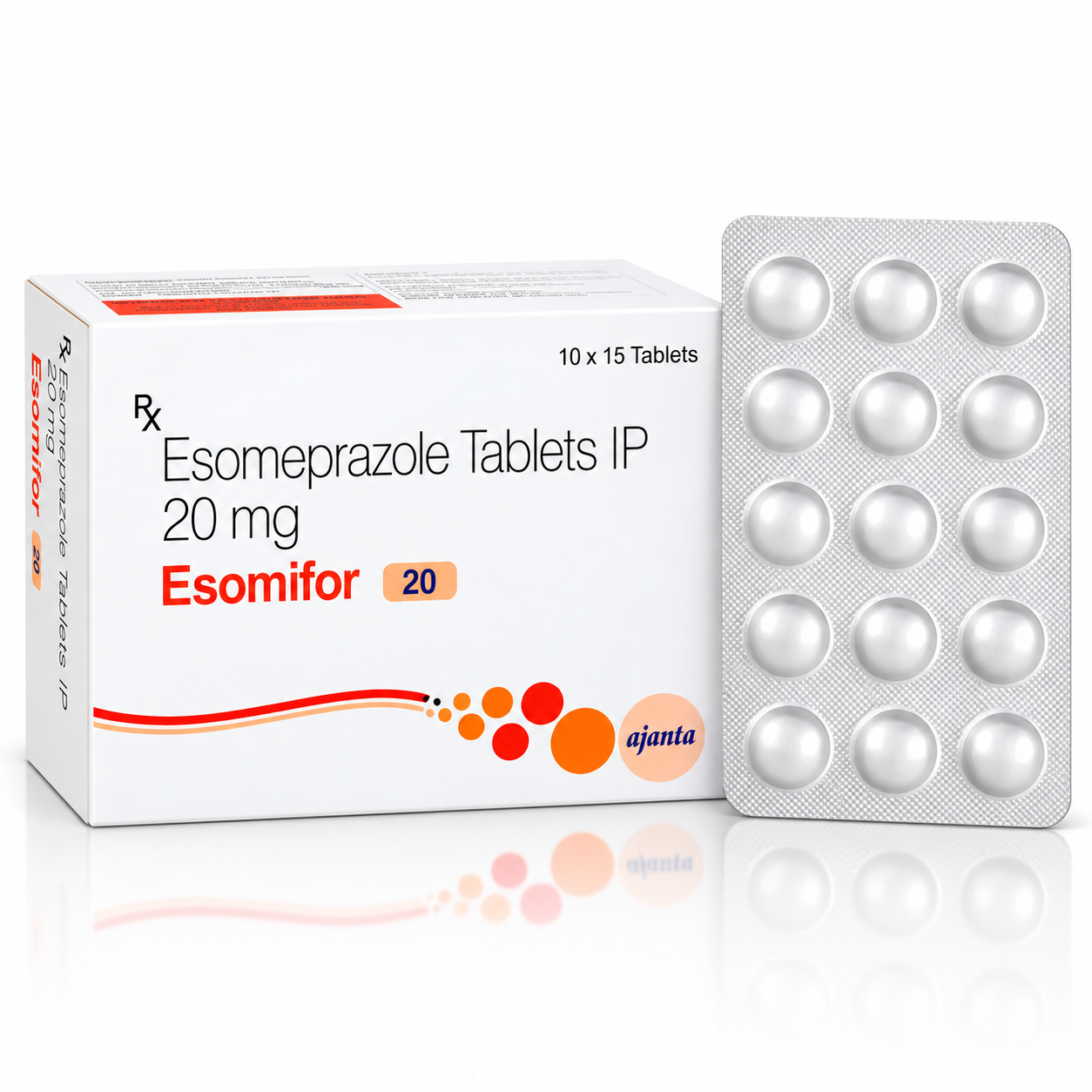
Esomifor 20 MG Tablet
$0.33 / unit
Available Options
| Pack Size | Price | Price / Unit | Quantity | Action |
|---|---|---|---|---|
| 180 Tablets | $45.00 | $0.25/unit | ||
| 150 Tablets | $39.00 | $0.26/unit | ||
| 120 Tablets | $31.00 | $0.26/unit | ||
| 90 Tablets | $25.00 | $0.28/unit | ||
| 60 Tablets | $18.00 | $0.30/unit | ||
| 30 Tablets | $10.00 | $0.33/unit |
Product Description
ESOMIFOR 20 MG TABLET
Brand Name: Esomifor 20 MG Tablet
Generic Name: Esomeprazole
Strength: 20 mg
Dosage Form: Oral Tablet
Therapeutic Class: Proton Pump Inhibitor (PPI) / Gastric Acid Suppressant
Manufacturer / Marketer: Ajanta Pharma Limited
Pack Size: 1 × 15 Tablets
What is this medicine?
ESOMIFOR 20 MG TABLET contains Esomeprazole 20 mg, a medicine belonging to the proton pump inhibitor (PPI) class. It is used to treat conditions caused by excessive stomach acid production.
Esomeprazole works by inhibiting the hydrogen-potassium ATPase enzyme system, commonly known as the proton pump, in the acid-producing parietal cells of the stomach.
By blocking these pumps, esomeprazole reduces gastric acid secretion, helping relieve acid-related symptoms and allowing damaged tissues in the stomach and oesophagus to heal.
This medicine is commonly used for:
Gastroesophageal reflux disease (GERD)
Frequent acid reflux and heartburn
Erosive oesophagitis caused by stomach acid
Maintenance treatment of healed erosive oesophagitis
Gastric and duodenal ulcers in appropriate patients
Prevention of NSAID-associated gastric ulcers in patients at increased risk
Helicobacter pylori-associated peptic ulcer disease when combined with appropriate antibiotics
Zollinger-Ellison syndrome and other conditions involving excessive gastric acid secretion
Management of acid-related upper gastrointestinal symptoms when clinically indicated
NOTE: Esomifor 20 MG Tablet reduces stomach acid production but does not provide immediate relief from heartburn.
Symptoms may begin improving within a few days, while complete healing of acid-related damage may require several weeks.
Persistent or recurring symptoms should be evaluated by a healthcare professional.
What should I tell my health care provider before I take this medicine?
They need to know if you have any of these conditions:
Allergy to esomeprazole, omeprazole, or other proton pump inhibitors
Previous severe allergic reactions to acid-suppressing medicines
Liver disease or impaired liver function
Kidney disease
History of acute interstitial nephritis
Low magnesium levels
Vitamin B12 deficiency
Osteoporosis or increased risk of bone fractures
History of severe or persistent diarrhoea
Previous Clostridioides difficile infection
Systemic lupus erythematosus
Cutaneous lupus erythematosus
Unexplained weight loss
Difficulty swallowing
Persistent vomiting
Vomiting blood
Black or tarry stools
History of gastric or oesophageal cancer
Pregnancy or planning pregnancy
Breastfeeding
Long-term use of NSAID pain relievers
Use of medicines that interact with esomeprazole
Inform your healthcare provider about all prescription medicines, nonprescription medicines, supplements, vitamins, and herbal products you currently take.
Important: Long-term proton pump inhibitor treatment may be associated with low magnesium levels, vitamin B12 deficiency, certain gastrointestinal infections, and an increased risk of bone fractures in susceptible patients.
Use the lowest effective dose for the shortest clinically appropriate duration.
How should I use this medicine?
Take this medicine exactly as prescribed by your healthcare provider.
Swallow the tablet whole with a glass of water.
Do not crush or chew the delayed-release tablet.
Esomeprazole is generally taken at least one hour before a meal.
It is commonly taken before breakfast.
Take the medicine at approximately the same time each day.
Follow the prescribed dosage and treatment duration.
Do not increase or decrease the dose without medical advice.
Do not take additional doses for immediate heartburn relief.
Continue treatment for the duration recommended by your doctor.
Avoid unnecessarily prolonged use.
Follow medical advice regarding other acid-reducing medicines.
Inform your doctor if symptoms persist or worsen.
Attend follow-up appointments when necessary.
Usual Adult Dose: For symptomatic GERD, esomeprazole 20 mg once daily is a commonly prescribed dose.
Erosive Oesophagitis: Treatment may require esomeprazole 20 mg or 40 mg once daily for approximately 4–8 weeks, depending on the severity and applicable prescribing guidance.
Maintenance Treatment: Esomeprazole 20 mg once daily may be prescribed to maintain healing of erosive oesophagitis when ongoing treatment is appropriate.
NSAID-Associated Gastric Ulcer Prevention: Esomeprazole 20 mg or 40 mg once daily may be prescribed for selected patients who are at increased risk of NSAID-associated gastric ulcers.
H. pylori Treatment: Esomeprazole is used alongside appropriate antibiotics as part of a combination treatment regimen. Antibiotic selection, dosing, and duration should follow current clinical guidance.
Duration of Treatment: Depends on the underlying condition, disease severity, clinical response, and individual risk factors. Some patients require short courses, while others may need longer treatment under medical supervision.
Overdosage: Seek medical attention if an overdose is suspected. Symptoms may include confusion, drowsiness, headache, nausea, or other adverse effects.
NOTE: Esomifor 20 MG Tablet contains 20 mg of esomeprazole per tablet. Higher doses and prolonged treatment should only be used when medically appropriate and prescribed by a healthcare professional.
What if I miss a dose?
Take the missed dose as soon as you remember.
If it is nearly time for your next scheduled dose, skip the missed dose.
Continue with your normal dosing schedule.
Do not take two doses together to compensate for a missed dose.
Avoid taking additional tablets without medical advice.
Contact your healthcare provider if you frequently miss doses or are unsure how to continue treatment.
Important: Inconsistent use may reduce the effectiveness of acid suppression and allow symptoms to return.
What may interact with this medicine?
Esomeprazole may interact with medications whose absorption depends on stomach acidity or whose metabolism is affected by proton pump inhibition.
Potential interactions include:
Clopidogrel
Warfarin
Methotrexate, particularly at high doses
Digoxin
Phenytoin
Diazepam
Tacrolimus
Atazanavir
Nelfinavir
Rilpivirine
Ketoconazole
Itraconazole
Erlotinib and certain other medicines requiring an acidic environment for absorption
Rifampicin
St John's wort
Certain antiretroviral medicines
Other proton pump inhibitors
Certain iron preparations
Important Drug Interaction Considerations
Clopidogrel: Esomeprazole may reduce the activation of clopidogrel, potentially decreasing its antiplatelet effectiveness. Concomitant use is generally avoided.
Warfarin: Esomeprazole may alter anticoagulation in some patients. Additional INR monitoring may be required.
Methotrexate: Proton pump inhibitors may increase methotrexate exposure, particularly during high-dose methotrexate therapy. Temporary interruption of esomeprazole may be considered by the treating physician.
Digoxin: Reduced stomach acidity may increase digoxin absorption in some patients, raising the risk of digoxin toxicity.
Antiretroviral Medicines: Esomeprazole can significantly reduce the absorption of certain HIV medicines. Some combinations, including rilpivirine-containing therapy, are contraindicated.
Antifungal Medicines: Esomeprazole may reduce the absorption of certain antifungal medicines that require an acidic gastric environment.
Rifampicin and St John's Wort: These may reduce esomeprazole concentrations and decrease treatment effectiveness.
Important: Some medication combinations are contraindicated, while others require monitoring or dose adjustments. Inform your healthcare provider about all medicines you take before starting Esomifor 20 MG Tablet.
What should I watch for while using this medicine?
Seek immediate medical attention if you experience:
Severe allergic reactions
Swelling of the face, lips, tongue, or throat
Difficulty breathing
Severe skin reactions involving blistering or peeling
Persistent or bloody diarrhoea
Severe abdominal pain
Vomiting blood
Black or tarry stools
Severe or persistent vomiting
Significant unexplained weight loss
Difficulty swallowing
Reduced urination or blood in the urine
Severe muscle cramps, tremors, or abnormal heartbeat
Seizures
Severe weakness or confusion
While using this medicine:
Monitor whether acid reflux and heartburn symptoms improve.
Report persistent or worsening symptoms.
Avoid unnecessarily prolonged treatment.
Attend follow-up appointments when recommended.
Report severe or persistent diarrhoea.
Inform your doctor about unexplained weight loss.
Follow dietary and lifestyle recommendations for GERD.
Avoid lying down immediately after meals.
Avoid large meals close to bedtime.
Identify and limit foods that trigger reflux symptoms.
Maintain a healthy body weight.
Avoid smoking.
Limit alcohol if it worsens acid reflux.
Follow recommended monitoring of magnesium and vitamin B12 during prolonged treatment when clinically appropriate.
Inform your healthcare provider about new joint pain or unusual skin rashes.
Report symptoms that return after stopping treatment.
NOTE: Long-term esomeprazole use may be associated with low magnesium levels, vitamin B12 deficiency, certain gastrointestinal infections, and fractures in susceptible patients.
Regular medical review helps determine whether continued acid-suppressing therapy is necessary.
What side effects may I notice from this medicine?
Side effects that should be reported immediately:
Severe allergic reactions or anaphylaxis
Difficulty breathing or swallowing
Swelling of the face, lips, or tongue
Severe skin reactions, including Stevens-Johnson syndrome
Severe or persistent diarrhoea
Bloody diarrhoea
Acute kidney inflammation
Reduced urine output
Severe magnesium deficiency
Seizures associated with electrolyte abnormalities
Serious irregular heartbeat
Severe muscle cramps or spasms
Lupus-like skin reactions
Severe unexplained weakness
Signs of serious liver problems, including jaundice
Side effects that usually do not require medical attention:
Headache
Nausea
Mild diarrhoea
Constipation
Abdominal discomfort
Stomach pain
Flatulence
Dry mouth
Mild dizziness
Bloating
These side effects are generally mild and may improve as the body adjusts to treatment.
Contact your healthcare provider if they persist, become troublesome, or worsen.
Important: Headache, abdominal pain, nausea, diarrhoea, and constipation are among the commonly reported side effects of esomeprazole.
Persistent or severe symptoms require medical evaluation.
Where should I keep my medicine?
Keep out of the reach of children.
Store according to the temperature instructions printed on the original product packaging.
Keep the tablets in a cool, dry place.
Protect from excessive heat and moisture.
Protect from direct sunlight.
Keep the tablets in their original blister packaging until use.
Avoid storing the medicine in bathrooms or excessively humid locations.
Do not use tablets after the expiry date.
Do not use tablets if the packaging is damaged.
Avoid transferring tablets to unlabelled containers.
Dispose of expired or unused tablets according to your pharmacist's instructions.
Storage Note: The exact temperature requirement for Esomifor 20 MG Tablet should be confirmed from its original packaging. Storage requirements may vary between formulations.
Manufacturer Details
Field | Information |
|---|---|
Brand Name | Esomifor 20 MG Tablet |
Generic Name | Esomeprazole |
Strength | 20 mg |
Dosage Form | Oral Tablet |
Therapeutic Class | Proton Pump Inhibitor (PPI) / Gastric Acid Suppressant |
Indication | Treatment of GERD, Acid-Related Disorders, and Peptic Ulcer Disease |
Manufacturer / Marketer | Ajanta Pharma Limited |
Prescription Status | Prescription Only Medicine |
Storage | Follow Original Product Label |
Route of Administration | Oral |
Pack Size | 1 × 15 Tablets |
Country of Origin | India |