Esram 10 MG Tablet
$0.43 / unit
Available Options
| Pack Size | Price | Price / Unit | Quantity | Action |
|---|---|---|---|---|
| 180 Tablets | $58.00 | $0.32/unit | ||
| 150 Tablets | $50.00 | $0.33/unit | ||
| 120 Tablets | $40.00 | $0.33/unit | ||
| 90 Tablets | $32.00 | $0.36/unit | ||
| 60 Tablets | $23.00 | $0.38/unit | ||
| 30 Tablets | $13.00 | $0.43/unit |
Product Description
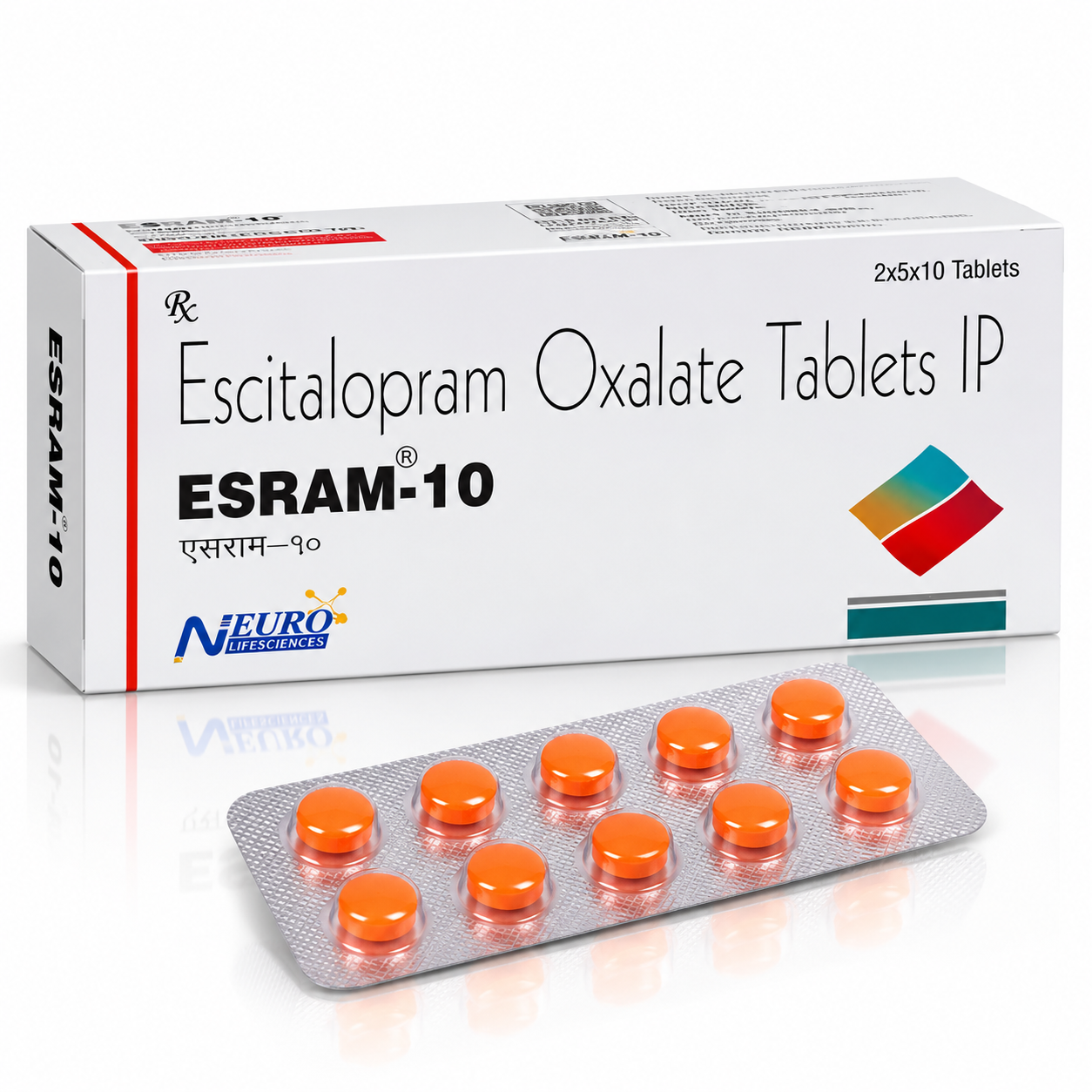
ESRAM 10 MG TABLET
Brand Name: Esram 10 MG Tablet
Generic Name: Escitalopram Oxalate
Strength: 10 mg
Dosage Form: Oral Tablet
Therapeutic Class: Selective Serotonin Reuptake Inhibitor (SSRI) / Antidepressant
Manufacturer / Marketer: Neuro Life Science / Neurolife Pharmaceuticals Pvt. Ltd.
Pack Size: 1 × 10 Tablets
What is this medicine?
ESRAM 10 MG TABLET contains Escitalopram Oxalate equivalent to Escitalopram 10 mg, an antidepressant medicine belonging to the selective serotonin reuptake inhibitor (SSRI) class.
It is primarily used to treat depression and generalized anxiety disorder. Escitalopram may also be prescribed for certain other anxiety-related conditions, depending on clinical assessment and local prescribing guidelines.
Escitalopram works by selectively inhibiting serotonin reuptake in the brain. Serotonin is a neurotransmitter involved in regulating mood, anxiety, sleep, and emotional responses.
By increasing the availability of serotonin between nerve cells, escitalopram helps improve mood and reduce symptoms of depression and anxiety.
This medicine is commonly used for:
Major depressive disorder (MDD)
Generalized anxiety disorder (GAD)
Persistent anxiety symptoms associated with diagnosed anxiety disorders
Panic disorder, where approved or prescribed by a specialist
Social anxiety disorder, where approved or clinically appropriate
Obsessive-compulsive disorder (OCD), where approved or prescribed by a specialist
Maintenance treatment to reduce the risk of depression recurrence in suitable patients
NOTE: Esram 10 MG Tablet does not provide immediate relief from acute anxiety or panic attacks.
Some patients may notice improvement within the first few weeks, but full antidepressant benefits commonly take 4–6 weeks or longer.
Approved indications can vary by country, and some uses may be off-label.
What should I tell my health care provider before I take this medicine?
They need to know if you have any of these conditions:
Allergy to escitalopram, citalopram, or any ingredient of the tablet
Bipolar disorder or a history of manic episodes
Previous suicidal thoughts or self-harm behavior
History of seizures or epilepsy
Liver disease
Kidney disease
Heart disease or irregular heartbeat
Congenital long QT syndrome
History of QT interval prolongation
Low potassium or magnesium levels
Glaucoma, particularly angle-closure glaucoma
Bleeding disorders
Low blood sodium levels (hyponatremia)
Diabetes
History of serotonin syndrome
Previous severe reactions to antidepressants
Pregnancy or planning pregnancy
Breastfeeding
Use of other antidepressants
Use of medicines that increase serotonin levels
Use of blood-thinning medications
Regular alcohol consumption
Inform your healthcare provider about all prescription medicines, nonprescription medicines, vitamins, supplements, and herbal products you are currently taking.
Important: Antidepressants, including escitalopram, may increase suicidal thoughts and behaviors in children, adolescents, and young adults, particularly when treatment begins or the dosage changes.
Patients and caregivers should monitor for worsening depression, unusual mood changes, agitation, or suicidal thoughts and report these promptly.
How should I use this medicine?
Take this medicine exactly as prescribed by your healthcare provider.
Swallow the tablet with a glass of water.
It may be taken with or without food.
Escitalopram is generally taken once daily.
Take the medicine at approximately the same time each day.
It may be taken in the morning or evening, depending on your doctor's instructions.
If the medicine causes insomnia, morning administration may be preferred.
If the medicine causes drowsiness, evening administration may be recommended.
Do not increase or decrease the dose without medical advice.
Do not stop taking the medicine abruptly.
Continue treatment even if symptoms do not improve immediately.
Attend regular follow-up appointments to evaluate treatment response.
Avoid alcohol or discuss alcohol use with your healthcare provider.
Do not share your prescription with another person.
Usual Adult Starting Dose: For major depressive disorder and generalized anxiety disorder, escitalopram 10 mg once daily is a commonly recommended starting dose.
Lower Starting Dose: Some patients may be started on 5 mg once daily depending on tolerability, age, liver function, and clinical circumstances.
Maximum Adult Dose: The usual maximum recommended dose is 20 mg once daily, depending on the indication, treatment response, and individual risk factors.
Older Adults: A dose of 10 mg once daily is generally recommended for many older adults. Lower doses may be appropriate for some patients.
Duration of Treatment: Treatment depends on the underlying condition and response. For depression, medication is commonly continued for several months after symptoms improve to reduce the risk of relapse.
Expected Results: Some improvements in sleep, appetite, or anxiety may occur within the first few weeks. Full antidepressant benefits may take 4–6 weeks or longer.
Overdosage: Seek emergency medical attention if an overdose is suspected. Symptoms may include severe dizziness, vomiting, agitation, tremors, seizures, rapid heartbeat, or potentially serious heart rhythm disturbances.
NOTE: Esram 10 MG Tablet contains the commonly prescribed 10 mg strength of escitalopram. Dosage adjustments should be made only under medical supervision.
What if I miss a dose?
Take the missed dose as soon as you remember if it is not close to the next scheduled dose.
If it is nearly time for the next dose, skip the missed dose.
Continue with your normal dosing schedule.
Do not take two doses together to compensate for a missed dose.
Avoid taking extra tablets without medical advice.
If several consecutive doses have been missed, contact your healthcare provider for guidance.
Important: Abruptly stopping escitalopram or missing several doses may cause discontinuation symptoms, including dizziness, irritability, nausea, anxiety, insomnia, and electric-shock-like sensations.
Do not discontinue treatment suddenly without consulting your healthcare provider.
What may interact with this medicine?
Escitalopram can interact with medicines that affect serotonin levels, blood clotting, cardiac electrical activity, or drug metabolism.
Potential interactions include:
Monoamine oxidase inhibitors (MAOIs), including phenelzine and tranylcypromine
Linezolid
Intravenous methylene blue
Other SSRIs, including fluoxetine, sertraline, and paroxetine
SNRIs, including venlafaxine and duloxetine
Tricyclic antidepressants
Tramadol
Fentanyl and certain other opioids
Triptans used for migraine
Lithium
Buspirone
St John's wort
Tryptophan supplements
Aspirin
NSAIDs, including ibuprofen and naproxen
Warfarin and other anticoagulants
Certain antipsychotic medicines
Pimozide
Certain medicines that prolong the QT interval
Omeprazole and other CYP2C19 inhibitors
Cimetidine
Certain antiarrhythmic medicines
Important Drug Interaction Considerations
MAO Inhibitors: Combining escitalopram with MAOIs can cause potentially life-threatening serotonin syndrome. Appropriate medication-free intervals are necessary when switching between these treatments.
Other Serotonergic Medicines: Combining escitalopram with tramadol, other antidepressants, triptans, or serotonergic supplements may increase the risk of serotonin syndrome.
Blood-Thinning Medicines: Concurrent use with warfarin, aspirin, or NSAIDs may increase the risk of bleeding.
Heart Rhythm Medicines: Combining escitalopram with other medicines that prolong the QT interval may increase the risk of serious heart rhythm disturbances.
Omeprazole and Cimetidine: These medicines may increase escitalopram concentrations in some patients, potentially increasing adverse effects.
Alcohol: Alcohol may worsen drowsiness, impaired judgment, and other central nervous system effects. Avoid alcohol during treatment unless your healthcare provider advises otherwise.
Important: Some medication combinations are contraindicated, while others require dose adjustments or monitoring. Inform your healthcare provider about every medicine you take before starting treatment.
What should I watch for while using this medicine?
Seek immediate medical attention if you experience:
New or worsening suicidal thoughts
Severe changes in mood or behavior
Severe agitation or unusual restlessness
Symptoms of serotonin syndrome, including fever, confusion, sweating, tremors, and muscle rigidity
Seizures
Severe allergic reactions
Swelling of the face, lips, tongue, or throat
Difficulty breathing
Fainting or serious heart rhythm disturbances
Unusual bleeding or bruising
Severe headache, confusion, or weakness suggesting low sodium levels
Symptoms of mania, including unusually elevated mood, reduced need for sleep, or impulsive behavior
While using this medicine:
Attend regular medical follow-up appointments.
Monitor changes in mood and anxiety symptoms.
Report worsening depression or unusual behavioral changes.
Inform your doctor about persistent sleep disturbances.
Report significant changes in appetite or weight.
Monitor for sexual side effects.
Avoid driving or operating machinery until you know how the medicine affects you.
Avoid alcohol during treatment.
Take the medicine consistently as prescribed.
Do not suddenly stop treatment.
Report persistent nausea, dizziness, or other troublesome symptoms.
Inform your healthcare provider if you experience unusual bleeding.
Report unusually elevated mood or excessive energy.
Discuss pregnancy or breastfeeding plans with your doctor.
Follow a medically supervised dose-reduction schedule when discontinuing treatment.
NOTE: Escitalopram may help manage depression and anxiety, but regular clinical monitoring is particularly important during the first few weeks of treatment and after dosage changes.
What side effects may I notice from this medicine?
Side effects that should be reported immediately:
Suicidal thoughts or behaviors
Severe worsening of depression
Serotonin syndrome
Severe allergic reactions
Seizures
Serious abnormal heart rhythms
Severe dizziness or fainting
Unusual bleeding or bruising
Severe low blood sodium levels
Mania or hypomania
Severe agitation or confusion
Severe muscle rigidity
Sudden eye pain or vision changes
Severe discontinuation symptoms following abrupt withdrawal
Side effects that usually do not require medical attention:
Nausea
Headache
Dizziness
Mild fatigue
Drowsiness
Difficulty sleeping
Increased sweating
Dry mouth
Constipation
Mild diarrhoea
Reduced appetite
Mild stomach discomfort
Increased yawning
Changes in sexual desire
Delayed ejaculation
Difficulty achieving orgasm
Erectile difficulties in some patients
These side effects may be more noticeable when treatment begins or when the dosage increases.
Some effects improve as the body adjusts to treatment. However, certain effects, particularly sexual dysfunction, may persist and should be discussed with a healthcare professional.
Important: Do not stop taking Esram 10 MG Tablet suddenly because of side effects. Contact your healthcare provider to discuss appropriate treatment adjustments. In some patients, sexual dysfunction may persist after discontinuation of SSRIs.
Where should I keep my medicine?
Keep out of the reach of children.
Store below 30°C, according to available Indian product listings.
Keep the tablets in a cool, dry place.
Protect from excessive heat and moisture.
Protect from direct sunlight.
Keep tablets in their original blister packaging until use.
Avoid storing the medicine in bathrooms or excessively humid environments.
Do not use tablets after their expiry date.
Do not use tablets if the packaging is damaged.
Avoid transferring tablets to unlabelled containers.
Dispose of expired or unused tablets according to your pharmacist's instructions.
Storage Note: Available Indian product information recommends storage below 30°C. Always follow the storage requirements printed on the original Esram 10 MG Tablet packaging.
Manufacturer Details
Field | Information |
|---|---|
Brand Name | Esram 10 MG Tablet |
Generic Name | Escitalopram Oxalate |
Strength | 10 mg |
Dosage Form | Oral Tablet |
Therapeutic Class | Selective Serotonin Reuptake Inhibitor (SSRI) / Antidepressant |
Indication | Treatment of Major Depressive Disorder and Generalized Anxiety Disorder |
Manufacturer / Marketer | Neuro Life Science / Neurolife Pharmaceuticals Pvt. Ltd. |
Prescription Status | Prescription Only Medicine |
Storage | Store Below 30°C; Protect from Heat and Moisture |
Route of Administration | Oral |
Pack Size | 1 × 10 Tablets |
Country of Origin | India |