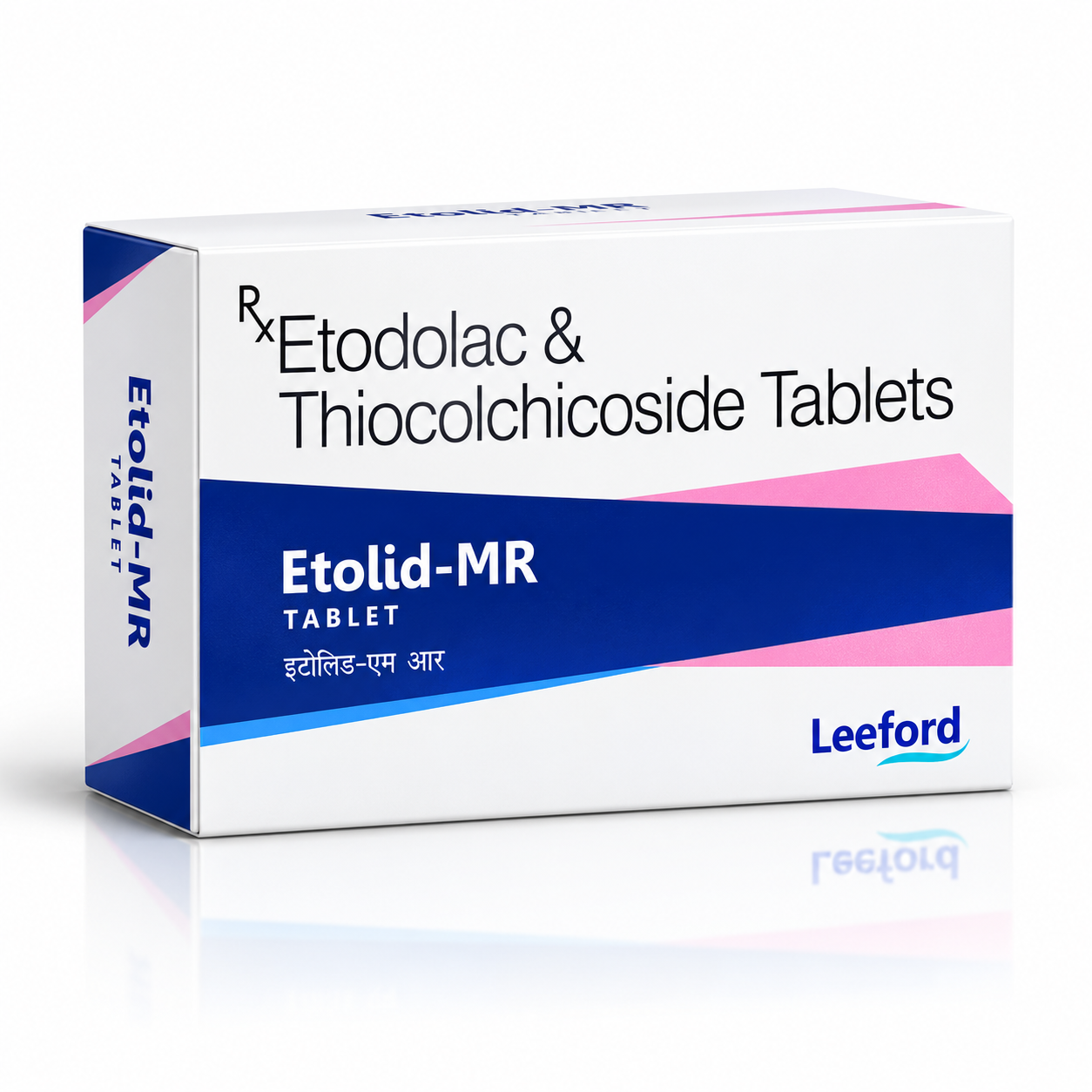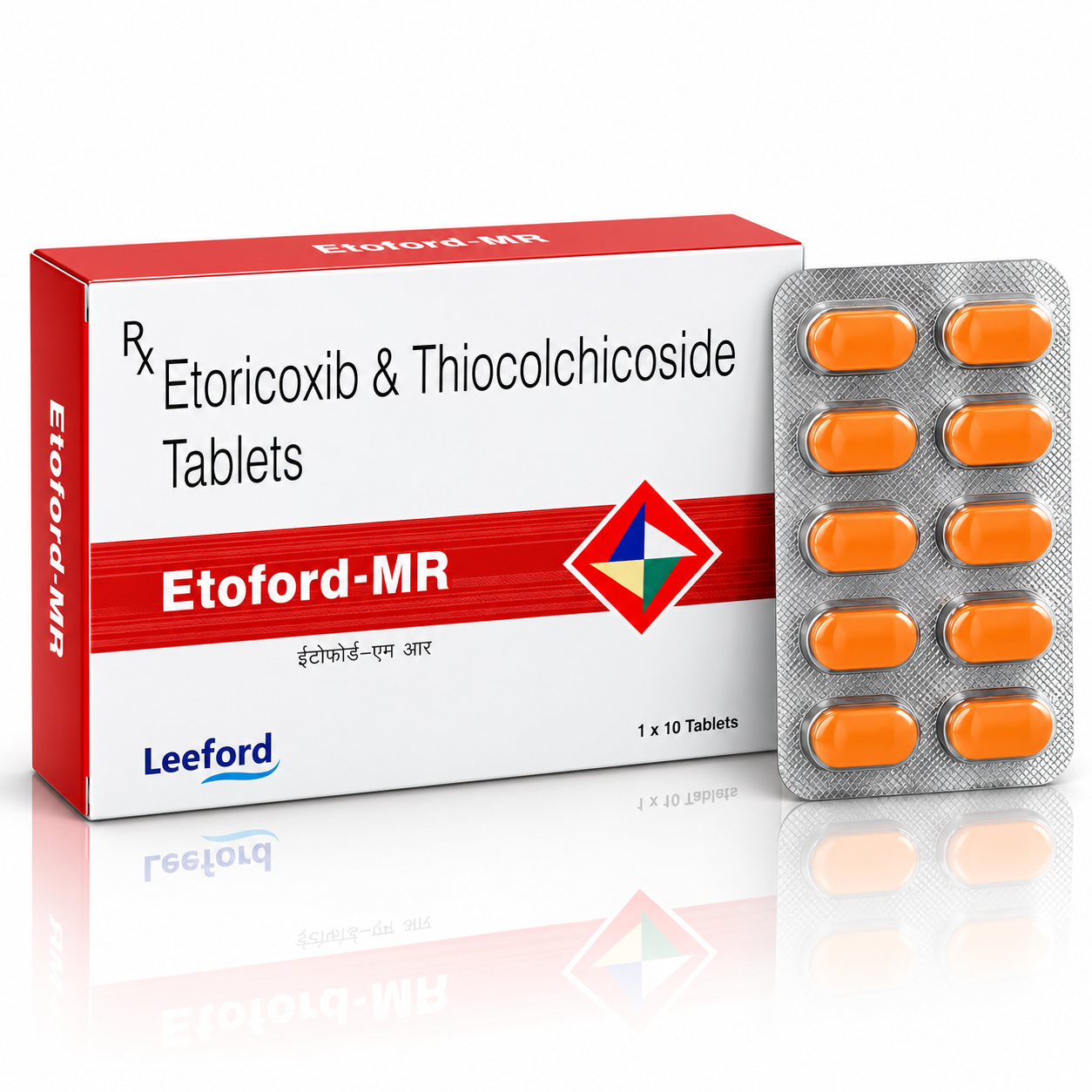
Etoford-MR Tablet
$0.38 / unit
Available Options
| Pack Size | Price | Price / Unit | Quantity | Action |
|---|---|---|---|---|
| 180 Tablets | $68.20 | $0.38/unit | ||
| 150 Tablets | $56.90 | $0.38/unit | ||
| 120 Tablets | $45.50 | $0.38/unit | ||
| 90 Tablets | $34.10 | $0.38/unit | ||
| 60 Tablets | $22.70 | $0.38/unit | ||
| 30 Tablets | $11.40 | $0.38/unit |
Product Description
ETOFORD MR TABLET
Brand Name: Etoford MR Tablet
Generic Name: Etoricoxib + Thiocolchicoside
Strength: Etoricoxib 60 mg + Thiocolchicoside 4 mg
Dosage Form: Oral Film-Coated Tablet
Therapeutic Class: Selective COX-2 Inhibitor (NSAID) / Skeletal Muscle Relaxant / Analgesic
Manufacturer / Marketer: Leeford Healthcare Limited
Pack Size: 1 × 10 Tablets
What is this medicine?
ETOFORD MR TABLET contains Etoricoxib 60 mg and Thiocolchicoside 4 mg, a combination medicine used for the short-term management of painful muscle spasms associated with acute musculoskeletal conditions.
Etoricoxib belongs to a class of medicines called selective cyclooxygenase-2 (COX-2) inhibitors, a type of nonsteroidal anti-inflammatory drug (NSAID). It helps reduce pain, inflammation, and swelling.
Thiocolchicoside is a skeletal muscle relaxant that acts on receptors involved in muscle tone and helps reduce painful muscle contractions and stiffness.
By combining an anti-inflammatory medicine with a muscle relaxant, Etoford MR Tablet helps relieve musculoskeletal pain, reduce muscle spasms, and improve movement.
This medicine may be prescribed for:
Acute lower back pain associated with muscle spasms
Painful neck muscle spasms
Acute musculoskeletal pain
Muscle stiffness associated with painful spasms
Painful muscle contractions following certain injuries
Short-term relief of pain associated with muscle strain
Selected sports-related musculoskeletal injuries
Acute spinal pain accompanied by muscle spasm
Short-term management of painful muscle spasms associated with certain joint or spinal conditions
NOTE: Etoford MR Tablet is intended for short-term relief of painful muscle spasms. It does not cure the underlying cause of musculoskeletal disorders.
Although etoricoxib is used separately for certain chronic inflammatory joint conditions, the thiocolchicoside-containing combination should not be used as routine long-term treatment for arthritis.
Oral thiocolchicoside treatment is generally restricted to a maximum of 7 consecutive days under European safety recommendations because of concerns about potential genetic damage from a metabolite.
What should I tell my health care provider before I take this medicine?
They need to know if you have any of these conditions:
Allergy to etoricoxib, thiocolchicoside, or any ingredient of the tablet
Allergy to aspirin or other NSAIDs
History of asthma or severe allergic reactions triggered by NSAIDs
Active stomach ulcers
History of gastrointestinal bleeding
Inflammatory bowel disease
Heart disease or previous heart attack
History of stroke
Peripheral arterial disease
Heart failure
Uncontrolled high blood pressure
Kidney disease or reduced kidney function
Liver disease or impaired liver function
History of seizures or epilepsy
Previous severe reactions to muscle relaxants
Severe dehydration
Bleeding disorders
Pregnancy or suspected pregnancy
Breastfeeding
Possibility of pregnancy without effective contraception
Use of blood-thinning medicines
Use of other NSAID pain relievers
Planned major surgery
Previous serious skin reactions to medicines
Inform your healthcare provider about all prescription medicines, nonprescription medicines, supplements, vitamins, and herbal products you are currently taking.
Important: Etoricoxib may increase the risk of serious cardiovascular events, including heart attack and stroke, particularly with prolonged use or in patients with existing cardiovascular risk factors.
Thiocolchicoside is contraindicated during pregnancy and breastfeeding. Patients who could become pregnant must follow appropriate contraception precautions during treatment and for the recommended period afterward.
How should I use this medicine?
Take this medicine exactly as prescribed by your healthcare provider.
Swallow the tablet whole with a glass of water.
Do not crush or chew the film-coated tablet unless advised by your pharmacist.
It may be taken with or without food.
Taking it after food may help reduce stomach discomfort in some patients.
Take the medicine at approximately the same time each day.
Follow the prescribed dosage and treatment duration.
Do not increase the dose without medical advice.
Do not combine it with other NSAID pain relievers unless specifically directed.
Avoid alcohol because it may increase dizziness and gastrointestinal complications.
Do not drive or operate machinery if you experience dizziness or drowsiness.
Avoid prolonged use without medical supervision.
Maintain adequate hydration.
Contact your healthcare provider if pain or muscle spasms persist or worsen.
Follow recommended physiotherapy, rest, and rehabilitation measures when appropriate.
Usual Adult Dose: The dose and frequency of Etoford MR Tablet must be determined by the treating physician according to the patient's condition and risk factors.
Thiocolchicoside Dose Limit: European safety recommendations limit oral thiocolchicoside to 8 mg every 12 hours, with treatment lasting no more than 7 consecutive days. This limit refers to thiocolchicoside exposure and is not a recommendation to take Etoford MR twice daily.
Duration of Treatment: Short-term use only. Treatment should be reviewed promptly if symptoms persist.
Expected Results: Pain relief and reduced muscle stiffness may begin within hours of administration, although individual response varies.
Overdosage: Seek immediate medical attention if an overdose is suspected. Symptoms may include severe abdominal pain, vomiting, dizziness, drowsiness, gastrointestinal bleeding, kidney problems, or seizures.
NOTE: Etoford MR Tablet contains two active medicines with different safety considerations. The lowest effective dose should be used for the shortest appropriate duration.
Do not use the combination for prolonged periods without a physician's recommendation.
What if I miss a dose?
Take the missed dose as soon as you remember if it is not close to your next scheduled dose.
If it is nearly time for the next dose, skip the missed dose.
Continue with your regular dosing schedule.
Do not take two doses together to compensate for a missed dose.
Avoid taking additional tablets without medical advice.
Contact your healthcare provider if you miss several doses or are unsure how to continue treatment.
Important: Etoford MR Tablet is generally prescribed for short-term treatment. Do not extend the treatment course to make up for missed doses without consulting your physician.
What may interact with this medicine?
Etoford MR Tablet may interact with medicines that affect blood clotting, blood pressure, kidney function, or the central nervous system.
Potential interactions include:
Aspirin
Ibuprofen
Diclofenac
Naproxen
Other nonsteroidal anti-inflammatory medicines
Warfarin and other anticoagulants
Certain antiplatelet medicines
ACE inhibitors, including enalapril and ramipril
Angiotensin receptor blockers, including losartan and valsartan
Diuretics, including furosemide and hydrochlorothiazide
Lithium
Methotrexate
Cyclosporine
Tacrolimus
Digoxin
Rifampicin
Certain hormonal contraceptives
Estrogen-containing hormonal treatments
Corticosteroids
Alcohol
Certain medicines that cause dizziness or drowsiness
Important Drug Interaction Considerations
Other NSAIDs: Combining etoricoxib with ibuprofen, diclofenac, naproxen, or other NSAIDs increases the risk of gastrointestinal bleeding, kidney injury, and other adverse effects.
Anticoagulants: Etoricoxib may increase the anticoagulant effect of warfarin. INR monitoring may be necessary.
Blood Pressure Medicines: Etoricoxib may reduce the effectiveness of certain antihypertensive medicines and increase the risk of kidney dysfunction when combined with ACE inhibitors, ARBs, or diuretics.
Lithium: Etoricoxib may increase lithium concentrations, raising the risk of lithium toxicity.
Methotrexate: Etoricoxib may increase methotrexate exposure in some patients. Monitoring may be required.
Cyclosporine and Tacrolimus: Concurrent use may increase the risk of kidney damage.
Hormonal Contraceptives: Etoricoxib may increase exposure to estrogen in certain combined hormonal contraceptives, potentially increasing estrogen-related adverse effects.
Alcohol and Sedating Medicines: Alcohol or medicines that cause drowsiness may worsen dizziness or impaired alertness.
Important: Some drug combinations require avoidance, while others require monitoring or dose adjustments. Inform your healthcare provider about all medicines you take before starting treatment.
What should I watch for while using this medicine?
Seek immediate medical attention if you experience:
Severe chest pain
Sudden difficulty breathing
Sudden weakness or numbness on one side of the body
Difficulty speaking
Severe headache with neurological symptoms
Severe abdominal pain
Vomiting blood
Black or tarry stools
Sudden swelling of the face, lips, tongue, or throat
Severe allergic reactions
Severe skin rash, blistering, or peeling
Seizures
Significant reduction in urine output
Severe swelling of the legs or feet
Yellowing of the skin or eyes
While using this medicine:
Monitor whether muscle pain and stiffness improve.
Report persistent or worsening symptoms.
Avoid taking additional NSAID medicines without medical advice.
Monitor blood pressure if advised by your physician.
Report unusual swelling or fluid retention.
Maintain adequate hydration.
Inform your doctor about persistent stomach discomfort.
Report dizziness or excessive drowsiness.
Avoid driving if your alertness is affected.
Report new or worsening muscle weakness.
Follow the prescribed short treatment course.
Do not increase the dose without medical supervision.
Attend follow-up appointments if symptoms persist.
Discuss physiotherapy or other rehabilitation measures when necessary.
Inform your physician if you experience any seizure-like symptoms.
Seek medical advice if pregnancy occurs or is suspected during treatment.
NOTE: Etoricoxib can increase cardiovascular and gastrointestinal risks, especially when used at higher doses or for prolonged periods.
Thiocolchicoside has additional safety restrictions related to reproductive toxicity and potential genetic damage. Treatment should be limited to the shortest appropriate duration.
What side effects may I notice from this medicine?
Side effects that should be reported immediately:
Heart attack symptoms
Stroke-like symptoms
Severe allergic reactions
Difficulty breathing
Swelling of the face, lips, or throat
Gastrointestinal bleeding
Black or bloody stools
Severe stomach pain
Seizures
Severe skin reactions
Acute kidney injury
Significant reduction in urine output
Severe liver problems
Yellowing of the skin or eyes
Severe fluid retention
Sudden worsening of heart failure
Severe or persistent high blood pressure
Side effects that usually do not require medical attention:
Nausea
Mild abdominal pain
Indigestion
Heartburn
Diarrhoea
Flatulence
Headache
Dizziness
Drowsiness
Mild fatigue
Mild swelling of the feet or ankles
Mild stomach discomfort
General weakness
These side effects may be more noticeable when treatment begins.
Some effects may improve during short-term treatment. However, persistent symptoms should be discussed with a healthcare professional.
Important: Do not ignore severe abdominal pain, black stools, chest pain, or sudden neurological symptoms. These may indicate serious complications requiring emergency medical attention.
Where should I keep my medicine?
Keep out of the reach of children.
Store according to the temperature instructions printed on the original packaging.
Available retailer information recommends storage below 25°C.
Keep tablets in a cool, dry place.
Protect from excessive heat and moisture.
Protect from direct sunlight.
Keep tablets in their original blister packaging until use.
Avoid storing the medicine in bathrooms or excessively humid locations.
Do not use tablets after their expiry date.
Do not use tablets if the packaging is damaged.
Avoid transferring tablets into unlabelled containers.
Dispose of expired or unused tablets according to your pharmacist's instructions.
Storage Note: Tata 1mg lists storage below 25°C for Etoford MR Tablet. Follow the current product strip or carton for the definitive storage instructions.
Manufacturer Details
Field | Information |
|---|---|
Brand Name | Etoford MR Tablet |
Generic Name | Etoricoxib + Thiocolchicoside |
Strength | Etoricoxib 60 mg + Thiocolchicoside 4 mg |
Dosage Form | Oral Film-Coated Tablet |
Therapeutic Class | Selective COX-2 Inhibitor (NSAID) / Skeletal Muscle Relaxant |
Indication | Short-Term Treatment of Painful Acute Musculoskeletal Spasms |
Manufacturer / Marketer | Leeford Healthcare Limited |
Prescription Status | Prescription Only Medicine |
Storage | Store Below 25°C According to Retailer Listing; Follow Original Label |
Route of Administration | Oral |
Pack Size | 1 × 10 Tablets |
Country of Origin | India |