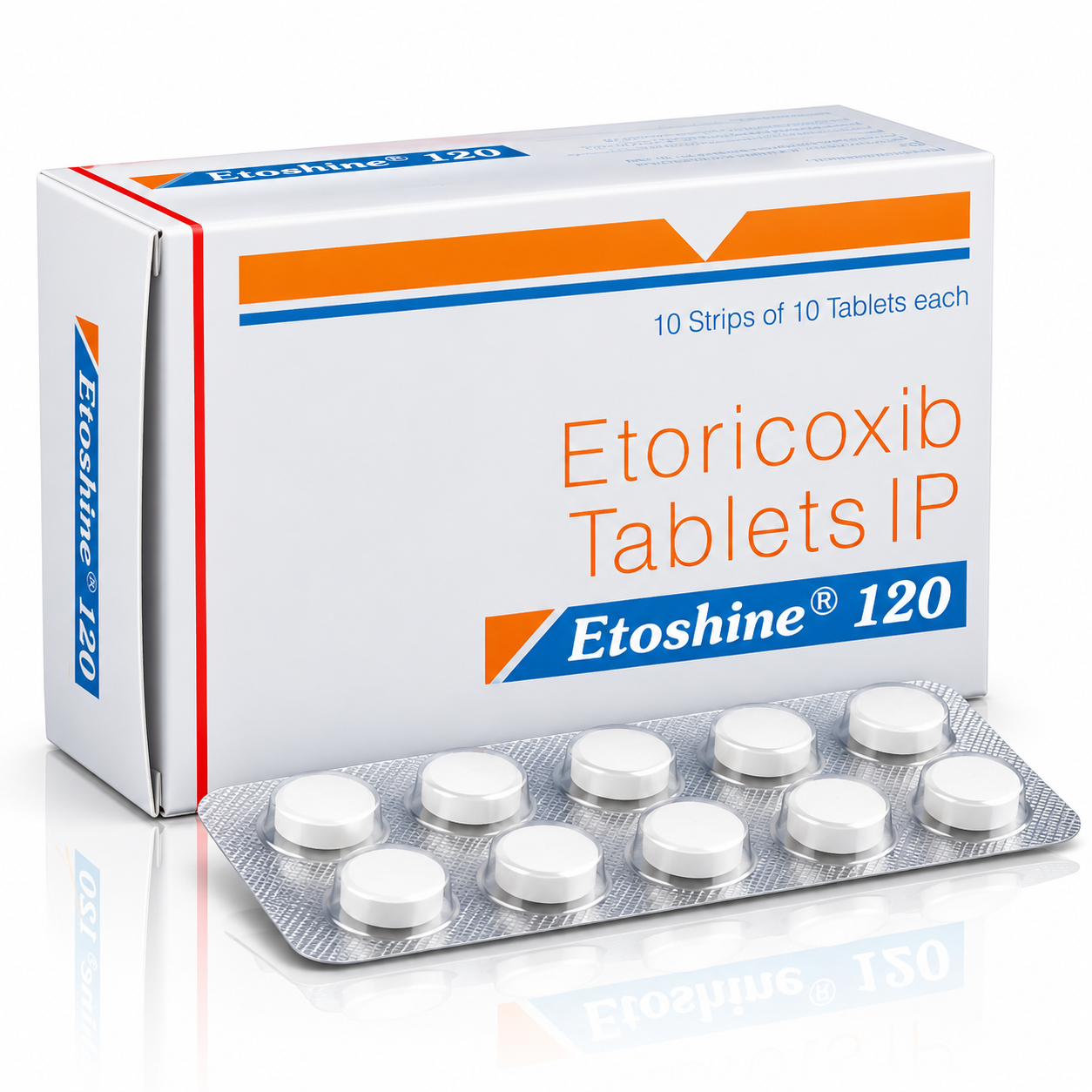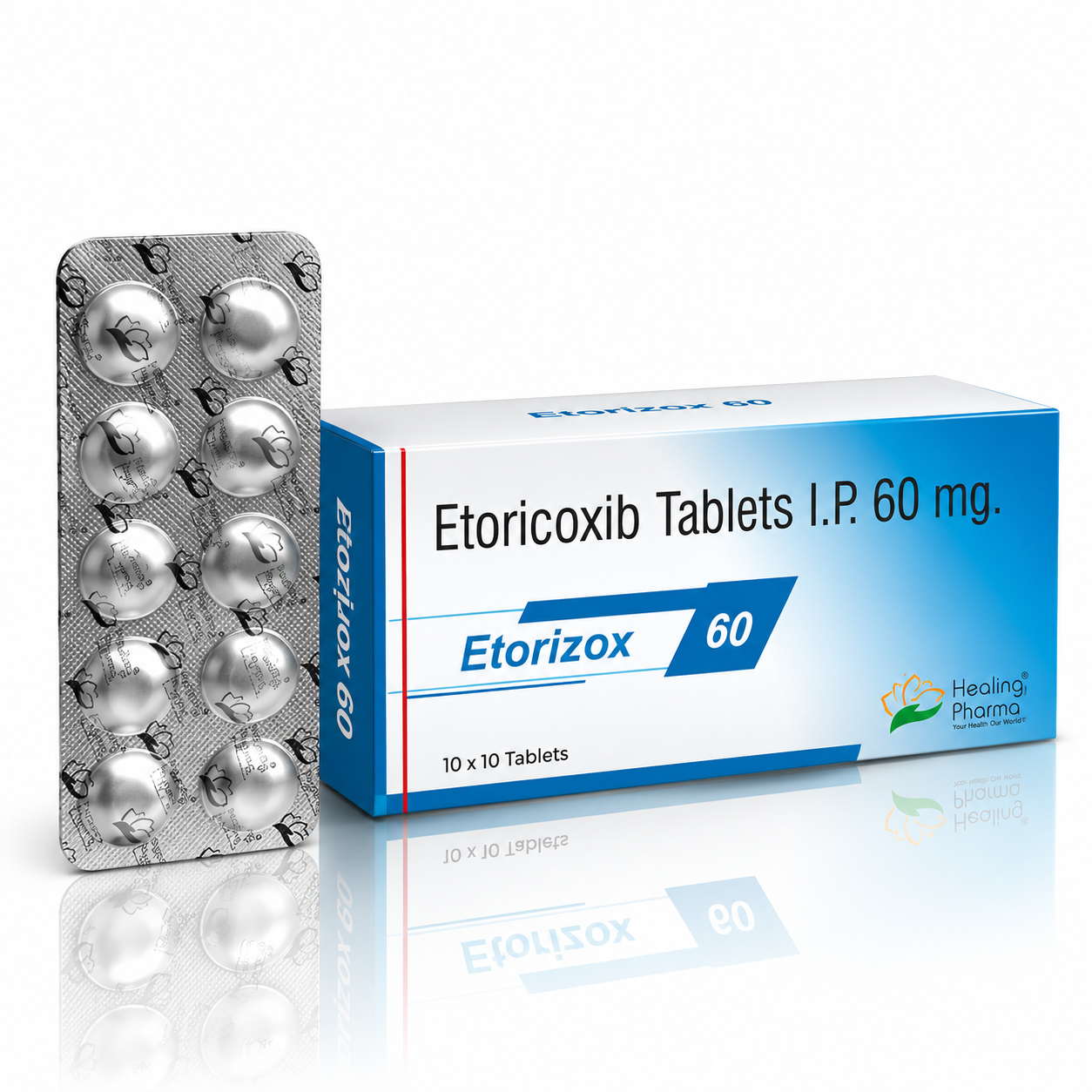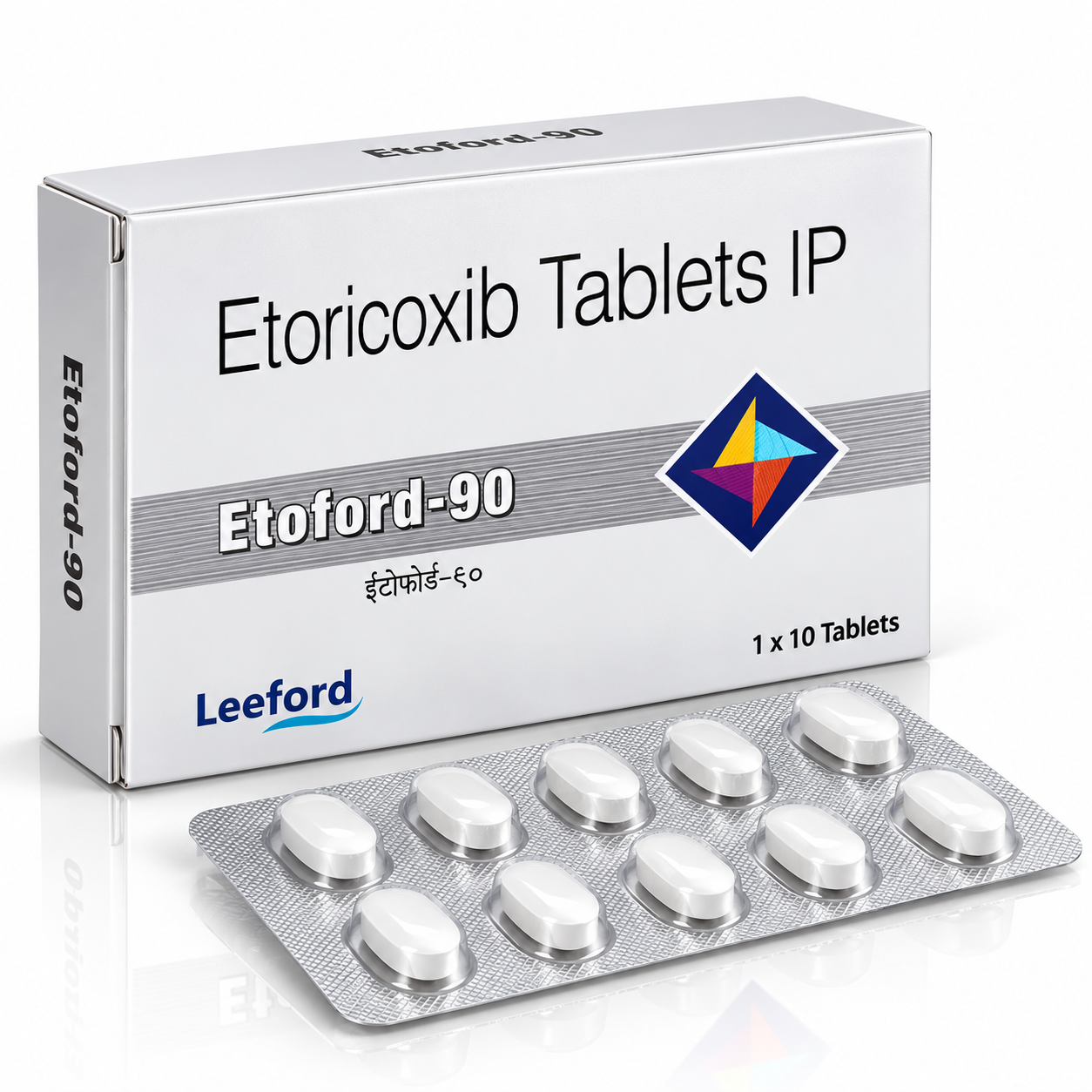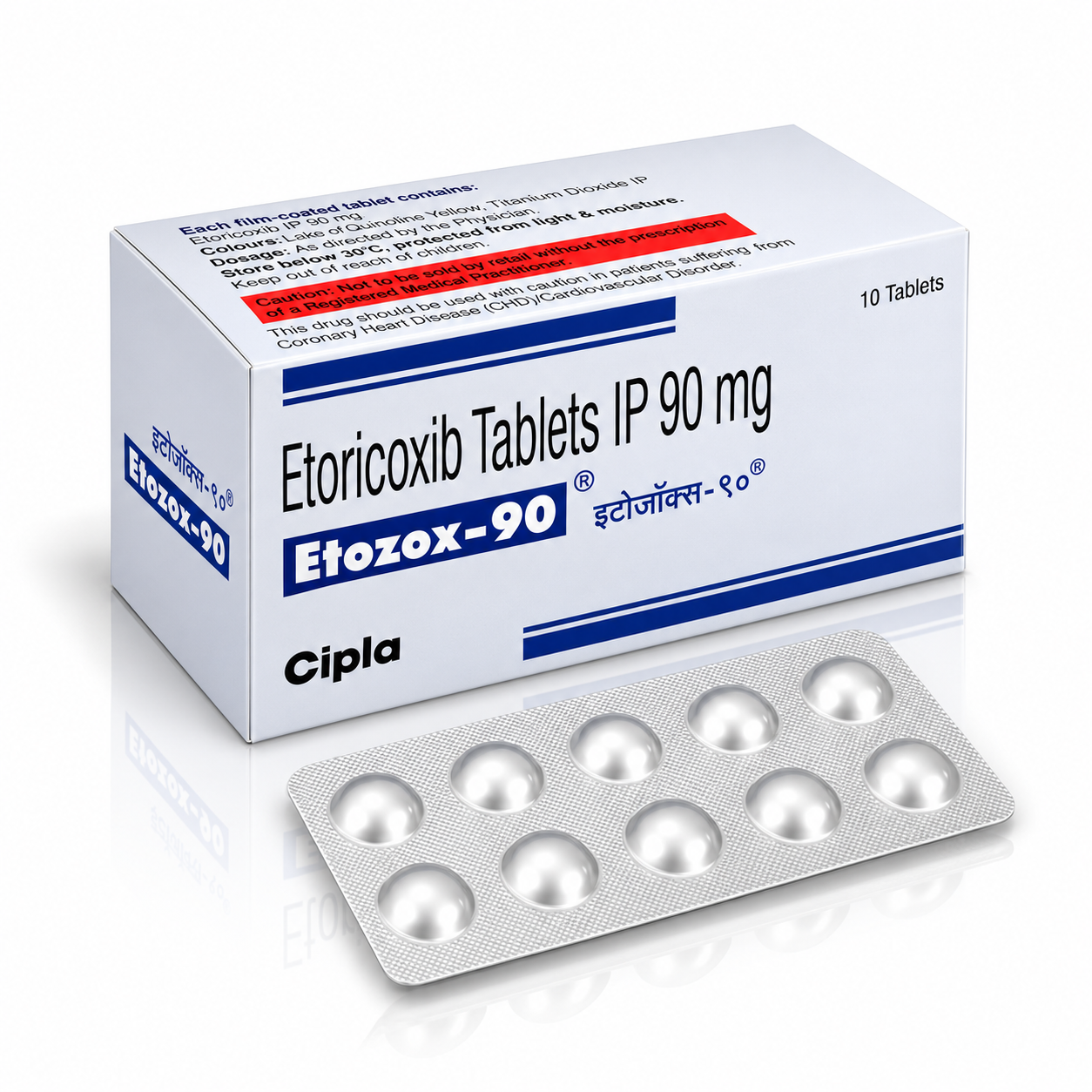
Etozox 90 MG Tablet
$0.57 / unit
Available Options
| Pack Size | Price | Price / Unit | Quantity | Action |
|---|---|---|---|---|
| 180 Tablets | $75.00 | $0.42/unit | ||
| 150 Tablets | $64.00 | $0.43/unit | ||
| 120 Tablets | $52.00 | $0.43/unit | ||
| 90 Tablets | $42.00 | $0.47/unit | ||
| 60 Tablets | $30.00 | $0.50/unit | ||
| 30 Tablets | $17.00 | $0.57/unit |
Product Description
ETOZOX 90 MG TABLET
Brand Name: Etozox 90 MG Tablet
Generic Name: Etoricoxib
Strength: 90 mg
Dosage Form: Oral Tablet
Therapeutic Class: Selective COX-2 Inhibitor / Nonsteroidal Anti-Inflammatory Drug (NSAID) / Analgesic
Manufacturer / Marketer: Cipla Limited
Pack Size: 1 × 10 Tablets
What is this medicine?
ETOZOX 90 MG TABLET contains Etoricoxib 90 mg, a selective cyclooxygenase-2 (COX-2) inhibitor belonging to the nonsteroidal anti-inflammatory drug (NSAID) class. It is used to relieve pain, inflammation, swelling, and stiffness associated with certain joint and musculoskeletal conditions.
Etoricoxib works by selectively inhibiting the COX-2 enzyme, which is involved in producing prostaglandins. Prostaglandins are chemical substances responsible for pain, inflammation, and swelling.
By reducing prostaglandin production, etoricoxib helps relieve joint discomfort, decrease inflammation, and improve mobility.
This medicine may be prescribed for:
Rheumatoid arthritis
Ankylosing spondylitis
Moderate pain following dental surgery
Joint pain associated with inflammatory arthritis
Joint swelling and stiffness
Inflammatory spinal pain
Short-term relief of postoperative dental pain
Symptomatic management of certain inflammatory musculoskeletal conditions
Etoricoxib is also available in other strengths for conditions such as:
Osteoarthritis
Acute gouty arthritis
NOTE: Etozox 90 MG Tablet provides symptomatic relief from pain and inflammation but does not cure arthritis or prevent the progression of underlying joint diseases.
The 90 mg strength may be prescribed for rheumatoid arthritis or ankylosing spondylitis when 60 mg daily provides insufficient relief. It may also be used for short-term postoperative dental pain.
The 90 mg strength is not routinely recommended for osteoarthritis or as the standard treatment dose for acute gout.
What should I tell my health care provider before I take this medicine?
They need to know if you have any of these conditions:
Allergy to etoricoxib or any ingredient of the tablet
Allergy to aspirin or other NSAIDs
History of asthma or allergic reactions triggered by NSAIDs
Active stomach or intestinal ulcers
Previous gastrointestinal bleeding
History of gastrointestinal perforation
Inflammatory bowel disease, including Crohn's disease or ulcerative colitis
Heart disease or previous heart attack
History of stroke
Peripheral arterial disease
Congestive heart failure
Uncontrolled high blood pressure
Kidney disease or impaired kidney function
Liver disease or impaired liver function
Severe dehydration
Fluid retention or swelling of the legs
Bleeding disorders
High cholesterol
Diabetes
History of serious skin reactions to medicines
Pregnancy or planning pregnancy
Breastfeeding
Use of blood-thinning medicines
Use of other NSAID pain relievers
Planned major surgery
Age below 16 years
Inform your healthcare provider about all prescription medicines, nonprescription medicines, vitamins, supplements, and herbal products you currently take.
Important: Etoricoxib may increase the risk of serious cardiovascular events, including heart attack and stroke, particularly with higher doses or prolonged use.
Etoricoxib is contraindicated in patients with established ischemic heart disease, cerebrovascular disease, peripheral arterial disease, significant heart failure, or persistently uncontrolled hypertension.
Patients with severe kidney or liver impairment should not use this medicine. Those with milder liver impairment may require lower doses.
How should I use this medicine?
Take this medicine exactly as prescribed by your healthcare provider.
Swallow the tablet whole with a glass of water.
It may be taken with or without food.
Taking etoricoxib without food may provide a faster onset of pain relief.
Taking it with food may help some patients tolerate stomach discomfort.
Etoricoxib is generally taken once daily.
Take the medicine at approximately the same time each day.
Follow the prescribed dosage and treatment duration.
Do not increase or decrease the dose without medical advice.
Do not combine it with other NSAID medicines unless specifically directed by your physician.
Avoid prolonged use without medical supervision.
Maintain adequate hydration.
Monitor blood pressure if advised by your healthcare provider.
Inform your doctor if symptoms persist or worsen.
Attend follow-up appointments when necessary.
Rheumatoid Arthritis: Etoricoxib 60 mg once daily is generally recommended initially. Patients with insufficient symptom relief may be prescribed 90 mg once daily.
Ankylosing Spondylitis: Etoricoxib 60 mg once daily is generally recommended initially. The dose may be increased to 90 mg once daily when clinically necessary.
Postoperative Dental Pain: Etoricoxib 90 mg once daily may be prescribed for short-term treatment of moderate pain following dental surgery.
Maximum Duration for Dental Pain: Treatment should not exceed 3 days under standard prescribing recommendations.
Osteoarthritis: Etoricoxib 30 mg once daily is a common starting dose, increasing to 60 mg when necessary. The 90 mg strength is not recommended for routine osteoarthritis treatment.
Acute Gouty Arthritis: Etoricoxib 120 mg once daily may be prescribed during an acute gout attack for a maximum of 8 days. Etozox 90 MG Tablet should not be independently increased or substituted for this regimen.
Maximum Daily Dose: For rheumatoid arthritis, ankylosing spondylitis, and postoperative dental pain, the maximum recommended dose is generally 90 mg daily.
Duration of Treatment: Depends on the condition, symptom severity, clinical response, and individual risk factors. Long-term arthritis treatment requires periodic medical reassessment.
Expected Results: Pain relief may begin within a few hours. Improvement in swelling and stiffness may continue with appropriate treatment.
Overdosage: Seek immediate medical attention if an overdose is suspected. Symptoms may include severe abdominal discomfort, nausea, vomiting, dizziness, gastrointestinal bleeding, kidney dysfunction, or cardiovascular complications.
NOTE: Etozox 90 MG Tablet contains 90 mg of etoricoxib. The appropriate dose depends on the condition being treated and the patient's medical history.
Use the lowest effective dose for the shortest clinically appropriate duration.
What if I miss a dose?
Take the missed dose as soon as you remember.
If it is nearly time for your next scheduled dose, skip the missed dose.
Continue with your regular dosing schedule.
Do not take two doses together to compensate for a missed dose.
Do not exceed the prescribed daily dose.
Avoid taking additional tablets without medical advice.
Contact your healthcare provider if you frequently miss doses or are uncertain about your treatment schedule.
Important: Taking excessive doses of etoricoxib increases the risk of serious adverse effects without necessarily improving pain relief.
What may interact with this medicine?
Etoricoxib may interact with medicines that affect blood clotting, blood pressure, kidney function, or drug metabolism.
Potential interactions include:
Aspirin
Ibuprofen
Diclofenac
Naproxen
Other nonsteroidal anti-inflammatory drugs
Warfarin and other anticoagulants
Certain antiplatelet medicines
ACE inhibitors, including ramipril and enalapril
Angiotensin receptor blockers, including losartan and valsartan
Diuretics, including furosemide and hydrochlorothiazide
Lithium
Methotrexate
Cyclosporine
Tacrolimus
Digoxin
Rifampicin
Certain hormonal contraceptives
Estrogen-containing hormone replacement therapies
Corticosteroids
Important Drug Interaction Considerations
Other NSAIDs: Combining etoricoxib with ibuprofen, diclofenac, naproxen, or other NSAIDs increases the risk of gastrointestinal bleeding, kidney injury, and other adverse effects.
Aspirin: Low-dose aspirin prescribed for cardiovascular protection may be continued when directed by a physician. However, combining aspirin with etoricoxib increases gastrointestinal risks. Do not stop prescribed aspirin independently.
Anticoagulants: Etoricoxib may increase the anticoagulant effects of warfarin. Additional INR monitoring may be necessary.
Blood Pressure Medicines: Etoricoxib may reduce the effectiveness of certain antihypertensive medicines and increase the risk of kidney dysfunction when combined with ACE inhibitors, ARBs, or diuretics.
Lithium: Etoricoxib may increase lithium concentrations, raising the risk of lithium toxicity.
Methotrexate: Etoricoxib may increase methotrexate exposure in some patients. Additional monitoring may be necessary.
Cyclosporine and Tacrolimus: Concurrent use may increase the risk of kidney damage.
Hormonal Contraceptives: Etoricoxib may increase estrogen exposure in certain combined hormonal contraceptives, potentially increasing estrogen-related adverse effects.
Corticosteroids: Concurrent use may increase the risk of gastrointestinal ulceration or bleeding.
Important: Some combinations should be avoided, while others require dose adjustments or monitoring.
Inform your healthcare provider about all medicines you take before starting Etozox 90 MG Tablet.
What should I watch for while using this medicine?
Seek immediate medical attention if you experience:
Severe chest pain
Sudden difficulty breathing
Sudden weakness or numbness on one side of the body
Difficulty speaking
Severe headache with neurological symptoms
Severe abdominal pain
Vomiting blood
Black or tarry stools
Severe allergic reactions
Swelling of the face, lips, tongue, or throat
Severe skin rash, blistering, or peeling
Significant reduction in urine output
Severe swelling of the legs or feet
Yellowing of the skin or eyes
Severe or persistent high blood pressure symptoms
While using this medicine:
Monitor whether joint pain and swelling improve.
Report persistent or worsening symptoms.
Avoid taking additional NSAID medicines without medical advice.
Monitor blood pressure regularly when recommended.
Report unusual swelling or fluid retention.
Maintain adequate hydration.
Inform your doctor about persistent stomach discomfort.
Report dizziness or headaches.
Avoid driving if dizziness or impaired alertness occurs.
Follow the prescribed treatment duration.
Do not increase the dose independently.
Attend follow-up appointments for chronic inflammatory conditions.
Follow recommended kidney and liver function monitoring when clinically appropriate.
Report signs of gastrointestinal bleeding immediately.
Inform your physician if you develop chest pain or breathing difficulties.
Discuss appropriate physiotherapy and joint-protection measures when necessary.
NOTE: Selective COX-2 inhibitors may cause fewer certain gastrointestinal complications than some traditional NSAIDs, but serious ulcers, bleeding, and perforation can still occur.
Etoricoxib may also increase blood pressure and cause fluid retention, particularly in patients with cardiovascular or kidney disease.
Regular clinical assessment is important during prolonged treatment.
What side effects may I notice from this medicine?
Side effects that should be reported immediately:
Heart attack symptoms
Stroke-like symptoms
Severe allergic reactions
Difficulty breathing
Swelling of the face, lips, or throat
Gastrointestinal bleeding
Black or bloody stools
Severe stomach pain
Severe skin reactions, including Stevens-Johnson syndrome
Acute kidney injury
Significant reduction in urine output
Serious liver problems
Yellowing of the skin or eyes
Severe fluid retention
Sudden worsening of heart failure
Severe or persistent high blood pressure
Severe weakness or fainting
Side effects that usually do not require medical attention:
Nausea
Mild abdominal pain
Indigestion
Heartburn
Headache
Dizziness
Mild swelling of the feet or ankles
Flatulence
Mild diarrhoea
Constipation
Fatigue
Mild stomach discomfort
General weakness
These side effects may be mild and temporary.
Contact your healthcare provider if they persist, become troublesome, or worsen.
Important: Gastrointestinal discomfort, headache, dizziness, swelling, and increased blood pressure are recognized adverse effects of etoricoxib.
Do not ignore severe abdominal pain, black stools, chest pain, or sudden neurological symptoms. These require immediate medical evaluation.
Where should I keep my medicine?
Keep out of the reach of children.
Store below 30°C according to available product information.
Keep the tablets in a cool, dry place.
Protect from excessive heat and moisture.
Protect from direct sunlight.
Keep tablets in their original blister packaging until use.
Avoid storing the medicine in bathrooms or excessively humid locations.
Do not use tablets after their expiry date.
Do not use tablets if the packaging is damaged.
Avoid transferring tablets into unlabelled containers.
Dispose of expired or unused tablets according to your pharmacist's instructions.
Storage Note: Tata 1mg lists storage below 30°C for Etozox 90 MG Tablet. Follow the instructions printed on the original product strip or carton.
Manufacturer Details
Field | Information |
|---|---|
Brand Name | Etozox 90 MG Tablet |
Generic Name | Etoricoxib |
Strength | 90 mg |
Dosage Form | Oral Tablet |
Therapeutic Class | Selective COX-2 Inhibitor / NSAID / Analgesic |
Indication | Management of Pain and Inflammation in Rheumatoid Arthritis, Ankylosing Spondylitis, and Short-Term Postoperative Dental Pain |
Manufacturer / Marketer | Cipla Limited |
Prescription Status | Prescription Only Medicine |
Storage | Store Below 30°C According to Retailer Listing; Follow Original Label |
Route of Administration | Oral |
Pack Size | 1 × 10 Tablets |
Country of Origin | India |