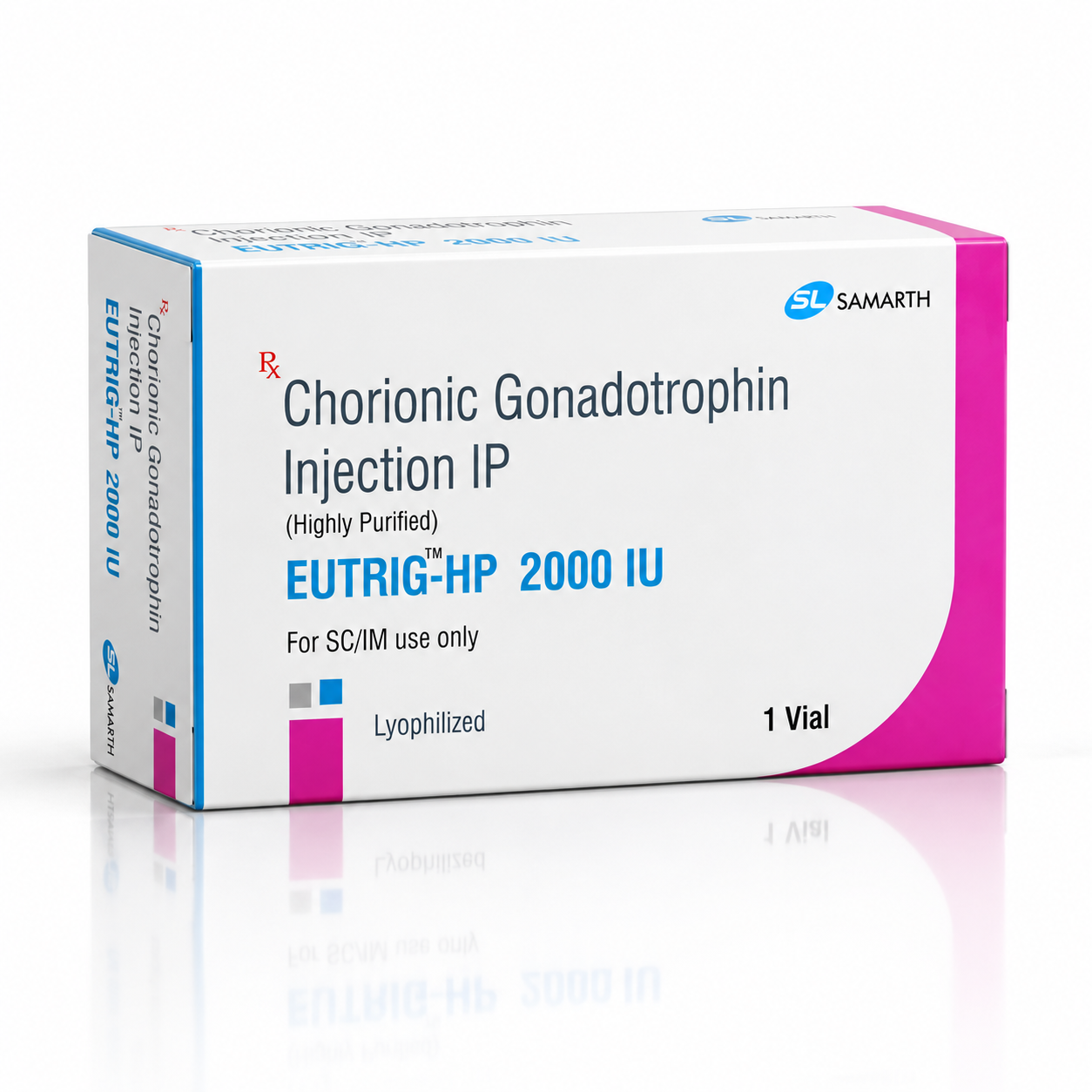
Eutrig-HP 2000 IU Injection
$23.00 / unit
Available Options
| Pack Size | Price | Price / Unit | Quantity | Action |
|---|---|---|---|---|
| 10 Vial | $170.00 | $17.00/unit | ||
| 8 Vial | $136.00 | $17.00/unit | ||
| 6 Vial | $103.00 | $17.17/unit | ||
| 4 Vial | $72.00 | $18.00/unit | ||
| 2 Vial | $41.00 | $20.50/unit | ||
| 1 Vial | $23.00 | $23.00/unit |
Product Description
Eutrig HP 2000 IU Injection (1 × 1 Vial)
Brand Name: Eutrig HP 2000 IU
Generic Name: Human Chorionic Gonadotropin (hCG), Highly Purified
Strength: 2000 IU per vial
Dosage Form: Lyophilized Powder for Injection
Therapeutic Class: Gonadotropin / Fertility Hormone
Manufacturer/Marketer: Samarth Life Sciences Pvt. Ltd.
Pack Size: 1 × 1 Vial (with diluent where supplied)
Route of Administration: Intramuscular or Subcutaneous Injection, as directed by the product labeling and healthcare professional
Prescription Status: Prescription Medicine
Country of Origin: India.
What is this medicine?
HUMAN CHORIONIC GONADOTROPIN (hCG) is a hormone medicine that acts similarly to luteinizing hormone (LH), a naturally occurring hormone involved in reproductive function.
This medicine is used to treat certain fertility and hormonal conditions in men and women.
In women, hCG is used during fertility treatment to trigger the final maturation and release of an egg from the ovary. It may be prescribed to women who have difficulty ovulating and to patients undergoing assisted reproductive procedures.
In men, hCG stimulates Leydig cells in the testes to produce testosterone. It may be prescribed for selected cases of hypogonadotropic hypogonadism, a condition in which the body does not produce enough reproductive hormones to maintain normal testosterone production.
It may also support sperm production in some men with hormone-related infertility, often in combination with other fertility medicines.
In selected boys, hCG has historically been used for delayed puberty associated with insufficient gonadotropin production. Its use for undescended testes is limited and depends on current local guidelines.
Eutrig HP 2000 IU is not an anabolic steroid. Although it can stimulate the body's natural testosterone production, it should not be used for bodybuilding, athletic performance enhancement, weight loss, or unsupervised post-cycle therapy.
What should I tell my health care provider before I take this medicine?
They need to know if you have any of these conditions:
heart disease or a history of cardiovascular disorders
high blood pressure
kidney disease or impaired kidney function
liver disease
asthma or other chronic respiratory conditions
epilepsy or a history of seizures
migraine headaches
a history of blood clots or stroke
pituitary gland disorders or tumors
hypothalamic disorders
thyroid or adrenal gland disorders
prostate cancer or other androgen-sensitive cancers
ovarian cysts or ovarian enlargement
polycystic ovary syndrome (PCOS)
unexplained vaginal bleeding
breast cancer or other hormone-sensitive cancers
a history of ovarian hyperstimulation syndrome (OHSS)
infertility or reproductive hormonal disorders
fluid retention or swelling of the legs and ankles
early or precocious puberty
if you are receiving other fertility hormone injections
if you are taking testosterone or other hormonal medicines
an unusual or allergic reaction to human chorionic gonadotropin, other hormone medicines, or any ingredients in the injection
pregnant or trying to get pregnant
breast-feeding
Inform your healthcare professional if you have previously experienced complications during fertility treatment.
Patients with certain hormone-dependent tumors, unexplained reproductive disorders, or conditions that make pregnancy medically unsafe may not be suitable candidates for hCG treatment.
How should I use this medicine?
Eutrig HP 2000 IU Injection is administered by intramuscular or subcutaneous injection, depending on the product instructions and your healthcare professional's prescription.
This medicine should be prepared and administered by a qualified healthcare professional or by a properly trained patient when home administration has been specifically authorized.
The medicine is supplied as a powder that must be mixed with the appropriate sterile diluent before injection.
Use only the diluent and preparation instructions recommended by the manufacturer or healthcare professional.
The correct dosage, injection schedule, and treatment duration depend on the condition being treated.
In women undergoing fertility treatment, the timing of hCG administration is particularly important because it helps trigger ovulation.
In men with certain forms of hypogonadism, hCG may be administered according to a specialist-prescribed schedule to stimulate testosterone production.
Do not assume that the entire 2000 IU vial is the appropriate dose for every patient.
Your doctor may recommend regular blood tests and ultrasound examinations to monitor treatment response.
Do not increase the dosage or administer additional injections without medical advice.
Overdosage: If you think you have received too much of this medicine, contact your doctor, poison control center, or emergency department immediately. Excessive exposure may increase the risk of hormonal disturbances, fluid retention, and ovarian hyperstimulation syndrome in women undergoing fertility treatment.
NOTE: This medicine is only for you. Do not share this medicine with others. Do not reuse needles or syringes.
What if I miss a dose?
If you miss a scheduled injection, contact your healthcare professional immediately for instructions.
Do not administer a double dose or an additional injection to make up for a missed dose.
For women undergoing ovulation induction or assisted reproductive treatment, injection timing is critical. Missing or delaying a dose may affect the success of the treatment cycle.
For men receiving hCG for hypogonadism or infertility, your doctor will determine whether the treatment schedule needs adjustment.
Do not change the timing or frequency of injections without medical advice.
What may interact with this medicine?
clomiphene citrate and other ovulation-inducing medicines
follicle-stimulating hormone (FSH) injections
human menopausal gonadotropins (hMG), including menotropins
other fertility hormone treatments
testosterone replacement medicines
anabolic-androgenic steroids
other hormonal treatments that affect reproductive hormone levels
Fertility Medicines: Combining hCG with FSH, menotropins, or other fertility medicines is sometimes part of a specialist-supervised treatment plan. However, these combinations may increase the risk of ovarian hyperstimulation syndrome and multiple pregnancies.
Clomiphene Citrate: Clomiphene and hCG may be used together in certain fertility protocols. Careful monitoring is required because both medicines affect reproductive function.
Testosterone and Anabolic Steroids: Concurrent use may alter hormone levels and complicate the assessment of testosterone production or fertility treatment. These are clinical considerations rather than universally established drug interactions.
Specific drug interactions with hCG are not extensively documented.
This list may not describe all possible interactions. Give your healthcare provider a complete list of all prescription medicines, over-the-counter drugs, herbal products, vitamins, and dietary supplements you use.
Also tell your healthcare provider if you smoke, drink alcohol, or use recreational drugs. Some substances may affect your hormonal health or fertility treatment.
What should I watch for while using this medicine?
Visit your doctor or healthcare professional regularly to monitor your treatment response and overall health.
Your healthcare provider may recommend blood tests to measure testosterone, estradiol, LH, FSH, or other hormone levels, depending on the condition being treated.
Women receiving hCG for fertility treatment may require ultrasound examinations and hormone testing to monitor ovarian follicle development.
hCG treatment can cause ovarian hyperstimulation syndrome (OHSS), a potentially serious complication in which the ovaries become enlarged and fluid may accumulate in the abdomen or other parts of the body.
Contact your healthcare professional immediately if you develop severe abdominal pain, persistent vomiting, rapid weight gain, abdominal swelling, or reduced urination.
Seek emergency medical attention if you experience severe breathing difficulties, chest pain, or symptoms of a blood clot.
Fertility treatment involving hCG may increase the chance of multiple pregnancies, including twins or triplets, particularly when combined with other ovulation-stimulating medicines.
In men, hCG stimulates the testes to produce testosterone. This may cause changes in estrogen levels and can sometimes lead to breast tenderness, gynecomastia, or fluid retention.
Patients with heart disease, kidney disease, high blood pressure, asthma, migraine, or epilepsy should be monitored carefully because hCG-related hormone changes and fluid retention may worsen certain conditions.
hCG may stimulate androgen production and contribute to early puberty in children receiving treatment for selected hormonal disorders.
Patients should report unusual physical changes, including excessive acne, breast enlargement, or behavioral changes.
Do not use hCG injections as a treatment for obesity or weight loss. Evidence does not support their effectiveness for these purposes.
Do not assume that hCG can reliably restore natural testosterone production after anabolic steroid use. Its use for post-cycle therapy is not established as a standard approved treatment.
hCG may cause a positive pregnancy test for a period after injection because pregnancy tests detect this hormone. Inform your healthcare provider about recent hCG injections before interpreting pregnancy test results.
Do not use this medicine during an established pregnancy unless a specialist has identified a specific medically justified reason. hCG used to induce ovulation is not intended for administration during pregnancy.
Do not use this medicine while breastfeeding without appropriate medical advice.
Continue treatment only for the duration recommended by your healthcare professional.
What side effects may I notice from this medicine?
Side effects that you should report to your doctor or healthcare professional as soon as possible:
allergic reactions such as skin rash, hives, or itching
swelling of the face, lips, tongue, or throat
difficulty breathing or swallowing
severe abdominal pain or abdominal swelling
persistent nausea or vomiting
rapid or unexplained weight gain
reduced urine output
shortness of breath or chest pain
severe dizziness or fainting
swelling or pain in one leg
severe ovarian enlargement or ovarian hyperstimulation syndrome
symptoms of ovarian cyst rupture
unusual or excessive fluid retention
significant swelling of the legs, ankles, or feet
severe headaches or unusual vision changes
significant mood or behavioral changes
severe reactions at the injection site
Side effects that usually do not require immediate medical attention (report to your doctor or healthcare professional if they continue or are bothersome):
mild pain at the injection site
redness or irritation at the injection site
headache
fatigue or tiredness
irritability
restlessness
mild mood changes
mild abdominal discomfort
breast tenderness
mild swelling or fluid retention
nausea
acne
In men, hCG treatment may occasionally cause breast enlargement (gynecomastia), particularly when hormone levels change during treatment.
In women, mild ovarian enlargement or abdominal discomfort may occur during fertility treatment. These symptoms should be assessed because they can also be early signs of ovarian hyperstimulation.
Some patients may experience temporary hormonal changes during treatment.
This list may not describe all possible side effects. Contact your healthcare professional if you experience unexpected, persistent, or severe symptoms.
Where should I keep my medicine?
Keep out of the reach of children and pets.
Store Eutrig HP 2000 IU Injection in a refrigerator at 2°C to 8°C (36°F to 46°F). Do not freeze. This is the storage guidance provided by current Indian pharmacy listings for this product. Confirm the requirements on your specific carton, since product inserts and storage instructions can differ between markets.
Protect the medicine from direct sunlight, excessive heat, and moisture.
Keep the vial in its original packaging until it is ready to be prepared and administered.
Use only the sterile diluent recommended for the product.
The Eutrig-HP product insert states that the reconstituted solution should be used immediately after preparation. Do not store or reuse any leftover solution unless the specific product instructions explicitly permit it.
Do not use the medicine if the vial is damaged, the solution appears discolored, or visible particles are present after preparation.
Do not use this medicine after the expiration date printed on the packaging.
Dispose of unused medicine, empty vials, needles, and syringes according to appropriate medical waste disposal guidelines.