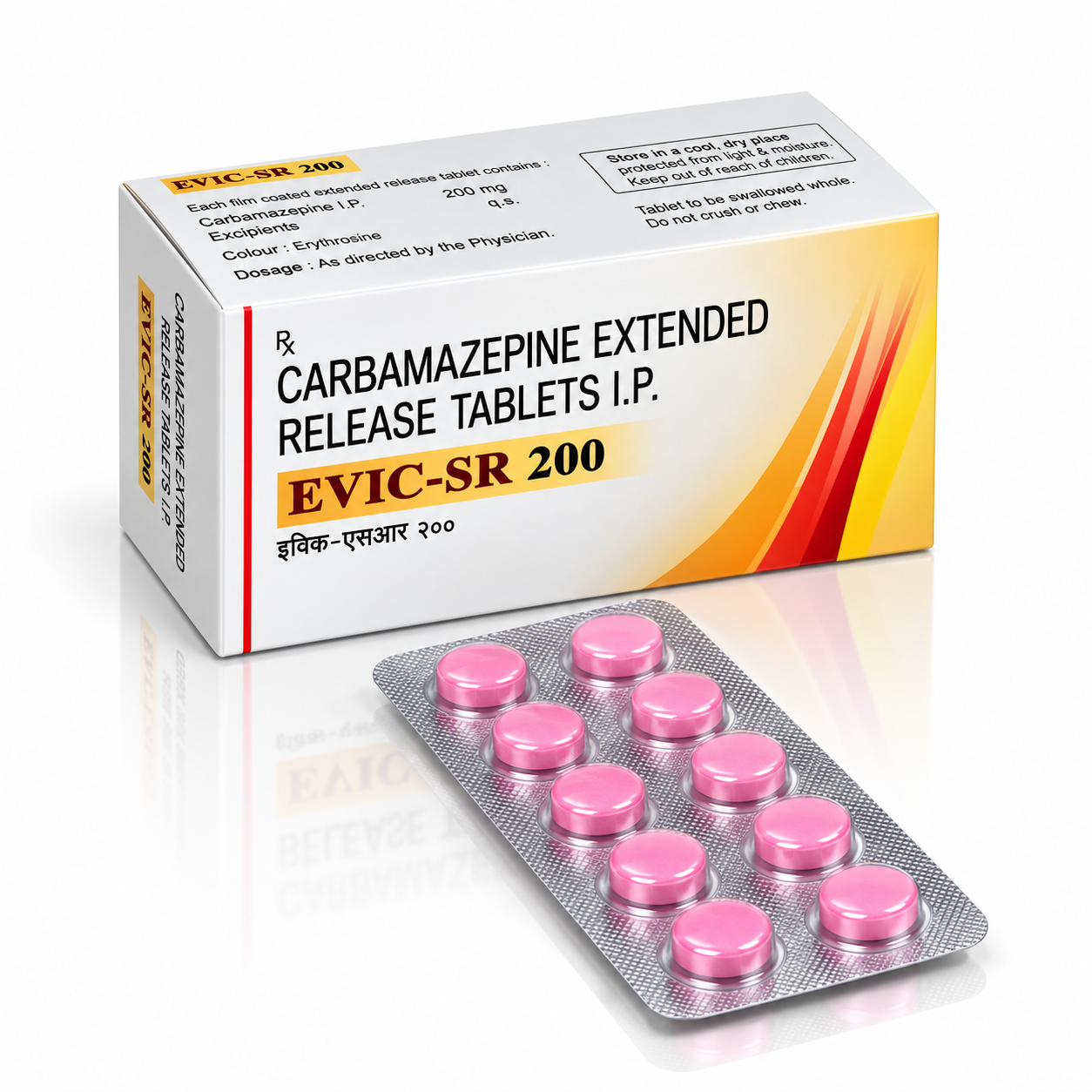
Evic-SR 200 MG Tablet
$0.17 / unit
Available Options
| Pack Size | Price | Price / Unit | Quantity | Action |
|---|---|---|---|---|
| 180 Tablets | $20.00 | $0.11/unit | ||
| 150 Tablets | $18.00 | $0.12/unit | ||
| 120 Tablets | $14.00 | $0.12/unit | ||
| 90 Tablets | $11.00 | $0.12/unit | ||
| 60 Tablets | $8.00 | $0.13/unit | ||
| 30 Tablets | $5.00 | $0.17/unit |
Product Description
EVIC-SR 200 MG TABLET
Brand Name: Evic-SR 200 MG Tablet
Generic Name: Carbamazepine
Strength: 200 mg
Dosage Form: Sustained-Release (SR) Tablet
Therapeutic Class: Anticonvulsant / Antiepileptic Medicine / Sodium Channel Blocker
Manufacturer / Marketer: Elikem Pharmaceuticals Pvt. Ltd.
Pack Size: 1 × 10 Tablets
What is this medicine?
EVIC-SR 200 MG TABLET contains Carbamazepine 200 mg, a prescription medicine belonging to a class of medicines called anticonvulsants or antiepileptic drugs.
It is primarily used to treat certain types of epilepsy and trigeminal neuralgia, a condition characterized by severe nerve pain affecting the face.
Carbamazepine works by blocking voltage-gated sodium channels in nerve cells. This helps stabilize overactive nerve membranes and reduces the repeated electrical impulses responsible for seizures and certain types of nerve pain.
The sustained-release formulation is designed to release carbamazepine gradually over an extended period, helping maintain more consistent drug levels in the bloodstream.
This medicine is commonly prescribed for:
Focal-onset seizures
Focal seizures that spread to involve both sides of the brain
Generalized tonic-clonic seizures in appropriate patients
Certain mixed seizure disorders
Trigeminal neuralgia
Severe facial nerve pain associated with trigeminal neuralgia
Certain neuropathic pain conditions, when prescribed by a specialist
Selected cases of bipolar disorder, particularly when other treatments are unsuitable or ineffective
NOTE: Carbamazepine is not suitable for all seizure types. It may worsen certain generalized seizures, including absence and myoclonic seizures.
Its use in bipolar disorder and some neuropathic pain conditions depends on the patient's diagnosis, the specific formulation, and local prescribing recommendations.
Evic-SR 200 MG Tablet should be taken only under medical supervision.
What should I tell my healthcare provider before I take this medicine?
Inform your healthcare provider if you have:
Allergy to carbamazepine or any ingredient of the tablet
Allergy to tricyclic antidepressants or related medicines
Previous severe skin reactions to anticonvulsants
History of Stevens-Johnson syndrome or toxic epidermal necrolysis
Previous carbamazepine-associated blood disorders
Bone marrow suppression
Aplastic anaemia
Low white blood cell or platelet counts
Liver disease or impaired liver function
Kidney disease
Heart rhythm disturbances
Heart conduction disorders
Heart failure
Low sodium levels
History of hyponatraemia
Glaucoma
Difficulty passing urine
History of depression
Suicidal thoughts or previous self-harm
Previous severe allergic reactions to medicines
Porphyria
Pregnancy or planning pregnancy
Breastfeeding
Use of hormonal contraceptives
Use of other antiepileptic medicines
Use of medicines that may interact with carbamazepine
Inform your healthcare provider about all prescription medicines, nonprescription medicines, vitamins, supplements, and herbal products you currently take.
Important Genetic Screening Considerations
Carbamazepine can cause rare but potentially life-threatening skin reactions, including Stevens-Johnson syndrome (SJS) and toxic epidermal necrolysis (TEN).
Certain genetic variants are associated with increased risk.
HLA-B*15:02: Patients with ancestry from populations in which this variant is more common may require genetic testing before starting carbamazepine.
HLA-A*31:01: This variant is associated with an increased risk of certain carbamazepine hypersensitivity reactions, and testing may be considered according to clinical guidance.
Important: A negative genetic test does not eliminate all risk of severe allergic or skin reactions.
Carbamazepine can also cause serious blood disorders, including aplastic anaemia and agranulocytosis.
How should I use this medicine?
Take Evic-SR 200 MG Tablet exactly as prescribed by your healthcare provider.
Swallow the tablet with water.
Take the medicine at the same time each day.
The tablet may be taken with food to reduce stomach discomfort.
Swallow sustained-release tablets whole unless the specific product information explicitly permits splitting.
Do not crush or chew the tablet.
Follow your prescribed dosage carefully.
Do not increase or decrease the dose independently.
Do not stop treatment suddenly.
Attend regular follow-up appointments.
Follow recommended blood tests.
Avoid alcohol during treatment.
Avoid driving or operating machinery until you know how the medicine affects you.
Report unusual dizziness or drowsiness.
Inform your doctor if seizures increase in frequency.
Do not switch between immediate-release and sustained-release formulations without medical guidance.
Usual Adult Starting Dose for Epilepsy: Carbamazepine treatment is commonly initiated at a relatively low dose, such as 200 mg twice daily for selected adults using extended-release tablets, followed by gradual adjustment.
Maintenance Dose for Epilepsy: Many adults require approximately 800–1,200 mg daily in divided doses, although individual requirements vary. Some patients require different doses under specialist supervision.
Trigeminal Neuralgia: Treatment may begin at approximately 100 mg twice daily using a suitable formulation, followed by gradual adjustment according to pain relief and tolerability.
Maintenance Dose for Trigeminal Neuralgia: Common maintenance doses range from approximately 400–800 mg daily, although some patients require different doses.
Maximum Dose: The maximum recommended dose varies by indication, age, formulation, and prescribing information. The treating specialist should determine the appropriate limit.
Sustained-Release Dosing: Carbamazepine SR tablets are commonly administered in divided doses, often twice daily, according to the prescribed regimen.
Duration of Treatment: Treatment may continue for months or years depending on the condition and response.
Expected Results: Seizure control may improve as the appropriate dose is established. Relief from trigeminal neuralgia may develop over several days, although response varies.
Overdosage: Seek emergency medical attention if an overdose is suspected. Excessive carbamazepine may cause severe drowsiness, vomiting, confusion, abnormal heart rhythms, seizures, respiratory depression, or loss of consciousness.
NOTE: Evic-SR 200 MG Tablet contains carbamazepine 200 mg in a sustained-release formulation.
The appropriate dose must be determined by a healthcare professional. Do not independently adjust treatment based on symptoms.
What if I miss a dose?
Take the missed dose when you remember, unless it is nearly time for the next scheduled dose.
If the next dose is approaching, skip the missed dose.
Continue with your usual dosing schedule.
Do not take two doses together.
Do not increase the next dose to compensate for the missed tablet.
Contact your healthcare provider if you miss several doses.
Inform your doctor if seizures occur after missed doses.
Important: Missing carbamazepine doses may reduce seizure protection.
Do not stop carbamazepine suddenly, as abrupt discontinuation may trigger serious seizures, including status epilepticus.
What may interact with this medicine?
Carbamazepine has numerous clinically important drug interactions because it affects several liver enzymes and is itself metabolized by CYP3A4.
Potential interactions include:
Clarithromycin
Erythromycin
Ketoconazole
Itraconazole
Fluconazole
Verapamil
Diltiazem
Rifampicin
Phenytoin
Phenobarbital
Primidone
Valproic acid
Lamotrigine
Warfarin
Apixaban
Rivaroxaban
Dabigatran
Hormonal contraceptives
Certain antidepressants
Certain antipsychotics
Lithium
Tramadol
Opioid pain medicines
Benzodiazepines
Certain HIV medicines
Grapefruit juice
Alcohol
St. John's wort
Monoamine oxidase inhibitors (MAOIs)
Important Drug Interaction Considerations
Hormonal Contraceptives: Carbamazepine may reduce the effectiveness of oral contraceptive pills and certain other hormonal contraceptives, increasing the risk of unintended pregnancy.
Warfarin: Carbamazepine may reduce warfarin exposure and alter anticoagulant control. INR monitoring and dose adjustments may be required.
Direct Oral Anticoagulants: Carbamazepine may significantly reduce concentrations of certain anticoagulants, potentially reducing protection against blood clots. Some combinations should be avoided.
Macrolide Antibiotics: Clarithromycin and erythromycin may increase carbamazepine concentrations, leading to dizziness, unsteadiness, confusion, or toxicity.
Antifungal Medicines: Some azole antifungals may increase carbamazepine exposure. Carbamazepine can also reduce concentrations of certain antifungal medicines.
Other Antiepileptic Medicines: Carbamazepine can alter the concentrations of phenytoin, lamotrigine, valproate, and other seizure medicines.
Lithium: Concurrent use may increase the risk of neurological adverse effects, including confusion, tremors, and impaired coordination.
Grapefruit Juice: Grapefruit may increase carbamazepine concentrations and should generally be avoided.
Alcohol: Alcohol may increase dizziness, drowsiness, and impaired coordination.
MAO Inhibitors: Carbamazepine should not be used with MAO inhibitors or within the relevant washout period specified in the prescribing information.
Important: Carbamazepine can both affect other medicines and be affected by them. Do not start or stop another medicine without checking with your healthcare provider.
What should I watch for while using this medicine?
Seek immediate medical attention if you experience:
A new skin rash with fever or blistering
Peeling skin
Painful sores in the mouth or eyes
Severe allergic reactions
Swelling of the face, lips, tongue, or throat
Difficulty breathing
Unusual bleeding or bruising
Persistent fever or severe sore throat
Yellowing of the skin or eyes
Severe confusion
Persistent vomiting
Seizures that become more frequent or severe
Severe headache with confusion or unusual weakness
Suicidal thoughts or sudden serious changes in mood
While using this medicine:
Attend regular complete blood count (CBC) testing as recommended.
Follow liver function monitoring instructions.
Monitor sodium levels when clinically indicated.
Attend periodic kidney function assessments.
Follow prescribed carbamazepine blood level monitoring when necessary.
Report new or worsening skin rashes immediately.
Monitor seizure frequency.
Report excessive dizziness or unsteadiness.
Inform your healthcare provider about unusual tiredness.
Avoid alcohol.
Be cautious when driving.
Inform your doctor about new medicines.
Discuss reliable contraception if pregnancy is possible.
Report pregnancy promptly.
Follow recommended bone health assessments during prolonged treatment.
Maintain a consistent dosing schedule.
Do not discontinue treatment abruptly.
Important Monitoring Tests
Complete Blood Count: Helps identify changes in white blood cells, red blood cells, and platelets.
Liver Function Tests: Help detect liver injury.
Serum Sodium: May be monitored because carbamazepine can cause hyponatraemia.
Carbamazepine Blood Levels: May be measured when seizures remain uncontrolled, toxicity is suspected, adherence is uncertain, or interacting medicines are introduced.
Genetic Screening: HLA testing may be appropriate before treatment in genetically at-risk populations.
NOTE: Serious skin reactions and blood disorders are uncommon but require immediate medical evaluation.
A new unexplained rash during carbamazepine treatment should never be ignored.
What side effects may I notice from this medicine?
Side effects that should be reported immediately:
Stevens-Johnson syndrome
Toxic epidermal necrolysis
Drug reaction with eosinophilia and systemic symptoms (DRESS)
Severe allergic reactions
Aplastic anaemia
Agranulocytosis
Significant reduction in blood cell counts
Serious liver injury
Severe hyponatraemia
Severe confusion or seizures
Serious heart rhythm disturbances
Severe swelling of the face or throat
Suicidal thoughts or behaviours
Severe neurological symptoms
Severe or persistent skin reactions
Side effects that usually do not require medical attention:
Dizziness
Drowsiness
Nausea
Vomiting
Headache
Mild fatigue
Unsteadiness
Blurred vision
Double vision
Dry mouth
Constipation
Mild abdominal discomfort
Mild tremors
Difficulty concentrating
Temporary weakness
These effects may be more noticeable when treatment begins or when the dose is increased.
Contact your healthcare provider if symptoms persist, become troublesome, or worsen.
Important: Carbamazepine can cause life-threatening skin reactions, serious blood disorders, and liver problems.
Prompt medical evaluation is essential if severe symptoms occur.
Where should I keep my medicine?
Keep out of the reach of children.
Store below 30°C according to available Indian product information.
Keep the tablets in a cool, dry place.
Protect from excessive heat.
Protect from moisture.
Protect from direct sunlight.
Store in the original blister packaging.
Do not remove tablets until ready to use.
Avoid storing in bathrooms or humid environments.
Do not use after the expiry date.
Do not use tablets if the packaging is damaged.
Keep away from pets.
Do not transfer tablets into unlabelled containers.
Dispose of unused or expired medicines according to your pharmacist's instructions.
Storage Note: Indian retailer listings recommend storage below 30°C. Follow the exact storage requirements printed on the current Evic-SR 200 MG Tablet packaging.
Manufacturer Details
Field | Information |
|---|---|
Brand Name | Evic-SR 200 MG Tablet |
Generic Name | Carbamazepine |
Strength | 200 mg |
Dosage Form | Sustained-Release Tablet |
Therapeutic Class | Anticonvulsant / Antiepileptic Medicine |
Indication | Certain Epileptic Seizures and Trigeminal Neuralgia; Selected Other Specialist Uses |
Manufacturer / Marketer | Elikem Pharmaceuticals Pvt. Ltd. |
Prescription Status | Prescription Only Medicine |
Storage | Store Below 30°C; Follow Original Label |
Route of Administration | Oral |
Pack Size | 1 × 10 Tablets |
Country of Origin | India |