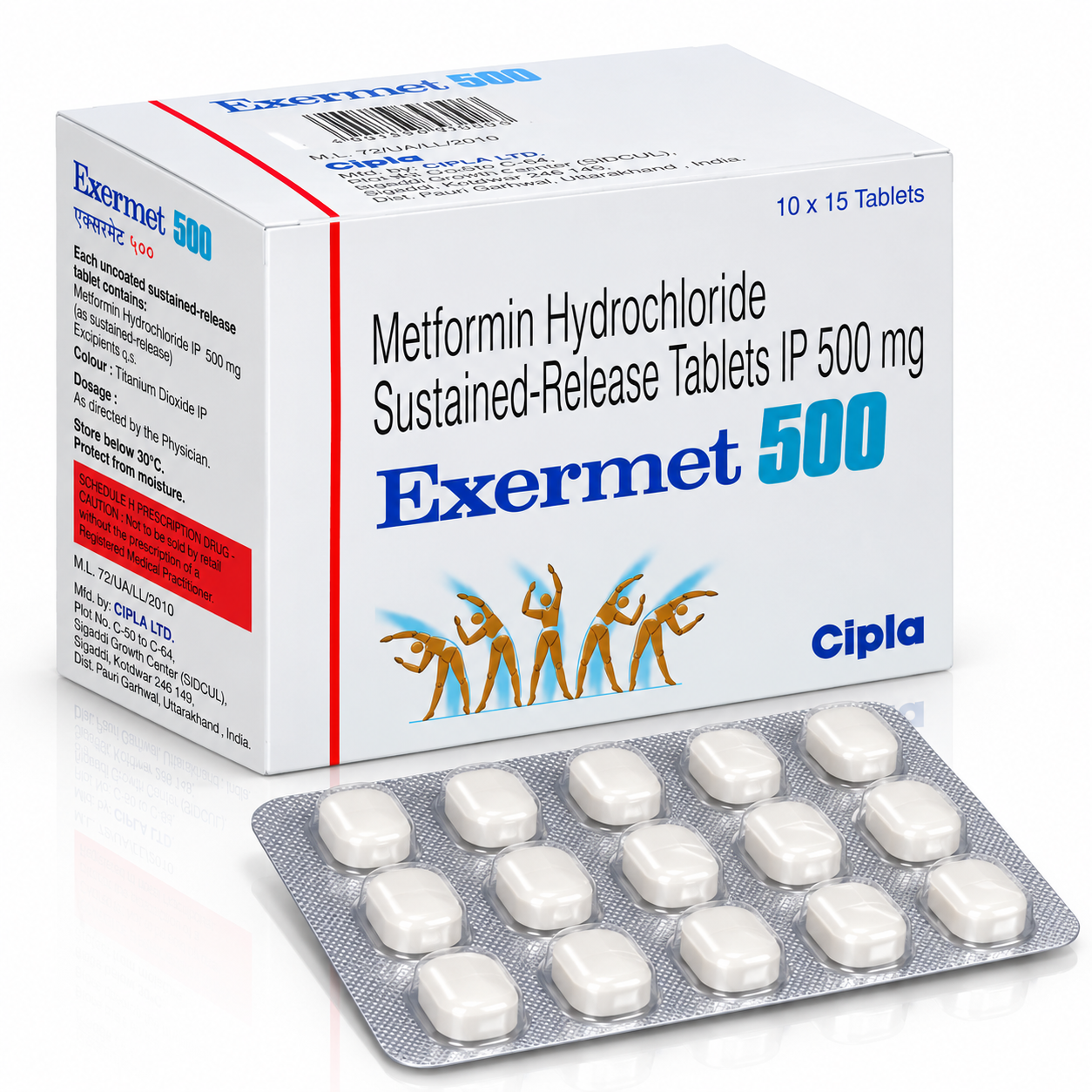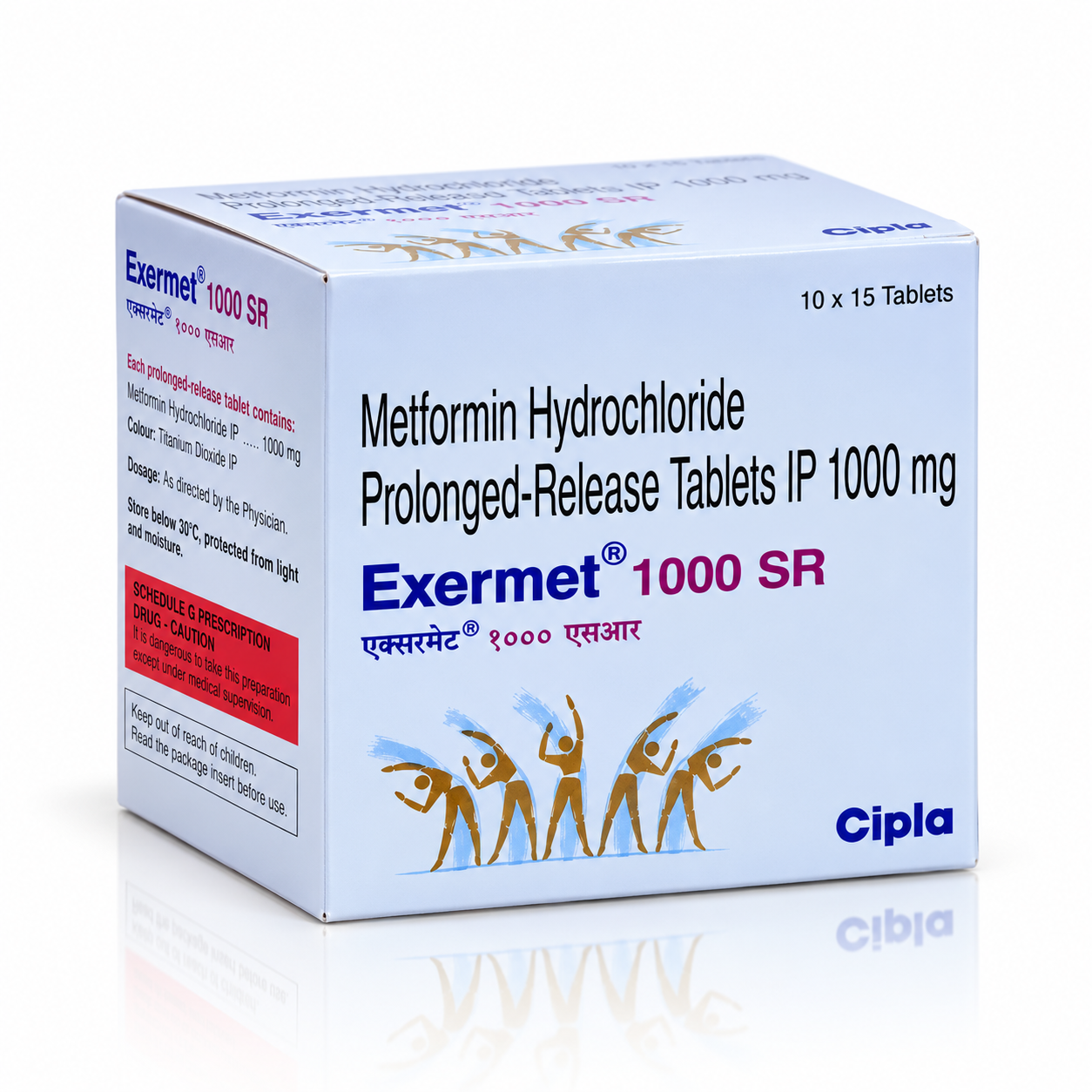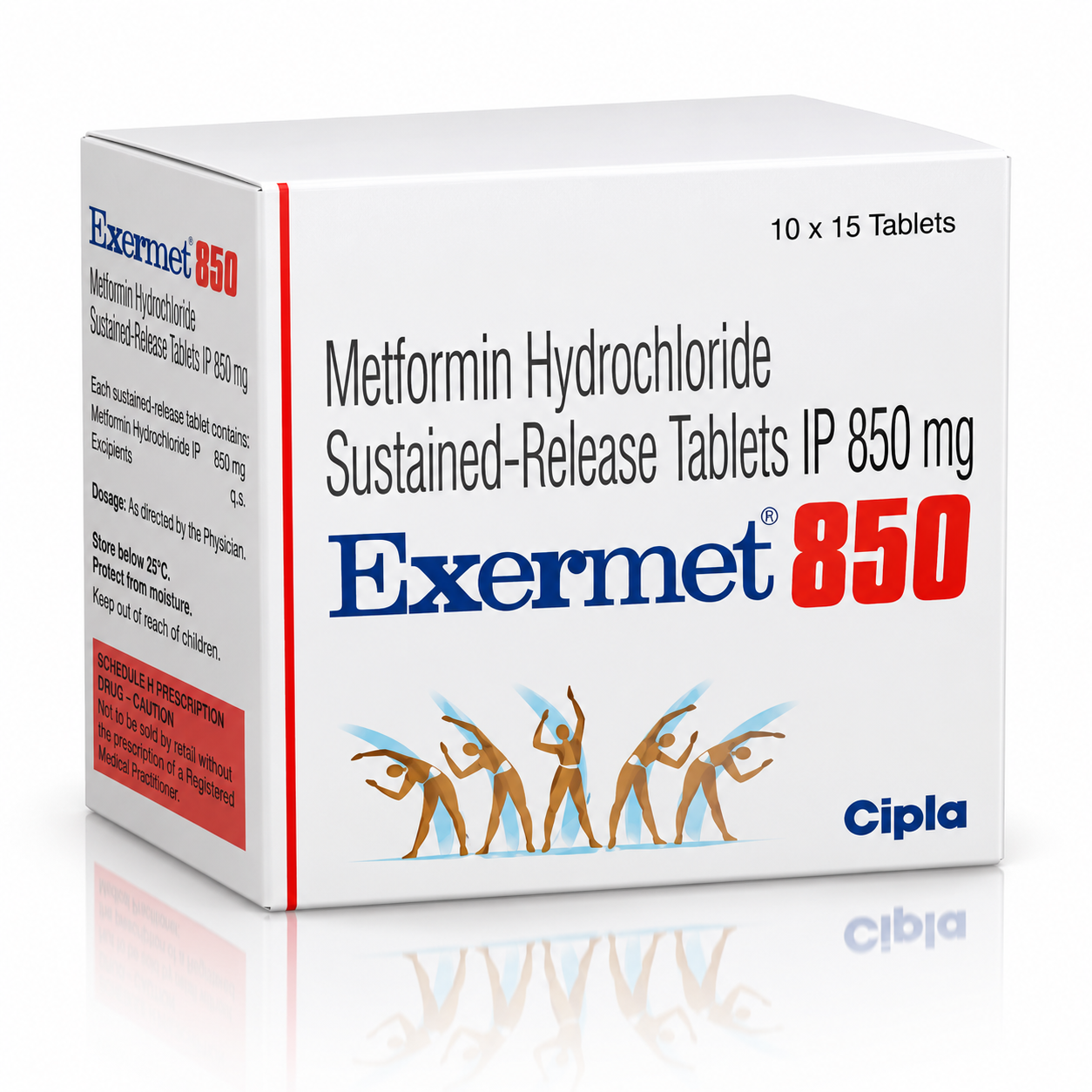
Exermet 850 MG Tablet
$0.08 / unit
Available Options
| Pack Size | Price | Price / Unit | Quantity | Action |
|---|---|---|---|---|
| 90 Tablets | $7.02 | $0.08/unit | ||
| 75 Tablets | $5.85 | $0.08/unit | ||
| 60 Tablets | $4.68 | $0.08/unit | ||
| 45 Tablets | $3.51 | $0.08/unit | ||
| 30 Tablets | $2.34 | $0.08/unit | ||
| 15 Tablets | $1.17 | $0.08/unit |
Product Description
EXERMET 850 MG TABLET
Brand Name: Exermet 850 MG Tablet
Generic Name: Metformin Hydrochloride
Strength: 850 mg
Dosage Form: Oral Tablet
Therapeutic Class: Biguanide / Oral Antidiabetic Medicine / Blood Glucose-Lowering Agent
Manufacturer / Marketer: Cipla Limited
Pack Size: 1 × 15 Tablets
What is this medicine?
EXERMET 850 MG TABLET contains Metformin Hydrochloride 850 mg, an oral antidiabetic medicine belonging to the biguanide class. It is used to manage elevated blood glucose levels in patients with type 2 diabetes mellitus.
Type 2 diabetes is a chronic metabolic condition in which the body becomes resistant to insulin or does not produce enough insulin to maintain healthy blood glucose levels.
Metformin works primarily by reducing glucose production in the liver, improving insulin sensitivity, and helping muscle and other tissues use glucose more effectively.
Unlike some other diabetes medicines, metformin does not directly stimulate insulin secretion from the pancreas. Therefore, it has a relatively low risk of causing hypoglycemia when used alone.
The conventional immediate-release formulation releases the medicine without the extended-release mechanism used in Exermet-SR tablets.
This medicine is commonly used for:
Management of type 2 diabetes mellitus
Reduction of elevated fasting blood glucose levels
Improvement of overall glycemic control
Management of insulin resistance associated with type 2 diabetes
Reduction of excessive glucose production by the liver
Supporting blood glucose control alongside diet and exercise
Combination treatment with other oral antidiabetic medicines
Combination treatment with insulin when clinically appropriate
Long-term management of type 2 diabetes
Helping reduce the risk of diabetes-related complications through effective glucose management
Metformin may also be prescribed for certain other conditions involving insulin resistance, such as polycystic ovary syndrome (PCOS). Such use may be off-label depending on local regulatory approvals.
NOTE: Exermet 850 MG Tablet is intended primarily for the management of type 2 diabetes mellitus.
It is not used to treat diabetic ketoacidosis and does not replace insulin when insulin treatment is medically necessary.
The medicine is most effective when used alongside appropriate dietary changes, regular physical activity, and blood glucose monitoring.
What should I tell my health care provider before I take this medicine?
They need to know if you have any of these conditions:
Allergy to metformin or any ingredient of the tablet
Severe kidney disease
Reduced kidney function
Diabetic ketoacidosis
Metabolic acidosis
Previous episodes of lactic acidosis
Severe dehydration
Persistent vomiting or diarrhoea
Serious infections
Liver disease
Excessive alcohol consumption
Heart failure, particularly if unstable
Recent heart attack
Severe respiratory disease associated with low oxygen levels
Shock or poor blood circulation
Recent or planned major surgery
Planned CT scans or other procedures involving iodinated contrast dye
Vitamin B12 deficiency
Anaemia
History of significant gastrointestinal disorders
Pregnancy or planning pregnancy
Breastfeeding
Use of insulin or other diabetes medicines
Use of medicines that may affect kidney function
Inform your healthcare provider about all prescription medicines, nonprescription medicines, vitamins, supplements, and herbal products you currently take.
Important: Metformin can rarely cause lactic acidosis, a serious and potentially life-threatening condition involving the accumulation of lactic acid in the bloodstream.
The risk increases in patients with severe kidney impairment, certain serious illnesses, inadequate oxygen delivery, excessive alcohol intake, or conditions that lead to metformin accumulation.
Metformin is contraindicated in patients with an estimated glomerular filtration rate (eGFR) below 30 mL/min/1.73 m².
How should I use this medicine?
Take this medicine exactly as prescribed by your healthcare provider.
Swallow the tablet with a glass of water.
Take the medicine with meals to reduce gastrointestinal discomfort.
Follow the dosing schedule prescribed by your doctor.
Immediate-release metformin is commonly taken in divided doses.
Do not increase or decrease the dose without medical advice.
Maintain a balanced diabetes-friendly diet.
Follow recommended physical activity.
Monitor blood glucose levels as advised.
Attend regular HbA1c testing appointments.
Avoid excessive alcohol consumption.
Maintain adequate hydration.
Inform your doctor if you develop prolonged vomiting or diarrhoea.
Tell your healthcare provider before iodinated contrast imaging procedures.
Inform your doctor before major surgery.
Do not discontinue treatment without medical advice.
Attend regular kidney function monitoring appointments.
Usual Adult Starting Dose: Conventional metformin treatment may be started at 500 mg twice daily with meals or 850 mg once daily with a meal.
Exermet 850 MG Strength: Each tablet contains Metformin Hydrochloride 850 mg. The prescribed daily dose and dosing frequency depend on the patient's blood glucose control, kidney function, and tolerance.
Dose Adjustment: For an 850 mg immediate-release regimen, the dose may be increased gradually, commonly in 850 mg increments at intervals of at least two weeks when clinically appropriate.
Maintenance Dose: Many adults require approximately 1500–2000 mg daily, although the dose varies depending on treatment response.
Maximum Daily Dose: Standard immediate-release metformin prescribing information allows up to 2550 mg daily in adults, divided into multiple doses.
Kidney Impairment: Renal function must be assessed before and during treatment. Metformin is contraindicated when eGFR is below 30 mL/min/1.73 m². Initiating treatment at an eGFR between 30 and 45 mL/min/1.73 m² is generally not recommended.
Duration of Treatment: Type 2 diabetes usually requires long-term treatment. Metformin may be continued for as long as it remains effective and appropriate.
Expected Results: Blood glucose improvement may begin within several days. Longer-term effectiveness is assessed through glucose monitoring and HbA1c testing.
Overdosage: Seek emergency medical attention if an overdose is suspected. Excessive metformin exposure can cause gastrointestinal symptoms and potentially life-threatening lactic acidosis.
NOTE: This description addresses conventional immediate-release metformin 850 mg.
Do not interchange Exermet 850 MG and Exermet 850 SR without guidance from a healthcare professional because the formulations may have different dosing schedules.
What if I miss a dose?
Take the missed dose with food when you remember, unless it is nearly time for your next scheduled dose.
If the next dose is approaching, skip the missed dose.
Continue with your regular treatment schedule.
Do not take two doses together to compensate for a missed dose.
Avoid taking additional tablets without medical advice.
Continue monitoring your blood glucose as recommended.
Inform your healthcare provider if you frequently miss doses.
Important: Missing doses may reduce blood glucose control.
Do not double the next dose, as this may increase gastrointestinal side effects and other risks.
What may interact with this medicine?
Metformin may interact with medicines that affect kidney function, blood glucose regulation, or elimination of the medicine from the body.
Potential interactions include:
Iodinated contrast agents
Alcohol
Insulin
Sulfonylureas, including glimepiride and gliclazide
Repaglinide
Topiramate
Acetazolamide
Cimetidine
Dolutegravir
Ranolazine
Certain medicines that inhibit renal drug transporters
Corticosteroids
Thiazide diuretics
Certain beta-agonists
Thyroid hormone preparations
Certain hormonal contraceptives
Medicines that may impair kidney function
Important Drug Interaction Considerations
Iodinated Contrast Agents: Metformin may need to be temporarily withheld around certain imaging procedures involving iodinated contrast, particularly in patients with reduced kidney function or other risk factors.
Alcohol: Excessive alcohol consumption increases the risk of lactic acidosis and may interfere with blood glucose control.
Insulin and Sulfonylureas: Combining metformin with insulin or medicines such as glimepiride may increase the risk of hypoglycemia. Dose adjustments may be necessary.
Topiramate and Acetazolamide: These medicines can increase the risk of metabolic acidosis and require additional caution.
Cimetidine: Cimetidine may reduce metformin elimination and increase its blood concentration.
Dolutegravir: Dolutegravir may increase metformin exposure by affecting kidney transport pathways. Additional monitoring or dose adjustment may be necessary.
Ranolazine: Ranolazine may increase metformin concentrations, and maximum dose restrictions may apply with certain regimens.
Corticosteroids: Corticosteroids may raise blood glucose levels and reduce the effectiveness of diabetes treatment.
Diuretics: Certain diuretics can contribute to dehydration or changes in kidney function, increasing metformin-related risks.
Important: Inform your healthcare provider whenever a new medicine is prescribed or an existing treatment is changed.
What should I watch for while using this medicine?
Seek immediate medical attention if you experience:
Severe weakness or unusual tiredness
Rapid or difficult breathing
Persistent vomiting
Severe abdominal pain
Unexplained muscle pain
Excessive drowsiness
Unusual dizziness or fainting
Feeling unusually cold
Slow or irregular heartbeat with severe symptoms
Severe dehydration
Confusion or loss of consciousness
Severe allergic reactions
These symptoms may indicate a serious complication, including lactic acidosis.
While using this medicine:
Monitor fasting and post-meal blood glucose levels as recommended.
Attend regular HbA1c testing appointments.
Follow recommended kidney function testing.
Monitor for symptoms of vitamin B12 deficiency.
Report persistent numbness or tingling in the hands or feet.
Follow your prescribed diabetes diet.
Maintain regular physical activity.
Avoid excessive alcohol consumption.
Maintain adequate hydration.
Report prolonged vomiting or diarrhoea.
Inform your doctor before major surgery.
Discuss metformin management before contrast imaging procedures.
Monitor for hypoglycemia when using other glucose-lowering medicines.
Attend routine diabetic eye examinations.
Follow recommended diabetic foot care.
Inform your doctor about unexplained weight changes.
Do not change the prescribed dose independently.
Important Monitoring Tests
Blood Glucose: Regular fasting and post-meal measurements help evaluate treatment effectiveness.
HbA1c: Commonly assessed every 3–6 months depending on treatment stability and individual goals.
Kidney Function: eGFR should be assessed before treatment and periodically during metformin therapy.
Vitamin B12: Periodic assessment is recommended during long-term treatment, particularly in patients with anaemia, neuropathy, or risk factors for deficiency.
NOTE: Long-term metformin treatment can reduce vitamin B12 levels.
Patients experiencing persistent fatigue, anaemia, numbness, tingling, or balance difficulties should discuss vitamin B12 testing with their healthcare provider.
What side effects may I notice from this medicine?
Side effects that should be reported immediately:
Lactic acidosis
Severe dehydration
Severe or persistent vomiting
Significant breathing difficulties
Severe unexplained muscle pain
Severe weakness accompanied by confusion
Loss of consciousness
Serious allergic reactions
Severe hypoglycemia when combined with certain other diabetes medicines
Significant deterioration in kidney function
Severe abdominal pain accompanied by symptoms of metabolic acidosis
Side effects that usually do not require medical attention:
Nausea
Diarrhoea
Abdominal discomfort
Bloating
Flatulence
Indigestion
Reduced appetite
Metallic taste
Mild stomach cramps
Temporary changes in bowel habits
Mild gastrointestinal discomfort after meals
These gastrointestinal side effects are particularly common when treatment begins or the dose is increased.
Taking metformin with meals may help improve tolerability.
Contact your healthcare provider if symptoms persist, become troublesome, or worsen.
Important: Lactic acidosis is rare but potentially life-threatening.
Seek emergency medical attention if severe weakness, breathing difficulty, abdominal discomfort, unusual drowsiness, or persistent vomiting occurs, particularly in someone with kidney impairment or a serious acute illness.
Where should I keep my medicine?
Keep out of the reach of children.
Store according to the temperature instructions printed on the original product packaging.
Keep the tablets in a cool, dry place.
Protect from excessive heat.
Protect from moisture.
Protect from direct sunlight.
Keep tablets in their original blister packaging.
Do not remove tablets until ready to use.
Avoid storing in bathrooms or excessively humid environments.
Do not use after the expiry date.
Do not use tablets if the packaging is damaged.
Keep away from pets.
Do not transfer tablets into unlabelled containers.
Dispose of unused or expired medicine according to pharmacist instructions.
Storage Note: Follow the storage conditions printed on the Exermet 850 MG Tablet strip or carton. Avoid excessive heat and moisture.
Manufacturer Details
Field | Information |
|---|---|
Brand Name | Exermet 850 MG Tablet |
Generic Name | Metformin Hydrochloride |
Strength | 850 mg |
Dosage Form | Oral Immediate-Release Tablet |
Therapeutic Class | Biguanide / Oral Antidiabetic Medicine |
Indication | Management of Type 2 Diabetes Mellitus |
Manufacturer / Marketer | Cipla Limited |
Prescription Status | Prescription Only Medicine |
Storage | Follow Original Product Label; Protect from Heat and Moisture |
Route of Administration | Oral |
Pack Size | 1 × 15 Tablets |
Country of Origin | India |