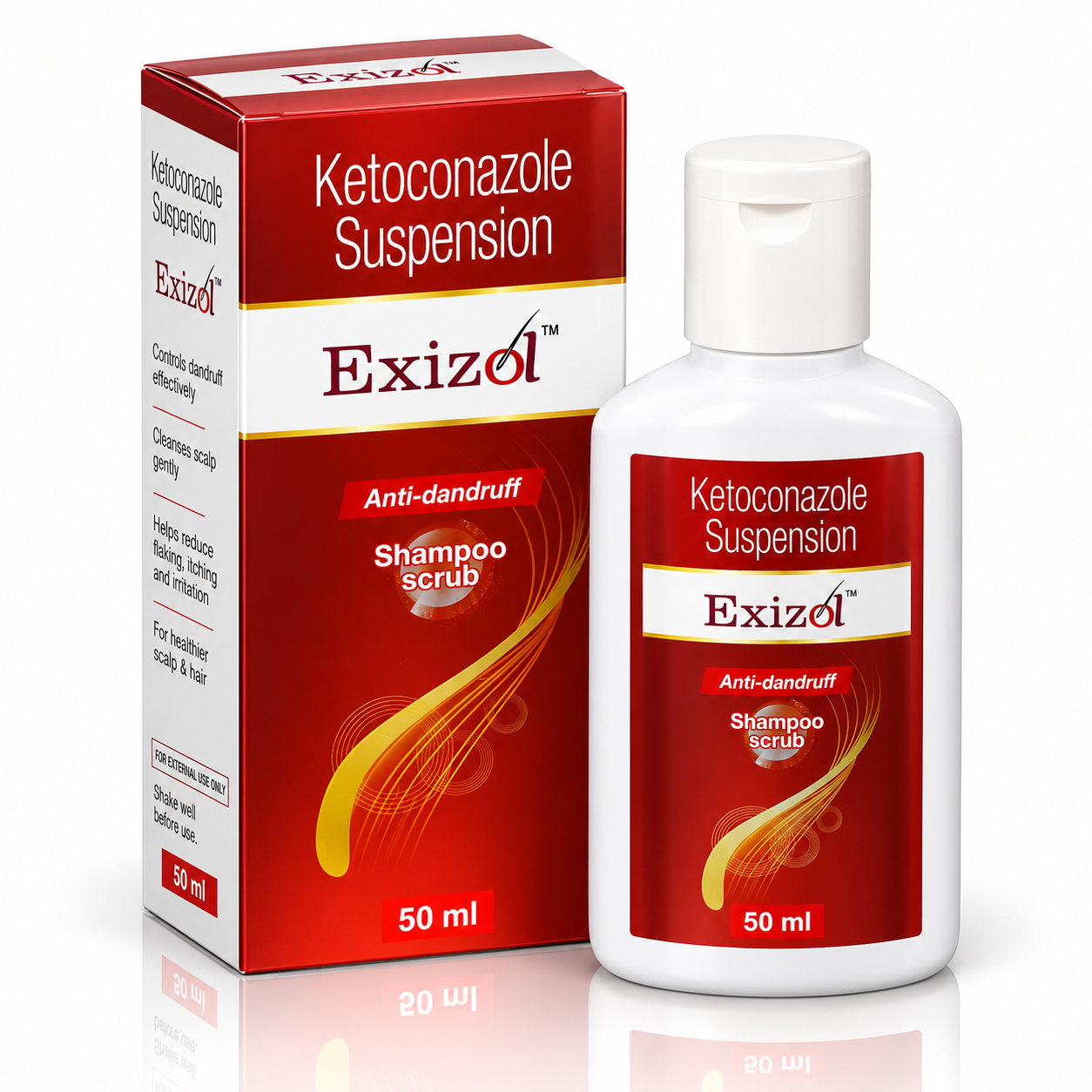
Exizol Shampoo 50 ML
$16.00 / unit
Available Options
| Pack Size | Price | Price / Unit | Quantity | Action |
|---|---|---|---|---|
| 10 Shampoo | $116.00 | $11.60/unit | ||
| 8 Shampoo | $93.00 | $11.63/unit | ||
| 6 Shampoo | $71.00 | $11.83/unit | ||
| 4 Shampoo | $49.00 | $12.25/unit | ||
| 2 Shampoo | $28.00 | $14.00/unit | ||
| 1 Shampoo | $16.00 | $16.00/unit |
Product Description
EXIZOL SHAMPOO 50 ML
Brand Name: Exizol Shampoo 50 ML
Generic Name: Ketoconazole
Strength: 2% w/w
Dosage Form: Medicated Antifungal Shampoo
Therapeutic Class: Imidazole Antifungal / Antidandruff Medicine / Dermatological Preparation
Manufacturer / Marketer: Sun Pharmaceutical Industries Limited
Pack Size: 1 × 50 ML Bottle
What is this medicine?
EXIZOL SHAMPOO 50 ML contains Ketoconazole 2% w/w, a topical antifungal medicine used primarily for treating dandruff and seborrheic dermatitis of the scalp.
Dandruff and seborrheic dermatitis are commonly associated with an inflammatory reaction to Malassezia, a yeast naturally present on the skin.
Ketoconazole belongs to the imidazole class of antifungal medicines. It works by inhibiting the fungal enzyme lanosterol 14-alpha-demethylase, which is essential for producing ergosterol, an important component of fungal cell membranes.
By interfering with ergosterol production, ketoconazole disrupts fungal membrane function and inhibits fungal growth.
Exizol Shampoo helps reduce fungal overgrowth on the scalp, thereby relieving dandruff, itching, flaking, and irritation.
This medicine is commonly used for:
Treatment of dandruff
Management of scalp seborrheic dermatitis
Reduction of excessive scalp flaking
Relief from dandruff-related itching
Reduction of yeast-associated scalp irritation
Control of recurrent dandruff
Maintenance treatment for seborrheic dermatitis
Management of selected Malassezia-associated skin conditions when directed by a dermatologist
NOTE: Exizol Shampoo 50 ML is intended for external use.
Although it may improve itching and flaking associated with fungal overgrowth, not every flaky or itchy scalp condition is caused by fungi.
Scalp psoriasis, contact dermatitis, and tinea capitis (scalp ringworm) may require different treatment. In particular, tinea capitis generally requires oral antifungal therapy rather than shampoo alone.
What should I tell my health care provider before I use this medicine?
Inform your healthcare provider if you have any of these conditions:
Allergy to ketoconazole
Allergy to other azole antifungal medicines
Previous allergic reactions to medicated shampoos
Severe scalp sensitivity
Eczema or atopic dermatitis
Contact dermatitis
Scalp psoriasis
Open wounds or damaged scalp skin
Severe scalp inflammation
Active bacterial scalp infections
Unexplained scalp sores
Significant hair loss or patchy bald areas
History of severe reactions to hair-care products
Recent chemical hair treatments
Recent scalp procedures
Pregnancy or planning pregnancy
Breastfeeding
Use of topical corticosteroids on the scalp
Use of other antifungal treatments
Use of prescription scalp medicines
Tell your healthcare provider about all prescription medicines, nonprescription products, herbal preparations, and scalp treatments you are currently using.
Important: Exizol Shampoo should not be used if you have a known allergy to ketoconazole or another ingredient in the product.
If you develop severe irritation, blistering, swelling, or a widespread rash after use, discontinue the shampoo and seek medical advice.
How should I use this medicine?
Use Exizol Shampoo exactly as directed by your healthcare provider or the product label.
Wet your hair and scalp thoroughly with water.
Apply enough shampoo to cover the affected scalp.
Massage gently until a lather forms.
Distribute the shampoo evenly over affected areas.
Leave the shampoo in contact with the scalp for approximately 3–5 minutes, unless the product label specifies otherwise.
Rinse thoroughly with water.
Avoid direct contact with the eyes.
If shampoo enters the eyes, rinse thoroughly with clean water.
Do not swallow the shampoo.
Do not apply to severely damaged or broken skin without medical advice.
Use according to the prescribed frequency.
Avoid excessive application.
Do not use the shampoo more often than recommended.
Avoid using multiple harsh scalp treatments together.
Report persistent irritation or worsening dandruff.
Follow maintenance treatment instructions if dandruff frequently returns.
Usual Adult Application: Apply sufficient shampoo to the wet scalp, massage gently, leave for approximately 3–5 minutes, and rinse thoroughly.
Treatment of Dandruff and Seborrheic Dermatitis: Ketoconazole 2% shampoo is commonly used twice weekly for 2–4 weeks, depending on the diagnosis and product-specific instructions.
Maintenance Treatment: Some patients may be advised to use ketoconazole shampoo once weekly or once every 1–2 weeks to help prevent recurrence.
Duration of Treatment: Treatment duration depends on the severity of dandruff, scalp condition, and clinical response.
Expected Results: Itching and flaking may begin improving within the first few applications. More complete improvement may require 2–4 weeks of treatment.
No Improvement: Consult your healthcare provider if symptoms persist after an appropriate treatment course, worsen, or are accompanied by pain, pus, or significant hair loss.
Overuse: Excessive shampoo use may cause scalp dryness, irritation, burning, or changes in hair texture.
Accidental Ingestion: Exizol Shampoo is for external use only. If swallowed, seek medical advice. Do not induce vomiting unless instructed by a healthcare professional.
NOTE: Exizol Shampoo contains ketoconazole 2%, a medicated antifungal ingredient.
Daily use is not routinely necessary for most dandruff treatment schedules unless specifically prescribed.
What if I miss a dose?
Use the shampoo when you remember if it is appropriate for your treatment schedule.
If the next scheduled application is approaching, skip the missed application.
Continue with the usual treatment routine.
Do not use excessive quantities to compensate for a missed application.
Do not wash repeatedly on the same day to make up for missed treatments.
Follow the maintenance schedule recommended by your healthcare provider.
Consult your dermatologist if dandruff repeatedly returns or remains uncontrolled.
Important: Missing an occasional application is unlikely to cause serious problems.
Consistent use according to the prescribed schedule helps improve dandruff control and reduce recurrence.
What may interact with this medicine?
Ketoconazole shampoo has minimal systemic absorption when used correctly on intact skin, so clinically significant systemic drug interactions are generally unlikely.
However, some topical medicines and hair-care products may increase scalp irritation.
Potential interactions and application concerns include:
Other medicated antidandruff shampoos
Selenium sulfide preparations
Zinc pyrithione shampoos
Salicylic acid scalp treatments
Coal tar shampoos
Topical corticosteroid solutions
Other topical antifungal medicines
Alcohol-containing scalp solutions
Strong exfoliating scalp products
Harsh shampoos
Hair dyes
Chemical hair-straightening products
Hair-perming solutions
Fragranced scalp products in sensitive individuals
Other potentially irritating dermatological preparations
Important Drug Interaction Considerations
Topical Corticosteroids: Ketoconazole shampoo may be prescribed alongside topical corticosteroids for seborrheic dermatitis. The treatments should be used according to the dermatologist's instructions.
Other Antidandruff Shampoos: Combining several medicated shampoos may increase dryness and irritation without improving results.
Salicylic Acid and Coal Tar: These ingredients may be useful in selected scalp disorders but can increase irritation when combined with other medicated treatments.
Hair Dyes and Chemical Treatments: Chemical hair products may irritate a sensitive or inflamed scalp. Consider delaying such treatments until inflammation improves.
Other Antifungal Products: Additional antifungal medicines should be used only when clinically appropriate.
Oral Medicines: Unlike oral ketoconazole, ketoconazole shampoo is not generally associated with significant CYP-mediated systemic drug interactions when used correctly.
Important: The serious liver toxicity and many systemic drug interactions associated with oral ketoconazole should not automatically be attributed to ketoconazole shampoo.
Inform your healthcare provider if you are using several scalp treatments simultaneously.
What should I watch for while using this medicine?
Seek medical attention if you experience:
Severe allergic reactions
Significant swelling of the scalp or face
Difficulty breathing
Severe burning or irritation
Extensive skin blistering
Persistent severe redness
Severe itching or rash
Painful scalp sores
Significant unexpected hair loss
Severe eye irritation following accidental contact
While using this medicine:
Monitor the scalp for improvement in itching.
Observe whether dandruff and flaking decrease.
Report persistent scalp irritation.
Avoid scratching inflamed areas.
Use lukewarm rather than excessively hot water.
Avoid harsh shampoos or hair treatments.
Rinse shampoo thoroughly after each application.
Avoid excessive frequency of use.
Maintain a gentle hair-care routine.
Report unusual changes in hair texture.
Monitor for worsening scalp redness.
Consult a dermatologist if dandruff persists.
Report scalp pain or pus-filled lesions.
Seek assessment if patchy hair loss develops.
Follow recommended maintenance treatment.
Avoid sharing personal hair-care items when an infectious scalp condition is suspected.
NOTE: Persistent dandruff may be caused by seborrheic dermatitis or another dermatological condition.
If the scalp develops painful swelling, patchy hair loss, crusting, or pus-filled lesions, seek medical evaluation rather than continuing antifungal shampoo alone.
What side effects may I notice from this medicine?
Side effects that should be reported immediately:
Severe allergic reactions
Swelling of the face, lips, or tongue
Difficulty breathing
Severe contact dermatitis
Extensive scalp blistering
Severe burning sensation
Significant worsening of scalp inflammation
Severe or persistent rash
Marked scalp swelling
Severe eye irritation
Side effects that usually do not require medical attention:
Mild scalp irritation
Temporary burning sensation
Mild itching
Scalp dryness
Temporary stinging
Hair dryness
Changes in hair texture
Mild scalp redness
Temporary oiliness or dryness of hair
Mild application-site discomfort
Uncommon hair discoloration or increased hair shedding
These side effects are generally mild and may resolve after treatment is stopped or the frequency of use is adjusted.
Contact your healthcare provider if symptoms persist, become troublesome, or worsen.
Important: Excessive use of ketoconazole shampoo may increase scalp irritation and dryness.
Discontinue treatment and seek medical advice if severe allergic reactions, blistering, or significant scalp inflammation develops.
Where should I keep my medicine?
Keep out of the reach of children.
Store below 30°C according to available Exizol product information.
Keep the shampoo in a cool, dry place.
Protect from excessive heat.
Protect from direct sunlight.
Keep the bottle tightly closed after use.
Avoid contamination of the bottle opening.
Do not freeze unless the manufacturer specifically permits it.
Store in its original container.
Do not use after the expiry date.
Do not use if the bottle or seal is damaged.
Avoid transferring the shampoo into unlabelled containers.
Keep away from pets.
Dispose of expired or unused product according to pharmacist instructions.
Storage Note: Available Indian pharmacy listings recommend storing Exizol Shampoo below 30°C. Follow the instructions printed on the original bottle or carton.
Manufacturer Details
Field | Information |
|---|---|
Brand Name | Exizol Shampoo 50 ML |
Generic Name | Ketoconazole |
Strength | 2% w/w |
Dosage Form | Medicated Antifungal Shampoo |
Therapeutic Class | Imidazole Antifungal / Antidandruff Medicine |
Indication | Dandruff and Seborrheic Dermatitis of the Scalp |
Manufacturer / Marketer | Sun Pharmaceutical Industries Limited |
Historical Brand Association | Ranbaxy Laboratories |
Prescription Status | Listed as Prescription-Required by Major Indian Pharmacies |
Storage | Below 30°C; Follow Original Product Label |
Route of Administration | Topical / External Use |
Pack Size | 1 × 50 ML Bottle |
Country of Origin | India |