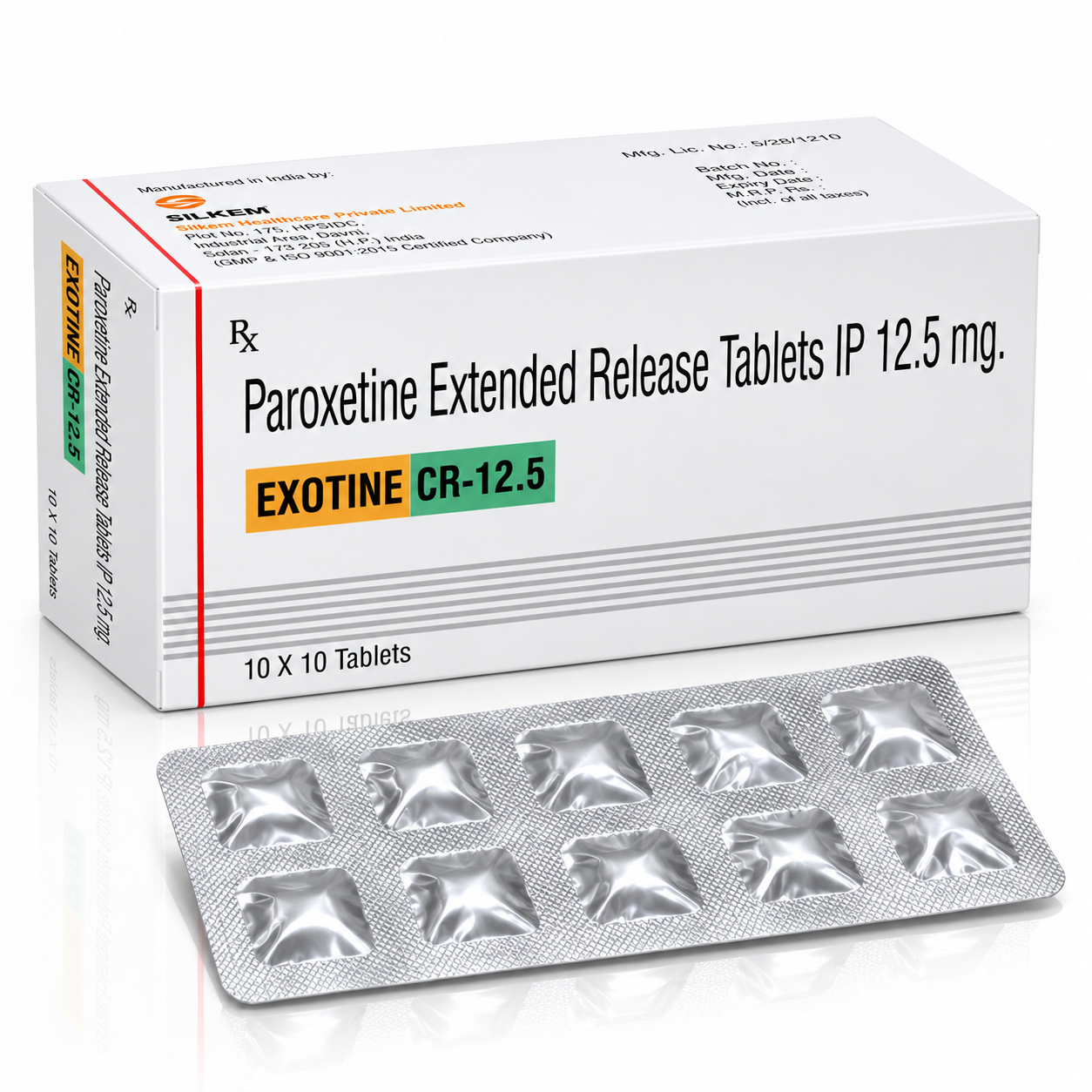
Exotine-CR 12.5 MG Tablet
$0.27 / unit
Available Options
| Pack Size | Price | Price / Unit | Quantity | Action |
|---|---|---|---|---|
| 180 Tablets | $48.00 | $0.27/unit | ||
| 150 Tablets | $40.00 | $0.27/unit | ||
| 120 Tablets | $32.00 | $0.27/unit | ||
| 90 Tablets | $24.00 | $0.27/unit | ||
| 60 Tablets | $16.00 | $0.27/unit | ||
| 30 Tablets | $8.00 | $0.27/unit |
Product Description
EXOTINE-CR 12.5 MG TABLET
Brand Name: Exotine-CR 12.5 MG Tablet
Generic Name: Paroxetine Hydrochloride
Strength: 12.5 mg
Dosage Form: Controlled-Release (CR) Oral Tablet
Therapeutic Class: Selective Serotonin Reuptake Inhibitor (SSRI) / Antidepressant / Anxiolytic Medicine
Manufacturer / Marketer: Elikem Pharmaceuticals Pvt. Ltd.
Pack Size: 1 × 10 Tablets
What is this medicine?
EXOTINE-CR 12.5 MG TABLET contains Paroxetine 12.5 mg in a controlled-release formulation. It is a prescription antidepressant belonging to the selective serotonin reuptake inhibitor (SSRI) class.
Paroxetine is used to treat depression and certain anxiety-related disorders. It works by blocking the reuptake of serotonin, a neurotransmitter involved in mood regulation, anxiety, sleep, and emotional processing.
By increasing serotonin availability in the brain, paroxetine helps regulate mood and reduce symptoms associated with certain psychiatric conditions.
The controlled-release formulation is designed to release the medicine gradually rather than immediately.
This medicine may be prescribed for:
Major depressive disorder
Panic disorder
Social anxiety disorder
Premenstrual dysphoric disorder (PMDD)
Obsessive-compulsive disorder (OCD), when prescribed according to appropriate clinical guidance
Generalized anxiety disorder (GAD), when the clinician considers paroxetine suitable
Post-traumatic stress disorder (PTSD), depending on the formulation and local approval
Other specialist-assessed anxiety-related conditions
NOTE: Approved indications can differ between immediate-release and controlled-release paroxetine formulations and between countries.
The controlled-release formulation has established regulatory indications for major depressive disorder, panic disorder, social anxiety disorder, and PMDD in certain markets.
Paroxetine is not an instant-relief medicine for anxiety attacks. Its full therapeutic benefits generally develop gradually with consistent treatment.
What should I tell my healthcare provider before I take this medicine?
Inform your healthcare provider if you have:
Allergy to paroxetine or any ingredient of the tablet
Previous allergic reactions to SSRI antidepressants
Bipolar disorder or a history of mania
Previous episodes of hypomania
Suicidal thoughts or self-harm behaviour
A history of severe depression
Epilepsy or a history of seizures
Liver disease
Kidney disease
Glaucoma, particularly angle-closure glaucoma
Low sodium levels
Previous episodes of hyponatraemia
Bleeding disorders
History of gastrointestinal bleeding
Heart disease
Diabetes mellitus
Sexual dysfunction
Previous severe withdrawal symptoms from antidepressants
Pregnancy or plans to become pregnant
Breastfeeding
Use of other antidepressant medicines
Use of blood-thinning medicines
Use of medicines that increase serotonin activity
Tell your healthcare provider about all prescription medicines, nonprescription medicines, supplements, vitamins, and herbal products you currently take.
Important: Antidepressants, including paroxetine, may increase the risk of suicidal thoughts and behaviours in children, adolescents, and young adults, particularly during the early stages of treatment or following dose changes.
Patients should be closely monitored for worsening depression, unusual behavioural changes, agitation, or suicidal thoughts.
Paroxetine controlled-release tablets are not approved for use in children.
How should I use this medicine?
Take Exotine-CR 12.5 MG Tablet exactly as prescribed by your healthcare provider.
Swallow the tablet whole with a glass of water.
Do not crush, chew, or break the controlled-release tablet.
Take the medicine at approximately the same time each day.
It is generally taken once daily in the morning.
The tablet may be taken with or without food.
Taking the medicine with food may help reduce nausea.
Follow the prescribed dosage carefully.
Do not increase or decrease the dose independently.
Do not discontinue treatment suddenly.
Continue treatment even if improvement is not immediately noticeable.
Avoid excessive alcohol consumption.
Avoid driving until you know how the medicine affects you.
Inform your doctor if you experience worsening anxiety or depression.
Report unusual mood or behavioural changes.
Attend regular follow-up appointments.
Inform your healthcare provider about any new medicines.
Usual Adult Dosage
Major Depressive Disorder: The usual recommended initial dose of paroxetine controlled-release tablets is 25 mg once daily.
Panic Disorder: Treatment may begin at 12.5 mg once daily, followed by adjustment according to response.
Social Anxiety Disorder: The usual recommended initial dose is 12.5 mg once daily.
Premenstrual Dysphoric Disorder: The recommended initial dose is 12.5 mg once daily. Continuous or intermittent dosing may be prescribed depending on the treatment plan.
Older Adults: A lower starting dose, often 12.5 mg daily, may be recommended.
Severe Kidney or Liver Impairment: Treatment may begin at 12.5 mg daily, with careful monitoring and dose adjustment.
Dose Adjustment: When necessary, the dose may be increased gradually, commonly in 12.5 mg increments at intervals of at least one week.
Maximum Daily Dose: The maximum dose depends on the specific indication, patient characteristics, and approved prescribing information.
Duration of Treatment: Depression and anxiety disorders may require treatment for several months or longer. The duration is individualized according to response, relapse risk, and tolerability.
Expected Results: Some patients notice early changes in sleep or anxiety within 1–2 weeks, but meaningful improvement may take several weeks. Full therapeutic benefit often requires approximately 4–6 weeks or longer.
Overdosage: Seek emergency medical attention if an overdose is suspected. Symptoms may include severe drowsiness, vomiting, rapid heartbeat, confusion, tremors, seizures, or serotonin toxicity.
NOTE: Exotine-CR 12.5 MG Tablet contains paroxetine in a controlled-release formulation.
The 12.5 mg strength is not the standard starting dose for every condition. Do not change the prescribed dose without consulting your healthcare provider.
What if I miss a dose?
Take the missed dose when you remember, unless it is nearly time for the next scheduled dose.
If the next dose is approaching, skip the missed dose.
Continue with your regular treatment schedule.
Do not take two tablets together to compensate for a missed dose.
Do not increase the next dose.
Contact your healthcare provider if you miss several consecutive doses.
Inform your doctor if you experience withdrawal-like symptoms after missed doses.
Important: Paroxetine may cause discontinuation symptoms when doses are missed or treatment is stopped suddenly.
Symptoms may include dizziness, nausea, headache, irritability, sleep disturbances, anxiety, or electric-shock-like sensations.
Do not discontinue treatment abruptly without medical supervision.
What may interact with this medicine?
Paroxetine may interact with medicines that increase serotonin activity, affect bleeding risk, or depend on CYP2D6 metabolism.
Potential interactions include:
Monoamine oxidase inhibitors (MAOIs)
Linezolid
Intravenous methylene blue
Other SSRI antidepressants
Serotonin-norepinephrine reuptake inhibitors (SNRIs)
Tricyclic antidepressants
Tramadol
Fentanyl and certain other opioids
Dextromethorphan
Triptan medicines used for migraine
Lithium
Buspirone
St. John's wort
Tryptophan supplements
Warfarin
Aspirin
Ibuprofen and other NSAIDs
Tamoxifen
Metoprolol
Certain antipsychotic medicines
Pimozide
Thioridazine
Alcohol
Important Drug Interaction Considerations
MAO Inhibitors: Combining paroxetine with MAO inhibitors can cause potentially life-threatening serotonin syndrome. These combinations are contraindicated, and appropriate washout periods are required.
Linezolid and Intravenous Methylene Blue: These medicines can substantially increase the risk of serotonin syndrome when used with paroxetine. Specialist assessment is required.
Other Serotonergic Medicines: Tramadol, other antidepressants, certain opioids, migraine medicines, and St. John's wort may increase serotonin syndrome risk.
Warfarin and NSAIDs: Paroxetine may increase bleeding risk, especially when used alongside anticoagulants, aspirin, or anti-inflammatory pain medicines.
Tamoxifen: Paroxetine strongly inhibits CYP2D6, an enzyme needed to convert tamoxifen into its active metabolite. Concurrent treatment may reduce tamoxifen effectiveness and should generally be avoided when appropriate alternatives are available.
Metoprolol: Paroxetine may increase metoprolol concentrations and potentially enhance effects such as slow heartbeat or low blood pressure.
Pimozide and Thioridazine: Concurrent use is contraindicated because paroxetine may increase their concentrations and the risk of serious cardiac rhythm abnormalities.
Alcohol: Alcohol may worsen drowsiness, dizziness, impaired judgment, and certain psychiatric symptoms.
Important: Paroxetine is a strong CYP2D6 inhibitor and has several clinically significant drug interactions.
Do not start, stop, or change other medicines without informing your healthcare provider.
What should I watch for while using this medicine?
Seek immediate medical attention if you experience:
Suicidal thoughts or urges to self-harm
Severe worsening of depression
Extreme agitation or unusual behavioural changes
Severe allergic reactions
Swelling of the face, lips, tongue, or throat
Difficulty breathing
Seizures
High fever with confusion and muscle rigidity
Severe tremors or muscle twitching
Rapid heartbeat with severe agitation
Severe confusion or loss of consciousness
Unusual or uncontrolled bleeding
Severe headache with confusion or weakness
Sudden eye pain or vision changes
Symptoms of mania, including unusually elevated mood and markedly reduced need for sleep
Important Monitoring Considerations
While using this medicine:
Monitor changes in mood and anxiety symptoms.
Attend regular mental health follow-up appointments.
Report worsening depression or suicidal thoughts.
Watch for unusual agitation or restlessness.
Monitor sleep patterns.
Report persistent nausea or gastrointestinal symptoms.
Inform your doctor about sexual side effects.
Monitor for unusual bruising or bleeding.
Report symptoms of low sodium, particularly confusion or severe headache.
Avoid abruptly discontinuing the medicine.
Follow gradual dose-reduction instructions when stopping treatment.
Be cautious when driving or operating machinery.
Avoid excessive alcohol consumption.
Inform your healthcare provider if you become pregnant.
Discuss medication benefits and risks before planning pregnancy.
Inform your doctor about new prescriptions or supplements.
Attend follow-up appointments after dose adjustments.
NOTE: Serotonin syndrome is a potentially serious reaction caused by excessive serotonin activity.
Symptoms may include agitation, confusion, fever, sweating, rapid heartbeat, diarrhoea, muscle rigidity, and exaggerated reflexes.
Severe symptoms require emergency medical attention.
What side effects may I notice from this medicine?
Side effects that should be reported immediately:
Suicidal thoughts or behaviours
Severe worsening of depression
Serotonin syndrome
Seizures
Severe allergic reactions
Difficulty breathing
Severe agitation or confusion
Manic or hypomanic episodes
Serious bleeding
Severe hyponatraemia
Sudden eye pain or visual disturbances
Serious heart rhythm disturbances
Severe symptoms following abrupt withdrawal
Side effects that usually do not require medical attention:
Nausea
Headache
Dizziness
Drowsiness
Difficulty sleeping
Increased sweating
Dry mouth
Constipation
Diarrhoea
Reduced appetite
Mild fatigue
Tremors
Yawning
Reduced sexual desire
Delayed ejaculation
Difficulty reaching orgasm
Erectile difficulties
Changes in body weight
These side effects may be more noticeable during the early stages of treatment or following dose adjustments.
Some may improve as the body adjusts to treatment, while others may persist.
Contact your healthcare provider if symptoms continue, become troublesome, or worsen.
Important: Paroxetine may cause sexual dysfunction, including reduced libido, delayed ejaculation, erectile difficulties, or difficulty achieving orgasm.
In some patients, sexual symptoms may persist after discontinuation of SSRI treatment.
Discuss these effects with your healthcare provider rather than independently stopping the medicine.
Where should I keep my medicine?
Keep out of the reach of children.
Store below 25°C according to available Indian product information.
Keep the medicine in a cool, dry place.
Protect from excessive heat.
Protect from moisture.
Protect from direct sunlight.
Keep tablets in their original blister packaging.
Do not remove tablets until ready for use.
Avoid storing in bathrooms or humid environments.
Do not use after the expiry date.
Do not use tablets if the packaging is damaged.
Keep away from pets.
Do not transfer tablets into unlabelled containers.
Dispose of unused or expired medicine according to pharmacist instructions.
Storage Note: Some Indian listings advise storage below 25°C. The definitive storage requirements should be confirmed from the Exotine-CR 12.5 MG Tablet packaging.
Manufacturer Details
Field | Information |
|---|---|
Brand Name | Exotine-CR 12.5 MG Tablet |
Generic Name | Paroxetine Hydrochloride |
Strength | 12.5 mg |
Dosage Form | Controlled-Release Oral Tablet |
Therapeutic Class | SSRI Antidepressant |
Indication | Depression, Panic Disorder, Social Anxiety Disorder, PMDD and Other Specialist-Directed Uses |
Manufacturer / Brand Listing | Elikem Pharmaceuticals Pvt. Ltd. |
Alternate Marketer Listing | Boston Pharma — Verify Current Packaging |
Prescription Status | Prescription Only Medicine |
Storage | Follow Original Label; Some Listings Recommend Below 25°C |
Route of Administration | Oral |
Pack Size | 1 × 10 Tablets |
Country of Origin | India |