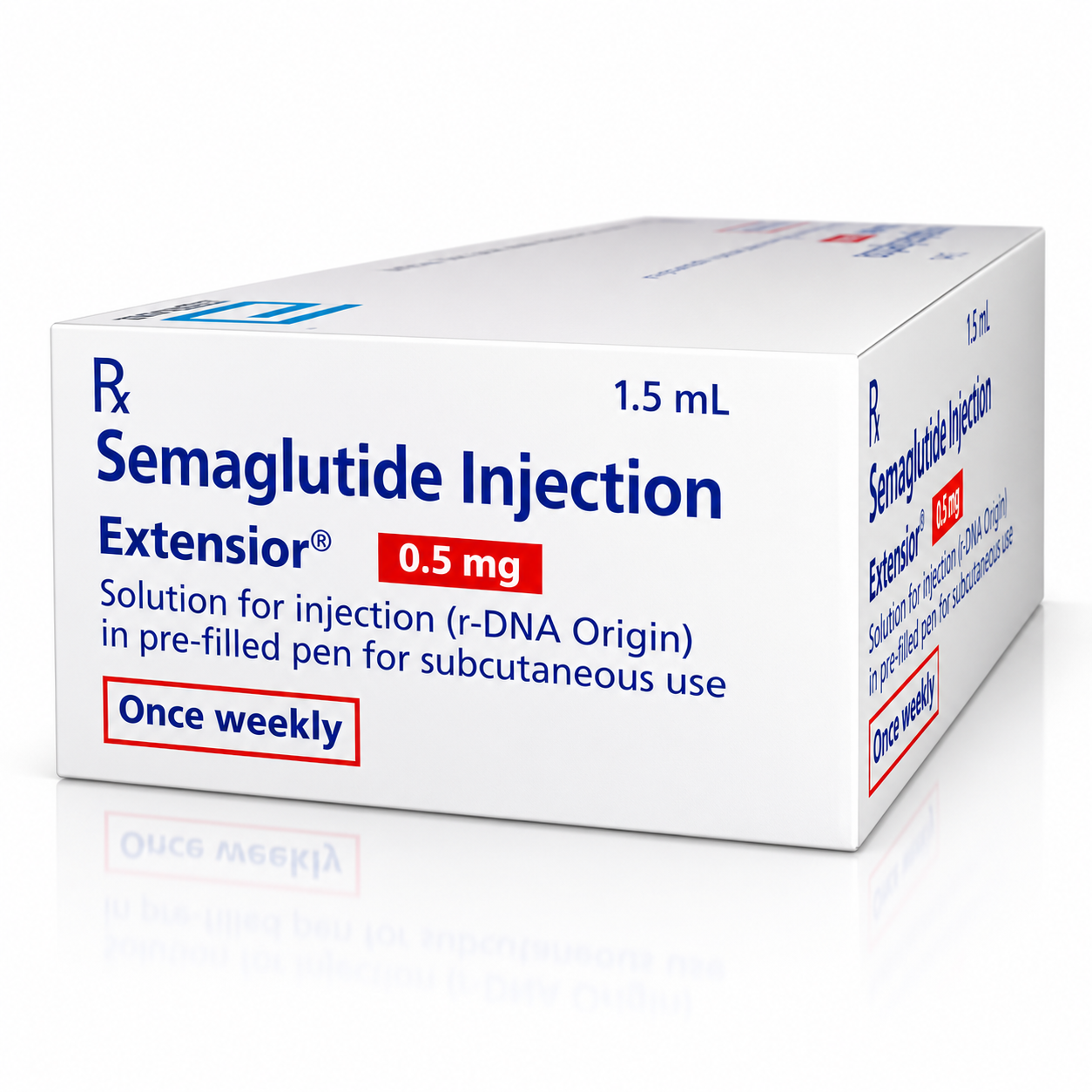
Extensior 0.5 MG Injection (1.5 ML)
$262.94 / unit
Available Options
| Pack Size | Price | Price / Unit | Quantity | Action |
|---|---|---|---|---|
| 10 Injection | $1973.00 | $197.30/unit | ||
| 8 Injection | $1579.00 | $197.38/unit | ||
| 6 Injection | $1197.00 | $199.50/unit | ||
| 4 Injection | $835.00 | $208.75/unit | ||
| 2 Injection | $474.00 | $237.00/unit | ||
| 1 Injection | $263.00 | $263.00/unit |
Product Description
EXTENSIOR 0.5 MG INJECTION 1.5 ML
Brand Name: Extensior 0.5 MG Injection 1.5 ML
Generic Name: Semaglutide
Strength: 0.5 mg per dose (0.37 mL); 2 mg/1.5 mL per prefilled pen
Dosage Form: Solution for Subcutaneous Injection in a Multidose Prefilled Pen
Therapeutic Class: GLP-1 Receptor Agonist / Antidiabetic Medicine
Manufacturer / Marketer: Abbott India Limited
Pack Size: 1 × 1.5 ML Prefilled Pen with 4 Disposable Needles
What is this medicine?
EXTENSIOR 0.5 MG INJECTION 1.5 ML contains Semaglutide, a prescription medicine belonging to the class of glucagon-like peptide-1 (GLP-1) receptor agonists.
It is primarily used to improve blood glucose control in adults with type 2 diabetes mellitus when combined with an appropriate diet, physical activity, and other diabetes management measures.
Semaglutide mimics the action of GLP-1, a naturally occurring intestinal hormone that helps regulate blood glucose levels and appetite.
It works through several mechanisms:
Stimulates Glucose-Dependent Insulin Release: Semaglutide helps the pancreas release insulin when blood glucose levels are elevated.
Reduces Glucagon Secretion: It decreases excessive glucagon release, helping reduce glucose production by the liver.
Slows Gastric Emptying: It slows the movement of food from the stomach into the intestine, particularly after starting treatment.
Increases Satiety: It acts on appetite-regulating pathways, helping patients feel fuller and potentially reducing food intake.
This medicine is used for:
Improving blood glucose control in adults with type 2 diabetes
Reducing elevated fasting and post-meal blood glucose levels
Supporting long-term glycemic management
Combination treatment with other antidiabetic medicines when clinically appropriate
Supporting diabetes management alongside diet and exercise
Helping reduce body weight in some patients with type 2 diabetes
Supporting individualized management of cardiovascular risk in appropriate patients
Some semaglutide products also have regulatory indications for weight management or reduction of selected cardiovascular and kidney risks. These indications are product-specific and should not automatically be attributed to every semaglutide brand.
NOTE: Extensior 0.5 MG Injection is primarily marketed as a treatment for type 2 diabetes.
It is not insulin and is not a substitute for insulin in patients who require insulin treatment.
It should not be used for type 1 diabetes or diabetic ketoacidosis.
What should I tell my healthcare provider before I take this medicine?
They need to know if you have any of these conditions:
Allergy to semaglutide or any ingredient of the injection
Personal or family history of medullary thyroid carcinoma (MTC)
Multiple endocrine neoplasia syndrome type 2 (MEN 2)
Previous pancreatitis
Severe gastrointestinal disorders
Severe gastroparesis
Recurrent vomiting or dehydration
Gallstones or gallbladder disease
Kidney disease or impaired kidney function
Diabetic retinopathy or other diabetes-related eye disease
History of severe hypoglycemia
Type 1 diabetes mellitus
Diabetic ketoacidosis
Significant changes in appetite or nutritional intake
Previous severe reactions to GLP-1 receptor agonists
Pregnancy or planning pregnancy
Breastfeeding
Use of insulin
Use of sulfonylurea medicines
Use of another semaglutide product
Use of another GLP-1 receptor agonist
Inform your healthcare provider about all prescription medicines, nonprescription medicines, vitamins, supplements, and herbal products you currently use.
Important: Semaglutide has a boxed warning in US prescribing information concerning thyroid C-cell tumours observed in rodents. It is unknown whether semaglutide causes medullary thyroid carcinoma in humans.
Patients with a personal or family history of MTC or MEN 2 should not use semaglutide products carrying this contraindication.
Semaglutide can also cause pancreatitis, serious gastrointestinal reactions, and dehydration-related kidney problems.
How should I use this medicine?
Use Extensior 0.5 MG Injection exactly as prescribed by your healthcare provider.
Administer the medicine by subcutaneous injection.
It is generally injected once every week.
Choose the same day each week.
The injection may be given at any time of day.
It can be used with or without meals.
Suitable injection areas include the abdomen, thigh, or upper arm.
Rotate injection sites to reduce local irritation.
Follow the pen's instructions for use.
Use a new sterile needle for every injection.
Never share the pen, even if the needle has been changed.
Inspect the solution before administration.
Do not use the solution if it is cloudy, discoloured, or contains particles.
Do not inject into a vein or muscle.
Do not exceed the prescribed dose.
Remove the needle after each injection, according to the pen instructions.
Dispose of used needles in an appropriate sharps container.
Monitor blood glucose levels as directed.
Attend regular follow-up appointments.
Usual Adult Dosage
Starting Dose: Semaglutide is commonly initiated at 0.25 mg once weekly for four weeks to improve gastrointestinal tolerability.
Dose Escalation: After four weeks, the dose is commonly increased to 0.5 mg once weekly.
Maintenance Dose: Extensior 0.5 MG is a maintenance-dose presentation for patients whose prescriber has determined that 0.5 mg weekly is appropriate.
Further Dose Adjustment: If additional blood glucose control is needed, a clinician may prescribe a different semaglutide strength according to approved treatment guidance.
Pen Capacity: The 1.5 mL pen contains 2 mg semaglutide and is designed to provide four 0.5 mg doses when used according to its instructions.
Duration of Treatment: Type 2 diabetes requires long-term management. Semaglutide may be continued while it remains appropriate, effective, and well tolerated.
Expected Results: Blood glucose may improve during the initial weeks, while longer-term changes in HbA1c and body weight are assessed over several months.
Overdosage: Seek immediate medical attention if an overdose is suspected. Symptoms may include severe nausea, vomiting, dehydration, or hypoglycemia, particularly when combined with other diabetes medicines.
NOTE: The label 0.5 mg/1.5 mL must not be interpreted as meaning the entire 1.5 mL pen should be injected for one 0.5 mg dose.
The pen contains multiple doses. Follow the device instructions carefully.
What if I miss a dose?
If a weekly dose is missed, administer it as soon as possible within five days of the scheduled date.
If more than five days have passed, skip the missed dose.
Take the next dose on the usual scheduled day.
Do not administer two doses together.
Do not inject an extra dose to compensate for a missed injection.
Contact your healthcare provider if several weekly doses have been missed.
A lower restart dose may be necessary after a prolonged interruption to reduce gastrointestinal adverse effects.
Important: The day of weekly administration may be changed when necessary, provided the interval between two injections meets the minimum requirement specified in the product instructions.
For many injectable semaglutide products, this minimum interval is 48 hours. Follow the specific Extensior pen instructions.
What may interact with this medicine?
Semaglutide may interact with certain medicines through its glucose-lowering effects and its ability to slow gastric emptying.
Potential interactions and treatment considerations include:
Insulin
Glimepiride
Gliclazide
Glipizide
Glyburide (Glibenclamide)
Repaglinide
Other GLP-1 receptor agonists
Other semaglutide formulations
Certain oral medicines requiring precise absorption timing
Warfarin, where additional monitoring may be clinically appropriate
Medicines that affect blood glucose control
Important Drug Interaction Considerations
Insulin: Using semaglutide with insulin may increase hypoglycemia risk. The insulin dose may require adjustment.
Sulfonylureas: Medicines such as glimepiride and gliclazide stimulate insulin release and may increase the risk of low blood glucose when combined with semaglutide.
Repaglinide: Combining semaglutide with insulin secretagogues may increase hypoglycemia risk.
Other GLP-1 Medicines: Concurrent use of multiple semaglutide products or other GLP-1 receptor agonists is generally not recommended without specialist direction.
Oral Medicines: Semaglutide delays gastric emptying and may affect the absorption rate of certain oral medications. Healthcare providers should assess medicines with narrow therapeutic ranges or clinically sensitive absorption.
Diabetes Medicines: Changes in diet, appetite, and blood glucose can affect the overall diabetes regimen, requiring ongoing monitoring.
Important: Semaglutide alone has a relatively low risk of hypoglycemia, but that risk increases when combined with insulin or insulin-secretagogue medicines.
What should I watch for while using this medicine?
Seek immediate medical attention if you experience:
Severe and persistent abdominal pain
Abdominal pain extending to the back
Severe vomiting or dehydration
Symptoms of pancreatitis
Severe allergic reactions
Swelling of the face, lips, tongue, or throat
Difficulty breathing
Severe hypoglycemia
Persistent abdominal pain with fever or jaundice
Significant reduction in urine output
Sudden vision changes
Severe constipation with abdominal distension or persistent vomiting
While using this medicine:
Monitor fasting and post-meal blood glucose levels.
Attend regular HbA1c testing appointments.
Report persistent nausea or vomiting.
Maintain adequate fluid intake.
Monitor body weight when advised.
Report symptoms of gallbladder disease.
Attend diabetic eye examinations.
Report changes in vision.
Follow kidney function monitoring recommendations.
Watch for signs of hypoglycemia when using other diabetes medicines.
Rotate injection sites.
Follow proper needle disposal procedures.
Check that the solution remains clear before injection.
Maintain recommended refrigeration.
Inform your doctor before procedures involving general anaesthesia or deep sedation.
Follow dietary and activity recommendations.
Attend regular diabetes follow-up appointments.
NOTE: Semaglutide may increase the risk of dehydration when nausea, vomiting, or diarrhoea is severe or persistent.
Patients with kidney disease may be more vulnerable to dehydration-related complications.
What side effects may I notice from this medicine?
Side effects that should be reported immediately:
Acute pancreatitis
Severe allergic reactions or anaphylaxis
Angioedema
Severe dehydration
Acute kidney injury
Severe hypoglycemia
Serious gallbladder complications
Severe or persistent vomiting
Significant worsening of diabetic retinopathy
Severe gastrointestinal complications
Persistent severe abdominal pain
Side effects that usually do not require medical attention:
Nausea
Vomiting
Diarrhoea
Constipation
Mild abdominal pain
Bloating
Indigestion
Reduced appetite
Belching
Increased fullness after meals
Mild injection-site discomfort
Temporary changes in bowel habits
These side effects are often more noticeable during treatment initiation or dose escalation.
Eating smaller meals and avoiding unusually large or high-fat meals may help some patients tolerate treatment.
Contact your healthcare provider if side effects persist or worsen.
Important: Persistent severe abdominal pain should not be dismissed as routine gastrointestinal discomfort.
Stop administration and seek urgent medical evaluation if pancreatitis is suspected.
Where should I keep my medicine?
Keep out of the reach of children.
Store unopened pens in a refrigerator at 2°C–8°C.
Do not freeze the medicine.
Do not use a pen that has been frozen.
Protect the pen from excessive heat and light.
Keep the pen cap on when it is not being used.
Store in its original packaging when appropriate.
Follow the manufacturer's instructions for storage after first use.
Do not use after the expiry date.
Do not use if the solution is cloudy, coloured, or contains particles.
Remove and dispose of the needle after each injection.
Never store the pen with a needle attached.
Do not share the injection pen.
Keep away from children and pets.
Dispose of used or expired pens and needles according to local sharps-disposal instructions.
Storage Note: Available Indian listings specify refrigerated storage at 2°C–8°C and warn against freezing. The permitted temperature and duration after first use should be confirmed from the Extensior-specific package insert.
Manufacturer Details
Field | Information |
|---|---|
Brand Name | Extensior 0.5 MG Injection 1.5 ML |
Generic Name | Semaglutide |
Dose Strength | 0.5 mg per 0.37 mL |
Total Pen Content | 2 mg in 1.5 mL |
Concentration | Approximately 1.34 mg/mL |
Dosage Form | Solution for Injection in Multidose Prefilled Pen |
Therapeutic Class | GLP-1 Receptor Agonist / Antidiabetic Medicine |
Indication | Management of Type 2 Diabetes Mellitus |
Marketer | Abbott India Limited |
Manufacturer | Verify from the original pack |
Prescription Status | Prescription Only Medicine |
Storage | Refrigerate at 2°C–8°C; Do Not Freeze |
Route of Administration | Subcutaneous |
Dosing Frequency | Once Weekly, as Prescribed |
Pack Size | 1 × 1.5 ML Prefilled Pen with 4 Disposable Needles |
Country of Origin | Verify current pack; retailer listings differ |