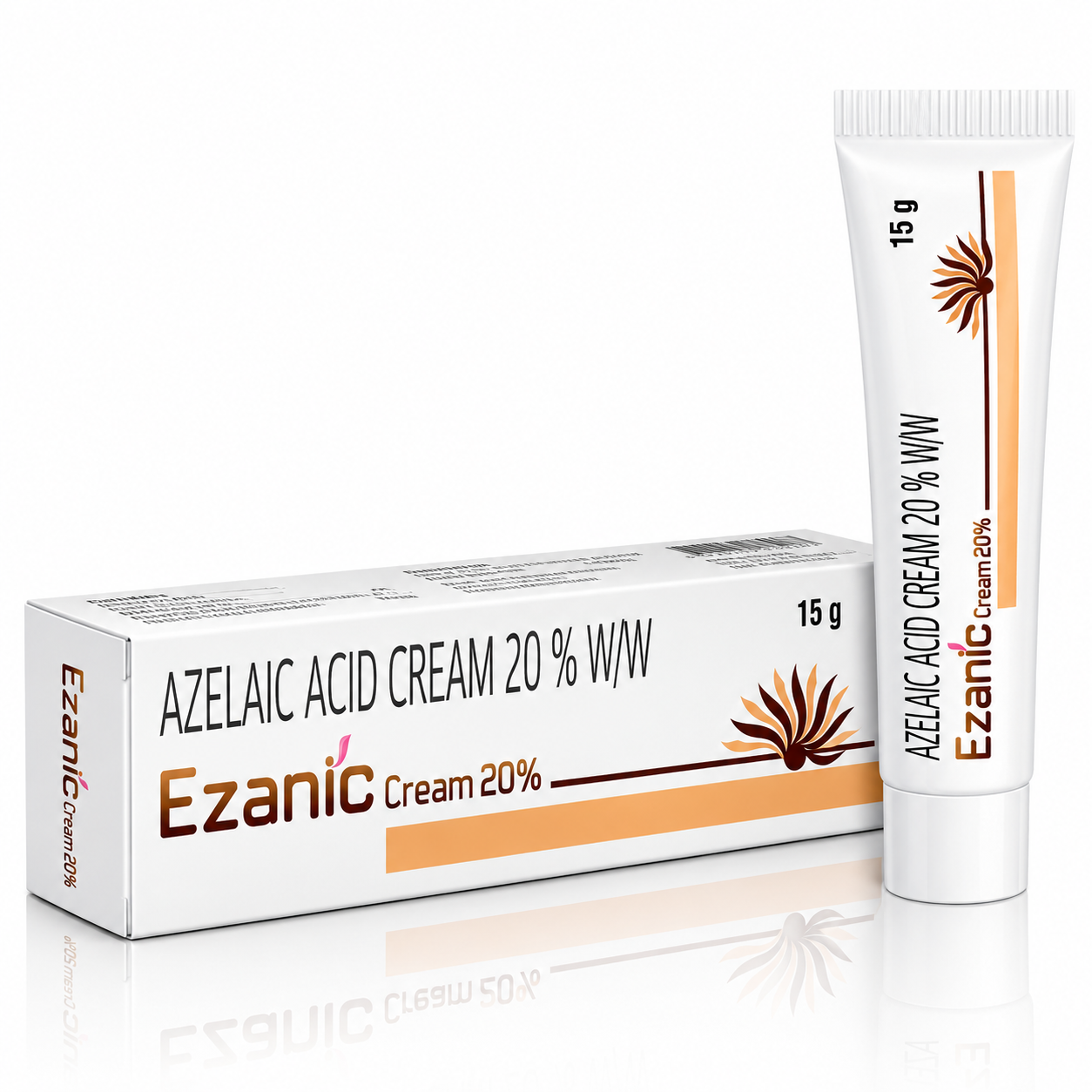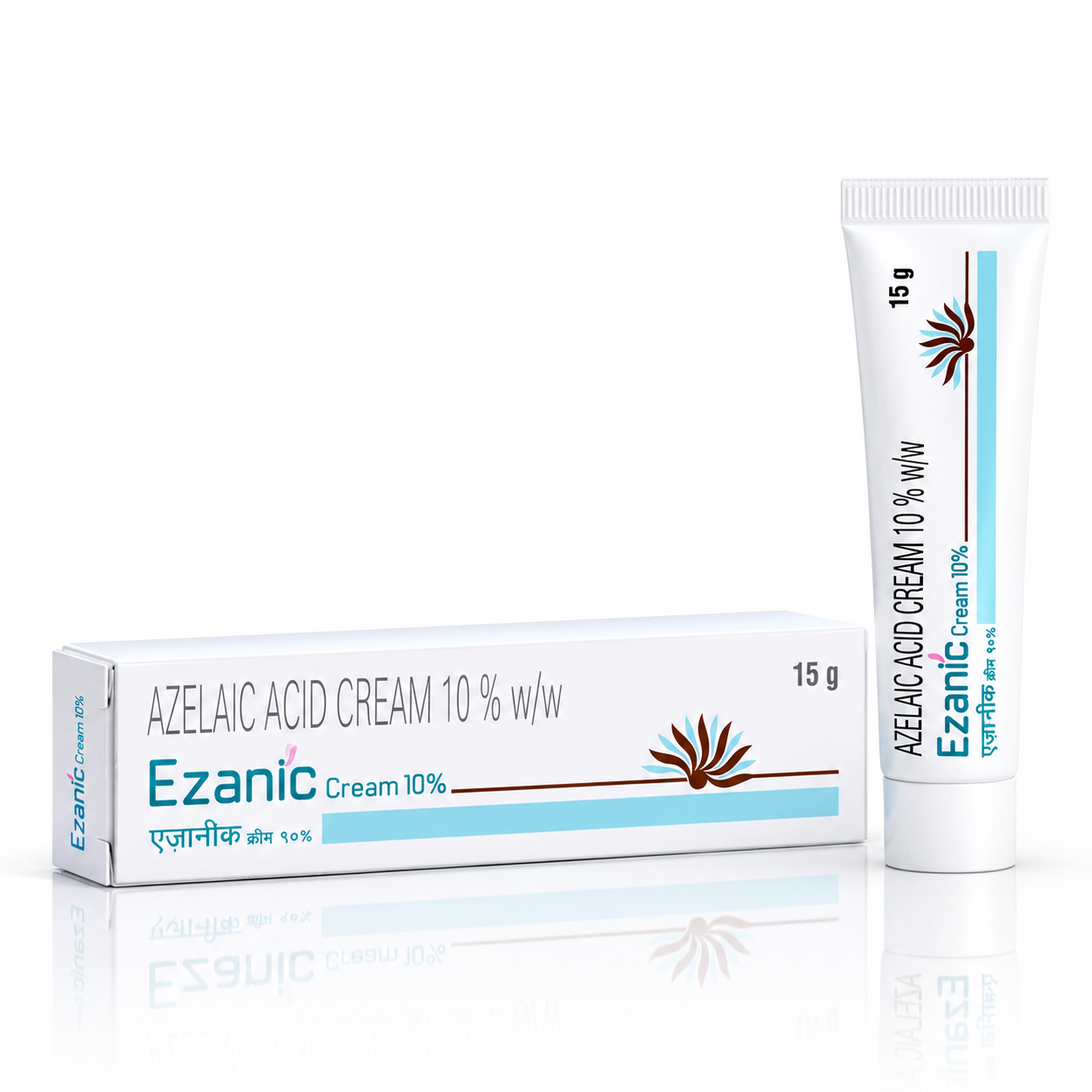
Ezanic 10% Cream (15 GM)
$10.00 / unit
Available Options
| Pack Size | Price | Price / Unit | Quantity | Action |
|---|---|---|---|---|
| 10 Cream | $73.00 | $7.30/unit | ||
| 8 Cream | $58.00 | $7.25/unit | ||
| 6 Cream | $44.00 | $7.33/unit | ||
| 4 Cream | $31.00 | $7.75/unit | ||
| 2 Cream | $17.00 | $8.50/unit | ||
| 1 Cream | $10.00 | $10.00/unit |
Product Description
EZANIC 10% CREAM 15 GM
Brand Name: Ezanic 10% Cream 15 GM
Generic Name: Azelaic Acid
Strength: 10% w/w
Dosage Form: Topical Cream
Therapeutic Class: Anti-Acne Medicine / Dicarboxylic Acid / Dermatological Preparation
Manufacturer / Marketer: Intas Pharmaceuticals Limited
Pack Size: 1 × 15 GM Tube
What is this medicine?
Acne is a common skin condition that develops when hair follicles become blocked with excess oil and dead skin cells. This can lead to blackheads, whiteheads, inflamed pimples, and other acne lesions.
Azelaic acid is a naturally occurring dicarboxylic acid with antibacterial, anti-inflammatory, and keratinization-regulating properties.
It works through several mechanisms:
Antibacterial Action: Azelaic acid helps reduce the growth of Cutibacterium acnes, a bacterium associated with inflammatory acne.
Anti-inflammatory Action: It helps reduce inflammatory processes that contribute to redness, swelling, and acne lesions.
Normalizes Keratinization: It helps prevent the accumulation of dead skin cells within hair follicles, reducing clogged pores.
Reduces Excess Pigmentation: Azelaic acid inhibits tyrosinase, an enzyme involved in melanin formation, and may help improve certain forms of hyperpigmentation.
This medicine is commonly used for:
Treatment of mild to moderate acne vulgaris
Reduction of inflammatory acne lesions
Management of pimples and acne-related redness
Reduction of clogged pores
Improvement of blackheads and whiteheads
Supporting treatment of post-inflammatory hyperpigmentation
Improving uneven pigmentation associated with acne
Helping reduce recurrent acne breakouts
Supporting dermatologist-directed skincare routines
Azelaic acid is also used in certain formulations for papulopustular rosacea and pigmentation disorders such as melasma. However, these uses are formulation-specific, and evidence from higher-strength azelaic acid products should not automatically be applied to Ezanic 10% Cream.
NOTE: Ezanic 10% Cream is intended for external use only.
It is not an oral medicine and should not be used inside the eyes, mouth, or nose.
Treatment results develop gradually, and regular use according to medical advice is important.
What should I tell my health care provider before I use this medicine?
They Need To Know If You Have Any Of This Conditions:
Allergy to azelaic acid or any ingredient of the cream
Previous allergic reactions to anti-acne products
Sensitive or easily irritated skin
Eczema or atopic dermatitis
Contact dermatitis
Rosacea or another inflammatory facial condition
Severe acne requiring additional treatment
Open wounds, cuts, or damaged skin
Severe sunburn
Excessively dry or peeling skin
Previous reactions to topical acids
History of skin pigmentation disorders
History of unusual skin lightening
Recent chemical peels
Recent laser treatment
Recent facial procedures
Pregnancy or planning pregnancy
Breastfeeding
Use of prescription retinoids
Use of benzoyl peroxide
Use of other exfoliating acids
Use of multiple acne treatments
Inform your healthcare provider about all prescription creams, over-the-counter skincare products, supplements, and topical medicines you currently use.
Important: Azelaic acid may cause burning, stinging, redness, dryness, or irritation, particularly when treatment begins.
Individuals with sensitive skin may need a gradual introduction or an adjusted application frequency.
Pregnant or breastfeeding patients should consult their healthcare provider before use. If used while breastfeeding, avoid applying it to the breast or areas where the infant could have direct contact with treated skin.
How should I use this medicine?
Use Ezanic 10% Cream exactly as prescribed by your dermatologist.
Wash your hands before applying the cream.
Clean the affected skin using a mild cleanser.
Allow the skin to dry completely.
Apply a thin layer to the affected areas.
Spread the cream gently without excessive rubbing.
Use only the quantity recommended by your healthcare provider.
Avoid applying excessive amounts.
Avoid contact with the eyes, lips, mouth, and other mucous membranes.
Do not apply to open wounds or severely irritated skin.
Wash your hands after application.
Use a gentle moisturizer if necessary.
Apply broad-spectrum sunscreen during the daytime.
Avoid harsh facial scrubs.
Do not combine with multiple strong exfoliating products without medical advice.
Follow the recommended application frequency.
Discontinue use and seek medical advice if severe irritation develops.
Usual Application: Apply a thin layer to clean, dry affected skin.
Application Frequency: Ezanic 10% Cream is commonly used once or twice daily, depending on the dermatologist's instructions and skin tolerance.
Starting Treatment: Individuals with sensitive skin may be advised to begin with once-daily application and increase frequency only if tolerated.
Duration of Treatment: Acne treatment often requires several weeks of consistent use. Your dermatologist will determine the appropriate course.
Expected Results: Some improvement may become noticeable after approximately 4 weeks. More substantial improvement may take 8–12 weeks or longer, depending on acne severity and individual response.
No Improvement: Consult your dermatologist if acne worsens, significant irritation develops, or improvement is not apparent after an appropriate treatment period.
Overuse: Excessive application may increase redness, dryness, itching, burning, and peeling without producing faster results.
Accidental Ingestion: Ezanic Cream is for external use only. If accidentally swallowed, seek medical advice.
NOTE: Applying more cream or using it more frequently than prescribed will not necessarily improve acne faster.
Consistent use with gentle skincare is generally more beneficial than aggressive treatment.
What if I miss a dose?
Apply the missed dose when you remember, unless it is nearly time for the next scheduled application.
If the next application is approaching, skip the missed application.
Continue with your usual treatment schedule.
Do not apply a double quantity to compensate for a missed dose.
Avoid repeated application to make up for missed treatments.
Continue using sunscreen and moisturizer as recommended.
Contact your dermatologist if treatment has been interrupted for an extended period.
Important: Missing an occasional application is unlikely to cause serious problems.
Applying excessive amounts may increase irritation and does not guarantee faster acne improvement.
What may interact with this medicine?
Topical azelaic acid has minimal systemic absorption, and clinically significant systemic drug interactions are not generally expected when used appropriately.
However, combining it with other topical medicines or harsh skincare products may increase irritation.
Potential interactions and irritation concerns include:
Tretinoin
Adapalene
Tazarotene
Benzoyl peroxide
Salicylic acid
Glycolic acid
Lactic acid
Other alpha-hydroxy acids
Strong chemical exfoliants
Alcohol-containing facial toners
Harsh facial cleansers
Abrasive scrubs
Strong astringents
Other topical acne treatments
Certain topical corticosteroids
Chemical peels
Laser treatments
Other irritating dermatological preparations
Important Drug Interaction Considerations
Topical Retinoids: Azelaic acid may be used in a skincare routine containing tretinoin or adapalene, but the combination may increase dryness, redness, and irritation.
Benzoyl Peroxide: Azelaic acid and benzoyl peroxide may be used together when clinically appropriate. However, sensitive skin may develop increased irritation.
Salicylic Acid: Combining salicylic acid with azelaic acid may increase peeling, stinging, or dryness.
Glycolic and Lactic Acids: These exfoliating agents may cause additional irritation when used alongside azelaic acid.
Alcohol-Based Skincare Products: Strong toners and astringents may worsen dryness or burning.
Chemical Peels and Laser Treatments: Recently treated skin may be more sensitive. Your dermatologist should advise when azelaic acid can be resumed.
Important: Azelaic acid can be part of a combination acne treatment regimen, but multiple active ingredients should be introduced carefully according to medical advice.
What should I watch for while using this medicine?
Seek medical attention if you experience:
Severe allergic reactions
Swelling of the face, lips, or tongue
Difficulty breathing
Severe or persistent burning
Extensive blistering
Significant facial swelling
Severe itching or rash
Persistent worsening of skin inflammation
Unusual loss of skin pigmentation
Severe eye irritation following accidental exposure
While using this medicine:
Monitor the skin for improvement in acne lesions.
Watch for redness, dryness, or peeling.
Report persistent burning or stinging.
Avoid picking or squeezing pimples.
Use a gentle, non-comedogenic moisturizer.
Use broad-spectrum sunscreen during the daytime.
Avoid excessive facial scrubbing.
Do not apply to damaged or sunburned skin.
Avoid applying excessive quantities.
Use non-comedogenic skincare products when possible.
Report unusual changes in skin pigmentation.
Follow the prescribed treatment duration.
Avoid introducing several new skincare products simultaneously.
Attend follow-up dermatology appointments when recommended.
Seek medical advice if painful cystic acne or scarring develops.
NOTE: Mild stinging or burning may occur during the early stages of treatment.
However, severe irritation, persistent swelling, or unusual pigmentation changes require medical assessment.
What side effects may I notice from this medicine?
Side effects that should be reported immediately:
Severe allergic reactions
Difficulty breathing
Significant swelling of the face or lips
Severe contact dermatitis
Extensive blistering
Severe or persistent skin inflammation
Significant skin swelling
Severe itching or rash
Unusual or pronounced skin depigmentation
Severe eye irritation
Side effects that usually do not require medical attention:
Mild burning sensation
Temporary stinging
Skin redness
Mild itching
Skin dryness
Mild peeling or flaking
Skin tightness
Mild irritation
Temporary tingling
Application-site discomfort
These effects may be more noticeable when treatment begins.
Some mild irritation may improve as the skin becomes accustomed to treatment.
Contact your healthcare provider if symptoms persist, become troublesome, or worsen.
Important: Azelaic acid is generally well tolerated, but individuals with sensitive or damaged skin may experience more pronounced irritation.
Reduce application frequency or discontinue treatment only according to the severity of symptoms and medical advice. Severe allergic reactions require prompt assessment.
Where should I keep my medicine?
Keep out of the reach of children.
Store according to the temperature instructions printed on the original packaging.
Some Indian product listings recommend storage below 25°C.
Keep the cream in a cool, dry place.
Protect from excessive heat.
Protect from direct sunlight.
Keep the tube tightly closed after use.
Avoid exposure to excessive moisture.
Do not freeze.
Store in its original container.
Do not use after the expiry date.
Do not use if the tube or seal is damaged.
Avoid contaminating the tube opening.
Do not transfer the cream into unlabelled containers.
Dispose of expired or unused medicine according to pharmacist instructions.
Manufacturer Details
Field | Information |
|---|---|
Brand Name | |
Generic Name | Azelaic Acid |
Strength | 10% w/w |
Dosage Form | Topical Cream |
Therapeutic Class | |
Indication | Treatment of Acne Vulgaris |
Manufacturer / Marketer | Intas Pharmaceuticals Limited |
Prescription Status | Prescription Medicine (as listed by Indian pharmacies) |
Storage | Follow Original Product Label; Protect from Heat and Moisture |
Route of Administration | Topical / External Use |
Pack Size | 1 × 15 GM Tube |
Country of Origin | India |