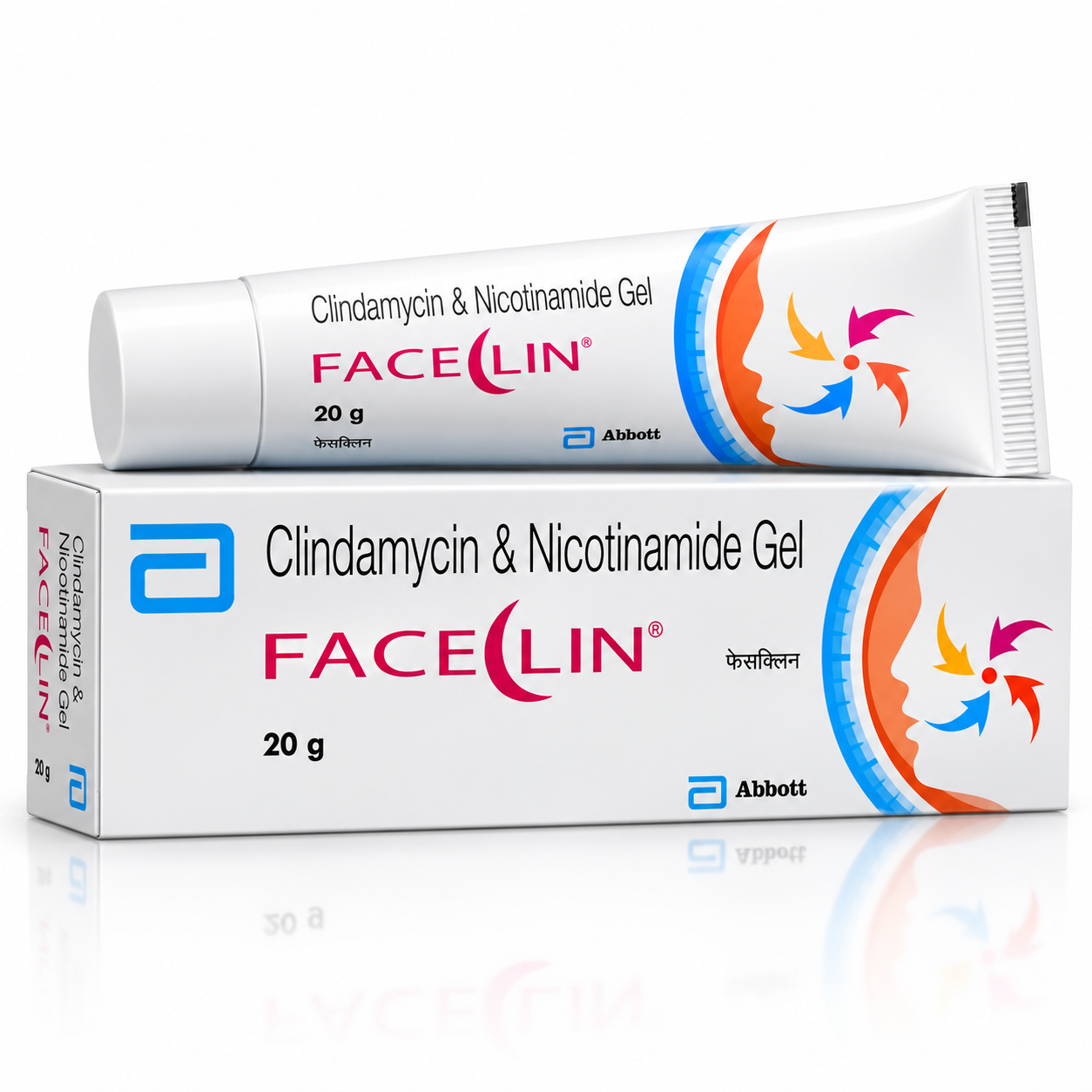
Faceclin Gel 20 GM
$11.00 / unit
Available Options
| Pack Size | Price | Price / Unit | Quantity | Action |
|---|---|---|---|---|
| 10 Gel | $84.00 | $8.40/unit | ||
| 8 Gel | $67.00 | $8.38/unit | ||
| 6 Gel | $51.00 | $8.50/unit | ||
| 4 Gel | $36.00 | $9.00/unit | ||
| 2 Gel | $20.00 | $10.00/unit | ||
| 1 Gel | $11.00 | $11.00/unit |
Product Description
FACECLIN GEL 20 GM
Brand Name: Faceclin Gel 20 GM
Generic Name: Clindamycin Phosphate + Nicotinamide
Strength: Clindamycin 1% w/w + Nicotinamide 4% w/w
Dosage Form: Topical Gel
Therapeutic Class: Topical Antibiotic / Anti-Acne Medicine / Dermatological Preparation
Manufacturer / Marketer: Abbott India Limited / Abbott Healthcare Pvt. Ltd.
Pack Size: 1 × 20 GM Tube
What is this medicine?
Acne is a common skin condition that develops when hair follicles become blocked with excess oil and dead skin cells. Bacterial growth and inflammation can contribute to red, swollen, and painful pimples.
Faceclin Gel combines an antibiotic with an anti-inflammatory ingredient to help manage acne.
Clindamycin is a lincosamide antibiotic that inhibits bacterial protein synthesis by binding to the 50S ribosomal subunit. It helps control susceptible acne-associated bacteria, including Cutibacterium acnes.
Nicotinamide, also called niacinamide, is a form of vitamin B3 with anti-inflammatory properties. It may help reduce redness and irritation associated with inflammatory acne.
This medicine is commonly used for:
Treatment of mild to moderate acne vulgaris
Management of inflammatory pimples
Reduction of acne-associated redness
Reduction of swelling and tenderness around acne lesions
Treatment of papules and pustules
Control of susceptible acne-associated bacteria
Supporting improvement in acne-prone skin
Management of recurrent inflammatory acne under dermatological supervision
Combination acne treatment when recommended by a dermatologist
Topical clindamycin should generally not be used as the only antibiotic-based acne treatment for prolonged periods because bacterial resistance can develop.
A dermatologist may prescribe benzoyl peroxide alongside topical clindamycin to reduce the risk of antibiotic resistance.
What should I tell my health care provider before I use this medicine?
Inform your healthcare provider if you have:
Allergy to clindamycin
Allergy to lincomycin
Allergy to nicotinamide or other product ingredients
Previous severe reactions to topical antibiotics
History of antibiotic-associated colitis
Previous Clostridioides difficile infection
Ulcerative colitis
Crohn's disease
Significant inflammatory bowel disease
Persistent or severe diarrhoea
Sensitive or easily irritated skin
Eczema or atopic dermatitis
Contact dermatitis
Severe acne requiring systemic treatment
Open wounds or damaged skin
Significant sunburn
Active skin infections requiring other treatment
Recent chemical peels
Recent laser treatment or facial procedures
Pregnancy or planning pregnancy
Breastfeeding
Use of other topical antibiotics
Use of oral clindamycin or erythromycin
Use of benzoyl peroxide or prescription retinoids
Tell your healthcare provider about all prescription medicines, nonprescription medicines, and skincare products you currently use.
Important: Although topical clindamycin has much lower systemic absorption than oral clindamycin, serious antibiotic-associated diarrhoea and colitis have rarely occurred.
Patients with a history of antibiotic-associated colitis or inflammatory bowel disease should discuss this history with their doctor before treatment.
How should I use this medicine?
Use Faceclin Gel exactly as prescribed by your dermatologist.
Wash your hands before applying the gel.
Clean the affected skin gently with a mild cleanser.
Allow the skin to dry completely.
Apply a thin layer to the acne-affected area.
Spread the gel gently without excessive rubbing.
Avoid applying large quantities.
Do not apply unnecessarily to unaffected skin.
Avoid contact with the eyes, lips, mouth, and inside the nose.
Do not apply to open wounds or severely irritated skin.
Wash your hands after application.
Allow the gel to dry before applying other skincare products.
Use a non-comedogenic moisturizer if necessary.
Apply broad-spectrum sunscreen during the daytime.
Avoid harsh facial scrubs.
Follow the prescribed application frequency.
Do not use for longer than recommended.
Report persistent irritation or worsening symptoms.
Usual Application: Apply a thin layer to the affected acne-prone skin as directed by your dermatologist.
Application Frequency: Topical clindamycin-containing gels are commonly prescribed once or twice daily, depending on the formulation and individual treatment plan.
Starting Treatment: Patients with sensitive skin may require an adjusted application schedule to minimize irritation.
Duration of Treatment: Acne treatment is commonly reassessed after approximately 6–8 weeks. Antibiotic-containing acne regimens should generally be reviewed by 12 weeks, and prolonged use should be avoided unless specifically justified.
Expected Results: Some improvement in inflammatory acne may appear after several weeks. More substantial improvement can require 6–12 weeks.
No Improvement: Consult your dermatologist if acne worsens, significant irritation develops, or improvement is not observed after an appropriate treatment period.
Overuse: Applying excessive amounts can increase dryness, redness, itching, and irritation without improving results.
Accidental Ingestion: Faceclin Gel is intended for external use only. If accidentally swallowed, seek medical advice.
Using clindamycin together with an appropriate non-antibiotic acne treatment may help improve effectiveness and reduce antibiotic resistance.
What if I miss a dose?
Apply the missed dose when you remember, unless it is nearly time for the next scheduled application.
If the next application is approaching, skip the missed dose.
Continue with your regular treatment schedule.
Do not apply a double quantity.
Avoid repeated applications to compensate for missed doses.
Continue using recommended moisturizer and sunscreen.
Contact your dermatologist if treatment has been interrupted for an extended period.
Important: Missing an occasional application is unlikely to cause serious problems.
Using excessive quantities may increase irritation without improving acne control.
What may interact with this medicine?
Potential interactions and application concerns include:
Erythromycin
Other topical clindamycin preparations
Oral clindamycin
Neuromuscular blocking medicines
Tretinoin
Adapalene
Tazarotene
Benzoyl peroxide
Salicylic acid
Glycolic acid
Lactic acid
Strong chemical exfoliants
Alcohol-containing facial toners
Harsh facial cleansers
Abrasive facial scrubs
Other medicated acne products
Chemical peels
Laser treatments
Important Drug Interaction Considerations
Erythromycin: Clindamycin and erythromycin can antagonize each other's antibacterial effects. Concurrent use is generally not recommended.
Benzoyl Peroxide: Benzoyl peroxide is commonly combined with topical clindamycin in acne treatment to reduce the development of antibiotic resistance. A dermatologist may prescribe separate products or an appropriate combination regimen.
Topical Retinoids: Tretinoin and adapalene may be used alongside clindamycin in acne management, but the combination can increase dryness and irritation.
Exfoliating Acids: Salicylic acid, glycolic acid, and lactic acid may increase peeling or skin sensitivity when used with Faceclin Gel.
Neuromuscular Blocking Medicines: Clindamycin has neuromuscular blocking properties. Although systemic absorption from topical use is usually limited, patients receiving such medicines should inform their healthcare provider.
Other Topical Antibiotics: Using additional topical antibiotics without medical advice may unnecessarily increase antibiotic exposure and resistance risk.
Important: Do not combine multiple prescription acne treatments without consulting your dermatologist.
What should I watch for while using this medicine?
Seek medical attention if you experience:
Severe allergic reactions
Swelling of the face, lips, tongue, or throat
Difficulty breathing
Severe skin irritation
Extensive blistering
Persistent severe redness
Severe itching or rash
Severe abdominal cramps
Persistent watery diarrhoea
Bloody diarrhoea
Fever associated with significant diarrhoea
Severe eye irritation after accidental exposure
While using this medicine:
Monitor acne lesions for improvement.
Watch for skin dryness or irritation.
Report persistent redness or burning.
Avoid squeezing or picking pimples.
Use a gentle facial cleanser.
Apply a non-comedogenic moisturizer.
Use broad-spectrum sunscreen.
Avoid excessive facial scrubbing.
Do not apply to broken or sunburned skin.
Follow the prescribed treatment duration.
Avoid using additional antibiotics without advice.
Report severe or persistent diarrhoea.
Monitor for signs of allergic contact dermatitis.
Attend follow-up dermatology appointments.
Discuss maintenance treatment after completing the antibiotic course.
Consult your dermatologist if painful nodules or acne scarring develops.
NOTE: Severe diarrhoea associated with topical clindamycin is uncommon but potentially serious.
Stop using the medicine and seek prompt medical advice if persistent watery or bloody diarrhoea develops.
What side effects may I notice from this medicine?
Side effects that should be reported immediately:
Severe allergic reactions
Difficulty breathing
Swelling of the face, lips, or tongue
Severe contact dermatitis
Extensive blistering
Severe skin inflammation
Persistent watery diarrhoea
Bloody diarrhoea
Antibiotic-associated colitis
Severe abdominal cramps with diarrhoea
Severe or persistent rash
Significant eye irritation
Side effects that usually do not require medical attention:
Mild skin redness
Temporary burning sensation
Mild stinging after application
Skin dryness
Mild itching
Temporary skin irritation
Peeling or flaking
Skin tightness
Mild application-site discomfort
Temporary skin sensitivity
These side effects may be more noticeable when treatment begins.
Some mild irritation may improve as the skin adjusts to the medicine.
Contact your healthcare provider if symptoms persist, become troublesome, or worsen.
Important: Topical clindamycin can rarely cause serious antibiotic-associated colitis despite relatively low systemic absorption.
Do not ignore severe abdominal cramps or persistent diarrhoea.
Where should I keep my medicine?
Keep out of the reach of children.
Store below 25°C according to available product information.
Keep the gel in a cool, dry place.
Protect from direct sunlight.
Protect from excessive heat.
Do not freeze.
Keep the tube tightly closed after use.
Store in its original container.
Avoid exposure to excessive moisture.
Do not use after the expiry date.
Do not use if the tube or seal is damaged.
Avoid contaminating the tube opening.
Do not transfer the gel into unlabelled containers.
Keep away from pets.
Dispose of expired or unused medicine according to pharmacist instructions.
Manufacturer Details
Field | Information |
|---|---|
Brand Name | |
Generic Name | Clindamycin Phosphate + Nicotinamide |
Strength | Clindamycin 1% w/w + Nicotinamide 4% w/w |
Dosage Form | Topical Gel |
Therapeutic Class | |
Indication | |
Manufacturer / Marketer | Abbott India Limited / Abbott Healthcare Pvt. Ltd. |
Actual Manufacturing Facility | Verify from Current Product Packaging |
Prescription Status | Prescription Only Medicine |
Storage | Below 25°C; Do Not Freeze; Follow Original Label |
Route of Administration | Topical / External Use |
Pack Size | 1 × 20 GM Tube |
Country of Origin | India |