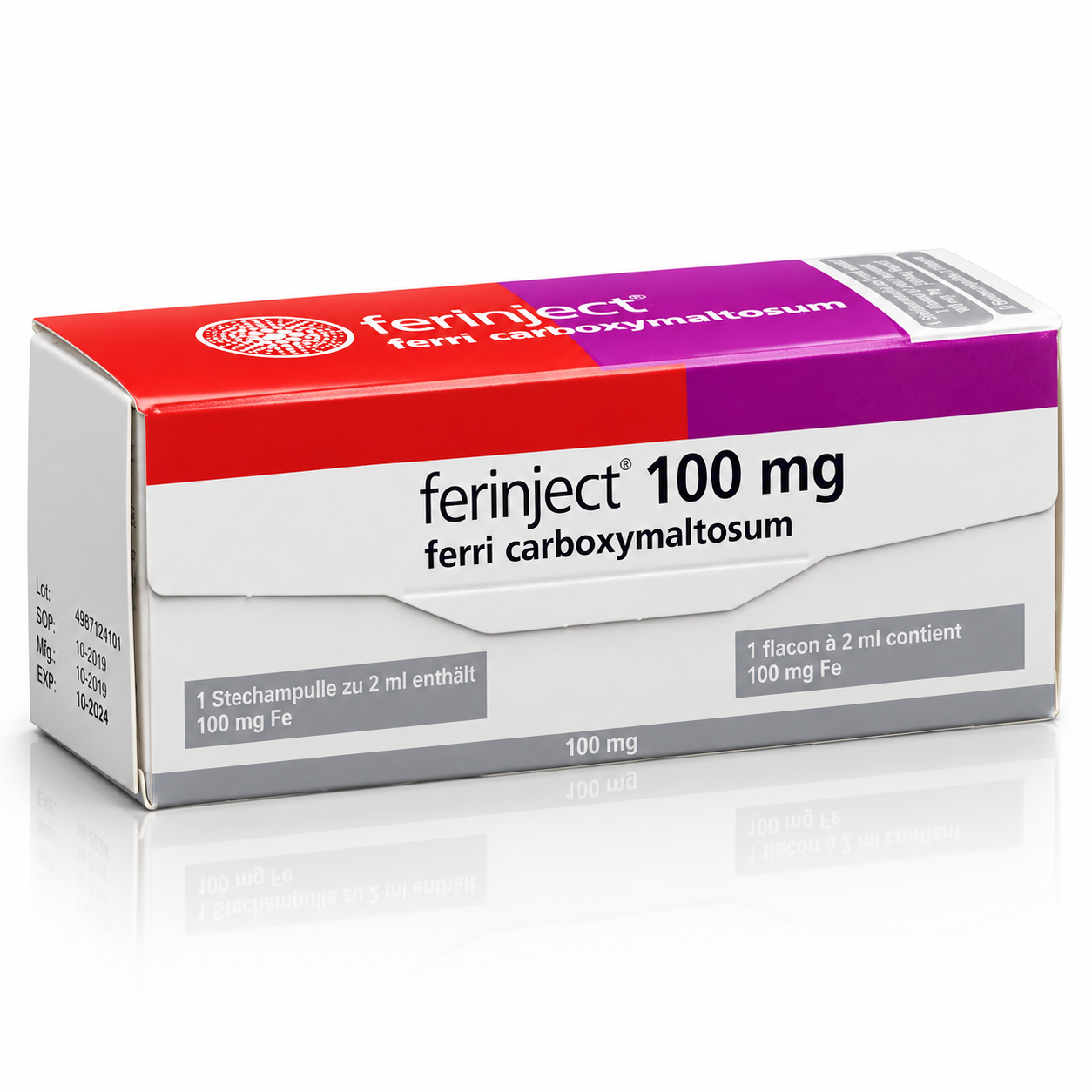
Ferinject 100 MG Injection (2 ML)
$50.00 / unit
Available Options
| Pack Size | Price | Price / Unit | Quantity | Action |
|---|---|---|---|---|
| 10 Injection | $375.00 | $37.50/unit | ||
| 8 Injection | $300.00 | $37.50/unit | ||
| 6 Injection | $227.00 | $37.83/unit | ||
| 4 Injection | $159.00 | $39.75/unit | ||
| 2 Injection | $90.00 | $45.00/unit | ||
| 1 Injection | $50.00 | $50.00/unit |
Product Description
FERINJECT 100 MG INJECTION 2 ML
Product Description
Brand Name: Ferinject 100 MG Injection
Generic Name: Ferric Carboxymaltose
Strength: 100 mg Elemental Iron per 2 mL (50 mg/mL)
Dosage Form: Solution / Dispersion for Intravenous Injection or Infusion
Therapeutic Class: Parenteral Iron Preparation / Haematinic / Antianaemic Medicine
Manufacturer / Marketer: Lupin Ltd. (Indian market listing); Ferinject is a Vifor / CSL Vifor brand internationally
Pack Size: 1 × 2 mL Single-Use Vial
What is this medicine?
FERINJECT 100 MG INJECTION 2 ML contains ferric carboxymaltose, an intravenous iron replacement medicine used to correct iron deficiency when oral iron supplementation is ineffective, unsuitable, poorly tolerated, or when there is a clinical need for rapid iron replenishment.
Iron is an essential mineral required for haemoglobin production. Haemoglobin is the protein in red blood cells responsible for transporting oxygen throughout the body.
When iron levels become too low, the body may not produce enough healthy red blood cells, resulting in iron deficiency anaemia.
Iron deficiency anaemia may cause:
Persistent fatigue
Weakness
Pale skin
Dizziness
Headaches
Reduced exercise tolerance
Shortness of breath during activity
Increased heart rate
Ferric carboxymaltose is an iron-carbohydrate complex that delivers iron directly into the bloodstream.
After intravenous administration, the iron is taken up by cells of the reticuloendothelial system and gradually made available for haemoglobin synthesis and replenishment of iron stores.
Unlike oral iron supplements, ferric carboxymaltose does not depend on gastrointestinal absorption.
Common Uses
Ferinject may be prescribed for:
Laboratory-confirmed iron deficiency
Iron deficiency anaemia when oral iron is ineffective
Iron deficiency when oral iron cannot be tolerated
Iron deficiency associated with gastrointestinal absorption disorders
Iron deficiency in selected patients with inflammatory bowel disease
Iron deficiency associated with chronic kidney disease
Iron deficiency after significant blood loss, when appropriate
Postpartum iron deficiency anaemia when intravenous treatment is indicated
Rapid iron replenishment when medically necessary
Iron deficiency in selected patients with heart failure, according to applicable clinical guidance and local approval
NOTE: Ferinject should only be used when iron deficiency has been confirmed by appropriate laboratory testing.
It does not treat all types of anaemia.
Anaemia caused by vitamin B12 deficiency, folate deficiency, haemolysis, certain inherited blood disorders, or other medical conditions may require different treatment.
What should I tell my healthcare provider before I take this medicine?
Inform your healthcare provider if you have:
Allergy to ferric carboxymaltose
Previous severe reactions to intravenous iron medicines
History of anaphylaxis
Severe asthma
Eczema or multiple allergies
Rheumatoid arthritis
Systemic lupus erythematosus
Other immune or inflammatory disorders
Iron overload disorders
Haemochromatosis
Haemosiderosis
Anaemia not caused by iron deficiency
Previous low blood phosphate levels
Vitamin D deficiency
Osteoporosis
Osteomalacia
Previous unexplained bone fractures
Chronic kidney disease
Significant liver disease
Active infection
Bloodstream infection
Repeated intravenous iron treatment
Pregnancy or plans to become pregnant
Breastfeeding
Previous complications from intravenous medicines
Tell your healthcare provider about every prescription medicine, over-the-counter medicine, vitamin, supplement, and herbal product you take.
Important Contraindications
Ferinject should not be used in patients with:
Known hypersensitivity to ferric carboxymaltose
Serious hypersensitivity to other parenteral iron products
Anaemia not caused by iron deficiency
Evidence of iron overload
Disorders that prevent normal iron utilization
Important Hypersensitivity Warning
Intravenous iron medicines can cause serious and potentially fatal allergic reactions.
These reactions may occur even in patients who have previously received intravenous iron without complications.
Ferinject must only be given in a medical setting where trained personnel and emergency resuscitation equipment are immediately available.
Important: Patients must be monitored during administration and observed for at least 30 minutes afterward.
Important Low Phosphate Warning
Ferric carboxymaltose can cause hypophosphataemia, meaning abnormally low phosphate levels in the blood.
In some patients, particularly those receiving repeated treatment, low phosphate may persist and contribute to:
Severe fatigue
Muscle weakness
Muscle pain
Bone pain
Osteomalacia
Increased risk of fractures
Patients with risk factors may require phosphate monitoring.
How should I use this medicine?
Ferinject 100 MG Injection must be administered by a trained healthcare professional.
It is given intravenously.
It must not be injected into a muscle.
It must not be injected beneath the skin.
The iron dose is calculated according to the patient's clinical needs.
Haemoglobin and iron studies are reviewed before treatment.
The healthcare professional determines the injection or infusion schedule.
The patient is monitored for allergic reactions.
Blood pressure may be monitored during treatment.
The injection site is checked for leakage.
The patient must remain under observation after administration.
Additional doses are given only when clinically indicated.
Follow-up laboratory tests are required to assess iron replenishment.
Do not attempt to administer the medicine at home without appropriately trained medical personnel and emergency facilities.
Usual Adult Dosage
Ferinject 2 mL Strength: Each 2 mL vial contains 100 mg of elemental iron.
Concentration: 50 mg elemental iron per mL.
Dose Selection: The total required iron dose is calculated using factors such as body weight, haemoglobin concentration, iron studies, and the reason for treatment.
Intravenous Injection: For adults and adolescents aged 14 years and older, a single administration must not exceed 15 mg iron per kilogram of body weight or 1,000 mg iron, whichever is lower, according to the referenced Ferinject prescribing information.
Intravenous Infusion: A single infusion must not exceed 20 mg iron per kilogram or 1,000 mg iron, whichever is lower.
Maximum Weekly Dose: Under the referenced prescribing information, the cumulative dose must not exceed 1,000 mg iron in one week.
Additional Doses: If more iron is required, another administration may be scheduled at least seven days later.
Ferinject 100 MG Vial: The 2 mL vial is a product strength, not a standard complete treatment course. Some patients require a larger total iron dose.
Administration: May be given as an intravenous injection or appropriately diluted intravenous infusion.
Dilution: When dilution is required, only sterile 0.9% sodium chloride solution should be used, following the manufacturer's instructions.
Kidney Disease: Dose selection and monitoring depend on the patient's condition, dialysis status, and iron requirements.
Liver Disease: Intravenous iron should only be given after careful assessment of the benefits and risks.
Pregnancy: Use requires individual medical assessment. In general, intravenous ferric carboxymaltose is considered during the second or third trimester only when the expected benefit outweighs the potential risk.
Breastfeeding: Available evidence suggests that transfer into breast milk is low. Treatment should still be reviewed by the healthcare professional.
Pediatric Use: Age eligibility and dosing vary between countries and prescribing labels. Children should receive treatment only under applicable specialist guidance.
Duration of Treatment: Treatment depends on the calculated total iron requirement. It is not necessarily administered daily.
Expected Results: Iron stores may improve after administration, while haemoglobin typically increases over the following weeks when iron deficiency is the underlying cause.
Overdosage: Excess intravenous iron can cause iron overload. Appropriate medical monitoring and management are necessary if excessive iron is administered.
Important Administration Precautions
Ferinject is intended for intravenous use only.
It must not be administered intramuscularly or subcutaneously.
Leakage of the medicine outside the vein can cause irritation and potentially long-lasting brown discolouration of the skin.
If pain, swelling, burning, or leakage occurs at the injection site, the healthcare professional should stop administration and assess the site immediately.
NOTE: Ferric carboxymaltose dosing and administration instructions can differ across national prescribing labels. Healthcare professionals must follow the approved instructions for the exact product being administered.
What if I miss a dose?
Ferinject is generally administered during scheduled medical appointments.
If you miss an appointment:
Contact your healthcare provider.
Arrange a new appointment as advised.
Do not attempt to administer the injection yourself.
Do not compensate by requesting a larger dose without medical assessment.
Follow your clinician's revised treatment schedule.
Attend recommended blood tests.
Important: The treatment schedule depends on your calculated iron requirement and clinical condition.
A missed appointment should be managed through the prescribing healthcare professional.
What may interact with this medicine?
Ferinject has fewer conventional drug absorption interactions than oral iron supplements because it is administered directly into the bloodstream.
However, important treatment considerations include:
Oral iron supplements
Other intravenous iron preparations
Medicines affecting phosphate balance
Medicines used to manage chronic kidney disease
Other treatments for anaemia
Erythropoiesis-stimulating agents
Important Drug Interaction Considerations
Oral Iron Supplements: Intravenous iron can reduce absorption of concurrently administered oral iron.
Under the Ferinject prescribing information, oral iron treatment should generally not be started until at least five days after the last Ferinject administration, if oral treatment is required.
Other Intravenous Iron Medicines: Combining multiple intravenous iron products without calculating the total iron requirement can increase the risk of iron overload.
Erythropoiesis-Stimulating Agents: These medicines may be used in selected patients with chronic kidney disease or other conditions, but iron treatment should be coordinated with the overall anaemia management plan.
Medicines Affecting Phosphate Balance: Patients at risk of hypophosphataemia may need additional assessment when receiving treatments or having medical conditions that alter phosphate metabolism.
Other Anaemia Treatments: Vitamin B12, folic acid, or other therapy may be required if a patient has multiple causes of anaemia.
Important: Inform your healthcare provider about all current iron treatments.
Do not combine Ferinject with another iron injection without medical supervision.
What should I watch for while using this medicine?
Seek immediate medical attention if you experience:
Difficulty breathing
Severe wheezing
Swelling of the face, lips, tongue, or throat
Sudden dizziness or collapse
Severe chest tightness
Severe allergic reactions
Fainting
Marked blood pressure changes
Severe rash
Significant injection site pain
Severe or worsening weakness
Persistent muscle pain
Persistent bone pain
Unusual fractures after repeated treatment
While receiving this medicine:
Remain under medical supervision during administration.
Report itching, flushing, or difficulty breathing immediately.
Report chest discomfort.
Inform the healthcare professional about injection site pain.
Stay for the required observation period.
Attend recommended haemoglobin testing.
Monitor iron stores.
Report unusual fatigue after treatment.
Discuss persistent muscle or bone pain.
Follow phosphate monitoring recommendations if indicated.
Avoid unnecessary additional iron supplementation.
Inform your doctor about any new medical conditions.
Attend recommended follow-up appointments.
Important Monitoring Tests
Complete Blood Count (CBC): Helps assess haemoglobin and red blood cell indices.
Serum Ferritin: Helps evaluate iron stores and the response to treatment.
Transferrin Saturation (TSAT): Helps assess iron availability.
Serum Phosphate: Important in patients receiving repeated or higher-dose treatment and in those with risk factors for hypophosphataemia.
Blood Pressure: May be monitored during and after infusion because hypertension and hypotension can occur.
Clinical Allergy Assessment: Essential during intravenous administration and afterward.
Iron Overload Assessment: Necessary when repeated iron doses are considered.
NOTE: Serum ferritin and other iron measurements can be temporarily affected after intravenous iron administration.
The healthcare provider should determine the appropriate timing of follow-up tests.
What side effects may I notice from this medicine?
Side effects that should be reported immediately:
Anaphylaxis
Severe hypersensitivity reactions
Angioedema
Difficulty breathing
Severe bronchospasm
Severe hypotension
Fainting or collapse
Severe chest discomfort
Serious injection site complications
Persistent symptomatic hypophosphataemia
Osteomalacia associated with prolonged low phosphate
Severe bone pain
Unexplained fractures
Significant iron overload
Side effects that usually do not require medical attention:
Nausea
Headache
Dizziness
Flushing
Temporary changes in blood pressure
Mild injection site pain
Mild injection site swelling
Temporary metallic or altered taste
Mild abdominal discomfort
Muscle aches
Joint discomfort
Temporary fatigue
Some patients may develop low phosphate levels without immediate symptoms.
A temporary increase in blood pressure may also occur.
Important Injection Site Warning
If ferric carboxymaltose leaks outside the vein, it can cause brown discolouration that may persist for a long time or become permanent.
Inform the healthcare professional immediately if burning, swelling, pain, or unusual staining develops around the injection site.
Important: Serious allergic reactions can occur even after previous intravenous iron treatments were tolerated.
All administration must take place in a setting equipped to manage medical emergencies.
Where should I keep my medicine?
Keep out of the reach of children.
Store at a temperature not exceeding 30°C according to the manufacturer's product information.
Do not freeze.
Keep the vial in its original packaging.
Protect it from inappropriate storage conditions.
Do not use after the expiry date.
Do not use if the vial is damaged.
Do not use if the contents appear abnormal or contain sediment.
Inspect the vial before administration.
Use each vial only once.
Discard unused contents according to healthcare facility procedures.
Prepare and administer the product using appropriate aseptic technique.
Storage Note: Manufacturer product information specifies storage not exceeding 30°C and no freezing. Follow the precise instructions on the current Indian product label.
Manufacturer Details
Field | Information |
|---|---|
Brand Name | Ferinject 100 MG Injection |
Generic Name | Ferric Carboxymaltose |
Elemental Iron Strength | 100 mg |
Concentration | 50 mg/mL |
Volume | 2 mL |
Dosage Form | Solution / Dispersion for Intravenous Injection or Infusion |
Therapeutic Class | Parenteral Iron Preparation / Haematinic |
Primary Indication | Laboratory-Confirmed Iron Deficiency When Intravenous Replacement Is Appropriate |
Indian Marketed Product Listing | Lupin Ltd. |
International Brand Association | Vifor / CSL Vifor |
Actual Manufacturer | Verify from Current Product Packaging |
Prescription Status | Prescription Only Medicine |
Route of Administration | Intravenous Only |
Storage | Do Not Store Above 30°C; Do Not Freeze |
Pack Size | 1 × 2 mL Vial |
Packaging Type | Single-Use Vial |
Country of Manufacture | Verify from Current Product Packaging |