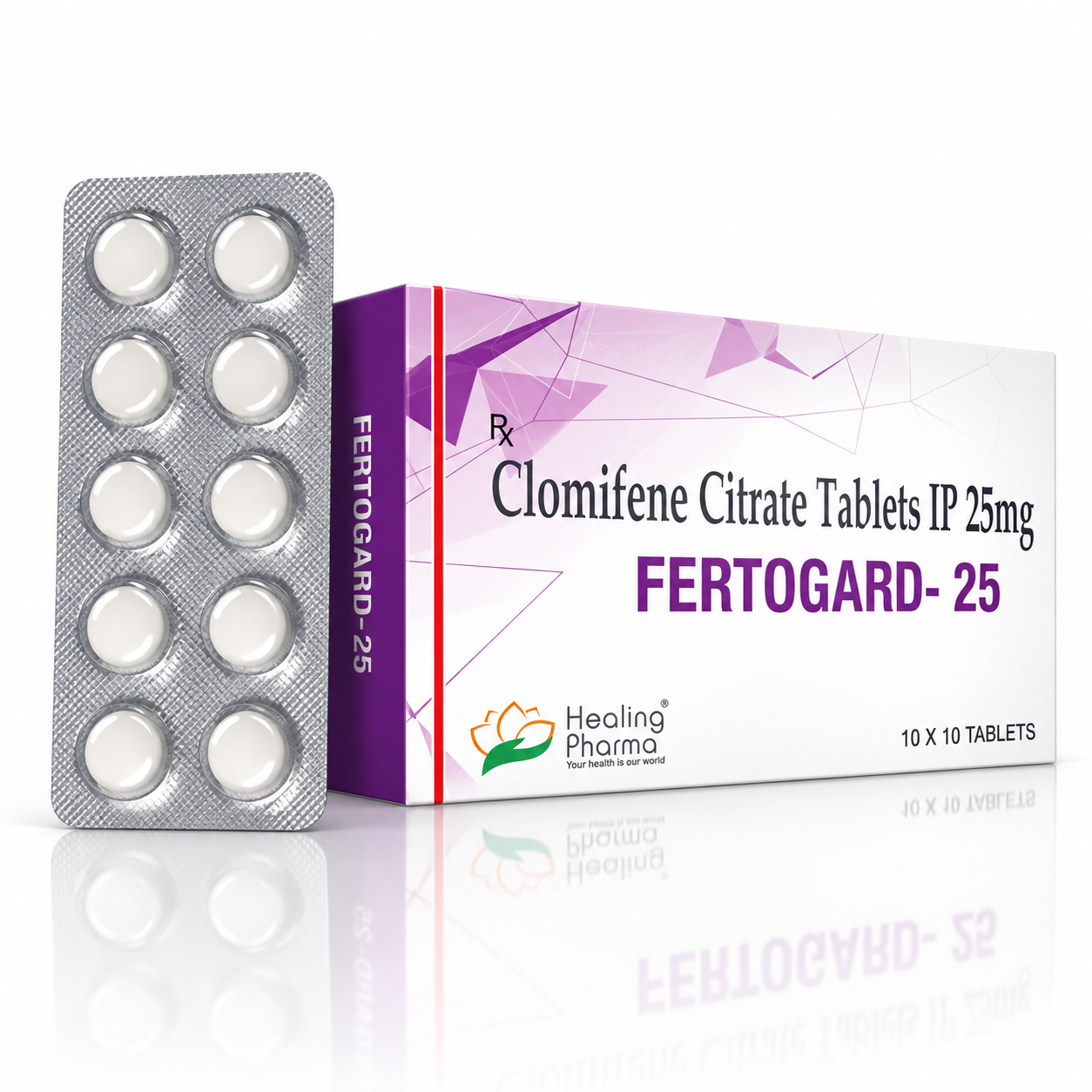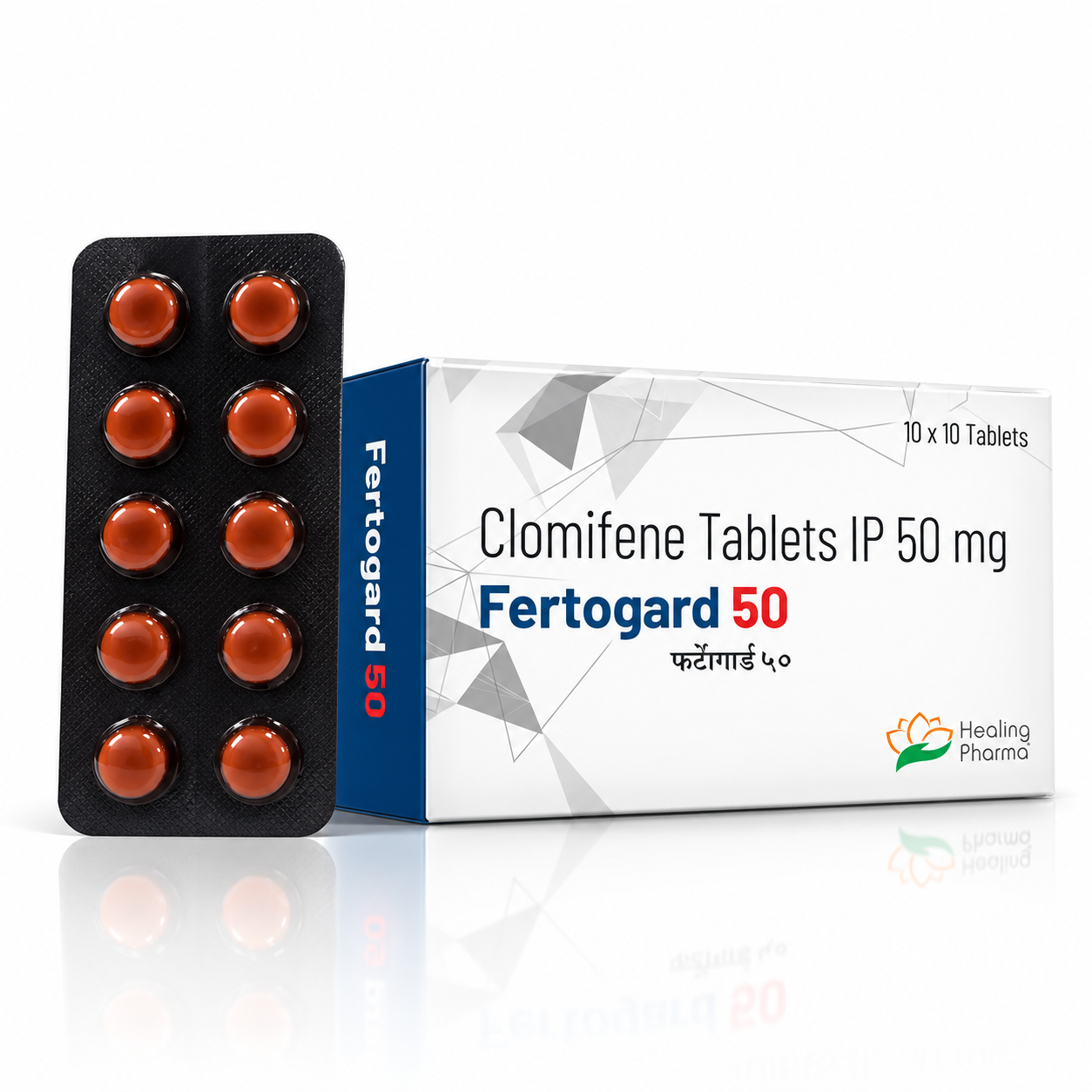
Fertoguard 50 MG Tablet
$0.30 / unit
Available Options
| Pack Size | Price | Price / Unit | Quantity | Action |
|---|---|---|---|---|
| 180 Tablets | $43.00 | $0.24/unit | ||
| 150 Tablets | $37.00 | $0.25/unit | ||
| 120 Tablets | $30.00 | $0.25/unit | ||
| 90 Tablets | $24.00 | $0.27/unit | ||
| 60 Tablets | $17.00 | $0.28/unit | ||
| 30 Tablets | $9.00 | $0.30/unit |
Product Description
FERTOGARD 50 MG TABLET
Brand Name: Fertogard 50 MG Tablet
Requested Name: Fertoguard 50 MG Tablet
Generic Name: Clomiphene Citrate (Clomifene)
Strength: 50 mg
Dosage Form: Oral Tablet
Therapeutic Class: Selective Estrogen Receptor Modulator (SERM) / Ovulation Stimulant / Fertility Medicine
Manufacturer / Marketer: Healing Pharma India Pvt. Ltd.
Pack Size: 1 × 10 Tablets
What is this medicine?
FERTOGARD 50 MG TABLET contains Clomiphene Citrate 50 mg, a prescription fertility medicine used to induce ovulation in women who have difficulty releasing eggs naturally.
Ovulation is the process through which a mature egg is released from an ovary. In some women, hormonal disorders can interfere with this process, leading to irregular menstrual cycles or infertility.
Clomiphene belongs to a class of medicines known as selective estrogen receptor modulators (SERMs).
It works by influencing estrogen receptors in the hypothalamus, a part of the brain involved in reproductive hormone regulation.
This reduces estrogen's normal feedback signal and stimulates the release of gonadotropin-releasing hormone (GnRH).
GnRH subsequently promotes the release of two important reproductive hormones:
Follicle-Stimulating Hormone (FSH): Supports the growth and maturation of ovarian follicles.
Luteinizing Hormone (LH): Helps trigger ovulation when a mature follicle develops.
By stimulating these hormonal signals, clomiphene may help induce ovulation and improve the opportunity for conception in appropriately selected patients.
Common Uses
Fertogard 50 MG Tablet may be prescribed for:
Female infertility caused by ovulatory dysfunction
Anovulation, where eggs are not released regularly
Irregular ovulation associated with selected hormonal disorders
Selected women with polycystic ovary syndrome (PCOS)
Certain cases of secondary amenorrhea associated with ovulatory dysfunction
Ovulation induction during monitored fertility treatment
Additional Specialist Use
Clomiphene is also sometimes prescribed off-label in selected men with certain forms of secondary hypogonadism or infertility.
Its role in men differs from its established indication for female ovulatory dysfunction and requires specialist supervision.
NOTE: Clomiphene does not treat every cause of infertility.
A fertility evaluation should consider sperm factors, fallopian tube function, uterine conditions, ovarian reserve, and other possible causes before beginning treatment.
For many women with anovulatory PCOS, current fertility guidelines prefer letrozole over clomiphene as first-line ovulation induction therapy when appropriate.
What should I tell my healthcare provider before I take this medicine?
Inform your healthcare provider if you have:
Allergy to clomiphene citrate
Previous severe reactions to fertility medicines
Pregnancy or suspected pregnancy
Liver disease
Previous liver dysfunction
Unexplained vaginal bleeding
Ovarian cysts
Ovarian enlargement not related to PCOS
Previous ovarian hyperstimulation syndrome
Significant pelvic pain
Thyroid disorders
Adrenal disorders
Pituitary gland tumors
Hypothalamic disorders
Unexplained absence of menstruation
Previous ectopic pregnancy
Blocked fallopian tubes
Uterine abnormalities
History of visual disturbances
Severe headaches
Elevated triglycerides
Previous pancreatitis
Previous multiple pregnancy
Breastfeeding
Other fertility treatments currently being used
Tell your healthcare provider about all prescription medicines, nonprescription medicines, vitamins, supplements, and herbal preparations you currently take.
Important Contraindications
Clomiphene citrate should not be used in patients with:
Known hypersensitivity to clomiphene
Pregnancy
Active liver disease or a history of liver dysfunction
Abnormal uterine bleeding of undetermined cause
Ovarian cysts or enlargement not associated with polycystic ovary syndrome
Uncontrolled thyroid or adrenal dysfunction
Certain organic intracranial lesions, including pituitary tumors
Important Visual Disturbance Warning
Clomiphene may cause blurred vision, flashing lights, spots, or other visual disturbances.
Although many visual effects resolve after treatment discontinuation, prolonged and occasionally irreversible visual problems have been reported.
If any visual disturbance occurs, stop taking the medicine and seek prompt medical assessment, including an ophthalmological examination.
How should I use this medicine?
Take Fertogard 50 MG Tablet exactly as directed by your fertility specialist.
Swallow the tablet with water.
Take it with or without food.
Follow the prescribed menstrual-cycle schedule.
Take the medicine at approximately the same time each day during the treatment course.
Do not continue taking it every day throughout the month unless specifically instructed.
Do not increase the dose independently.
Do not repeat a treatment cycle without medical advice.
Attend recommended ultrasound appointments.
Follow ovulation monitoring instructions.
Perform pregnancy testing when advised.
Report abdominal pain or swelling.
Report visual disturbances immediately.
Inform your doctor about new medicines.
Do not share the tablets with another person.
Usual Adult Dosage
Usual Initial Dose for Ovulation Induction: Clomiphene Citrate 50 mg orally once daily for five days.
Treatment Timing: Depending on the patient's menstrual history and clinician's protocol, treatment may begin around the fifth day of the menstrual cycle or at another medically determined time.
If Ovulation Does Not Occur: A clinician may prescribe 100 mg once daily for five days during a subsequent treatment cycle, after reassessment and exclusion of pregnancy.
Maximum Commonly Recommended Course: The referenced US prescribing information does not recommend increasing the dose beyond 100 mg daily for five days.
Duration of Therapy: Treatment is administered in short cycles, not as uninterrupted long-term daily therapy.
Treatment Review: If ovulation does not occur after three appropriately administered courses, reassessment is recommended.
Long-Term Use: Prolonged cyclic treatment beyond approximately six cycles is generally not recommended.
Ovulation Timing: Ovulation most commonly occurs approximately 5–10 days after completing a clomiphene treatment course, though timing varies.
Pregnancy Testing: Pregnancy must be excluded before beginning another treatment course.
Liver Impairment: Clomiphene is contraindicated in patients with liver disease or a history of liver dysfunction.
Pediatric Use: Not indicated for routine use in children.
Overdosage: Seek urgent medical advice if excessive tablets are taken.
Important Fertility Treatment Precautions
The correct dose and cycle timing depend on individual hormonal and reproductive findings.
Clomiphene may stimulate the development of more than one ovarian follicle, increasing the risk of multiple pregnancy.
Ovarian monitoring may be necessary to assess response and help identify excessive stimulation.
NOTE: A 50 mg tablet does not mean that every patient should receive the same treatment schedule.
Fertility medicines must be used under specialist supervision.
What if I miss a dose?
Because Fertogard is generally taken during a short, scheduled course, missed doses require special attention.
Contact your fertility specialist if you miss a dose.
Do not take two tablets together unless specifically instructed.
Do not independently extend the five-day course.
Do not change treatment days without medical advice.
Follow the clinician's revised schedule.
Inform the clinic if the missed dose may affect ultrasound or ovulation monitoring.
Important: Incorrect timing may interfere with the planned ovulation induction schedule.
What may interact with this medicine?
Clomiphene has relatively few well-established direct pharmacokinetic drug interactions, but its effectiveness and safety may be influenced by other reproductive hormone treatments.
Potential interaction considerations include:
Human Chorionic Gonadotropin (hCG)
Follicle-Stimulating Hormone (FSH)
Human Menopausal Gonadotropin (hMG)
Other gonadotropin injections
Estrogen-containing hormonal medicines
Other ovulation induction treatments
Certain fertility hormone protocols
Medicines affecting thyroid or adrenal function
Important Drug Interaction Considerations
hCG Injections: hCG may be used as part of certain fertility protocols, but combining ovulation-stimulating treatments can increase the risk of excessive ovarian response.
FSH and hMG: Gonadotropin injections may increase follicular development and therefore require careful ultrasound and hormonal monitoring.
Other Ovulation Induction Medicines: Concurrent fertility treatment must be coordinated by a specialist.
Estrogen-Containing Hormonal Treatments: These may affect the intended endocrine response and should be reviewed by the prescriber.
Other Endocrine Medicines: Uncontrolled thyroid or adrenal conditions can affect fertility treatment and should be evaluated appropriately.
Important: Do not independently combine clomiphene with letrozole, hCG injections, gonadotropins, or other fertility medicines.
What should I watch for while using this medicine?
Seek urgent medical attention if you experience:
Severe abdominal or pelvic pain
Rapid abdominal swelling
Sudden significant weight gain
Persistent vomiting
Difficulty breathing
Reduced urination
Severe dizziness or fainting
Visual disturbances
Severe headache with visual changes
Sudden chest pain
Severe allergic reactions
Significant vaginal bleeding
Symptoms suggesting an ectopic pregnancy
Important Monitoring Tests
Pelvic Ultrasound: Helps evaluate follicular development and ovarian enlargement.
Pregnancy Testing: Required when clinically appropriate before treatment and subsequent cycles.
Progesterone Testing: May help confirm that ovulation occurred.
Hormonal Evaluation: Thyroid, prolactin, FSH, LH, or other tests may be recommended depending on the infertility evaluation.
Liver Function Tests: May be necessary when indicated; patients with liver disease should not receive clomiphene.
Triglyceride Monitoring: May be considered in patients with pre-existing or familial lipid disorders.
Clinical Fertility Assessment: Helps determine whether treatment is achieving ovulation and whether alternative strategies are appropriate.
Ovarian Hyperstimulation Syndrome (OHSS)
Clomiphene can occasionally cause excessive ovarian stimulation.
Warning symptoms include:
Abdominal swelling
Pelvic pain
Rapid weight gain
Nausea or vomiting
Reduced urination
Difficulty breathing
Severe cases require urgent medical assessment.
NOTE: The risk may increase when clomiphene is used with gonadotropin injections.
What side effects may I notice from this medicine?
Side effects that should be reported immediately:
Significant visual disturbances
Severe ovarian hyperstimulation
Severe abdominal pain
Marked ovarian enlargement
Serious allergic reactions
Severe difficulty breathing
Severe or persistent vomiting
Suspected ectopic pregnancy
Severe neurological symptoms
Severe headache with visual changes
Side effects that usually do not require medical attention:
Hot flashes
Abdominal discomfort
Bloating
Breast tenderness
Nausea
Headache
Dizziness
Mild pelvic discomfort
Temporary mood changes
Mild menstrual irregularities
Temporary spotting
These effects do not occur in every patient.
Some symptoms may be related to hormonal changes during ovarian stimulation.
Important Multiple Pregnancy Warning
Clomiphene increases the likelihood of multiple pregnancy compared with natural conception.
Multiple pregnancies may involve higher risks of pregnancy complications, premature delivery, and low birth weight.
Important: Patients should receive appropriate counseling about multiple pregnancy, ovarian hyperstimulation, and the limitations of fertility treatment.
Where should I keep my medicine?
Keep out of the reach of children.
Store below 30°C according to the available Indian brand listing.
Keep the tablets in a cool, dry place.
Protect from excessive heat.
Protect from moisture.
Protect from direct sunlight.
Keep tablets in their original blister packaging.
Do not use after the expiry date.
Do not use tablets from damaged packaging.
Keep away from pets.
Do not transfer tablets into unlabelled containers.
Dispose of expired or unused medicine according to pharmacist instructions.
Storage Note: Follow the exact storage instructions printed on the current product strip or carton.
Manufacturer Details
Field | Information |
|---|---|
Verified Brand Name | Fertogard 50 Tablet |
Requested Spelling | Fertoguard 50 MG Tablet — Not Independently Verified |
Generic Name | Clomiphene Citrate / Clomifene |
Strength | 50 mg |
Dosage Form | Oral Tablet |
Therapeutic Class | Selective Estrogen Receptor Modulator / Ovulation Stimulant |
Primary Indication | Female Infertility Associated with Ovulatory Dysfunction |
Manufacturer / Marketer | Healing Pharma India Pvt. Ltd. |
Actual Manufacturing Facility | Verify from Current Product Packaging |
Prescription Status | Prescription Only Medicine |
Storage | Below 30°C; Follow Original Product Label |
Route of Administration | Oral |
Retail Pack Size | 1 × 10 Tablets |
Larger Trade Packs | 3 × 10 and 10 × 10 Tablets Listed by Distributors |
Country of Origin | India |