Fiasp Penfill 100 U / ML
$32.30 / unit
Available Options
| Pack Size | Price | Price / Unit | Quantity | Action |
|---|---|---|---|---|
| 30 Pens | $733.00 | $24.43/unit | ||
| 25 Pens | $628.00 | $25.12/unit | ||
| 20 Pens | $511.00 | $25.55/unit | ||
| 15 Pens | $407.00 | $27.13/unit | ||
| 10 Pens | $290.00 | $29.00/unit | ||
| 5 Pens | $161.00 | $32.20/unit |
Product Description
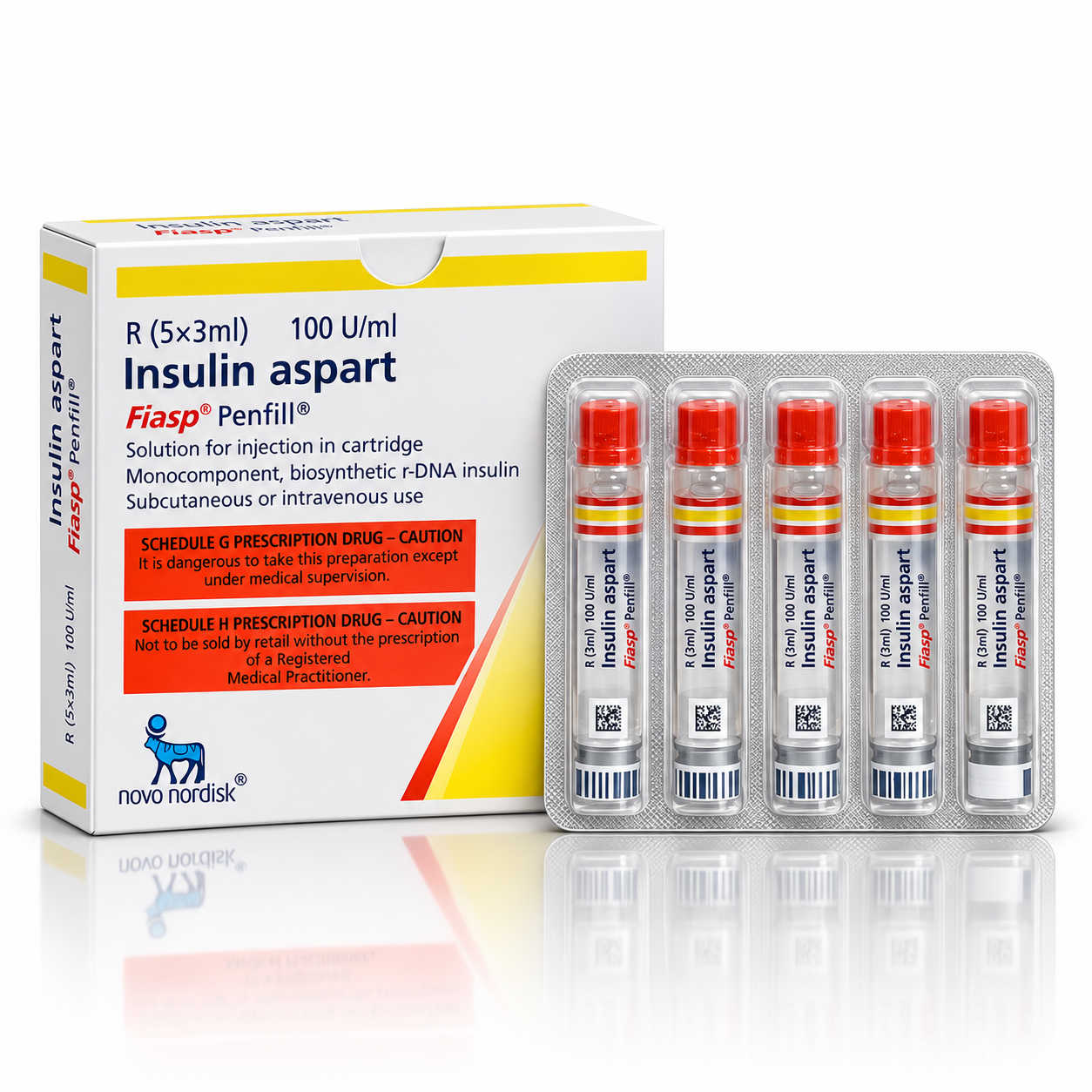
FIASP PENFILL 100 U/ML
Brand Name: Fiasp Penfill 100 U/mL
Generic Name: Insulin Aspart
Strength: 100 units/mL (U-100 Insulin)
Total Insulin Content: 300 units per 3 mL Cartridge
Dosage Form: Solution for Subcutaneous Injection
Therapeutic Class: Fast-Acting Insulin Analogue / Antidiabetic Medicine
Manufacturer: Novo Nordisk A/S, Denmark
Manufacturer / Marketer in India: Novo Nordisk India Pvt. Ltd.
Pack Size: 1 × 3 mL Cartridge (also available as a box of 5 cartridges)
What is this medicine?
FIASP PENFILL 100 U/ML contains Insulin Aspart, a fast-acting insulin analogue used to help control blood glucose levels in people with diabetes mellitus.
Diabetes is a chronic condition in which the body does not produce sufficient insulin or cannot use insulin effectively.
Insulin is a hormone that helps glucose move from the bloodstream into cells, where it is used for energy.
Without adequate insulin action, blood glucose levels rise and may cause long-term complications affecting the eyes, kidneys, nerves, heart, and blood vessels.
Fiasp is a faster-acting formulation of insulin aspart. It contains niacinamide (vitamin B3), which helps accelerate the early absorption of insulin following injection.
How Does Fiasp Work?
Insulin Aspart works by binding to insulin receptors in the body.
It helps:
Increase glucose uptake into muscle cells
Increase glucose uptake into fat cells
Reduce glucose production by the liver
Control blood glucose increases after meals
Support normal glucose metabolism
Lower elevated blood glucose levels
Fiasp is designed primarily for mealtime glucose management.
Common Uses
Fiasp Penfill may be prescribed for:
Type 1 diabetes mellitus
Type 2 diabetes mellitus requiring insulin treatment
Management of blood glucose increases after meals
Mealtime insulin replacement
Basal-bolus insulin treatment regimens
Patients requiring faster mealtime insulin action
Children and adolescents with diabetes when prescribed according to applicable age-specific instructions
Use in Type 1 Diabetes
People with type 1 diabetes produce little or no insulin.
Fiasp is used to control blood glucose associated with meals and is generally combined with a longer-acting insulin to provide insulin coverage between meals and overnight.
Use in Type 2 Diabetes
Fiasp may be prescribed when additional mealtime insulin is required to achieve appropriate glucose control.
It may be used alongside basal insulin or other diabetes medicines.
NOTE: Fiasp Penfill is a fast-acting mealtime insulin, not a long-acting basal insulin.
It should not be substituted for insulin glargine, insulin degludec, or other basal insulin preparations without medical instructions.
What should I tell my healthcare provider before I take this medicine?
Inform your healthcare provider if you have:
Allergy to insulin aspart
Previous serious allergic reactions to insulin
Frequent hypoglycaemia
Severe hypoglycaemia episodes
Hypoglycaemia unawareness
Kidney disease
Reduced kidney function
Liver disease
Heart failure
Low blood potassium
Irregular meal schedules
Frequent vomiting
Difficulty eating
Gastroparesis
Significant weight changes
Increased or changing physical activity
Recent infection or fever
Recent surgery
Pregnancy or plans to become pregnant
Breastfeeding
Changes in other diabetes medicines
Difficulty using injection devices
Significant vision impairment
Problems with hand coordination or dexterity
Tell your healthcare provider about all prescription medicines, over-the-counter medicines, supplements, and herbal preparations you use.
Important Contraindications
Fiasp should not be administered:
During an episode of hypoglycaemia
In patients with serious hypersensitivity to insulin aspart or another formulation ingredient
Important Hypoglycaemia Warning
Hypoglycaemia is the most common serious adverse effect of insulin treatment.
Symptoms may include:
Sweating
Trembling
Sudden hunger
Dizziness
Headache
Rapid heartbeat
Irritability
Confusion
Weakness
Difficulty concentrating
Severe hypoglycaemia can cause seizures, loss of consciousness, or death.
Important: Patients should understand how to recognize and treat low blood glucose and have an appropriate emergency management plan.
How should I use this medicine?
Fiasp Penfill must be used according to instructions from a healthcare professional.
Insert the cartridge into a compatible reusable Novo Nordisk insulin pen.
Check the medicine name and concentration before every injection.
Use a new compatible needle for each injection.
Inspect the solution before use.
The insulin should be clear and colourless.
Do not use cloudy or discoloured insulin.
Perform the required pen flow check.
Select the prescribed number of insulin units.
Inject subcutaneously at the beginning of a meal or within 20 minutes after starting the meal.
Use an approved injection site, such as the abdomen or upper arm.
Rotate injection sites within the same region.
Avoid repeatedly injecting into lumpy, scarred, bruised, or damaged skin.
Follow the reusable pen's instructions to deliver the full dose.
Remove the needle after every injection.
Dispose of used needles in an appropriate sharps container.
Never share an insulin cartridge, pen, or needle.
Monitor blood glucose regularly.
How to Use the Penfill Cartridge
Step 1: Check the Cartridge
Confirm that it contains Fiasp Insulin Aspart 100 U/mL.
Step 2: Inspect the Insulin
The solution must be clear and colourless.
Step 3: Insert the Cartridge
Load it into a compatible reusable Novo Nordisk pen following the device instructions.
Step 4: Attach a New Needle
Use a compatible sterile pen needle.
Step 5: Check Insulin Flow
Perform the recommended flow check.
Step 6: Dial the Prescribed Dose
Select the number of insulin units prescribed.
Step 7: Inject Subcutaneously
Use the injection technique taught by your diabetes healthcare professional.
Step 8: Complete the Injection
Keep the needle in place for the period specified in the pen instructions to help ensure the complete dose is delivered.
Step 9: Remove the Needle
Dispose of the used needle safely.
Step 10: Store the Cartridge Properly
Keep the cartridge in the compatible pen and follow the in-use storage instructions.
Important Device Precautions
Fiasp Penfill is not a disposable FlexTouch pen.
A compatible reusable insulin pen is required.
Do not refill the cartridge.
Do not withdraw insulin from the cartridge using a syringe.
Do not transfer insulin into another container.
Do not use the Penfill cartridge in an insulin infusion pump.
Do not administer Penfill insulin intravenously.
Never share injection equipment.
NOTE: When intravenous insulin or insulin pump administration is prescribed, healthcare professionals must select an appropriately approved Fiasp presentation rather than using the Penfill cartridge.
Usual Adult Dosage
Insulin Concentration: 100 units/mL.
Total Insulin per Cartridge: 300 units.
Cartridge Volume: 3 mL.
Usual Timing: At the beginning of a meal or within 20 minutes after starting a meal.
Dose Selection: Individualized according to blood glucose readings, carbohydrate intake, insulin sensitivity, physical activity, and other clinical factors.
Type 1 Diabetes: Generally used alongside basal insulin as part of a basal-bolus regimen.
Type 2 Diabetes: May be used when mealtime insulin is required.
Switching from Another Mealtime Insulin: A unit-for-unit initial conversion may sometimes be appropriate, but switching products requires medical supervision and closer blood glucose monitoring.
Kidney Impairment: Insulin requirements may decrease, requiring more frequent glucose monitoring and possible dosage adjustment.
Liver Impairment: Insulin requirements may change, and closer monitoring may be necessary.
Older Adults: Dose selection should consider kidney function, hypoglycaemia risk, and ability to administer insulin safely.
Children: Use according to applicable pediatric prescribing information and specialist guidance.
Pregnancy: Insulin requirements may change during pregnancy. Close glucose monitoring is essential.
Breastfeeding: Insulin requirements may change after delivery and during breastfeeding.
Duration of Treatment: May be long-term or lifelong, depending on the type of diabetes.
Overdosage: Excess insulin can cause serious or prolonged hypoglycaemia and requires immediate medical attention.
Important Dose Warning
There is no single standard dose appropriate for every patient.
The insulin dose must be individualized and may need adjustment with changes in meals, illness, exercise, or other medicines.
Do not use another person's insulin dose or independently adjust the prescribed regimen.
The pen dose counter displays insulin units, not millilitres.
What if I miss a dose?
Because Fiasp is a mealtime insulin, missed-dose management depends on meal timing, blood glucose levels, and the patient's diabetes management plan.
If a dose is missed:
Check blood glucose.
Follow the correction-dose or missed-dose instructions provided by the diabetes team.
Do not automatically take a missed mealtime dose several hours after eating.
Do not double the next dose.
Monitor for hyperglycaemia.
Contact your healthcare provider if uncertain.
Follow sick-day instructions when unwell.
Check ketones when recommended, especially in type 1 diabetes.
Important Hyperglycaemia Warning
Insufficient insulin can cause high blood glucose.
Symptoms may include:
Excessive thirst
Frequent urination
Fatigue
Blurred vision
Nausea
In people with type 1 diabetes, insufficient insulin can lead to diabetic ketoacidosis (DKA), a medical emergency.
Seek urgent care for vomiting, abdominal pain, rapid breathing, marked drowsiness, or significant ketone elevation.
What may interact with this medicine?
Fiasp may interact with medicines that increase or decrease blood glucose or alter the body's response to insulin.
Potential interactions include:
Other insulin products
Sulfonylureas
Other glucose-lowering medicines
GLP-1 receptor agonists
SGLT2 inhibitors
Corticosteroids
Certain diuretics
Thyroid hormones
Oral contraceptives
Beta-blockers
ACE inhibitors
Angiotensin receptor blockers
Salicylates
Monoamine oxidase inhibitors
Certain antibiotics
Pioglitazone
Rosiglitazone
Alcohol
Important Drug Interaction Considerations
Other Glucose-Lowering Medicines: Combination treatment may increase the risk of low blood glucose.
Sulfonylureas: Medicines such as glimepiride or gliclazide can increase hypoglycaemia risk when combined with insulin.
Corticosteroids: May raise blood glucose and increase insulin requirements.
Beta-Blockers: May mask warning symptoms of hypoglycaemia, particularly rapid heartbeat.
ACE Inhibitors: May enhance glucose-lowering effects in some patients.
Diuretics: Some diuretics may raise blood glucose.
Thyroid Hormones: Changes in thyroid treatment may alter insulin requirements.
Pioglitazone and Rosiglitazone: These medicines may increase fluid retention and heart failure risk when combined with insulin.
Alcohol: May increase the risk of hypoglycaemia and make glucose control unpredictable.
Important: Significant changes in medicines, diet, exercise, or illness may require reassessment of insulin dosing.
What should I watch for while using this medicine?
Seek urgent medical attention if you experience:
Severe hypoglycaemia
Seizures
Loss of consciousness
Severe confusion
Difficulty swallowing during a low blood glucose episode
Severe allergic reactions
Swelling of the face, lips, tongue, or throat
Difficulty breathing
Severe hyperglycaemia with ketones
Signs of diabetic ketoacidosis
Significant muscle weakness associated with low potassium
Serious injection-site complications
While using Fiasp:
Monitor blood glucose regularly.
Review glucose patterns around meals.
Learn the warning signs of hypoglycaemia.
Keep a suitable source of fast-acting carbohydrate available.
Follow glucagon rescue instructions if prescribed.
Monitor carbohydrate intake.
Coordinate injections with meals.
Rotate injection sites.
Check for skin lumps or thickening.
Verify cartridge and pen compatibility.
Never share insulin equipment.
Review storage conditions and expiry dates.
Attend regular diabetes follow-up appointments.
Important Monitoring Tests
Blood Glucose Monitoring: Helps assess response to insulin and detect low or high blood glucose.
Continuous Glucose Monitoring (CGM): May help identify glucose patterns and time in the target range.
HbA1c: Measures average blood glucose control over approximately two to three months.
Kidney Function: Helps assess changes that may affect insulin requirements.
Potassium Levels: May be checked in selected patients at risk of hypokalaemia.
Injection Site Assessment: Helps identify lipodystrophy or localized cutaneous amyloidosis.
NOTE: Changes in insulin products, doses, devices, or injection sites may affect blood glucose control.
These changes should be made under appropriate medical supervision.
What side effects may I notice from this medicine?
Side effects that should be reported immediately:
Severe hypoglycaemia
Hypoglycaemic seizures
Loss of consciousness
Severe allergic reactions
Anaphylaxis
Angioedema
Significant hypokalaemia
Severe generalized rash
Serious breathing difficulty
Severe injection site reactions
Severe hyperglycaemia caused by inadequate insulin delivery
Side effects that usually do not require medical attention:
Mild injection site pain
Injection site redness
Mild itching
Mild swelling
Temporary skin irritation
Weight gain
Mild fluid retention
Lipodystrophy from repeated injections
Localized skin lumps or thickening
Important Hypoglycaemia Management
If blood glucose is low and the patient is conscious and able to swallow, follow the prescribed hypoglycaemia treatment plan.
A commonly used approach is to consume approximately 15 grams of fast-acting carbohydrate and recheck blood glucose after 15 minutes, repeating treatment if still low.
For severe hypoglycaemia involving unconsciousness, seizures, or inability to swallow:
Seek emergency medical assistance.
Use prescribed glucagon if available, following its instructions.
Do not give food or drink by mouth to an unconscious person.
Important: Severe hypoglycaemia is a medical emergency.
Where should I keep my medicine?
Before First Use
Refrigerate unopened Fiasp Penfill cartridges at 2°C–8°C.
Do not freeze.
Do not use frozen insulin.
Keep cartridges away from the freezer compartment.
Protect from excessive heat.
Keep unused cartridges in the original carton to protect from light.
Use unopened cartridges before the printed expiry date when stored correctly.
After First Use
Store the Penfill cartridge in use below 30°C.
Do not refrigerate the cartridge after first use, according to the referenced European product information.
Do not freeze.
Use within four weeks (28 days).
Discard after the in-use period, even if insulin remains.
Protect from excessive heat and direct sunlight.
Remove the needle after every injection.
Do not store the pen with a needle attached.
Keep the cartridge in the compatible reusable insulin pen.
Do not use cloudy or discoloured insulin.
Keep out of the reach of children.
Never share the cartridge or pen.
Storage During Travel
Keep unused cartridges at the recommended refrigerated temperature.
Avoid freezing.
Do not leave insulin in a hot car.
Avoid prolonged exposure to direct sunlight.
Carry spare needles and glucose-monitoring supplies.
Follow appropriate insulin travel and storage recommendations.
Storage Note: Fiasp Penfill has a maximum in-use period of four weeks. Storage instructions differ between Penfill cartridges, FlexTouch pens, and Fiasp vials. Follow the current product carton and package insert.
Manufacturer Details
Field | Information |
|---|---|
Brand Name | Fiasp Penfill 100 U/mL |
Generic Name | Insulin Aspart |
Strength | 100 units/mL |
Total Insulin | 300 units |
Cartridge Volume | 3 mL |
Dosage Form | Solution for Injection |
Delivery Device | Cartridge for Compatible Reusable Insulin Pen |
Therapeutic Class | Fast-Acting Insulin Analogue |
Primary Indications | Type 1 and Type 2 Diabetes Mellitus |
International Manufacturer | Novo Nordisk A/S |
Indian Manufacturer / Marketer | Novo Nordisk India Pvt. Ltd. |
Actual Manufacturing Facility | Verify from Current Product Carton |
Prescription Status | Prescription Only Medicine |
Route of Administration | Subcutaneous Injection |
Unopened Storage | Refrigerate at 2°C–8°C |
In-Use Storage | Below 30°C; Do Not Refrigerate; Use Within 4 Weeks |
Retail Pack Size | 1 × 3 mL Cartridge |
Alternative Pack | 5 × 3 mL Cartridges |
Country of Manufacture | Verify from Current Product Packaging |