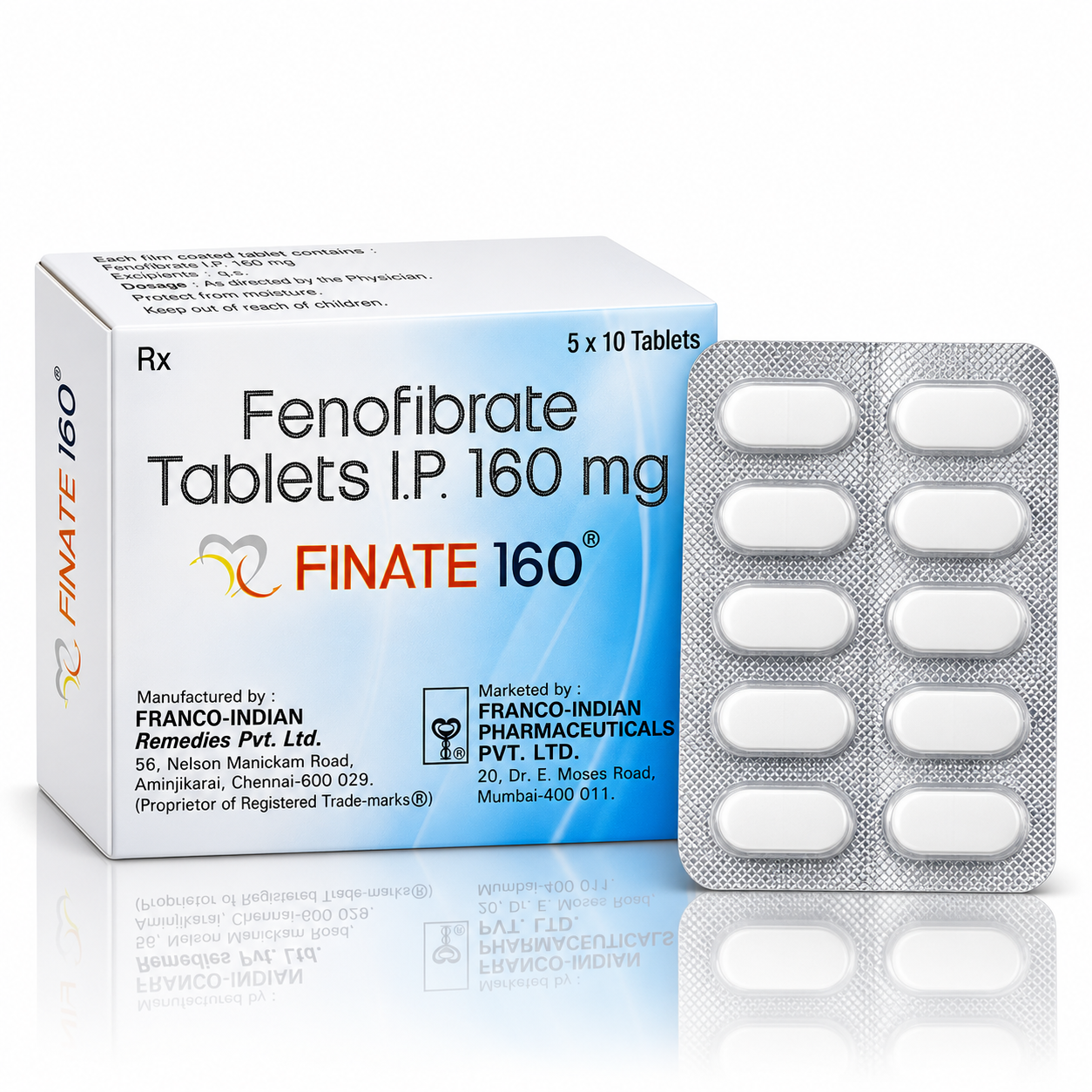
Finate 160 MG Tablet
$0.29 / unit
Available Options
| Pack Size | Price | Price / Unit | Quantity | Action |
|---|---|---|---|---|
| 180 Tablets | $52.38 | $0.29/unit | ||
| 150 Tablets | $43.65 | $0.29/unit | ||
| 120 Tablets | $34.92 | $0.29/unit | ||
| 90 Tablets | $26.19 | $0.29/unit | ||
| 60 Tablets | $17.46 | $0.29/unit | ||
| 30 Tablets | $8.73 | $0.29/unit |
Product Description
FINATE 160 MG TABLET
Product Description
Brand Name: Finate 160 MG Tablet
Generic Name: Fenofibrate (Micronised)
Strength: 160 mg
Dosage Form: Film-Coated Oral Tablet
Therapeutic Class: Fibrate / Lipid-Lowering Medicine / Antihyperlipidaemic Agent
Manufacturer: Franco-Indian Remedies Pvt. Ltd.
Marketer: Franco-Indian Pharmaceuticals Pvt. Ltd.
Pack Size: 1 × 10 Tablets
Trade Packaging: 5 × 10 Tablets
What is this medicine?
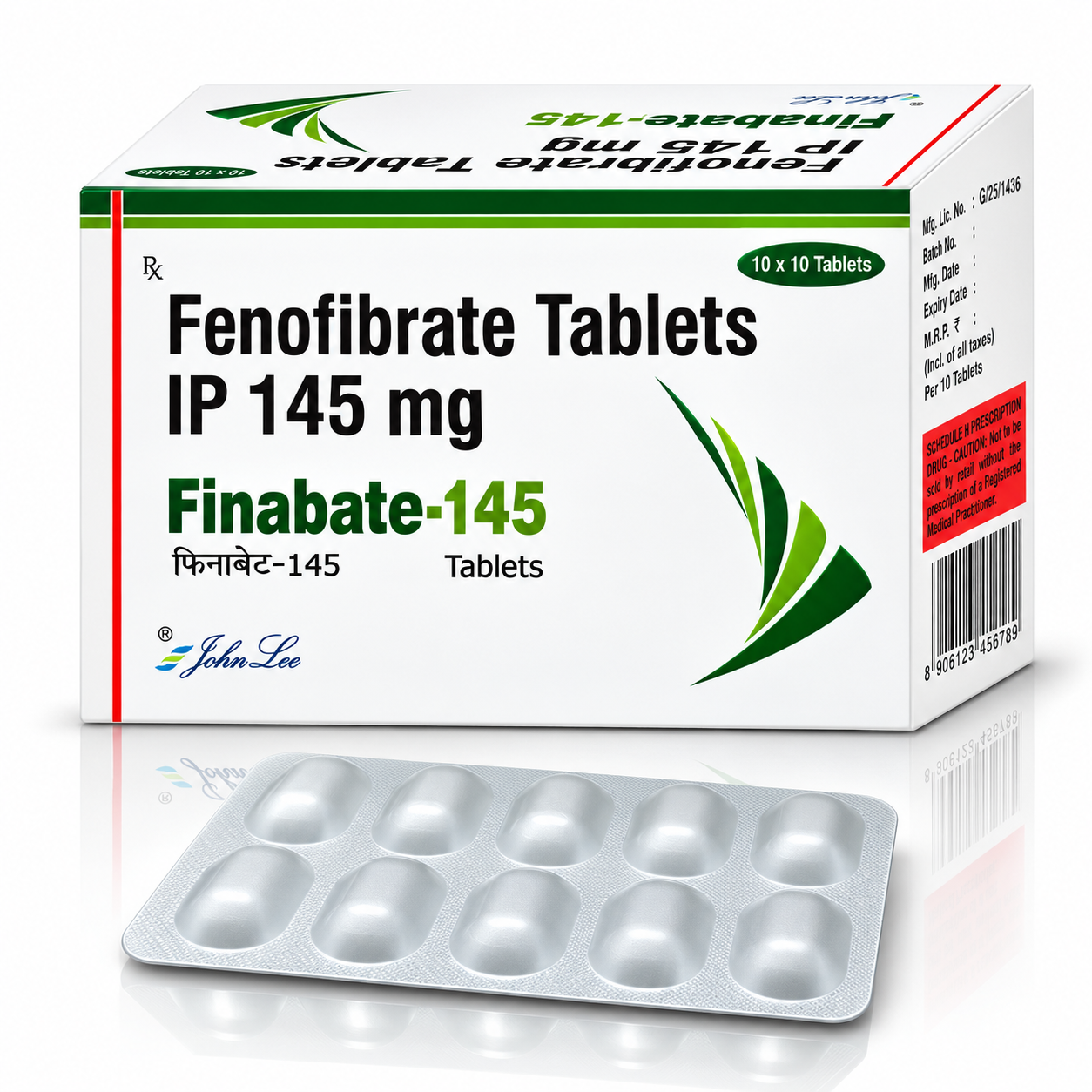
FINATE 160 MG TABLET contains Fenofibrate 160 mg, a prescription medicine used to lower elevated triglycerides and manage certain abnormalities in blood cholesterol levels.
Fenofibrate belongs to a class of medicines called fibrates.
It is commonly prescribed for patients with severe hypertriglyceridaemia, primary hypercholesterolaemia, or mixed dyslipidaemia when treatment is clinically appropriate.
Dyslipidaemia is a condition in which blood lipid levels become abnormal.
These abnormalities may include:
High triglycerides
High LDL cholesterol
Low HDL cholesterol
Elevated total cholesterol
Increased levels of triglyceride-rich lipoproteins
Persistently elevated blood lipids can contribute to cardiovascular disease. Severely elevated triglycerides can also increase the risk of acute pancreatitis.
Fenofibrate primarily reduces triglycerides and may also improve other lipid measurements.
How Does Finate Work?
Fenofibrate activates a receptor called peroxisome proliferator-activated receptor alpha (PPAR-alpha).
This receptor helps regulate the body's metabolism of fats.
By activating PPAR-alpha, fenofibrate:
Increases the breakdown of triglyceride-rich lipoproteins
Improves the clearance of triglycerides from the bloodstream
Reduces the production of certain triglyceride-rich particles
Helps decrease VLDL levels
May increase HDL cholesterol
Can lower LDL cholesterol in selected patients
The extent of improvement depends on the patient's underlying lipid disorder and treatment response.
Common Uses
Finate 160 MG Tablet may be prescribed for:
Severe hypertriglyceridaemia
Primary hypercholesterolaemia
Mixed dyslipidaemia
Elevated triglycerides despite dietary changes
Selected patients with high LDL cholesterol and triglycerides
Management of abnormal lipid profiles
Patients requiring triglyceride reduction under medical supervision
Important Treatment Consideration
Fenofibrate is not required for every patient with high cholesterol.
Its use depends on the lipid profile, cardiovascular risk, other medicines, kidney function, and underlying medical conditions.
Although fenofibrate improves lipid measurements, it has not consistently demonstrated an additional reduction in heart attacks or cardiovascular mortality across all patient groups.
Statins generally remain the first-line lipid-lowering medicines when the primary treatment goal is cardiovascular risk reduction.
NOTE: Finate 160 MG Tablet contains fenofibrate alone.
It does not contain atorvastatin, rosuvastatin, or another statin.
What should I tell my healthcare provider before I take this medicine?
Inform your healthcare provider if you have:
Allergy to fenofibrate
Allergy to fenofibric acid
Previous reactions to fibrate medicines
Kidney disease
Reduced kidney function
Liver disease
Abnormal liver function tests
Gallbladder disease
Gallstones
Previous pancreatitis
Unexplained muscle pain
Muscle weakness
Previous rhabdomyolysis
A history of statin-related muscle problems
Hypothyroidism
Diabetes mellitus
Significant alcohol consumption
Pregnancy or plans to become pregnant
Breastfeeding
Previous severe drug reactions
Use of statins
Use of anticoagulants
Use of other cholesterol-lowering medicines
Tell your healthcare provider about all prescription medicines, over-the-counter medicines, vitamins, supplements, and herbal products you take.
Important Contraindications
Fenofibrate must not be used in patients with:
Known hypersensitivity to fenofibrate or fenofibric acid
Severe renal impairment
End-stage kidney disease
Patients undergoing dialysis
Active liver disease
Unexplained persistent liver function abnormalities
Pre-existing gallbladder disease
Fenofibrate should not be used during breastfeeding.
Important Kidney Disease Warning
Fenofibrate is eliminated primarily through the kidneys.
Patients with reduced kidney function may have increased exposure to the medicine and may need a lower dose.
The 160 mg strength may be unsuitable when the patient requires a lower initial dose.
Important: Severe kidney impairment is a contraindication to fenofibrate treatment.
Important Muscle Injury Warning
Fenofibrate can occasionally cause myopathy and rhabdomyolysis.
Rhabdomyolysis is a serious condition involving muscle breakdown that can damage the kidneys.
Warning signs include:
Severe or unexplained muscle pain
Muscle tenderness
Significant muscle weakness
Dark or cola-coloured urine
Unusual fatigue
Reduced urine output
The risk of muscle injury may increase with older age, kidney disease, hypothyroidism, and certain interacting medicines.
Important: Seek prompt medical assessment if serious muscle symptoms develop.
How should I use this medicine?
Take Finate 160 MG Tablet exactly as prescribed by your healthcare provider.
Swallow the tablet with water.
Take the medicine once daily as prescribed.
Take it with a meal, consistent with prescribing information for applicable micronised 160 mg fenofibrate formulations.
Take it at approximately the same time each day.
Do not exceed the prescribed dose.
Do not combine it with another fibrate without medical advice.
Continue the recommended lipid-lowering diet.
Reduce excessive refined carbohydrates and added sugars.
Limit or avoid alcohol as advised.
Maintain regular physical activity.
Attend scheduled medical appointments.
Complete recommended blood tests.
Report unexplained muscle pain or weakness.
Inform your doctor about severe or persistent abdominal pain.
Do not stop or change treatment without medical advice.
Usual Adult Dosage
Finate Strength: Each tablet contains Fenofibrate 160 mg.
Primary Hypercholesterolaemia: Fenofibrate 160 mg once daily is an established regimen for applicable 160 mg formulations.
Mixed Dyslipidaemia: Fenofibrate 160 mg orally once daily may be prescribed when clinically appropriate.
Severe Hypertriglyceridaemia: Dosing may range from 54 mg to 160 mg once daily for certain formulations, depending on triglyceride levels and treatment response.
Maximum Standard Dose: 160 mg once daily for the referenced 160 mg tablet formulation.
Administration: Take with food according to the applicable formulation instructions.
Dose Adjustment: Treatment should be individualized based on lipid response, kidney function, and clinical circumstances.
Mild to Moderate Kidney Impairment: A lower initial dose, such as 54 mg daily for applicable formulations, may be required.
Severe Kidney Impairment: Fenofibrate is contraindicated when eGFR is below 30 mL/min/1.73 m².
Liver Impairment: Do not use in patients with active liver disease.
Older Adults: Dose selection should be based primarily on kidney function.
Children: Safety and effectiveness for routine pediatric use have not been established.
Pregnancy: Use only if a specialist determines that the potential benefit justifies the potential risk.
Breastfeeding: Do not use during breastfeeding.
Duration of Treatment: May be long-term if effective and well tolerated.
Treatment Review: Lipid levels are commonly reassessed after approximately four to eight weeks.
Inadequate Response: If the response remains inadequate after approximately two months, the clinician should reassess the treatment plan.
Overdosage: Seek medical attention if excessive tablets are taken.
Important Dosage Considerations
The appropriate fenofibrate dose depends on:
Triglyceride levels
LDL cholesterol
HDL cholesterol
Kidney function
Liver function
Existing medical conditions
Other medicines
Treatment goals
NOTE: Different fenofibrate formulations are not necessarily interchangeable milligram for milligram.
Do not substitute Finate 160 mg with a fenofibrate 145 mg product without medical or pharmacist confirmation.
What if I miss a dose?
If a dose is missed:
Take the missed tablet when remembered unless it is nearly time for the next scheduled dose.
If the next dose is approaching, skip the missed dose.
Continue with the regular schedule.
Do not take two tablets together.
Do not exceed the prescribed daily amount.
Important: Taking additional fenofibrate tablets will not produce faster or better cholesterol reduction.
What may interact with this medicine?
Fenofibrate may interact with medicines that affect muscle function, kidney function, blood clotting, or lipid metabolism.
Potential interactions include:
Atorvastatin
Rosuvastatin
Simvastatin
Other statins
Gemfibrozil
Other fibrates
Warfarin
Other coumarin anticoagulants
Cyclosporine
Colchicine
Cholestyramine
Colestipol
Other bile acid sequestrants
Important Drug Interaction Considerations
Statins: Combining fenofibrate with a statin may increase the risk of muscle injury.
The combination should only be used when the expected benefits outweigh the risks.
Gemfibrozil: Combining different fibrates is generally inappropriate unless specifically directed by a specialist.
Warfarin: Fenofibrate may increase anticoagulant effects. More frequent INR monitoring and warfarin dose adjustment may be necessary.
Cyclosporine: May increase the risk of kidney-related adverse effects. Kidney function requires careful monitoring.
Colchicine: Concurrent use may increase the risk of muscle toxicity.
Bile Acid Sequestrants: These medicines may reduce fenofibrate absorption.
For applicable formulations, fenofibrate should be administered at least one hour before or four to six hours after a bile acid sequestrant.
Important: Inform your healthcare provider before starting or discontinuing another medicine during Finate treatment.
What should I watch for while using this medicine?
Seek prompt medical attention if you develop:
Severe muscle pain
Significant muscle weakness
Dark-coloured urine
Reduced urine output
Yellowing of the skin or eyes
Severe or persistent nausea
Severe abdominal pain
Upper abdominal pain spreading to the back
Persistent unusual fatigue
Swelling of the face or throat
Difficulty breathing
Severe allergic reactions
While taking Finate:
Continue a lipid-lowering diet.
Maintain regular physical activity.
Limit alcohol intake as advised.
Attend follow-up appointments.
Complete recommended kidney and liver tests.
Report muscle pain or weakness promptly.
Watch for symptoms of gallbladder disease.
Discuss persistent abdominal discomfort.
Inform your healthcare provider about new medicines.
Important Monitoring Tests
Lipid Profile: Measures triglycerides, LDL cholesterol, HDL cholesterol, and total cholesterol to evaluate treatment effectiveness.
Kidney Function Tests: Serum creatinine and estimated glomerular filtration rate help determine whether fenofibrate remains suitable.
Liver Function Tests: ALT, AST, and total bilirubin should be checked before treatment and periodically during therapy.
Creatine Kinase (CK): May be measured when significant muscle symptoms develop.
Thyroid Function: May be evaluated when hypothyroidism is suspected, particularly in patients with muscle symptoms.
Blood Glucose and HbA1c: May be monitored in patients with diabetes or other metabolic risk factors.
Important Liver Warning
Fenofibrate may increase liver enzyme levels and has occasionally been associated with serious liver injury.
Warning symptoms include:
Jaundice
Dark urine
Persistent nausea
Loss of appetite
Unexplained fatigue
Upper abdominal discomfort
Significant liver abnormalities may require treatment discontinuation.
Important Gallbladder Warning
Fenofibrate may increase cholesterol excretion into bile, contributing to gallstone formation.
Seek medical attention if severe upper abdominal pain occurs, especially with nausea, vomiting, or fever.
Important Pancreatitis Warning
Patients with severely elevated triglycerides may be at increased risk of pancreatitis.
Pancreatitis has also been reported during fenofibrate treatment.
Severe and persistent abdominal pain requires urgent medical assessment.
What side effects may I notice from this medicine?
Side effects that should be reported immediately:
Severe muscle pain or weakness
Myopathy
Rhabdomyolysis
Acute kidney injury
Serious liver injury
Jaundice
Pancreatitis
Gallbladder complications
Severe allergic reactions
Angioedema
Severe skin reactions
Persistent severe abdominal pain
Side effects that usually do not require immediate medical attention:
Mild abdominal discomfort
Nausea
Indigestion
Constipation
Diarrhoea
Headache
Mild back discomfort
Temporary digestive disturbances
These side effects do not occur in every patient.
However, unexplained muscle pain or weakness should not be dismissed as a minor symptom because it may occasionally indicate serious muscle injury.
Contact your healthcare provider if symptoms persist, worsen, or interfere with daily activities.
Important Long-Term Safety Considerations
Patients receiving long-term fenofibrate treatment may require regular review of:
Triglyceride levels
Cholesterol levels
Kidney function
Liver function
Muscle-related symptoms
Treatment response
Other medicines
Important: Continue recommended dietary and lifestyle measures even when blood lipid levels improve.
Where should I keep my medicine?
Keep out of the reach of children.
Store according to the current product label.
Keep tablets in a cool, dry place.
Protect from moisture.
Protect from excessive heat.
Protect from direct sunlight.
Keep tablets in their original blister packaging.
Do not remove tablets until ready for use.
Avoid storing medicines in humid bathrooms.
Do not use after the expiry date.
Do not use tablets from damaged packaging.
Keep away from pets.
Do not transfer tablets into unlabelled containers.
Dispose of expired or unused medicine according to pharmacist instructions.
Storage Note: The verified Finate blister packaging specifically states Protect from moisture. Confirm any numerical temperature limit from the current carton.
Manufacturer Details
Field | Information |
|---|---|
Brand Name | Finate 160 MG Tablet |
Generic Name | Fenofibrate (Micronised) |
Strength | 160 mg |
Dosage Form | Film-Coated Oral Tablet |
Therapeutic Class | Fibrate / Lipid-Lowering Medicine |
Primary Indication | Hypertriglyceridaemia |
Additional Indications | Primary Hypercholesterolaemia and Mixed Dyslipidaemia |
Manufacturer | Franco-Indian Remedies Pvt. Ltd. |
Marketer | Franco-Indian Pharmaceuticals Pvt. Ltd. |
Manufacturing Address on Packaging | 56, Nelson Manickam Road, Aminjikarai, Chennai – 600029 |
Marketer Address on Packaging | 20, Dr. E. Moses Road, Mumbai – 400011 |
Prescription Status | Schedule H Prescription Medicine |
Route of Administration | Oral |
Storage | Protect from Moisture; Follow Original Product Label |
Retail Pack Size | 1 × 10 Tablets |
Trade Packaging | 5 × 10 Tablets |
Country of Origin | India |