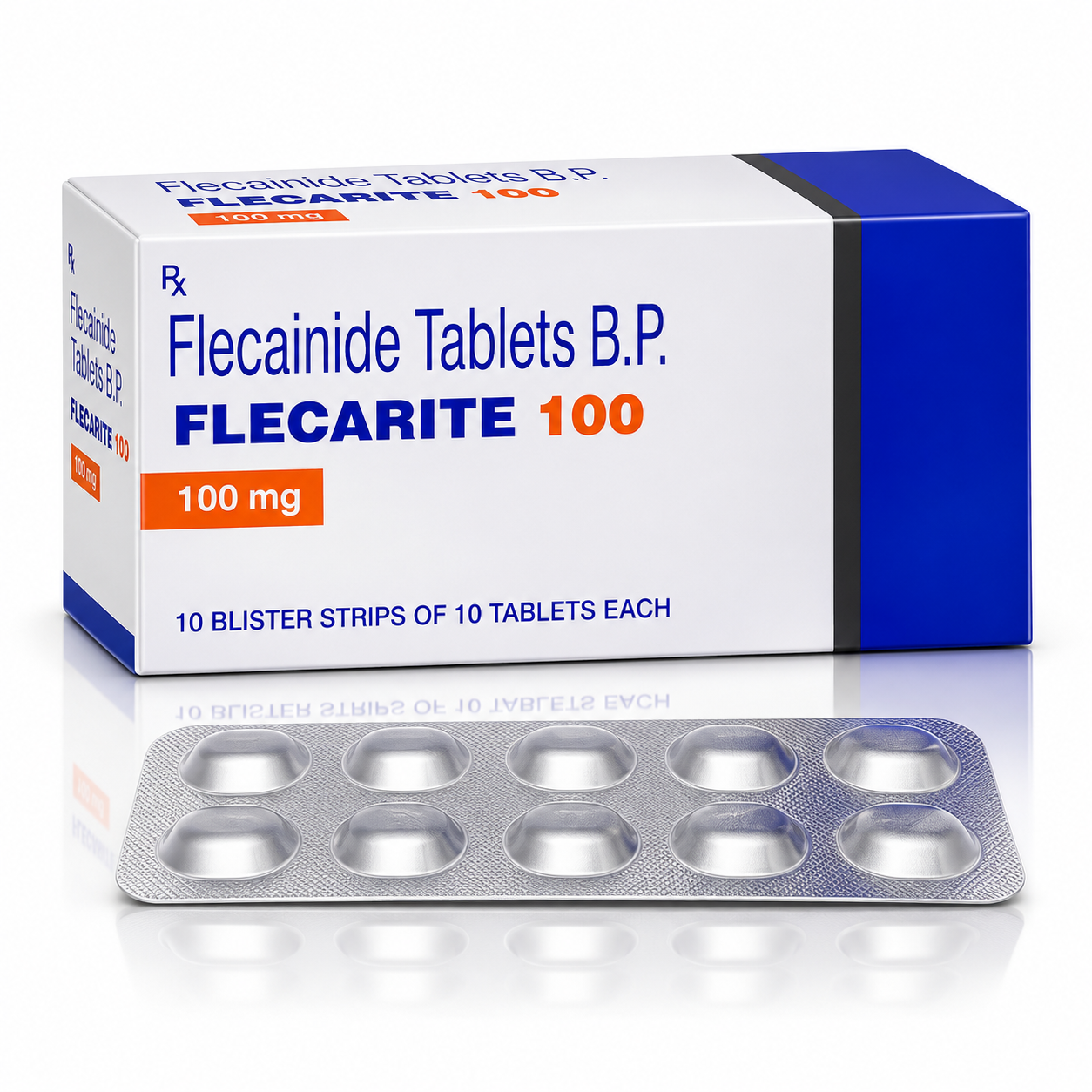
Flecarite 100 MG Tablet
$0.77 / unit
Available Options
| Pack Size | Price | Price / Unit | Quantity | Action |
|---|---|---|---|---|
| 180 Tablets | $140.00 | $0.77/unit | ||
| 150 Tablets | $116.00 | $0.77/unit | ||
| 120 Tablets | $93.00 | $0.77/unit | ||
| 90 Tablets | $70.00 | $0.77/unit | ||
| 60 Tablets | $47.00 | $0.77/unit | ||
| 30 Tablets | $23.00 | $0.77/unit |
Product Description
FLECARITE 100 MG TABLET
Brand Name: Flecarite 100 MG Tablet
Generic Name: Flecainide Acetate
Strength: 100 mg
Dosage Form: Oral Tablet
Therapeutic Class: Class IC Antiarrhythmic / Sodium Channel Blocker
Manufacturer / Marketer: Torrent Pharmaceuticals Ltd.
Pack Size: 1 × 10 Tablets
Trade Packaging: 10 × 10 Tablets
What is this medicine?
FLECARITE 100 MG TABLET contains Flecainide Acetate 100 mg, a prescription medicine used to treat and prevent selected abnormal heart rhythms.
An abnormal heart rhythm, medically called an arrhythmia, occurs when the electrical signals controlling the heartbeat become irregular, unusually fast, or otherwise disturbed.
Certain arrhythmias can cause symptoms such as:
Palpitations
A racing heartbeat
An irregular heartbeat
Dizziness
Weakness
Reduced exercise tolerance
Shortness of breath
Chest discomfort
Fainting or near-fainting
Flecainide belongs to a group of medicines called Class IC antiarrhythmics.
It works by blocking fast sodium channels in heart muscle cells, slowing the conduction of electrical signals through the heart.
In appropriately selected patients, this action can help prevent certain abnormal electrical circuits and maintain a more regular heart rhythm.
However, flecainide can also cause dangerous new arrhythmias or worsen existing ones. It must be prescribed only after careful assessment of the patient's heart condition.
Common Uses
Flecarite 100 MG Tablet may be prescribed for:
Selected cases of paroxysmal atrial fibrillation
Selected cases of paroxysmal atrial flutter
Paroxysmal supraventricular tachycardia (PSVT)
Certain atrioventricular nodal reentrant tachycardias
Certain atrioventricular reentrant tachycardias
Prevention of recurrent symptomatic supraventricular arrhythmias
Selected serious ventricular arrhythmias under specialist supervision
How Does Flecarite Work?
The heartbeat is controlled by electrical impulses travelling through specialized heart tissue.
Flecainide blocks fast sodium channels involved in transmitting these impulses.
This helps:
Slow abnormal electrical conduction
Interrupt certain rapid electrical circuits
Reduce recurrence of selected abnormal heart rhythms
Maintain sinus rhythm in appropriately selected patients
Flecainide has a narrow therapeutic safety margin.
Excessive drug exposure can significantly slow cardiac conduction and increase the risk of serious arrhythmias.
Important Treatment Consideration
Flecarite is not suitable for every type of arrhythmia.
It is generally reserved for patients carefully selected by a cardiologist, often those without significant structural heart disease.
Flecainide may be particularly hazardous in patients with:
Previous myocardial infarction
Significant coronary artery disease
Certain cardiomyopathies
Significant structural heart disease
Severe heart failure
Important cardiac conduction disorders
NOTE: Flecarite 100 MG Tablet is a heart-rhythm medicine, not a general treatment for high blood pressure, chest pain, or anxiety-related palpitations.
What should I tell my healthcare provider before I take this medicine?
Inform your healthcare provider if you have:
Allergy to flecainide
Previous serious reactions to antiarrhythmic medicines
A history of heart attack
Coronary artery disease
Heart failure
Cardiomyopathy
Structural heart disease
Heart valve disease
Heart block
Sick sinus syndrome
Very slow heartbeat
Brugada syndrome
A pacemaker
Previous ventricular tachycardia
Previous ventricular fibrillation
Fainting episodes
Kidney disease
Liver disease
Low potassium
High potassium
Low magnesium
Thyroid disorders
Significant dizziness
Pregnancy or plans to become pregnant
Breastfeeding
Use of other antiarrhythmic medicines
Use of beta-blockers
Use of calcium channel blockers
Use of digoxin
Tell your healthcare provider about all prescription medicines, nonprescription medicines, supplements, and herbal products you use.
Important Contraindications
Flecainide is contraindicated in patients with:
Known hypersensitivity to flecainide
Cardiogenic shock
Second- or third-degree atrioventricular block without appropriate pacing support
Certain serious intraventricular conduction disorders without an appropriate pacemaker
It should generally be avoided in patients with previous myocardial infarction or significant structural heart disease because of the risk of serious arrhythmias and increased mortality.
Important Proarrhythmia Warning
Flecainide may occasionally cause a new abnormal heart rhythm or make an existing rhythm disturbance more dangerous.
This is known as proarrhythmia.
Potential complications include:
New ventricular tachycardia
Worsening ventricular arrhythmias
Ventricular fibrillation
Severe slowing of cardiac conduction
Atrial flutter with dangerously rapid ventricular conduction
Cardiac arrest
Important: Flecainide should only be prescribed and adjusted by a healthcare professional experienced in managing cardiac arrhythmias.
Important Heart Attack Warning
Clinical trial evidence has shown increased mortality and nonfatal cardiac arrest in certain patients who received flecainide after a myocardial infarction.
Flecainide is therefore not recommended for routine suppression of harmless or non-life-threatening ventricular extra beats in patients with a history of heart attack.
How should I use this medicine?
Take Flecarite 100 MG Tablet exactly as prescribed by your cardiologist.
Swallow the tablet with water.
Take it at the prescribed times.
It may generally be taken with or without food.
Take doses at consistent intervals.
Do not increase or decrease the dose independently.
Do not stop treatment abruptly without medical advice.
Attend scheduled ECG examinations.
Follow instructions for monitoring heart rate and rhythm.
Report new or worsening palpitations.
Report unusual dizziness or fainting.
Inform your doctor about new medicines.
Follow the prescribed treatment and follow-up schedule.
Usual Adult Dosage
Flecarite Strength: Each tablet contains Flecainide Acetate 100 mg.
Paroxysmal Supraventricular Tachycardia: Established prescribing information commonly recommends an initial dose of flecainide 50 mg every 12 hours, with gradual adjustment according to clinical response.
Paroxysmal Atrial Fibrillation or Flutter: The initial regimen is commonly 50 mg every 12 hours in appropriately selected patients.
Dose Adjustment: The cardiologist may adjust the dose at intervals of at least four days, considering response, ECG findings, and adverse effects.
Sustained Ventricular Tachycardia: Treatment requires specialist assessment and is typically initiated in a hospital. An established starting regimen is 100 mg every 12 hours, with careful monitoring.
Maximum Dose: Depends on the indication. The referenced prescribing information lists a maximum of 300 mg/day for supraventricular arrhythmias and 400 mg/day for selected ventricular arrhythmias.
Kidney Impairment: A lower starting dose, slower adjustment, and blood-level monitoring may be necessary.
Liver Impairment: Flecainide should generally be avoided in significant liver impairment unless the expected benefits justify the risks and close monitoring is available.
Older Adults: Dosing must consider kidney function, cardiac conduction, and concurrent medicines.
Children: Pediatric use requires direct supervision by a pediatric cardiologist experienced in arrhythmia management.
Pregnancy: Use only after specialist assessment.
Breastfeeding: Discuss potential infant exposure and monitoring with a healthcare professional.
Duration of Treatment: Depends on the arrhythmia, treatment response, and cardiologist's assessment.
Overdosage: Flecainide overdose can be life-threatening and requires emergency medical treatment.
Important Dosage Warning
Flecainide dosing must be individualized.
A 100 mg tablet does not mean that every patient should begin treatment with 100 mg.
Some patients require a 50 mg starting dose or a different schedule.
Do not begin, increase, repeat, or stop flecainide without instructions from the prescribing cardiologist.
What if I miss a dose?
If a dose is missed:
Follow the missed-dose instructions provided by your cardiologist.
Take the dose when remembered unless the next scheduled dose is approaching.
If it is nearly time for the next dose, skip the missed dose.
Do not take two doses together.
Do not take extra tablets to correct an irregular heartbeat.
Contact your healthcare provider if you miss multiple doses.
Important: If palpitations, fainting, severe dizziness, chest pain, or breathing difficulty occur, seek prompt medical assessment rather than taking additional flecainide.
What may interact with this medicine?
Flecainide can interact with medicines that affect heart rhythm, electrical conduction, or its metabolism.
Potential interactions include:
Amiodarone
Quinidine
Propafenone
Other antiarrhythmic medicines
Digoxin
Propranolol
Metoprolol
Other beta-blockers
Verapamil
Diltiazem
Disopyramide
Certain antidepressants
Fluoxetine
Paroxetine
Certain medicines that inhibit CYP2D6
Other medicines that slow cardiac conduction
Important Drug Interaction Considerations
Amiodarone: Can significantly increase flecainide concentrations. Substantial dose reduction and close monitoring may be necessary.
Quinidine: May increase flecainide levels through effects on CYP2D6 metabolism.
Digoxin: Flecainide can modestly increase digoxin concentrations. Heart rate and clinical response should be monitored.
Beta-Blockers: May be intentionally prescribed with flecainide in selected patients, but the combination can also increase the risk of slow heart rate or impaired cardiac function.
Verapamil and Diltiazem: May increase effects on cardiac conduction and contractility. Specialist supervision is essential.
Disopyramide: Combining two medicines with potentially negative effects on cardiac contractility may increase the risk of adverse cardiac effects.
Certain Antidepressants: Strong CYP2D6 inhibitors, such as fluoxetine or paroxetine, may increase flecainide exposure.
Other Antiarrhythmics: Combining flecainide with another rhythm-control medicine may increase the risk of dangerous conduction abnormalities or proarrhythmia.
Important Atrial Flutter Precaution
Flecainide may convert atrial fibrillation into atrial flutter with rapid conduction to the ventricles.
For this reason, cardiologists may prescribe an appropriate atrioventricular nodal blocking medicine alongside flecainide in selected patients.
Important: Do not independently add a beta-blocker or another heart medicine to prevent this complication.
What should I watch for while using this medicine?
Seek emergency medical attention if you experience:
Fainting
Severe dizziness
Chest pain
Severe shortness of breath
A new very fast heartbeat
A dangerously slow heartbeat
Sudden worsening of palpitations
Collapse
Severe weakness with an irregular heartbeat
Symptoms of worsening heart failure
While taking Flecarite:
Attend regular cardiology appointments.
Complete recommended ECG tests.
Monitor for new or worsening palpitations.
Report fainting or near-fainting episodes.
Inform your doctor about worsening breathlessness.
Watch for swollen feet or ankles.
Follow kidney and liver function monitoring instructions.
Report visual disturbances that interfere with daily activities.
Avoid changing the dose independently.
Keep an updated list of all medicines.
Important Monitoring Tests
Electrocardiogram (ECG): Helps assess heart rhythm, PR interval, QRS duration, and other conduction changes.
Echocardiogram: May be used to evaluate heart structure and pumping function before treatment.
Kidney Function Tests: Help determine whether flecainide may accumulate in the body.
Liver Function Tests: May be required in patients with liver disease or suspected liver-related adverse effects.
Electrolyte Tests: Potassium and magnesium levels may be checked because abnormalities can increase arrhythmia risk.
Flecainide Blood Levels: May be measured in selected patients, particularly those with kidney impairment, liver impairment, suspected toxicity, or interacting medicines.
Pacemaker Assessment: Patients with an implanted pacemaker may require evaluation of pacing thresholds.
Important ECG Monitoring Warning
Flecainide slows electrical conduction in the heart.
It may increase the PR interval and widen the QRS complex on an ECG.
Excessive widening may indicate an increased risk of adverse cardiac effects.
Important: ECG monitoring is particularly important after treatment initiation, dose increases, and changes in interacting medicines.
Important Heart Failure Warning
Flecainide can reduce the force of heart muscle contraction.
In susceptible patients, it may cause or worsen heart failure.
Warning symptoms include:
Increasing shortness of breath
Swelling of the feet or ankles
Sudden weight gain related to fluid retention
Unusual tiredness
Difficulty breathing while lying flat
Report these symptoms promptly.
What side effects may I notice from this medicine?
Side effects that should be reported immediately:
New or worsening dangerous arrhythmias
Severe bradycardia
Serious heart block
Fainting
Worsening heart failure
Severe chest pain
Severe breathing difficulty
Severe allergic reactions
Marked confusion
Serious neurological changes
Significant liver injury
Symptoms of flecainide toxicity
Side effects that usually do not require immediate medical attention:
Dizziness
Blurred vision
Double vision
Headache
Nausea
Mild stomach discomfort
Fatigue
Tremor
Mild weakness
Some side effects may improve with dose adjustment, but changes in heart rate, rhythm, or consciousness must not be dismissed.
Important Dizziness and Vision Warning
Flecainide may cause:
Dizziness
Blurred vision
Double vision
Difficulty focusing
These effects may impair driving or operating machinery.
Avoid potentially dangerous activities until you know how the medicine affects you.
Important Serious Arrhythmia Warning
Flecainide can sometimes trigger life-threatening heart rhythm disturbances.
This risk is particularly important in people with previous heart attack, significant structural heart disease, or excessive medicine exposure.
Important: New fainting, a very rapid or slow heartbeat, or severe chest symptoms require urgent evaluation.
Where should I keep my medicine?
Store below 30°C according to the current Indian product listing.
Keep out of the reach of children.
Store in a cool, dry place.
Protect from excessive heat.
Protect from moisture.
Keep tablets in their original blister packaging.
Do not use after the expiry date.
Do not use tablets from damaged packaging.
Keep away from pets.
Do not transfer tablets into unlabelled containers.
Dispose of expired or unused tablets according to pharmacist instructions.
Storage Note: Follow the storage instructions printed on the current Flecarite 100 MG Tablet strip or carton.
Manufacturer Details
Field | Information |
|---|---|
Brand Name | Flecarite 100 MG Tablet |
Generic Name | Flecainide Acetate |
Strength | 100 mg |
Dosage Form | Oral Tablet |
Therapeutic Class | Class IC Antiarrhythmic / Sodium Channel Blocker |
Primary Indications | Selected Supraventricular and Serious Ventricular Arrhythmias |
Manufacturer / Marketer | Torrent Pharmaceuticals Ltd. |
Actual Manufacturing Facility | Verify from Current Product Packaging |
Prescription Status | Prescription Only Medicine |
Route of Administration | Oral |
Storage | Below 30°C; Follow Original Product Label |
Retail Pack Size | 1 × 10 Tablets |
Trade Packaging | 10 × 10 Tablets |
Country of Origin | India |