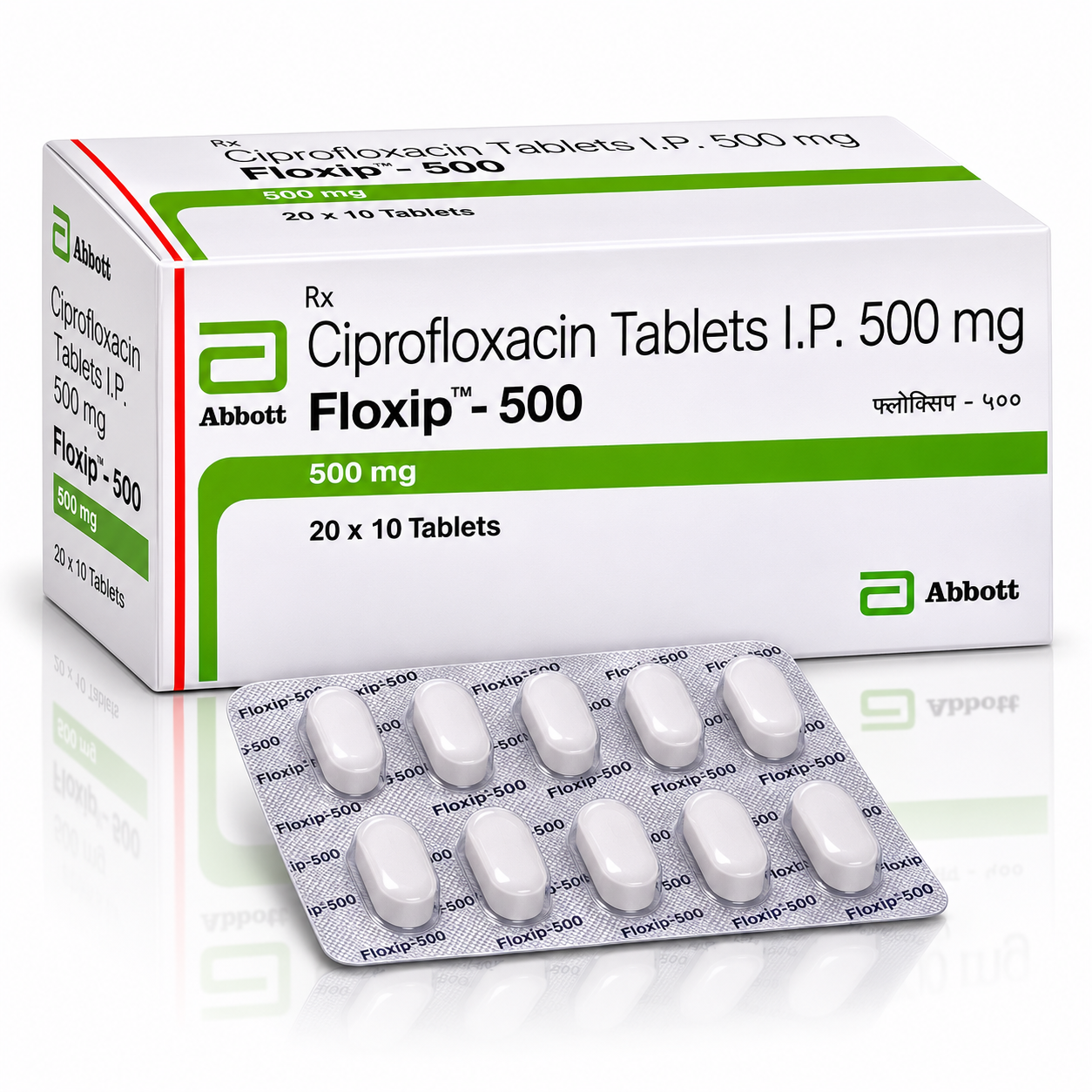
Floxip 500 MG Tablet
$0.20 / unit
Available Options
| Pack Size | Price | Price / Unit | Quantity | Action |
|---|---|---|---|---|
| 180 Tablets | $29.00 | $0.16/unit | ||
| 150 Tablets | $25.00 | $0.17/unit | ||
| 120 Tablets | $20.00 | $0.17/unit | ||
| 90 Tablets | $16.00 | $0.18/unit | ||
| 60 Tablets | $12.00 | $0.20/unit | ||
| 30 Tablets | $6.00 | $0.20/unit |
Product Description
FLOXIP 500 MG TABLET
Brand Name: Floxip 500 MG Tablet
Generic Name: Ciprofloxacin
Strength: 500 mg
Dosage Form: Film-Coated Oral Tablet
Therapeutic Class: Fluoroquinolone Antibiotic / Antibacterial Medicine
Manufacturer / Marketer: Abbott Healthcare Pvt. Ltd. / Abbott India Ltd.
Pack Size: 1 × 10 Tablets
Prescription Status: Schedule H Prescription Medicine
What is this medicine?
FLOXIP 500 MG TABLET contains Ciprofloxacin 500 mg, a prescription antibiotic used to treat certain infections caused by susceptible bacteria.
Ciprofloxacin belongs to a group of antibiotics called fluoroquinolones.
It works by interfering with essential bacterial enzymes responsible for DNA replication, repair and cell division.
By disrupting these processes, ciprofloxacin helps kill susceptible bacteria and control the infection.
Bacterial infections may affect various parts of the body, including:
Urinary tract
Kidneys
Prostate
Respiratory tract
Digestive system
Skin and soft tissues
Bones and joints
Certain internal organs
The effectiveness of Floxip depends on the bacteria causing the infection and whether those bacteria are susceptible to ciprofloxacin.
How Does Floxip Work?
Ciprofloxacin inhibits two important bacterial enzymes.
DNA Gyrase
This enzyme helps bacteria maintain and replicate their genetic material.
Topoisomerase IV
This enzyme is involved in separating replicated bacterial DNA during cell division.
By blocking these enzymes, ciprofloxacin:
Disrupts bacterial DNA replication
Interferes with DNA repair
Prevents normal bacterial cell division
Kills susceptible bacteria
Helps eliminate the bacterial infection
Common Uses
Floxip 500 MG Tablet may be prescribed for selected susceptible bacterial infections, including:
Complicated urinary tract infections
Kidney infections
Chronic bacterial prostatitis
Certain lower respiratory tract infections
Selected skin and soft tissue infections
Bone and joint infections
Certain gastrointestinal bacterial infections
Infectious diarrhoea caused by susceptible bacteria
Typhoid fever when susceptibility is established
Selected intra-abdominal infections when combined with appropriate additional antibiotics
Other infections for which ciprofloxacin is specifically indicated
Important Treatment Consideration
Ciprofloxacin is not suitable for every bacterial infection.
Its use depends on:
Type of infection
Severity of infection
Bacterial susceptibility
Local antimicrobial resistance
Patient age
Kidney function
Other medical conditions
Availability of safer alternatives
For certain uncomplicated infections, such as acute bacterial sinusitis, uncomplicated urinary tract infection or acute exacerbation of chronic bronchitis, fluoroquinolones should generally be reserved for patients without suitable alternative treatment options.
NOTE: Floxip 500 MG Tablet is an antibacterial medicine.
It does not treat viral infections such as influenza, the common cold or most viral sore throats.
It is not an antifungal medicine or a general antiparasitic treatment.
What should I tell my healthcare provider before I take this medicine?
Inform your healthcare provider if you have:
Allergy to ciprofloxacin
Allergy to other fluoroquinolone antibiotics
Previous reactions to levofloxacin, ofloxacin or moxifloxacin
Previous tendon inflammation
A history of tendon rupture
Peripheral neuropathy
Persistent numbness or tingling
Myasthenia gravis
Seizure disorders
Epilepsy
Other neurological disorders
Previous serious psychiatric reactions
Kidney disease
Liver disease
Heart rhythm disorders
Prolonged QT interval
Low potassium
Low magnesium
Diabetes
Previous severe hypoglycaemia
Aortic aneurysm
Aortic dissection
Certain connective tissue disorders
Uncontrolled high blood pressure
A history of antibiotic-associated colitis
Severe or persistent diarrhoea
Pregnancy or plans to become pregnant
Breastfeeding
Use of corticosteroids
Use of blood-thinning medicines
Use of tizanidine
Use of antacids or mineral supplements
Tell your healthcare provider about all prescription medicines, over-the-counter medicines, supplements and herbal products you currently take.
Important Contraindications
Ciprofloxacin should not be used in patients with:
Known hypersensitivity to ciprofloxacin
Serious hypersensitivity reactions to another quinolone antibiotic
Concurrent treatment with tizanidine
Patients who have experienced serious fluoroquinolone-associated adverse effects should generally avoid further fluoroquinolone treatment unless a specialist determines that there is a compelling reason.
Important Tendon Injury Warning
Ciprofloxacin may cause inflammation or rupture of tendons.
The Achilles tendon is frequently affected, but injuries may occur in other tendons.
Symptoms include:
Sudden tendon pain
Swelling around a tendon
Difficulty walking
Pain near the heel
Muscle weakness
A sudden snapping sensation
Reduced ability to move the affected area
The risk may be higher in:
Older adults
Patients taking corticosteroids
Kidney, heart or lung transplant recipients
Patients with certain tendon disorders
Important: Stop taking ciprofloxacin, avoid stressing the affected tendon and seek prompt medical advice if tendon pain or swelling develops.
Tendon injuries may occur during treatment or several months after discontinuation.
Important Peripheral Neuropathy Warning
Ciprofloxacin may cause peripheral nerve injury.
Symptoms may include:
Tingling
Numbness
Burning sensations
Muscle weakness
Reduced sensation
Changes in temperature or touch sensitivity
Some symptoms may persist after treatment.
Important: Stop the medicine and contact a healthcare professional promptly if new nerve-related symptoms develop.
Important Myasthenia Gravis Warning
Fluoroquinolone antibiotics may worsen muscle weakness in patients with myasthenia gravis.
Serious complications, including respiratory failure, have been reported.
Ciprofloxacin should generally be avoided in patients with known myasthenia gravis.
How should I use this medicine?
Take Floxip 500 MG Tablet exactly as prescribed by your healthcare provider.
Swallow the tablet with water.
Take it at the prescribed intervals.
It may generally be taken with or without food.
Avoid taking it with milk or yoghurt alone.
Avoid taking it with calcium-fortified juice alone.
Separate administration from mineral-containing antacids and supplements.
Maintain adequate hydration unless medically restricted.
Follow the prescribed duration.
Do not increase the dose independently.
Complete the prescribed course unless your clinician instructs you to stop, including because of a serious adverse reaction.
Avoid unnecessary exposure to strong sunlight.
Report tendon pain or swelling.
Report numbness or tingling.
Report serious mood changes.
Do not share antibiotics with another person.
Usual Adult Dosage
Floxip Strength: Each tablet contains Ciprofloxacin 500 mg.
Administration: Oral.
Dosing Frequency: Many standard regimens involve administration every 12 hours, but the exact schedule depends on the infection and kidney function.
Complicated Urinary Tract Infections: Reference adult regimens commonly use 250–500 mg every 12 hours for approximately 7–14 days, according to infection severity.
Acute Pyelonephritis: A common reference regimen is 500 mg twice daily for seven days when the organism is susceptible and the chosen regimen is appropriate.
Chronic Bacterial Prostatitis: A standard reference regimen is 500 mg every 12 hours for 28 days.
Lower Respiratory Tract Infections: Certain susceptible infections may require 500–750 mg every 12 hours, typically for 7–14 days.
Skin and Soft Tissue Infections: Selected susceptible infections may be treated with 500–750 mg every 12 hours, depending on severity.
Bone and Joint Infections: Reference regimens may use 500–750 mg every 12 hours for several weeks under specialist supervision.
Infectious Diarrhoea: Dose and duration depend on the suspected or confirmed organism and current local treatment recommendations.
Typhoid Fever: Ciprofloxacin should be used only when the organism is susceptible because fluoroquinolone resistance is common in many regions.
Children: Ciprofloxacin is generally reserved for selected pediatric infections when the expected benefits justify its risks.
Older Adults: Dose selection should consider kidney function, tendon injury risk and other medicines.
Kidney Impairment: Dose or administration interval adjustments may be necessary.
Liver Impairment: Individual clinical assessment may be required.
Pregnancy: Use only when a healthcare professional determines that the expected benefits justify the potential risks.
Breastfeeding: Requires individualized medical advice.
Overdosage: Seek prompt medical attention if more than the prescribed amount is taken.
Important Dosage Considerations
The appropriate dosage depends on:
Type of bacterial infection
Infection severity
Culture and susceptibility results
Kidney function
Age
Other medical conditions
Other medicines
Treatment response
NOTE: Floxip 500 mg is twice the ciprofloxacin strength of Floxip 250 mg.
The two strengths should not be substituted without confirming the prescribed dose.
The schedules above are general prescribing references, not instructions for self-treatment.
Important Food and Mineral Precautions
Ciprofloxacin absorption may be reduced by certain mineral-containing products.
Avoid taking the tablet at the same time as:
Magnesium-containing antacids
Aluminium-containing antacids
Calcium supplements
Iron supplements
Zinc supplements
Multivitamins containing minerals
Sucralfate
A standard recommendation is to take ciprofloxacin at least two hours before or six hours after these products.
Ciprofloxacin may be taken with a regular meal containing dairy products, but should not be taken with dairy products or calcium-fortified juices alone.
What if I miss a dose?
If you miss a dose:
Take the missed tablet when remembered if sufficient time remains before the next scheduled dose.
For standard immediate-release ciprofloxacin tablets, skip the missed dose if fewer than six hours remain before the next dose.
Continue with the normal prescribed schedule.
Do not take two doses together.
Do not exceed the prescribed daily dose.
Important: Contact your healthcare provider if multiple doses have been missed or symptoms are worsening.
What may interact with this medicine?
Ciprofloxacin can interact with medicines affecting drug absorption, blood glucose, cardiac rhythm, anticoagulation or the central nervous system.
Potential interactions include:
Tizanidine
Theophylline
Warfarin
Other anticoagulants
Antacids
Calcium supplements
Iron supplements
Zinc supplements
Sucralfate
Mineral-containing multivitamins
Corticosteroids
Certain antiarrhythmic medicines
Certain antipsychotic medicines
Certain antidepressants
Insulin
Sulfonylurea diabetes medicines
Methotrexate
Cyclosporine
Phenytoin
Certain nonsteroidal anti-inflammatory drugs
Caffeine-containing products
Important Drug Interaction Considerations
Tizanidine: Ciprofloxacin can substantially increase tizanidine exposure, potentially causing severe low blood pressure and sedation.
This combination is contraindicated.
Theophylline: Ciprofloxacin may increase theophylline concentrations and cause serious toxicity, including seizures and abnormal heart rhythms.
Warfarin: May increase the anticoagulant effect of warfarin and the risk of bleeding. Additional INR monitoring may be necessary.
Antacids: Magnesium- and aluminium-containing antacids reduce ciprofloxacin absorption.
Calcium, Iron and Zinc: Mineral supplements can interfere with ciprofloxacin absorption.
Sucralfate: May significantly reduce the amount of ciprofloxacin absorbed.
Corticosteroids: May increase the risk of tendon inflammation and rupture.
Antiarrhythmic Medicines: Drugs that prolong the QT interval may increase the risk of dangerous cardiac arrhythmias.
Diabetes Medicines: Ciprofloxacin can contribute to blood glucose disturbances, including severe hypoglycaemia.
Methotrexate: Ciprofloxacin may interfere with methotrexate elimination in some patients.
Cyclosporine: Kidney function may require additional monitoring.
Phenytoin: Phenytoin concentrations may change and require monitoring.
Certain NSAIDs: May increase the risk of central nervous system stimulation or seizures in susceptible patients.
Caffeine: Ciprofloxacin can reduce caffeine clearance, increasing caffeine-related adverse effects.
Important: Have your full medication list checked by a pharmacist or healthcare provider before beginning Floxip.
What should I watch for while using this medicine?
Seek urgent medical attention if you experience:
Severe allergic reactions
Difficulty breathing
Swelling of the face, lips, tongue or throat
Sudden tendon pain or rupture
New numbness or tingling
Seizures
Severe confusion
Hallucinations
Severe mood changes
Suicidal thoughts
Severe low blood glucose
Fainting
Significant palpitations
Severe or bloody diarrhoea
Yellowing of the skin or eyes
Sudden severe chest, back or abdominal pain
While taking Floxip:
Monitor improvement in infection symptoms.
Complete treatment as instructed.
Report worsening symptoms.
Avoid excessive direct sunlight.
Maintain adequate hydration.
Monitor blood glucose when advised.
Report tendon symptoms immediately.
Report new neurological symptoms.
Follow instructions for separating mineral supplements.
Attend follow-up appointments.
Avoid taking antibiotics unnecessarily.
Important Monitoring Tests
Clinical Infection Assessment: Helps determine whether the infection is responding to treatment.
Bacterial Culture and Sensitivity: May identify the organism and guide antibiotic selection.
Kidney Function: Particularly important in patients with kidney impairment.
Blood Glucose: Important in patients with diabetes or unexplained symptoms of low blood sugar.
Electrolytes: May be assessed when there is a risk of abnormal heart rhythms.
Electrocardiogram (ECG): May be appropriate in patients with QT prolongation risk.
Liver Function: May be evaluated if liver injury is suspected.
Tendon Assessment: Important if pain or swelling develops.
Neurological Assessment: Necessary if numbness, tingling, seizures or severe central nervous system symptoms occur.
Important Aortic Aneurysm Warning
Fluoroquinolones have been associated with an increased risk of aortic aneurysm or dissection in some studies.
Patients who may be at increased risk include those with:
Known aortic aneurysm
Certain connective tissue disorders
Significant vascular disease
Uncontrolled hypertension
Older age
A healthcare professional should consider alternative antibiotics where appropriate for higher-risk patients.
Important: Sudden severe chest, abdominal or back pain requires emergency medical attention.
Important Blood Glucose Warning
Ciprofloxacin may cause low or high blood glucose.
Severe low blood sugar is particularly concerning in older adults and people taking diabetes medicines.
Warning symptoms include:
Sweating
Trembling
Dizziness
Confusion
Weakness
Palpitations
Loss of consciousness
Follow your healthcare provider's instructions for glucose monitoring.
Important Antibiotic Resistance Warning
Ciprofloxacin should be used only for bacterial infections for which it is appropriate.
Unnecessary use can contribute to antimicrobial resistance.
What side effects may I notice from this medicine?
Side effects that should be reported immediately:
Severe allergic reactions
Tendinitis
Tendon rupture
Peripheral neuropathy
Seizures
Severe psychiatric reactions
Serious cardiac rhythm disturbances
Severe hypoglycaemia
Serious liver injury
Severe skin reactions
Clostridioides difficile-associated diarrhoea
Severe muscle weakness
Other serious neurological reactions
Side effects that usually do not require immediate medical attention:
Nausea
Diarrhoea
Mild abdominal discomfort
Vomiting
Headache
Dizziness
Changes in taste
Mild skin rash
Increased sensitivity to sunlight
Important Tendon Injury Consideration
Tendon problems can develop during treatment or after the medicine has been discontinued.
Stop ciprofloxacin and contact your healthcare provider promptly if tendon pain, swelling or weakness occurs.
Important Peripheral Neuropathy Consideration
Ciprofloxacin may cause nerve-related symptoms that can persist in some patients.
Report:
Burning pain
Tingling
Numbness
Reduced sensation
New muscle weakness
Important Central Nervous System Warning
Possible reactions include:
Dizziness
Insomnia
Anxiety
Restlessness
Confusion
Tremors
Hallucinations
Seizures
Serious or sudden mental health changes require prompt medical assessment.
Important Severe Diarrhoea Warning
Antibiotics may disrupt normal intestinal bacteria.
Severe, persistent or bloody diarrhoea may indicate Clostridioides difficile infection.
This may occur during treatment or after the antibiotic course has ended.
Seek medical advice promptly if severe diarrhoea develops.
Important Photosensitivity Warning
Ciprofloxacin may increase sensitivity to sunlight.
During treatment:
Limit excessive sun exposure.
Wear protective clothing.
Use appropriate sunscreen.
Avoid tanning beds.
Important Pregnancy and Breastfeeding Considerations
Pregnancy: Ciprofloxacin is generally not preferred during pregnancy when suitable alternatives are available. Treatment decisions depend on the infection, organism susceptibility and medical assessment.
Breastfeeding: Ciprofloxacin passes into breast milk. Recommendations may differ according to the prescribed regimen, infant age and available alternatives. Follow individualized advice from the treating healthcare professional.
Important: Do not begin or discontinue prescribed antibiotic treatment during pregnancy or breastfeeding without medical advice.
Where should I keep my medicine?
Store at a temperature not exceeding 30°C.
Protect from light.
Keep out of the reach of children.
Keep tablets in a cool, dry place.
Protect from excessive moisture.
Keep tablets in the original blister packaging.
Do not use after the expiry date.
Do not use tablets from damaged packaging.
Keep away from pets.
Do not transfer tablets into unlabelled containers.
Dispose of expired or unused antibiotics according to pharmacist instructions.
Storage Note: The referenced Floxip 500 mg packaging specifies storage at a temperature not exceeding 30°C, protected from light. Follow the instructions on the current product strip or carton.
Manufacturer Details
Field | Information |
|---|---|
Brand Name | Floxip 500 MG Tablet |
Generic Name | Ciprofloxacin |
Strength | 500 mg |
Dosage Form | Film-Coated Oral Tablet |
Therapeutic Class | Fluoroquinolone Antibiotic |
Primary Indications | Selected Susceptible Bacterial Infections |
Mechanism of Action | Inhibition of Bacterial DNA Gyrase and Topoisomerase IV |
Manufacturer / Marketer | Abbott Healthcare Pvt. Ltd. / Abbott India Ltd. |
Manufacturing Facility on Referenced Pack | Acme Formulation Pvt. Ltd., Nalagarh, Himachal Pradesh, India |
Actual Batch Manufacturer | Verify from Current Product Packaging |
Prescription Status | Schedule H Prescription Medicine |
Route of Administration | Oral |
Storage | Not Exceeding 30°C; Protect from Light |
Retail Pack Size | 1 × 10 Tablets |
Country of Origin | India |