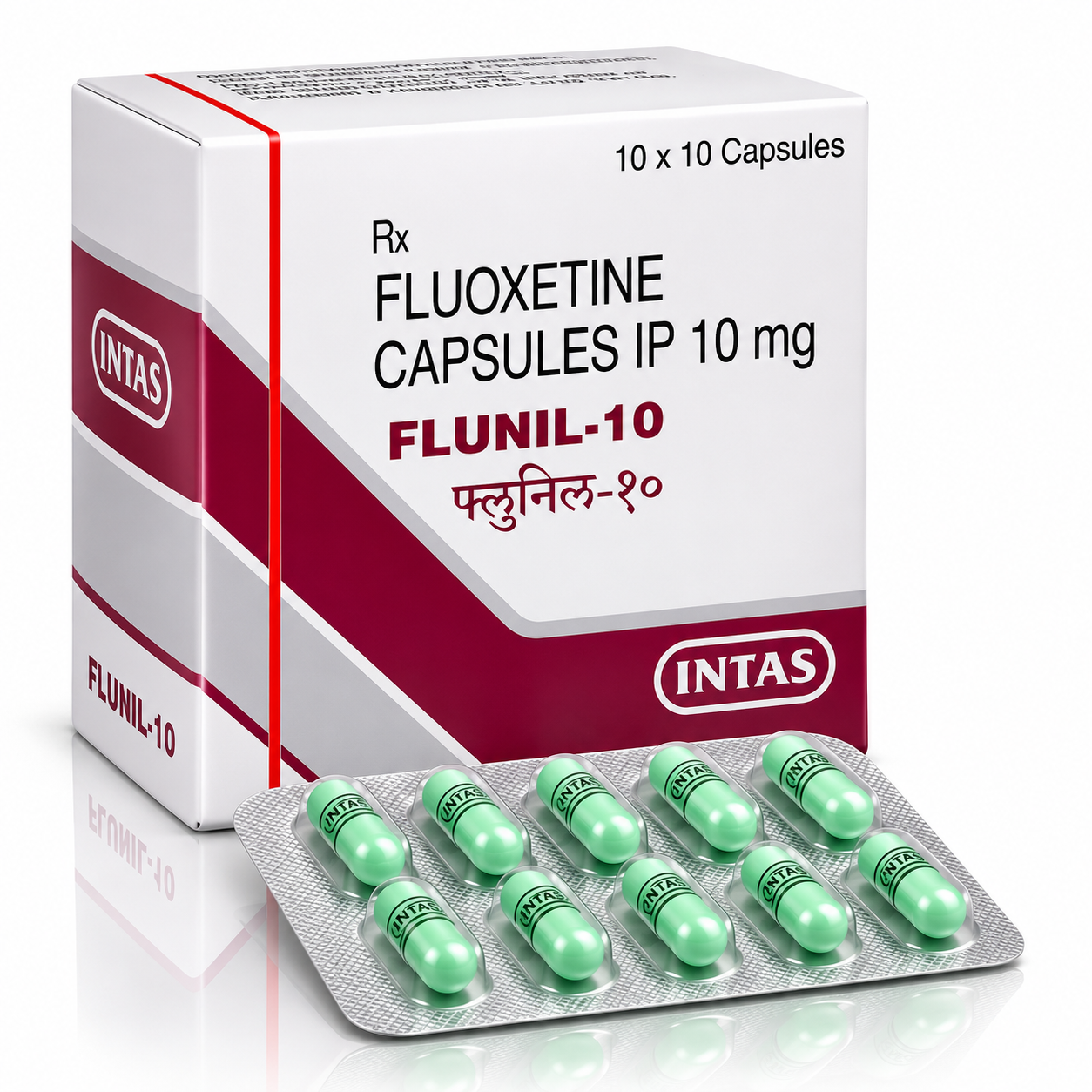
Flunil 10 MG Capsule
$0.17 / unit
Available Options
| Pack Size | Price | Price / Unit | Quantity | Action |
|---|---|---|---|---|
| 180 Capsule | $24.00 | $0.13/unit | ||
| 150 Capsule | $20.00 | $0.13/unit | ||
| 120 Capsule | $17.00 | $0.14/unit | ||
| 90 Capsule | $13.00 | $0.14/unit | ||
| 60 Capsule | $9.00 | $0.15/unit | ||
| 30 Capsule | $5.00 | $0.17/unit |
Product Description
FLUNIL 10 MG CAPSULE
Brand Name: Flunil 10 MG Capsule
Generic Name: Fluoxetine Hydrochloride
Strength: Equivalent to Fluoxetine 10 mg
Dosage Form: Oral Capsule
Therapeutic Class: Selective Serotonin Reuptake Inhibitor (SSRI) / Antidepressant
Manufacturer / Marketer: Intas Pharmaceuticals Ltd.
Pack Size: 1 × 10 Capsules
Prescription Status: Prescription Medicine
What is this medicine?
FLUNIL 10 MG CAPSULE contains Fluoxetine 10 mg, a prescription antidepressant used to manage selected mental health conditions.
Fluoxetine belongs to a group of medicines called selective serotonin reuptake inhibitors (SSRIs).
It works by increasing the availability of serotonin, a neurotransmitter involved in regulating mood, emotional responses and certain behavioural functions.
Flunil may be prescribed for depression, obsessive-compulsive disorder, panic disorder and bulimia nervosa.
People experiencing these conditions may have symptoms such as:
Persistent sadness
Loss of interest in daily activities
Low motivation
Excessive worry
Recurrent unwanted thoughts
Repetitive compulsive behaviours
Panic attacks
Changes in sleep
Changes in appetite
Difficulty concentrating
Emotional distress
Feelings of hopelessness
Flunil may help reduce these symptoms when used as part of an appropriate treatment plan.
How Does Flunil Work?
Fluoxetine selectively inhibits the reuptake of serotonin into nerve cells.
Normally, serotonin is released between nerve cells and subsequently taken back up by the releasing cell.
Fluoxetine blocks the serotonin transporter, allowing serotonin to remain available for longer.
Over time, this may help:
Improve symptoms of depression
Reduce obsessive thoughts
Reduce compulsive behaviours
Decrease the frequency of panic attacks
Improve emotional regulation
Reduce binge-eating and purging behaviours in patients with bulimia nervosa
Fluoxetine does not provide immediate symptom relief.
Its therapeutic effects generally develop over several weeks.
Common Uses
Flunil 10 MG Capsule may be prescribed for:
Major depressive disorder
Obsessive-compulsive disorder (OCD)
Panic disorder, with or without agoraphobia
Bulimia nervosa, as part of an appropriate higher-dose regimen
Additional Clinical Uses
Under specialist supervision, fluoxetine may also be used for:
Premenstrual dysphoric disorder (PMDD)
Selected anxiety-related conditions
Certain cases of premature ejaculation as an off-label treatment
Selected other psychiatric conditions where an SSRI is appropriate
Fluoxetine may also be combined with olanzapine for certain cases of bipolar I depression or treatment-resistant depression.
However, fluoxetine alone is not an approved treatment for bipolar I depressive episodes.
Important Treatment Consideration
Flunil may be used alongside:
Psychological therapy
Cognitive behavioural therapy
Exposure and response prevention for OCD
Psychiatric follow-up
Sleep and lifestyle interventions
Other prescribed treatments
NOTE: Flunil 10 MG Capsule is not an immediate-acting sedative or sleeping tablet.
It should not be used for occasional everyday stress without a medical diagnosis.
What should I tell my healthcare provider before I take this medicine?
Inform your healthcare provider if you have:
Allergy to fluoxetine
Previous serious reactions to SSRIs
Bipolar disorder
A history of mania or hypomania
Suicidal thoughts
Previous self-harm
Severe depression
Seizures or epilepsy
Liver disease
Kidney disease
Heart rhythm disorders
Prolonged QT interval
Low sodium levels
Glaucoma
Diabetes
Bleeding disorders
Previous gastrointestinal bleeding
A history of significant drug allergies
Pregnancy or plans to become pregnant
Breastfeeding
Use of other antidepressants
Use of migraine medicines
Use of tramadol
Use of blood-thinning medicines
Use of nonsteroidal anti-inflammatory medicines
Use of linezolid or methylene blue
Use of herbal preparations such as St. John's wort
Tell your healthcare provider about all prescription medicines, over-the-counter medicines, vitamins, supplements and herbal products you currently take.
Important Contraindications
Flunil should not be used in patients with:
Known serious hypersensitivity to fluoxetine
Concurrent monoamine oxidase inhibitor treatment
Certain recent MAOI treatments without the required washout interval
Concurrent pimozide treatment
Concurrent thioridazine treatment
Important MAOI Warning
Combining fluoxetine with monoamine oxidase inhibitors can cause life-threatening serotonin syndrome.
Generally:
After stopping an MAOI: Wait at least 14 days before beginning fluoxetine.
After stopping fluoxetine: Wait at least five weeks before beginning an MAOI used for psychiatric disorders.
Longer intervals may be necessary in some patients.
Important: Do not switch antidepressants without instructions from the prescribing healthcare professional.
Important Suicidal Thoughts Warning
Antidepressants may increase suicidal thoughts and behaviours in children, adolescents and young adults, particularly during early treatment or after dosage changes.
Warning signs include:
Worsening depression
New suicidal thoughts
Severe agitation
Increased anxiety
Unusual irritability
Impulsive behaviour
Severe restlessness
Aggressive behaviour
Significant behavioural changes
Important: Seek immediate emergency assistance if someone develops suicidal intent or is at risk of acting on suicidal thoughts.
Important Bipolar Disorder Warning
Fluoxetine may trigger mania or hypomania in susceptible patients.
Symptoms can include:
Unusually elevated mood
Excessive energy
Reduced need for sleep
Racing thoughts
Rapid speech
Impulsive decisions
Risk-taking behaviour
Unusual irritability
Patients should be evaluated for bipolar disorder before starting antidepressant treatment.
Important Serotonin Syndrome Warning
Fluoxetine may cause serotonin syndrome, especially when combined with other medicines that increase serotonin activity.
Symptoms include:
Agitation
Confusion
Fever
Excessive sweating
Tremors
Muscle stiffness
Muscle twitching
Rapid heartbeat
Diarrhoea
Changes in blood pressure
Important: Serotonin syndrome can be life-threatening and requires emergency medical assessment.
How should I use this medicine?
Take Flunil 10 MG Capsule exactly as prescribed by your healthcare provider.
Swallow the capsule with water.
Take it with or without food.
Follow the prescribed dose and frequency.
Take it at approximately the same time each day.
Morning administration is commonly recommended.
Do not increase the dose independently.
Do not stop treatment without medical advice.
Avoid sharing the medicine.
Inform your doctor about other medicines.
Attend scheduled follow-up appointments.
Report significant mood changes.
Avoid alcohol or discuss alcohol use with your clinician.
Do not drive if dizziness or impaired concentration occurs.
Continue treatment for the duration recommended by your prescriber.
Usual Adult Dosage
Flunil Strength: Each capsule contains Fluoxetine 10 mg.
Administration: Oral.
Food: May be taken with or without food.
Dosing Frequency: Commonly once daily, depending on the indication.
Major Depressive Disorder
A standard reference adult starting regimen is:
Fluoxetine 20 mg once daily in the morning.
A healthcare provider may choose a lower initial dose, such as 10 mg daily, in selected patients who require cautious initiation.
The dose may be adjusted after assessing tolerability and clinical response.
Reference Maximum Adult Dose: Generally 80 mg daily.
Important: One Flunil 10 mg capsule is below the usual adult starting dose for major depressive disorder, although a lower dose may be clinically appropriate in selected circumstances.
Obsessive-Compulsive Disorder (OCD)
A standard reference adult starting dose is:
Fluoxetine 20 mg once daily.
The dosage may be increased gradually according to response and tolerability.
Reference prescribing information describes treatment ranges commonly extending from 20 mg to 60 mg daily.
Some patients may receive up to 80 mg daily under medical supervision.
Panic Disorder
A common reference starting regimen is:
First Week: Fluoxetine 10 mg once daily.
After Approximately One Week: Increase to 20 mg once daily if clinically appropriate.
Some patients require further adjustments.
Important: Flunil 10 mg is particularly relevant as a starting strength for panic disorder.
Bulimia Nervosa
The established reference adult treatment dose is:
Fluoxetine 60 mg once daily in the morning.
Some patients may require gradual titration.
Important: Flunil 10 mg alone does not provide the standard 60 mg daily target dose used for bulimia nervosa.
Pediatric Patients
Fluoxetine has established reference prescribing guidance for selected pediatric patients with depression or OCD.
For major depressive disorder, reference initial doses may range from 10 mg to 20 mg daily, depending on patient circumstances.
For OCD, lower initial doses may be appropriate in selected children.
Important: Pediatric antidepressant treatment requires specialist supervision and close monitoring for suicidal thoughts and behavioural changes.
Special Patient Populations
Older Adults: Lower or less frequent dosing may be appropriate.
Liver Impairment: Reduced or less frequent dosing may be necessary because fluoxetine is metabolized by the liver.
Kidney Impairment: Treatment should be individualized according to medical circumstances.
Pregnancy: The clinician should assess maternal benefits and potential fetal risks.
Breastfeeding: Fluoxetine and its active metabolite pass into breast milk.
Overdosage: Seek emergency medical assistance after suspected overdose.
Important Dosage Considerations
The appropriate dosage depends on:
Diagnosis
Symptom severity
Age
Liver function
Other medical conditions
Current medicines
Previous antidepressant treatment
Treatment response
Side effects
NOTE: Flunil 10 mg may be used when a lower dose is needed, but it should not be increased or replaced with another strength without medical advice.
How Long Does Flunil Take to Work?
Some patients notice early improvements in sleep, appetite or anxiety symptoms within the first few weeks.
However, significant improvement in depression may take approximately four to six weeks or longer.
OCD may require a longer period before the full therapeutic benefit becomes apparent.
Important: Do not assume the medicine is ineffective after only a few days.
What if I miss a dose?
If you miss a dose:
Take it when remembered unless the next scheduled dose is approaching.
If the next dose is nearly due, skip the missed dose.
Continue with your regular prescribed schedule.
Do not take two capsules together.
Do not double the next dose.
Fluoxetine has a relatively long half-life.
Missing one dose may not immediately cause noticeable symptoms, but repeated missed doses can interfere with treatment.
Important: Contact your healthcare provider if several doses are missed or symptoms worsen.
What may interact with this medicine?
Fluoxetine can interact with medicines affecting serotonin, bleeding risk, heart rhythm and liver drug metabolism.
Potential interactions include:
Monoamine oxidase inhibitors
Other SSRIs
Serotonin-norepinephrine reuptake inhibitors
Tricyclic antidepressants
Tramadol
Linezolid
Methylene blue
Triptan migraine medicines
Lithium
St. John's wort
Dextromethorphan
Certain opioid medicines
Warfarin
Aspirin
Ibuprofen
Naproxen
Other NSAIDs
Pimozide
Thioridazine
Certain antiarrhythmic medicines
Certain antipsychotic medicines
Phenytoin
Certain benzodiazepines
Tamoxifen
Important Drug Interaction Considerations
MAO Inhibitors: Can cause life-threatening serotonin syndrome. Appropriate washout intervals are essential.
Other SSRIs and SNRIs: May increase serotonin syndrome risk when combined without appropriate specialist supervision.
Tramadol: May increase serotonin syndrome and seizure risk.
Linezolid and Methylene Blue: May cause dangerous serotonin-related reactions.
Triptans: May increase serotonin syndrome risk.
Lithium: Requires medical monitoring because serotonin-related reactions and lithium toxicity can occur.
Warfarin: May increase bleeding risk.
Aspirin and NSAIDs: May increase gastrointestinal and other bleeding risks.
Pimozide: Concurrent use is contraindicated.
Thioridazine: Concurrent use is contraindicated. A waiting period is required after stopping fluoxetine.
Tricyclic Antidepressants: Fluoxetine can increase blood concentrations of certain tricyclic antidepressants.
Tamoxifen: Fluoxetine strongly inhibits CYP2D6 and may reduce conversion of tamoxifen into its active metabolite, endoxifen.
Dextromethorphan: May increase serotonin-related adverse effects.
St. John's Wort: May increase serotonin syndrome risk.
Important CYP2D6 Interaction
Fluoxetine strongly inhibits the liver enzyme CYP2D6.
This can change the blood concentrations or effectiveness of several medicines.
Because fluoxetine and norfluoxetine remain in the body for a prolonged period, interactions may continue for weeks after treatment stops.
Important: Ask your healthcare provider or pharmacist to review your full medication list before taking Flunil.
What should I watch for while using this medicine?
Seek urgent medical attention if you experience:
Suicidal thoughts or behaviours
Severe worsening of depression
Serotonin syndrome symptoms
Seizures
Severe allergic reactions
Unusual bleeding
Severe confusion
Significant agitation
Mania or hypomania
Fainting
Severe irregular heartbeat
Severe low sodium symptoms
While taking Flunil:
Monitor changes in mood.
Observe for worsening anxiety or agitation.
Follow the prescribed schedule.
Attend medical reviews.
Report suicidal thoughts immediately.
Report unusual bleeding.
Monitor for serotonin syndrome.
Avoid abrupt discontinuation.
Inform your doctor about new medicines.
Discuss troublesome sexual side effects.
Monitor sleep changes.
Monitor appetite and weight when advised.
Important Monitoring
Mood and Depression Symptoms: Helps determine treatment response.
Suicidal Thoughts and Behaviour: Particularly important during treatment initiation and dosage changes.
Anxiety and Panic Symptoms: Helps assess response or early worsening.
Sleep Patterns: Fluoxetine may cause insomnia or drowsiness.
Body Weight and Appetite: Changes may occur during treatment.
Serum Sodium: May be checked in older adults or patients at risk of hyponatraemia.
Blood Glucose: May require monitoring in patients with diabetes.
ECG: May be considered in patients with significant heart rhythm risk factors.
Signs of Mania: Should be monitored in patients with bipolar risk factors.
Routine laboratory testing is not required for every patient, but clinical follow-up is important.
Important Hyponatraemia Warning
SSRIs, including fluoxetine, may cause low blood sodium.
Symptoms may include:
Headache
Confusion
Weakness
Difficulty concentrating
Unsteadiness
Severe dizziness
Seizures in serious cases
Older adults and people taking diuretics may be at increased risk.
Important Bleeding Warning
Fluoxetine can increase bleeding risk, especially when combined with anticoagulants, aspirin or NSAIDs.
Warning signs include:
Unusual bruising
Frequent nosebleeds
Bleeding gums
Black stools
Vomiting blood
Unusually heavy bleeding
Seek prompt medical attention for significant bleeding.
Important Discontinuation Warning
Stopping fluoxetine suddenly may cause discontinuation symptoms.
Possible symptoms include:
Dizziness
Anxiety
Irritability
Sleep disturbances
Headache
Nausea
Unusual sensory sensations
Fluoxetine has a longer half-life than many other SSRIs, so discontinuation symptoms may be less frequent or delayed.
Important: Discuss dose reduction or discontinuation with the prescribing clinician.
What side effects may I notice from this medicine?
Side effects that should be reported immediately:
Suicidal thoughts or behaviours
Serotonin syndrome
Severe allergic reactions
Seizures
Severe mood or behavioural changes
Mania
Serious heart rhythm abnormalities
Severe bleeding
Severe hyponatraemia
Significant confusion
Other serious unexpected reactions
Side effects that usually do not require immediate medical attention:
Nausea
Headache
Insomnia
Nervousness
Anxiety
Diarrhoea
Dry mouth
Sweating
Tremor
Reduced appetite
Fatigue
Drowsiness
Dizziness
Sexual dysfunction
Not everyone experiences these adverse effects.
Some mild reactions improve after the body adjusts to treatment.
Persistent or troublesome symptoms should be discussed with a healthcare professional.
Important Gastrointestinal Side Effects
Fluoxetine may cause:
Nausea
Diarrhoea
Stomach discomfort
Reduced appetite
Indigestion
Taking the capsule with food may help improve tolerance.
Important Sleep-Related Side Effects
Fluoxetine may cause:
Insomnia
Restlessness
Vivid dreams
Disturbed sleep
Drowsiness in some patients
Morning administration may help patients experiencing insomnia.
Important Sexual Side Effects
SSRIs, including fluoxetine, may cause:
Reduced sexual desire
Difficulty achieving orgasm
Delayed ejaculation
Erectile difficulties
Reduced sexual satisfaction
Some patients may experience sexual dysfunction that persists after stopping an SSRI.
Important: Discuss sexual side effects with your healthcare provider rather than discontinuing treatment independently.
Important Weight Changes
Fluoxetine may affect appetite and body weight.
Some patients experience reduced appetite or weight loss during early treatment.
Long-term changes vary between individuals.
Important Pregnancy and Breastfeeding Considerations
Pregnancy: The benefits of treating depression and other psychiatric conditions should be weighed against possible medication-related risks. Exposure late in pregnancy may be associated with neonatal adaptation symptoms and other complications.
Breastfeeding: Fluoxetine and norfluoxetine can enter breast milk. Some infants may experience irritability, feeding difficulties or poor weight gain.
Important: Patients who are pregnant, planning pregnancy or breastfeeding should not independently stop prescribed psychiatric treatment.
Where should I keep my medicine?
Store according to the current Flunil packaging.
Keep in a cool, dry place.
Protect from excessive heat.
Protect from moisture.
Protect from direct sunlight.
Keep the capsules in their original blister packaging.
Keep out of the reach of children.
Keep away from pets.
Do not use after the expiry date.
Do not use capsules from damaged packaging.
Do not transfer capsules into unlabelled containers.
Dispose of expired or unused medicines according to pharmacist instructions.
Storage Note: Indian distributor listings commonly recommend storage below 30°C. Follow the exact temperature instructions on the supplied Flunil 10 mg strip or carton.
Manufacturer Details
Field | Information |
|---|---|
Brand Name | Flunil 10 MG Capsule |
Generic Name | Fluoxetine Hydrochloride |
Strength | Equivalent to Fluoxetine 10 mg |
Dosage Form | Oral Capsule |
Therapeutic Class | Selective Serotonin Reuptake Inhibitor (SSRI) |
Primary Indications | Major Depressive Disorder, OCD, Panic Disorder and Bulimia Nervosa |
Mechanism of Action | Selective Inhibition of Serotonin Reuptake |
Manufacturer / Marketer | Intas Pharmaceuticals Ltd. |
Actual Manufacturing Facility | Verify from Current Product Packaging |
Prescription Status | Prescription Medicine |
Route of Administration | Oral |
Storage | Follow Current Product Label |
Retail Pack Size | 1 × 10 Capsules |
Country of Origin | India |