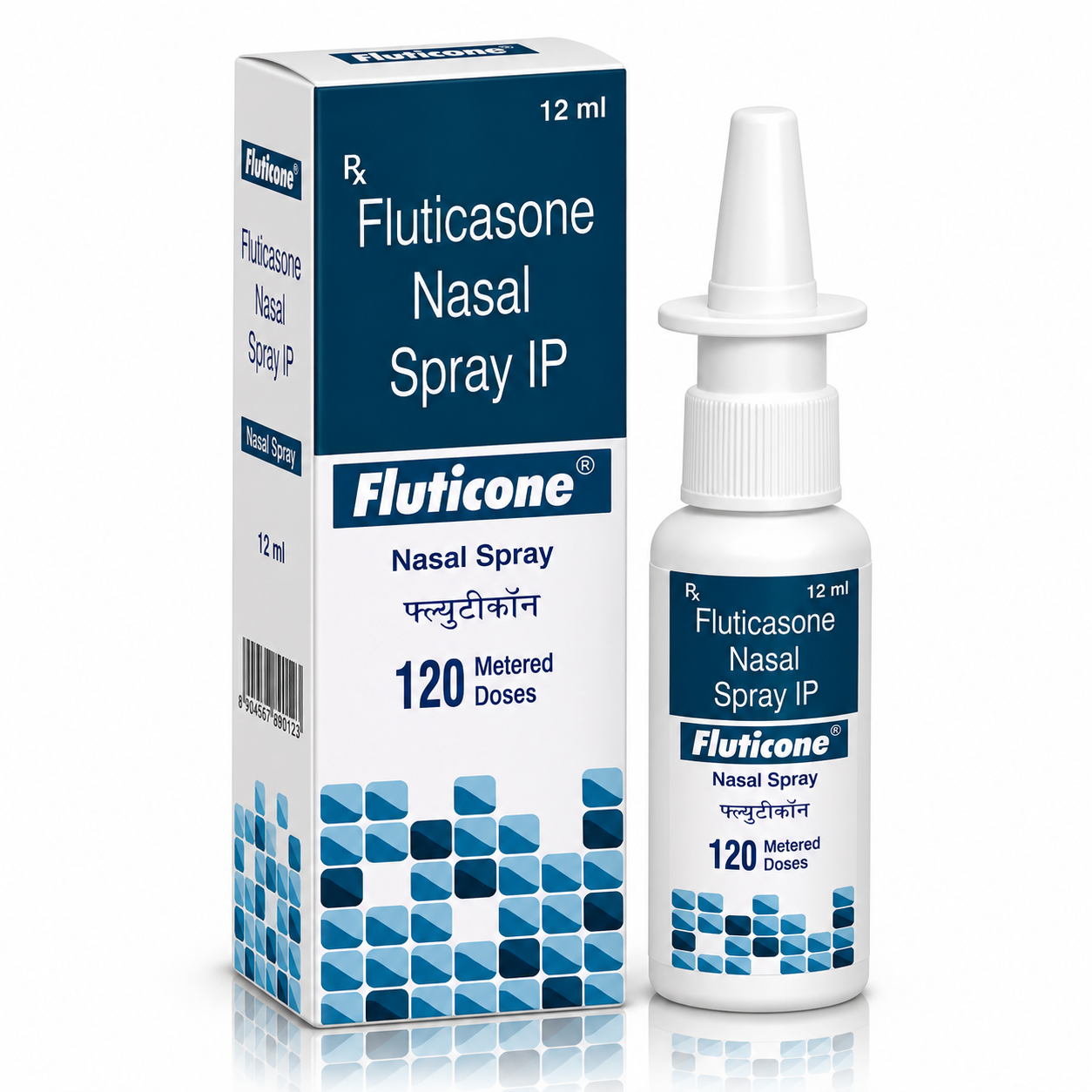
Fluticone Nasal Spray 12 ML
$16.00 / unit
Available Options
| Pack Size | Price | Price / Unit | Quantity | Action |
|---|---|---|---|---|
| 10 Spray | $119.00 | $11.90/unit | ||
| 8 Spray | $95.00 | $11.88/unit | ||
| 6 Spray | $72.00 | $12.00/unit | ||
| 4 Spray | $50.00 | $12.50/unit | ||
| 2 Spray | $28.00 | $14.00/unit | ||
| 1 Spray | $16.00 | $16.00/unit |
Product Description
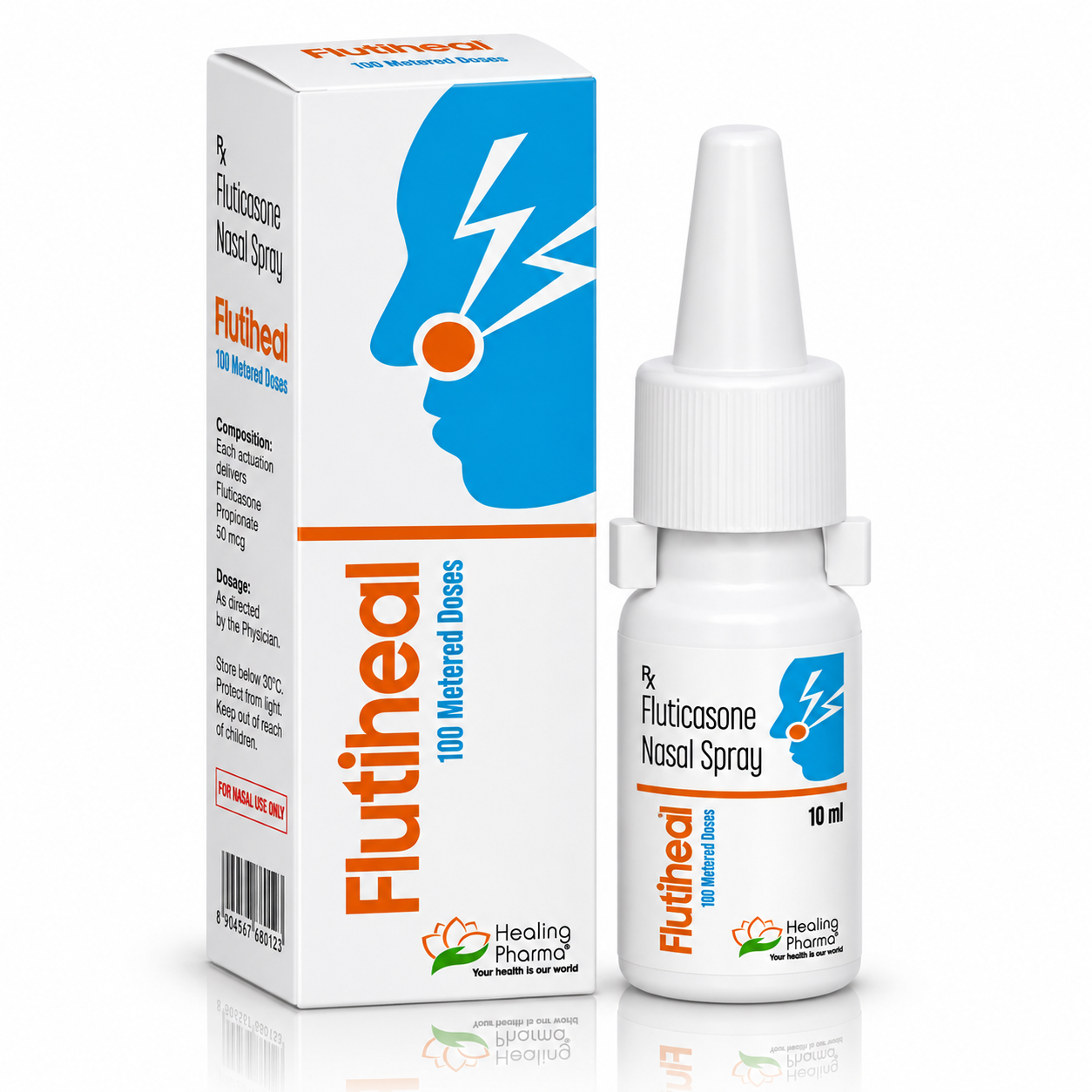
FLUTICONE NASAL SPRAY 12 ML
Brand Name: Fluticone Nasal Spray
Generic Name: Fluticasone Propionate
Strength: 0.05% w/v (50 mcg per Metered Spray)
Dosage Form: Metered-Dose Nasal Spray
Therapeutic Class: Intranasal Corticosteroid / Anti-inflammatory and Anti-allergic Medicine
Manufacturer / Marketer: Zydus Healthcare Ltd. (German Remedies Division)
Pack Size: 1 × 12 ml Bottle
Metered Doses: Approximately 120 Sprays
Prescription Status: Prescription Medicine in the Referenced Indian Listings
What is this medicine?
FLUTICONE NASAL SPRAY 12 ML contains Fluticasone Propionate, a synthetic corticosteroid used to manage inflammation inside the nasal passages.
It belongs to a class of medicines called intranasal corticosteroids.
Fluticone is commonly prescribed to treat symptoms of allergic rhinitis, a condition caused by an immune response to substances such as pollen, dust mites, mould spores and animal dander.
Allergic rhinitis can cause symptoms including:
Frequent sneezing
Runny nose
Blocked nose
Nasal congestion
Itching inside the nose
Nasal irritation
Postnasal drip
Discomfort associated with nasal inflammation
Fluticone helps control these symptoms by reducing inflammation in the lining of the nose.
How Does Fluticone Work?
Fluticasone propionate binds to glucocorticoid receptors in cells involved in inflammation.
It reduces the activity of inflammatory pathways and substances responsible for allergic responses.
This helps:
Reduce swelling inside the nose
Relieve nasal congestion
Decrease sneezing
Reduce excessive nasal secretions
Relieve nasal itching
Control nasal inflammation
Reduce the frequency and severity of allergy symptoms
Because the medicine acts locally inside the nose, systemic exposure is generally low when it is used correctly at recommended doses.
Common Uses
Fluticone Nasal Spray may be prescribed for:
Seasonal allergic rhinitis
Perennial allergic rhinitis
Hay fever symptoms
Dust mite allergies affecting the nose
Pollen-related nasal allergies
Pet dander-related nasal allergies
Mould-related nasal allergies
Nasal congestion associated with allergic inflammation
Selected cases of nonallergic rhinitis under medical supervision
Seasonal Allergic Rhinitis
Seasonal allergic rhinitis commonly occurs when pollen levels increase.
Symptoms may include:
Sneezing
Runny nose
Itchy nose
Nasal congestion
Regular use of an intranasal corticosteroid can help reduce these symptoms.
Perennial Allergic Rhinitis
Perennial allergic rhinitis may occur throughout the year due to triggers such as:
House dust mites
Animal dander
Indoor mould
Certain environmental allergens
Fluticone helps reduce inflammation caused by these triggers.
Important Treatment Consideration
Fluticone controls nasal inflammation but does not permanently eliminate allergies.
Additional measures may include:
Reducing allergen exposure
Appropriate cleaning of bedding
Limiting exposure to known triggers
Using saline nasal rinses when suitable
Following an individualized allergy management plan
NOTE: Fluticone contains fluticasone propionate alone.
It is not an antibiotic, antifungal or fast-acting nasal decongestant.
It should not be used as the sole treatment for an untreated nasal infection.
What should I tell my healthcare provider before I use this medicine?
Inform your healthcare provider if you have:
Allergy to fluticasone propionate
Allergy to another component of the spray
Previous reactions to corticosteroids
Recurrent nosebleeds
Nasal ulcers
Recent nasal surgery
Recent nasal injury
Nasal infections
Untreated fungal infections
Untreated bacterial infections
Tuberculosis
Certain viral infections
Glaucoma
Cataracts
Blurred vision
Significant immune system disorders
Liver disease
Previous adrenal gland problems
Long-term corticosteroid treatment
Pregnancy or plans to become pregnant
Breastfeeding
Use of HIV medicines containing ritonavir or cobicistat
Use of certain antifungal medicines
Use of other steroid-containing nasal sprays
Use of oral or inhaled corticosteroids
Tell your healthcare provider about all prescription medicines, over-the-counter medicines and nasal products you currently use.
Important Contraindications
Fluticone should not be used in patients with:
Known serious hypersensitivity to fluticasone propionate
Serious allergy to another ingredient in the formulation
Patients with recent nasal surgery, trauma or ulcers should seek medical advice before using an intranasal corticosteroid because it may interfere with wound healing.
Important Nasal Infection Warning
Intranasal corticosteroids reduce local inflammatory activity.
They may contribute to worsening of certain untreated infections.
Patients with fungal, bacterial or viral infections involving the nasal passages may require appropriate treatment before or alongside corticosteroid therapy.
Important: Fluticone is not an antibiotic or antifungal nasal spray.
Important Eye Safety Warning
Long-term intranasal corticosteroid treatment may be associated with:
Increased intraocular pressure
Glaucoma
Cataracts
Visual disturbances
Patients with existing eye conditions or new visual symptoms should seek medical review.
Important Nasal Septum Warning
Incorrect spraying technique may repeatedly expose the nasal septum, the structure separating the nostrils, to corticosteroids.
This can increase local irritation and may contribute to:
Nosebleeds
Nasal ulceration
Nasal discomfort
Rarely, nasal septal perforation
Important: Direct the spray slightly outward, away from the nasal septum.
How should I use this medicine?
Use Fluticone Nasal Spray exactly as prescribed by your healthcare provider.
Read the product instructions before first use.
Shake the bottle gently before use.
Blow your nose gently.
Keep your head upright or slightly tilted forward.
Insert the spray nozzle into one nostril.
Close the other nostril.
Point the nozzle away from the nasal septum.
Press the pump while breathing in gently.
Breathe out through the mouth.
Repeat according to the prescribed dose.
Use the spray in the other nostril as directed.
Wipe the nozzle after use.
Replace the protective cap.
Do not share the bottle with another person.
How to Use Fluticone Nasal Spray
Step 1: Prepare the Bottle
Shake the bottle gently.
Remove the protective cap.
Step 2: Prime the Spray
If using the bottle for the first time, prime the pump according to the manufacturer's instructions.
Reference fluticasone propionate nasal spray instructions recommend releasing six sprays into the air before first use or after a week or more without use.
Important: Follow the priming instructions supplied with the actual Fluticone bottle.
Step 3: Clear the Nose
Blow your nose gently to remove excess mucus.
Step 4: Position Your Head
Keep your head upright or tilted slightly forward.
Avoid tilting your head far backward.
Step 5: Insert the Nozzle
Place the nozzle gently inside one nostril.
Close the opposite nostril.
Step 6: Aim Outward
Direct the nozzle toward the outer wall of the nostril.
Avoid spraying directly toward the centre of the nose.
Step 7: Spray and Breathe Gently
Press the pump while breathing in gently through the nose.
Do not sniff forcefully.
Step 8: Repeat if Prescribed
Repeat the process according to the recommended number of sprays.
Step 9: Clean the Nozzle
Wipe the nozzle with a clean tissue.
Replace the protective cap.
Step 10: Wash Your Hands
Wash your hands after handling the spray when appropriate.
Usual Adult Dosage
Fluticone Strength: Fluticasone Propionate 50 mcg per metered spray.
Route: Intranasal.
Dosing Frequency: Usually once daily.
A standard reference adult regimen is:
Starting Dose: Two sprays into each nostril once daily.
Total Daily Dose: 200 mcg of fluticasone propionate.
After symptoms are controlled, some patients may be able to reduce the dose to:
Maintenance Dose: One spray into each nostril once daily.
Total Maintenance Dose: 100 mcg daily.
Reference Maximum Adult Dose: 200 mcg daily.
Do not exceed the prescribed dose.
Children Aged 4 Years and Older
Reference fluticasone propionate prescribing information describes:
Starting Dose: One spray into each nostril once daily.
Total Daily Dose: 100 mcg.
The clinician may adjust the regimen according to age, symptoms and response.
Children require monitoring for possible effects on growth during prolonged corticosteroid treatment.
Important: The age suitability and dosage of the actual Indian Fluticone product must be confirmed against its approved labeling.
Children Under 4 Years
Use is not recommended without specialist guidance.
Reference formulations are generally not indicated for children younger than four years.
Older Adults
Older adults may generally use intranasal fluticasone according to the prescribed schedule.
However, additional medical review may be appropriate in patients with:
Recurrent nosebleeds
Nasal disorders
Cataracts
Glaucoma
Significant drug interactions
Special Patient Populations
Liver Disease: Use cautiously, particularly when significant systemic exposure is possible.
Kidney Disease: Routine dose adjustment is not generally required, but individual assessment may be necessary.
Pregnancy: Use only after medical assessment of benefits and potential risks.
Breastfeeding: Systemic exposure is usually low with appropriate intranasal use, but individual medical advice is recommended.
Patients Using Other Corticosteroids: Total corticosteroid exposure should be considered.
Important Dosage Considerations
The correct regimen depends on:
Patient age
Severity of nasal symptoms
Duration of symptoms
Allergy triggers
Previous treatment response
Other medicines
Presence of nasal infections
Risk of corticosteroid adverse effects
NOTE: Fluticone is intended for regular allergy control.
Using more sprays than prescribed will not necessarily provide faster relief and may increase adverse effects.
How Long Does Fluticone Take to Work?
Some patients may begin noticing symptom improvement during the first day of treatment.
However, maximum benefit may take several days.
Regular use is usually necessary to maintain symptom control.
Important: Fluticone is not intended to provide the immediate decongestant effect associated with medicines such as oxymetazoline.
What if I miss a dose?
If you miss a scheduled dose:
Use the spray when remembered unless the next dose is approaching.
If the next dose is nearly due, skip the missed dose.
Continue with the usual schedule.
Do not double the number of sprays.
Do not exceed the prescribed daily amount.
Important: Frequent missed doses may reduce allergy symptom control.
What may interact with this medicine?
Fluticasone propionate is metabolized mainly by the CYP3A4 enzyme pathway.
Certain medicines inhibit CYP3A4 and may increase systemic fluticasone exposure.
Potential interactions include:
Ritonavir
Cobicistat-containing medicines
Ketoconazole
Itraconazole
Voriconazole
Clarithromycin
Certain other strong CYP3A4 inhibitors
Other corticosteroid medicines
Important Drug Interaction Considerations
Ritonavir: May greatly increase fluticasone exposure, causing systemic corticosteroid effects, including adrenal suppression and Cushing's syndrome.
Cobicistat: May increase systemic corticosteroid exposure. Alternative treatment may be necessary.
Ketoconazole: Can increase fluticasone exposure and potentially increase corticosteroid adverse effects.
Itraconazole: May increase systemic steroid exposure.
Voriconazole: May increase corticosteroid exposure because of CYP3A4 inhibition.
Clarithromycin: Can inhibit CYP3A4 and may increase systemic exposure.
Other Corticosteroids: Combined use may increase overall corticosteroid exposure.
Important Systemic Corticosteroid Interaction Warning
Although nasal administration usually results in low systemic exposure, strong CYP3A4 inhibitors can substantially increase the amount of fluticasone in the bloodstream.
Possible consequences include:
Adrenal suppression
Cushingoid features
Increased blood glucose
Other systemic corticosteroid effects
Important: Patients taking ritonavir, cobicistat or other strong CYP3A4 inhibitors should seek professional advice before using Fluticone.
What should I watch for while using this medicine?
Seek medical assessment if you experience:
Frequent nosebleeds
Severe nasal irritation
Persistent nasal pain
Nasal ulcers
Worsening nasal infection
Visual disturbances
Significant facial swelling
Severe allergic reactions
Difficulty breathing
Persistent fever
Severe facial pain
Symptoms suggesting systemic corticosteroid effects
While using Fluticone:
Monitor changes in allergy symptoms.
Follow the prescribed treatment schedule.
Use correct spraying technique.
Avoid directing the spray toward the nasal septum.
Report recurrent nosebleeds.
Report persistent irritation.
Avoid using the spray on recently operated nasal tissue without medical clearance.
Attend follow-up visits if symptoms persist.
Inform your doctor about other corticosteroid medicines.
Keep the spray nozzle clean.
Important Monitoring
Allergic Rhinitis Symptoms: Helps assess control of sneezing, congestion and nasal discharge.
Nasal Mucosa: Periodic assessment may be recommended during prolonged treatment.
Nosebleeds: Repeated bleeding may indicate irritation or other nasal complications.
Eye Health: May require assessment in patients with glaucoma, cataracts or visual symptoms.
Growth in Children: Should be monitored during prolonged intranasal corticosteroid treatment.
Adrenal Function: Rarely, evaluation may be necessary when significant systemic corticosteroid exposure is suspected.
Routine blood testing is generally not necessary for every patient using recommended intranasal doses.
Important Nasal Septal Perforation Warning
Rarely, intranasal corticosteroids may contribute to damage involving the nasal septum.
Warning symptoms may include:
Persistent crusting
Recurrent bleeding
Nasal discomfort
A whistling sound during breathing
Seek medical assessment if these symptoms develop.
Important Adrenal Suppression Warning
Excessive or prolonged corticosteroid exposure may suppress normal adrenal hormone production.
The risk increases with:
Higher-than-prescribed doses
Strong CYP3A4 inhibitors
Use of other corticosteroids
Certain underlying medical conditions
Important: Use the lowest effective prescribed dose.
Important Infection Warning
Patients with untreated infections, tuberculosis or conditions causing impaired immunity may require additional medical assessment.
Corticosteroids may worsen certain infections.
Important Pediatric Growth Warning
Intranasal corticosteroids may reduce growth velocity in some children.
Children receiving prolonged treatment should use the lowest effective dose and have their growth monitored.
What side effects may I notice from this medicine?
Side effects that should be reported promptly:
Severe allergic reactions
Significant swelling of the face or throat
Severe or frequent nosebleeds
Persistent nasal ulceration
Signs of nasal septal perforation
Significant visual disturbances
Serious nasal infections
Symptoms of adrenal suppression
Other severe unexpected reactions
Side effects that usually do not require immediate medical attention:
Mild nasal irritation
Temporary burning
Nasal dryness
Sneezing after application
Headache
Mild nosebleeds
Sore throat
Unpleasant taste
Changes in smell or taste
Mild cough
Not every patient experiences these adverse effects.
Some local reactions improve with correct spraying technique.
Persistent or worsening symptoms should be assessed by a healthcare professional.
Important Nosebleed Warning
Nosebleeds are among the recognized side effects of intranasal fluticasone.
Risk may increase when:
The nozzle is directed at the nasal septum
The nasal passages are very dry
Nasal tissue is irritated
Excessive doses are used
Correct application technique may reduce irritation.
Important Nasal Irritation Warning
Fluticone may cause:
Burning
Stinging
Dryness
Sneezing
Nasal discomfort
Contact your healthcare provider if irritation is severe or persistent.
Important Eye Safety Consideration
Long-term use may require additional assessment in patients with glaucoma, cataracts or new visual symptoms.
Important Systemic Corticosteroid Consideration
Systemic corticosteroid reactions are uncommon with appropriate intranasal administration.
However, they may occur when exposure increases substantially.
Potential effects include:
Adrenal suppression
Cushingoid features
Increased blood glucose
Other hormonal effects
Important Pregnancy and Breastfeeding Considerations
Pregnancy: Intranasal fluticasone may be considered when clinically necessary after assessment of benefits and risks. Use the lowest effective dose recommended by the clinician.
Breastfeeding: Systemic absorption from nasal treatment is generally low. A healthcare professional should assess individual treatment circumstances.
Important: Patients who are pregnant, planning pregnancy or breastfeeding should consult their healthcare provider before beginning or changing treatment.
Where should I keep my medicine?
Store according to the instructions printed on the current bottle or carton.
Indian retail listings commonly recommend storage below 30°C.
Keep in a cool, dry place.
Protect from excessive heat.
Protect from direct sunlight.
Keep the protective cap in place.
Keep the spray bottle upright where practical.
Do not freeze unless the product label specifically permits it.
Keep out of the reach of children.
Keep away from pets.
Do not use after the expiry date.
Do not share the nasal spray.
Do not use the bottle if its seal is damaged.
Do not continue using the spray beyond the labeled number of metered doses.
Dispose of expired or unused medicine according to pharmacist instructions.
Storage Note: Some Indian listings specify storage below 25°C, while others specify below 30°C. Follow the storage temperature on the actual Fluticone 12 ml product label.
Manufacturer Details
Field | Information |
|---|---|
Brand Name | Fluticone Nasal Spray |
Generic Name | Fluticasone Propionate |
Strength | 0.05% w/v |
Metered Dose Strength | 50 mcg per Spray |
Dosage Form | Metered-Dose Nasal Spray |
Therapeutic Class | Intranasal Corticosteroid |
Primary Indication | Allergic Rhinitis |
Common Uses | Sneezing, Runny Nose, Nasal Congestion and Nasal Itching |
Mechanism of Action | Suppression of Nasal Inflammation Through Glucocorticoid Receptors |
Manufacturer / Marketer | Zydus Healthcare Ltd. |
Associated Brand Division | German Remedies |
Listed Manufacturing Location | Zydus Healthcare Ltd., Saini Majra, Nalagarh, District Solan, Himachal Pradesh, India |
Actual Batch Manufacturer | Verify from Current Packaging |
Prescription Status | Prescription Medicine in Indian Listings |
Route of Administration | Intranasal |
Storage | Follow Current Product Label |
Pack Size | 1 × 12 ml Nasal Spray Bottle |
Number of Metered Doses | Approximately 120 |
Country of Origin | India |