FLXC 500 MG Capsule
$1.20 / unit
Available Options
| Pack Size | Price | Price / Unit | Quantity | Action |
|---|---|---|---|---|
| 180 Capsule | $216.00 | $1.20/unit | ||
| 150 Capsule | $180.00 | $1.20/unit | ||
| 120 Capsule | $144.00 | $1.20/unit | ||
| 90 Capsule | $108.00 | $1.20/unit | ||
| 60 Capsule | $72.00 | $1.20/unit | ||
| 30 Capsule | $36.00 | $1.20/unit |
Product Description
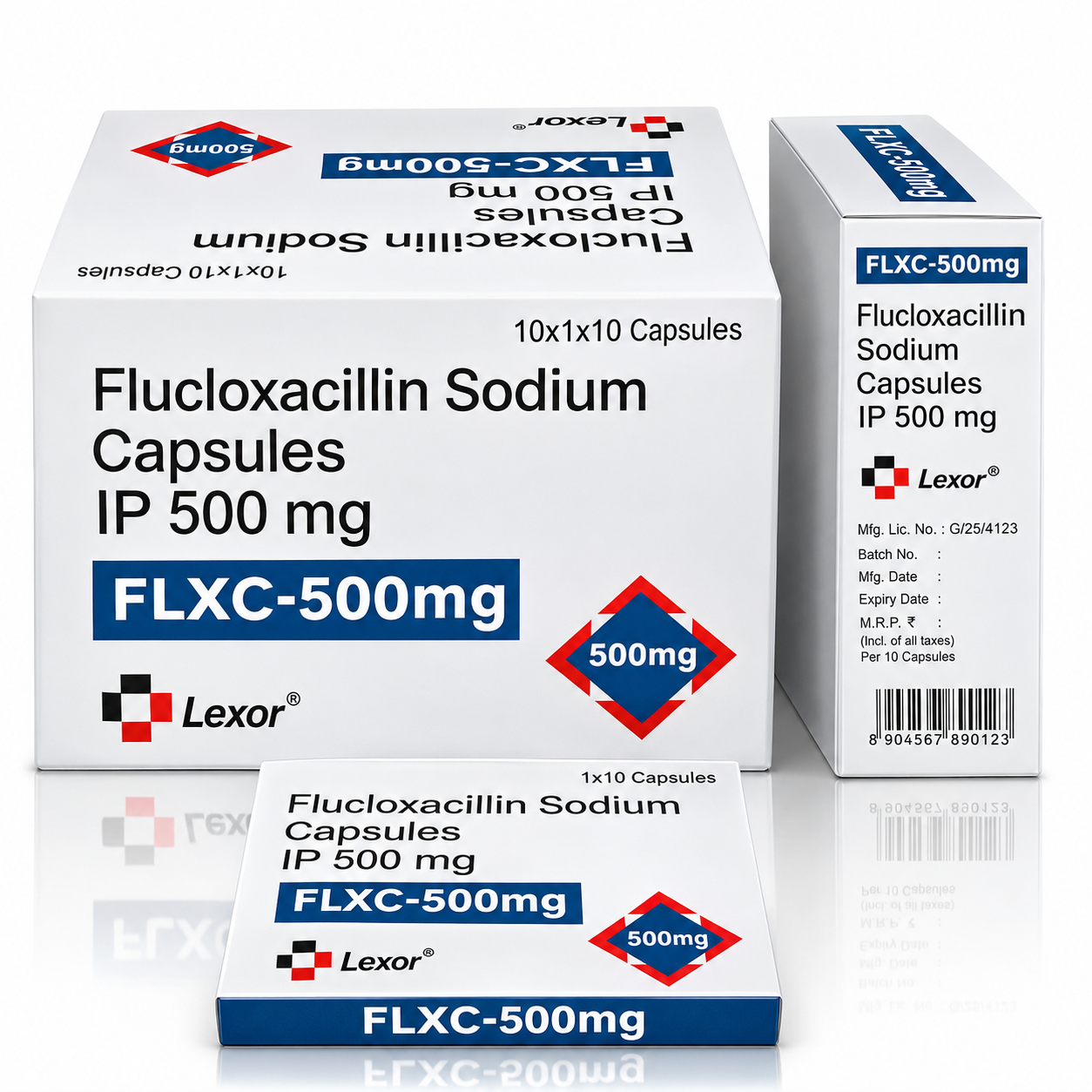
FLXC 500 MG CAPSULE
Brand Name: FLXC 500 MG Capsule
Generic Name: Flucloxacillin Sodium
Strength: 500 mg
Dosage Form: Oral Capsule
Therapeutic Class: Beta-Lactam Antibiotic / Penicillinase-Resistant Penicillin
Manufacturer / Marketer: Intelico Pharmaceuticals
Pack Size: 1 × 10 Capsules
Listed Trade Packaging: 10 × 1 × 10 Capsules
Prescription Status: Prescription Medicine
What is this medicine?
FLXC 500 MG CAPSULE contains Flucloxacillin Sodium equivalent to 500 mg of Flucloxacillin, a prescription antibiotic used to treat certain bacterial infections.
Flucloxacillin belongs to the penicillin group of beta-lactam antibiotics, specifically the penicillinase-resistant isoxazolyl penicillins.
It works against susceptible bacteria, particularly certain strains of Staphylococcus aureus and streptococci.
FLXC 500 MG Capsule may be prescribed for bacterial infections involving:
Skin and soft tissues
Hair follicles
Infected wounds
Boils and abscesses
Cellulitis
Certain respiratory tract infections
Bone infections
Joint infections
Selected bloodstream infections, where clinically appropriate
The selection of flucloxacillin depends on bacterial susceptibility, the location and severity of the infection, and the patient's medical history.
Important: FLXC 500 MG Capsule treats susceptible bacterial infections. It does not treat viral infections such as influenza or the common cold.
How Does FLXC 500 MG Capsule Work?
Flucloxacillin is a bactericidal antibiotic, meaning it kills susceptible bacteria.
It works by interfering with bacterial cell wall synthesis.
Bacteria require a strong cell wall to maintain their structure and survive.
Flucloxacillin binds to specific proteins called penicillin-binding proteins (PBPs), which are involved in constructing the bacterial cell wall.
This action:
Interferes with bacterial cell wall formation
Weakens the bacterial cell wall
Prevents normal bacterial growth and division
Causes susceptible bacteria to die
Helps the immune system clear the infection
Flucloxacillin is resistant to many penicillinase enzymes produced by certain staphylococci.
However, it is not effective against all bacteria.
Important: Flucloxacillin is not an appropriate treatment for methicillin-resistant Staphylococcus aureus (MRSA).
Common Uses
FLXC 500 MG Capsule may be prescribed for:
Skin and soft-tissue infections
Cellulitis
Impetigo
Infected eczema
Folliculitis
Furuncles and boils
Infected cuts and wounds
Certain surgical wound infections
Selected respiratory infections caused by susceptible bacteria
Bone and joint infections under specialist supervision
Not every infection requires flucloxacillin. The medicine should be selected according to clinical assessment and local antibiotic guidance.
Skin and Soft-Tissue Infections
Flucloxacillin is frequently used for infections involving susceptible staphylococci and streptococci.
These may include:
Cellulitis
Impetigo
Infected wounds
Infected skin lesions
Certain localized bacterial skin infections
Symptoms may include redness, swelling, warmth, tenderness and occasionally pus formation.
Flucloxacillin helps control the infection when the responsible organisms are susceptible.
Important: Abscesses may require drainage in addition to antibiotic treatment.
Cellulitis
Cellulitis is a bacterial infection affecting the deeper layers of the skin and underlying soft tissues.
Common symptoms include:
Redness
Swelling
Pain
Warmth
Tenderness
Fever in some patients
Flucloxacillin may be prescribed for uncomplicated cellulitis when an appropriate susceptible bacterial cause is suspected.
Severe cellulitis may require hospital treatment or intravenous antibiotics.
Impetigo
Impetigo is a contagious superficial bacterial skin infection.
It commonly causes:
Red sores
Small blisters
Honey-colored crusts
Itching
Localized skin irritation
Oral flucloxacillin may be used when systemic antibiotic treatment is indicated.
Limited infections may sometimes be managed with other approaches depending on clinical guidance.
Boils and Infected Hair Follicles
Flucloxacillin may be prescribed for selected infections involving hair follicles and surrounding tissues.
These include:
Folliculitis
Furuncles
Carbuncles
Secondary bacterial skin infections
Important: Large boils and abscesses may require drainage. Antibiotic treatment alone may not be sufficient.
Bone and Joint Infections
Flucloxacillin may be used as part of treatment for serious infections caused by susceptible staphylococci.
These include selected cases of:
Osteomyelitis
Septic arthritis
Other deep bacterial infections
Such infections usually require specialist assessment, microbiological testing and a carefully planned antibiotic regimen.
NOTE: Oral FLXC 500 MG Capsule should not be considered a substitute for hospital-based treatment when severe or invasive infections require intravenous antibiotics.
Important Treatment Consideration
Flucloxacillin is a relatively narrow-spectrum antibiotic.
It is particularly useful when the suspected or confirmed infection involves susceptible gram-positive bacteria.
The choice of treatment depends on:
Type of infection
Infection severity
Suspected bacterial organism
Laboratory culture results
Antibiotic susceptibility
Previous antibiotic exposure
Allergy history
Liver and kidney function
Local antibiotic resistance patterns
NOTE: Unnecessary antibiotic use increases the risk of antimicrobial resistance and avoidable adverse effects.
What should I tell my healthcare provider before I take this medicine?
Before taking FLXC 500 MG Capsule, inform your healthcare provider if you have:
Allergy to flucloxacillin
Allergy to penicillin antibiotics
Previous severe reaction to beta-lactam antibiotics
History of anaphylaxis
Previous antibiotic-associated jaundice
Previous flucloxacillin-associated liver injury
Liver disease
Kidney disease
Severe gastrointestinal disorders
Previous antibiotic-associated colitis
History of Clostridioides difficile infection
Significant dehydration
Serious ongoing bacterial infections
Pregnancy or plans to become pregnant
Breastfeeding
Use of methotrexate
Use of warfarin
Use of probenecid
Use of other antibiotics
Use of medicines affecting liver function
Tell your provider about all prescription medicines, nonprescription medicines, supplements and herbal products you currently use.
Important Contraindications
Flucloxacillin should not be used in patients with:
Known hypersensitivity to flucloxacillin
Previous serious hypersensitivity reactions to penicillins
Previous flucloxacillin-associated jaundice
Previous flucloxacillin-associated hepatic dysfunction
A history of immediate severe reactions to other beta-lactam antibiotics requires careful medical assessment.
Important Penicillin Allergy Warning
Flucloxacillin can cause allergic reactions.
Possible symptoms include:
Skin rash
Itching
Hives
Swelling of the lips
Swelling of the face
Swelling of the tongue
Wheezing
Difficulty breathing
Severe allergic reactions may develop rapidly.
Important: Seek emergency medical attention for difficulty breathing, throat swelling, fainting or other signs of anaphylaxis.
Important Liver Warning
Flucloxacillin has been associated with rare but potentially serious liver injury.
This may include:
Cholestatic hepatitis
Jaundice
Abnormal liver enzyme levels
Drug-induced liver inflammation
Symptoms may include:
Yellowing of the skin or eyes
Dark urine
Pale-colored stools
Persistent nausea
Loss of appetite
Severe itching
Unusual fatigue
Abdominal discomfort
Liver injury can sometimes appear several weeks after treatment has ended.
Risk may be greater in certain patients, including older adults and those receiving prolonged treatment.
Important: Seek prompt medical evaluation if symptoms of liver injury develop during or after treatment.
Important Kidney Warning
Patients with severe kidney impairment may require adjustments to their treatment plan.
Flucloxacillin may also rarely cause kidney-related adverse effects, including interstitial nephritis.
Tell your healthcare provider if you develop:
Reduced urine output
Blood in the urine
Unexplained swelling
Significant changes in kidney function
Kidney function monitoring may be required during prolonged or high-dose treatment.
How should I use this medicine?
Take FLXC 500 MG Capsule exactly as prescribed by your healthcare provider.
Swallow the capsule whole with water.
Take it at the prescribed intervals.
Flucloxacillin is generally taken on an empty stomach.
Take it approximately one hour before food or two hours after food.
Swallow with a full glass of water.
Do not lie down immediately after taking the capsule.
Do not crush or chew the capsule unless the manufacturer specifically permits an alternative administration method.
Do not increase or reduce the dose independently.
Do not skip doses intentionally.
Follow the prescribed treatment duration.
Do not use leftover antibiotics for a new illness.
Do not share antibiotics with another person.
Usual Adult Dosage
FLXC Strength: Each capsule contains Flucloxacillin Sodium equivalent to 500 mg of Flucloxacillin.
Administration: Oral.
Usual Timing: At regularly spaced intervals, generally on an empty stomach.
Adult Bacterial Infections
A commonly used adult oral regimen for certain susceptible bacterial infections is:
Flucloxacillin 500 mg four times daily.
This corresponds to one FLXC 500 MG Capsule per dose when prescribed at that strength.
However, the exact dosage depends on:
Infection type
Infection severity
Patient's age
Body weight
Kidney function
Liver function
Bacterial susceptibility
Clinical response
Local prescribing guidelines
Some infections require a different dosage or route of administration.
Important: The 500 mg four-times-daily regimen is a reference regimen, not a recommendation for every patient or infection.
Dosage for Skin Infections
For selected skin and soft-tissue infections, adult prescriptions may commonly use:
500 mg orally four times daily.
The duration varies according to the diagnosis and clinical response.
Some uncomplicated infections may be treated with a short course, while complicated infections require longer or different treatment.
Severe Bacterial Infections
Serious infections may require:
Hospital admission
Intravenous antibiotic therapy
Microbiological testing
Specialist consultation
Longer treatment
Monitoring of laboratory results
Important: Do not independently increase the oral flucloxacillin dose to treat a severe infection.
Children and Adolescents
Pediatric treatment is determined according to:
Age
Body weight
Infection type
Infection severity
Appropriate pharmaceutical formulation
A 500 mg capsule may be unsuitable for younger children.
Children should receive a pediatric dose and formulation selected by a qualified healthcare professional.
Older Adults
Older adults may require additional monitoring because of an increased risk of:
Liver-related adverse effects
Drug interactions
Kidney impairment
Complications from prolonged antibiotic treatment
The prescribing clinician should assess the patient's overall health before choosing the regimen.
Special Patient Populations
Kidney Disease: Severe renal impairment may require dose or interval adjustment, particularly with high-dose treatment.
Liver Disease: Additional caution is required. Flucloxacillin-associated liver injury is an important consideration.
Pregnancy: Penicillin antibiotics, including flucloxacillin, may be used during pregnancy when clinically indicated. The prescriber should evaluate the benefits and risks.
Breastfeeding: Flucloxacillin passes into breast milk in small amounts and is generally considered compatible with breastfeeding when clinically appropriate. Monitor the infant for diarrhea, rash or oral thrush.
Older Adults: Monitor for liver-related adverse effects and evaluate other medical conditions.
Overdosage: Seek urgent medical advice after taking significantly more than the prescribed amount.
How Long Does FLXC 500 MG Take to Work?
Flucloxacillin begins acting against susceptible bacteria after absorption.
Clinical improvement may become noticeable within approximately 48–72 hours for some uncomplicated infections.
However, response depends on the type and severity of infection.
Some patients may require more time or reassessment.
Important: Contact your healthcare provider if symptoms worsen, fever persists or there is no meaningful improvement within the expected period.
Important Treatment Duration
Antibiotic duration varies depending on the infection.
Follow the exact prescribed treatment course, even if symptoms improve early, unless your clinician advises a change.
Do not prolong treatment or stop early without medical guidance.
What if I miss a dose?
If you miss a dose of FLXC 500 MG Capsule:
Take the missed dose when remembered unless it is nearly time for the next dose.
If the next dose is approaching, skip the missed dose.
Continue with the regular prescribed schedule.
Maintain appropriate spacing between doses.
Do not take two doses at the same time.
Do not double your next dose.
Important: Taking extra capsules does not improve treatment effectiveness and may increase adverse effects.
What may interact with this medicine?
Flucloxacillin may interact with certain prescription medicines.
Potentially important interactions include:
Methotrexate
Warfarin and other anticoagulants
Probenecid
Certain other antibiotics
Voriconazole
Paracetamol in selected high-risk patients
Other medicines that may affect liver or kidney function
Important Drug Interaction Considerations
Methotrexate: Penicillins may reduce methotrexate elimination, potentially increasing toxicity. Medical supervision is necessary.
Warfarin: Antibiotic treatment may alter anticoagulant response. Additional INR monitoring may be needed.
Probenecid: May reduce renal elimination of flucloxacillin and increase antibiotic concentrations.
Voriconazole: Flucloxacillin can substantially reduce voriconazole concentrations, potentially making antifungal treatment less effective.
Paracetamol: Concurrent use has been associated with high anion gap metabolic acidosis in certain high-risk patients, especially those with severe illness, renal dysfunction or other predisposing factors.
Other Antibiotics: Some combinations may be appropriate, but treatment should be directed by the clinician.
Important Methotrexate Interaction
Methotrexate is used for certain inflammatory conditions and cancers.
Combining methotrexate with some penicillin antibiotics may increase methotrexate exposure.
Possible toxicity signs include:
Mouth ulcers
Unusual bruising
Severe nausea
Blood cell abnormalities
Kidney-related complications
Important: Inform your prescriber if you are taking methotrexate before starting FLXC.
Important Anticoagulant Interaction
Patients taking warfarin may require closer monitoring.
Antibiotics can affect anticoagulation through several mechanisms, including changes in illness status and vitamin K availability.
Contact your provider if you notice:
Unusual bruising
Nosebleeds
Bleeding gums
Blood in urine
Black stools
Prolonged bleeding
Important Drug Interaction Precaution
Always inform your healthcare provider about all medicines you are taking.
Do not start or stop prescribed medicines without professional guidance.
What should I watch for while using this medicine?
Contact your healthcare provider if you experience:
Persistent diarrhea
Severe stomach discomfort
New skin rash
Unusual itching
Increasing redness around the infection
Persistent fever
Worsening swelling
Unusual fatigue
Dark urine
Yellowing of the skin or eyes
Reduced urine output
Symptoms that do not improve with treatment
Seek urgent medical attention for:
Difficulty breathing
Swelling of the face or throat
Severe allergic reactions
Severe skin blistering
Bloody diarrhea
Severe dehydration
Significant jaundice
Signs of sepsis
Important Monitoring
Infection Symptoms: Monitor improvement in pain, redness, swelling and fever.
Treatment Response: Check whether the infection is improving.
Liver Function: May require monitoring during prolonged therapy or if liver-related symptoms occur.
Kidney Function: May require monitoring in patients with kidney disease or prolonged high-dose therapy.
Allergic Reactions: Monitor for rash, itching, swelling or breathing problems.
Gastrointestinal Symptoms: Monitor diarrhea and abdominal discomfort.
Antibiotic Susceptibility: Laboratory testing may be needed if the infection is severe or not responding.
Important Antibiotic Resistance Warning
Antibiotic resistance occurs when bacteria develop mechanisms that allow them to survive antibiotic treatment.
Unnecessary or inappropriate flucloxacillin use may contribute to resistance.
To support appropriate antibiotic use:
Take antibiotics only when prescribed.
Follow the prescribed dosage.
Avoid using antibiotics for viral infections.
Do not share antibiotics.
Do not reuse leftover capsules.
Seek medical review if treatment is ineffective.
Important Antibiotic-Associated Diarrhea Warning
Antibiotics can disrupt normal intestinal bacteria.
Some patients develop mild diarrhea.
However, severe or persistent diarrhea may indicate antibiotic-associated colitis, including Clostridioides difficile infection.
Warning signs include:
Frequent watery stools
Severe abdominal cramps
Fever
Blood in stools
Dehydration
Important: Seek medical advice promptly if severe diarrhea develops during or after antibiotic treatment.
Important Liver Monitoring
Flucloxacillin-associated liver injury can sometimes occur after completing the antibiotic course.
Patients should remain alert for:
Jaundice
Dark urine
Pale stools
Severe itching
Unusual fatigue
These symptoms require prompt assessment.
Important Infection Warning Signs
Seek urgent medical care if you develop:
Rapidly spreading skin redness
Severe pain
High or persistent fever with worsening illness
Confusion
Difficulty breathing
Unexplained low blood pressure
Rapid deterioration
Severe swelling around the eyes or face
These symptoms may indicate a serious infection requiring immediate treatment.
What side effects may I notice from this medicine?
Side effects that should be reported promptly:
Severe allergic reactions
Anaphylaxis
Severe skin rash
Blistering or peeling skin
Yellowing of the skin or eyes
Drug-induced hepatitis
Cholestatic jaundice
Severe or bloody diarrhea
Antibiotic-associated colitis
Unusual bleeding or bruising
Reduced urine output
Interstitial nephritis
Severe abdominal pain
Unexplained fever with rash
Severe weakness or confusion
Side effects that usually do not require immediate medical attention:
Nausea
Vomiting
Mild diarrhea
Stomach discomfort
Indigestion
Abdominal bloating
Mild skin rash
Itching
Temporary changes in bowel habits
Not everyone experiences these adverse effects.
Persistent or worsening symptoms should be discussed with a healthcare professional.
Important Gastrointestinal Side Effects
Flucloxacillin may cause gastrointestinal discomfort.
Possible symptoms include:
Nausea
Loose stools
Stomach upset
Vomiting
Mild abdominal pain
Taking the medicine according to the prescribed schedule and food instructions helps maintain appropriate absorption.
Important: Do not change the empty-stomach administration schedule without consulting your healthcare provider.
Important Liver-Related Side Effects
Rare liver complications associated with flucloxacillin include:
Cholestatic hepatitis
Hepatocellular injury
Elevated liver enzymes
Jaundice
Liver injury may occasionally be prolonged or severe.
Older adults and patients receiving longer courses may have an increased risk.
Important: Seek medical attention immediately if jaundice, dark urine or severe itching develops.
Important Allergic Skin Reactions
Flucloxacillin can cause hypersensitivity reactions.
Mild reactions may include itching or rash.
Serious reactions may include:
Stevens-Johnson syndrome
Toxic epidermal necrolysis
Severe drug hypersensitivity reactions
Anaphylaxis
Important: Severe blistering, skin peeling, breathing difficulty or facial swelling requires emergency medical attention.
Important Blood-Related Side Effects
Rare blood disorders reported with penicillin antibiotics include:
Neutropenia
Leukopenia
Thrombocytopenia
Other blood cell abnormalities
These reactions may be more relevant during prolonged treatment.
Patients should report unexplained bruising, fever, mouth ulcers or unusual infections.
Important Kidney-Related Side Effects
Rare kidney complications may include:
Interstitial nephritis
Changes in kidney function
Other renal adverse effects
Patients with pre-existing kidney disease may require closer monitoring.
Important Superinfection Warning
Prolonged antibiotic treatment may sometimes allow organisms not susceptible to flucloxacillin to multiply.
This may contribute to:
Oral thrush
Vaginal yeast infections
Other fungal overgrowth
Resistant bacterial infections
Tell your healthcare provider if new symptoms appear during treatment.
Important Pregnancy and Breastfeeding Considerations
Pregnancy: Flucloxacillin may be prescribed when clinically necessary. The healthcare provider should assess the infection and individual treatment requirements.
Breastfeeding: Small amounts of flucloxacillin may pass into breast milk. Although it is generally considered compatible with breastfeeding, infants should be monitored for possible diarrhea, rash or thrush.
Important: Patients who are pregnant, planning pregnancy or breastfeeding should consult their healthcare provider before taking FLXC 500 MG Capsule.
Where should I keep my medicine?
Store according to the temperature instructions printed on the product packaging.
Keep in a cool, dry place.
Protect from excessive heat.
Protect from direct sunlight.
Protect from moisture.
Keep capsules in their original blister packaging.
Keep out of the reach of children.
Keep away from pets.
Do not use after the expiry date.
Do not use capsules from damaged packaging.
Do not transfer capsules into unlabelled containers.
Do not store in bathrooms or other humid environments.
Dispose of expired or unused medicine according to pharmacist instructions.
Storage Note: Follow the exact storage conditions printed on the supplied FLXC 500 MG Capsule strip or carton.
Manufacturer Details
Field | Information |
|---|---|
Brand Name | FLXC 500 MG Capsule |
Generic Name | Flucloxacillin Sodium |
Strength | 500 mg |
Dosage Form | Oral Capsule |
Therapeutic Class | Beta-Lactam Antibiotic / Penicillinase-Resistant Penicillin |
Primary Indication | Treatment of Susceptible Bacterial Infections |
Common Uses | Skin and Soft-Tissue Infections; Selected Other Bacterial Infections |
Mechanism of Action | Inhibition of Bacterial Cell Wall Synthesis |
Manufacturer / Marketer | Intelico Pharmaceuticals (A Division of Intelicure Lifesciences) |
Actual Manufacturing Facility | Verify from Current Product Packaging |
Prescription Status | Prescription Medicine |
Route of Administration | Oral |
Storage | Cool, Dry Place; Follow Product Label |
Retail Pack Size | 1 × 10 Capsules |
Listed Trade Packaging | 10 × 1 × 10 Capsules |
Country of Manufacture | India, per Product Listing |