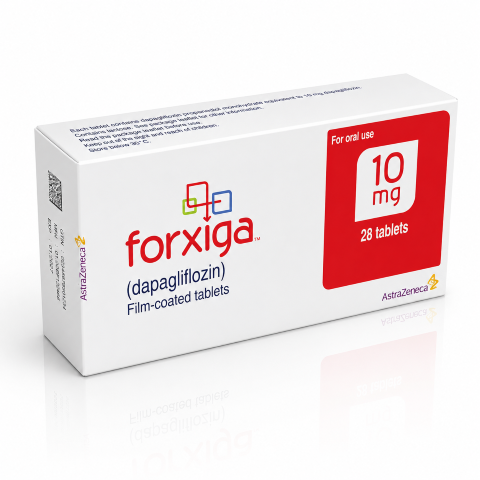
Forxiga 10 MG Tablet
$4.14 / unit
Available Options
| Pack Size | Price | Price / Unit | Quantity | Action |
|---|---|---|---|---|
| 84 Tablets | $265.00 | $3.15/unit | ||
| 70 Tablets | $228.00 | $3.26/unit | ||
| 56 Tablets | $185.00 | $3.30/unit | ||
| 42 Tablets | $147.00 | $3.50/unit | ||
| 28 Tablets | $105.00 | $3.75/unit | ||
| 14 Tablets | $58.00 | $4.14/unit |
Product Description
What is this medicine?
FORXIGA 10 MG TABLET contains Dapagliflozin 10 mg, an oral medicine belonging to the SGLT2 inhibitor class.
Dapagliflozin works mainly in the kidneys by blocking sodium-glucose cotransporter-2 (SGLT2). This reduces glucose reabsorption and allows excess glucose to be removed from the body through urine.
This medicine is commonly used for:
type 2 diabetes mellitus
improving blood-glucose control
lowering fasting and post-meal blood glucose
reducing HbA1c
heart failure in appropriate patients
chronic kidney disease (CKD) in appropriate patients
reducing the risk of worsening kidney disease in eligible patients
reducing cardiovascular death and hospitalization for heart failure in certain patients
Current prescribing information includes indications for type 2 diabetes, heart failure, and chronic kidney disease, depending on the patient's clinical situation.
Important: The reason Forxiga is prescribed may differ between patients. It should be used only for the indication recommended by a healthcare professional.
What should I tell my health care provider before I take this medicine?
They need to know if you have any of these conditions:
allergy to dapagliflozin or any ingredient in Forxiga
kidney disease or reduced kidney function
liver disease
type 1 diabetes
history of diabetic ketoacidosis
dehydration
low blood pressure
frequent urinary tract infections
recurrent genital fungal infections
severe infection or serious illness
if you are eating substantially less than usual
if you follow a ketogenic or very-low-carbohydrate diet
if you use insulin
if you take sulfonylureas or other diabetes medicines
if you take diuretics or "water tablets"
if you are undergoing major surgery
if you will be fasting for a medical procedure
if you are pregnant or planning pregnancy
if you are breastfeeding
Pregnancy, breastfeeding, renal impairment, and susceptibility to volume depletion require particular consideration with dapagliflozin.
Tell your healthcare professional about all prescription medicines, nonprescription medicines, vitamins, herbal preparations, and supplements you use.
How should I use this medicine?
Take Forxiga 10 mg Tablet exactly as prescribed by your healthcare professional.
For appropriate use:
swallow the tablet whole with water
it is generally taken once daily
take it at approximately the same time each day
it may be taken with or without food
take only the prescribed dose
maintain adequate hydration unless your healthcare professional has restricted fluids
continue your recommended diet and exercise program when prescribed for diabetes
monitor your blood glucose as instructed
do not change your dose yourself
do not stop treatment without medical advice
Current Indian product information states that Forxiga 10 mg can be taken with or without food and recommends taking it at approximately the same time every day.
Important: The correct dose depends on the condition being treated, kidney function, and other clinical factors.
What if I miss a dose?
If you miss a dose of Forxiga:
take it as soon as you remember unless it is nearly time for your next dose
if your next dose is near, skip the missed dose
continue with your regular schedule
Do not take two doses together to compensate for a missed tablet.
If you frequently miss doses, discuss this with your healthcare professional rather than changing your dosing schedule yourself.
What may interact with this medicine?
Tell your healthcare professional if you use:
insulin
sulfonylureas such as glimepiride, gliclazide, or glipizide
other antidiabetic medicines
diuretics or "water tablets"
medicines that lower blood pressure
medicines that can affect kidney function
other prescription or nonprescription medicines
Combining dapagliflozin with insulin or medicines that stimulate insulin secretion may increase the risk of hypoglycemia.
Diuretics can increase urine production and may contribute to dehydration or low blood pressure, particularly in susceptible patients.
What should I watch for while using this medicine?
Depending on why Forxiga has been prescribed, your healthcare professional may monitor your:
fasting blood glucose
post-meal blood glucose
HbA1c
kidney function/eGFR
blood pressure
hydration status
heart-failure symptoms when relevant
symptoms of urinary or genital infections
Diabetic ketoacidosis
SGLT2 inhibitors such as dapagliflozin can cause diabetic ketoacidosis (DKA). Importantly, DKA can sometimes occur even when blood glucose is not extremely high.
Seek urgent medical attention if you develop:
nausea
vomiting
abdominal pain
excessive thirst
unusual tiredness
rapid or difficult breathing
confusion
unusual sleepiness
Risk can increase with prolonged fasting, severe illness, surgery, reduced calorie intake, dehydration, or other conditions that predispose to ketosis.
Dehydration and low blood pressure
Forxiga increases glucose excretion through urine and can increase urination.
This may contribute to dehydration or low blood pressure, particularly in older adults, people taking diuretics, and patients with impaired kidney function.
Watch for:
dizziness
light-headedness
weakness
fainting
excessive thirst
dry mouth
reduced fluid intake
Maintain adequate hydration unless your healthcare professional has advised you to restrict fluids.
Urinary and genital infections
Because Forxiga increases glucose in the urine, it can increase the likelihood of genital fungal infections and may be associated with urinary tract infections.
Contact your healthcare professional if you develop:
burning or pain during urination
frequent or urgent urination with discomfort
fever
back or pelvic pain
genital itching
redness or swelling
unusual genital discharge
Indian product information lists urinary tract infections and genital fungal infections among the recognized adverse effects of Forxiga.
Fournier's gangrene warning
A rare but serious infection called necrotizing fasciitis of the perineum (Fournier's gangrene) has been reported with SGLT2 inhibitors.
Seek urgent medical attention if you develop:
severe pain or tenderness around the genital or perineal area
redness or swelling
fever
feeling severely unwell
This condition requires urgent medical assessment and treatment.
What side effects may I notice from this medicine?
Common or possible side effects include:
genital fungal infections
urinary tract infections
increased urination
increased thirst
nausea
dizziness
dehydration
low blood pressure
low blood sugar when combined with insulin or certain other diabetes medicines
Current Indian Forxiga information identifies nausea, genital fungal infection, urinary tract infection, and related effects among commonly reported adverse reactions.
Side effects that you should report promptly:
symptoms of diabetic ketoacidosis
severe dehydration
severe dizziness or fainting
severe urinary tract infection
severe genital or perineal infection
persistent vomiting
significant reduction in urination
severe hypoglycemia
severe allergic reaction
swelling of the face, lips, tongue, or throat
difficulty breathing or swallowing
What about low blood sugar?
Forxiga used alone generally has a relatively low risk of causing significant hypoglycemia.
However, the risk can increase when it is combined with:
insulin
sulfonylureas
other medicines that independently cause low blood sugar
Symptoms of hypoglycemia can include:
sweating
shaking or trembling
intense hunger
dizziness
weakness
confusion
headache
rapid heartbeat
blurred vision
Your healthcare professional may need to adjust insulin or certain other diabetes medicines when they are used together with Forxiga.
What happens if I take too much?
If you accidentally take more Forxiga than prescribed, contact your healthcare professional or seek medical advice.
An overdose may increase the risk of:
excessive urination
dehydration
dizziness
low blood pressure
electrolyte disturbances
hypoglycemia when combined with certain other diabetes medicines
Do not take additional Forxiga tablets to compensate for high blood-glucose readings or a high-carbohydrate meal.
What happens if I suddenly stop taking this medicine?
Do not stop Forxiga simply because your blood-glucose readings or symptoms have improved.
If Forxiga is being used for diabetes, stopping treatment without an appropriate alternative may result in:
increased blood glucose
increased HbA1c
worsening diabetes control
Current Indian product information warns that stopping Forxiga without medical advice may cause blood glucose to rise and increase the risk of diabetes-related complications.
If Forxiga is prescribed for heart failure or chronic kidney disease, stopping treatment may also remove its intended cardiorenal benefit.
Discuss discontinuation with your healthcare professional before stopping treatment.
Diet and lifestyle while taking Forxiga
When Forxiga is used for type 2 diabetes, follow your healthcare professional's recommendations regarding:
balanced carbohydrate intake
appropriate portion sizes
regular physical activity
maintaining an appropriate body weight
adequate hydration
regular blood-glucose monitoring
HbA1c testing
kidney-function monitoring
routine eye examinations
appropriate foot care
Current Indian guidance describes Forxiga as part of a treatment program that includes a healthy diet, regular exercise, and weight management when appropriate.
Avoid becoming severely dehydrated, particularly during hot weather, vomiting, diarrhea, or prolonged illness.
Surgery and prolonged fasting
Tell your healthcare professional that you take Forxiga before undergoing major surgery or procedures involving prolonged fasting.
Dapagliflozin may need to be temporarily withheld because surgery, prolonged fasting, and reduced food intake can increase the risk of ketoacidosis.
Follow your healthcare professional's specific instructions regarding when to stop and restart the medicine.
Where should I keep my medicine?
Current Indian product information specifies:
Store below 30°C.
Keep Forxiga:
in its original blister packaging
below 30°C
protected from excessive heat
protected from moisture
away from direct sunlight
securely out of the reach of children
Do not use tablets after their expiration date or if the packaging has been damaged.