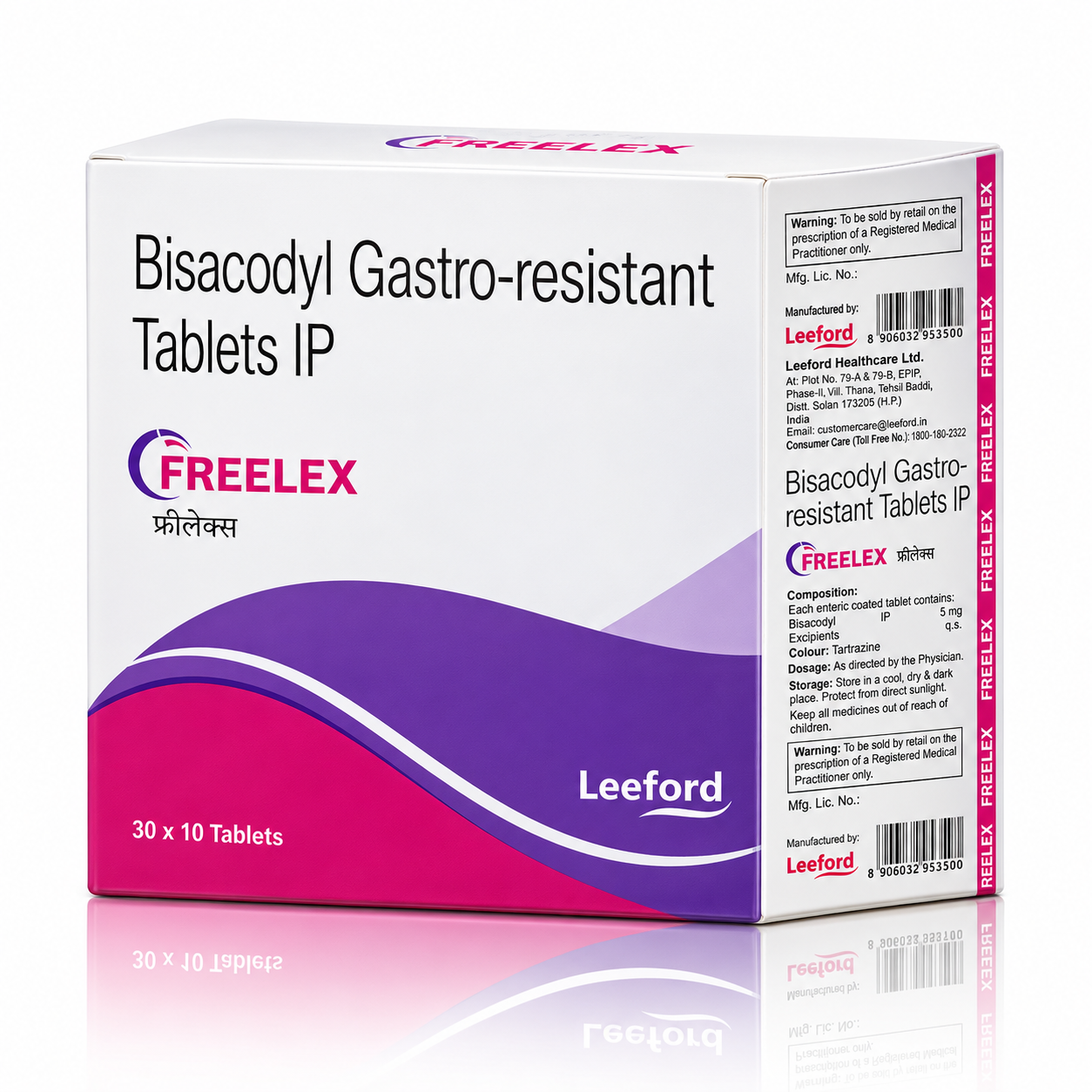
Freelex Tablet
$0.02 / unit
Available Options
| Pack Size | Price | Price / Unit | Quantity | Action |
|---|---|---|---|---|
| 60 Tablets | $1.26 | $0.02/unit | ||
| 50 Tablets | $1.05 | $0.02/unit | ||
| 40 Tablets | $0.84 | $0.02/unit | ||
| 30 Tablets | $0.63 | $0.02/unit | ||
| 20 Tablets | $0.42 | $0.02/unit | ||
| 10 Tablets | $0.21 | $0.02/unit |
Product Description
FREELEX TABLET
Brand Name: Freelex Tablet
Generic Name: Bisacodyl
Strength: 5 mg
Dosage Form: Oral Enteric-Coated Tablet (Gastro-Resistant Tablet)
Therapeutic Class: Stimulant Laxative / Gastrointestinal Medicine
Manufacturer / Marketer: Leeford Healthcare Ltd.
Pack Size: 1 × 10 Tablets
Listed Trade Packaging: 30 × 10 Tablets
Prescription Status: Prescription Medicine
What is this medicine?
FREELEX TABLET contains Bisacodyl 5 mg, a stimulant laxative used for short-term relief of constipation and bowel emptying before certain medical procedures.
Bisacodyl belongs to a group of medicines known as stimulant laxatives.
It works by stimulating intestinal movements and increasing water and electrolyte secretion into the bowel.
These actions help move stool through the large intestine and make bowel movements easier.
Freelex Tablet may be prescribed for:
Occasional constipation
Short-term relief of difficulty passing stool
Constipation associated with reduced bowel movements
Bowel emptying before selected medical examinations
Bowel preparation before certain procedures, as part of a prescribed regimen
The appropriate use depends on the patient's age, medical history, symptoms and underlying cause of constipation.
Important: Freelex is intended primarily for short-term use. Persistent constipation requires medical assessment rather than continuous unsupervised laxative treatment.
How Does Freelex Work?
Bisacodyl acts mainly in the large intestine.
After the enteric coating dissolves and bisacodyl is activated, it stimulates the nerves and muscular activity involved in bowel movement.
It also promotes the accumulation of water and electrolytes inside the intestine.
Its actions help:
Stimulate intestinal contractions
Increase bowel movement activity
Promote movement of stool through the colon
Increase water content within the bowel
Facilitate stool passage
Relieve occasional constipation
Support bowel emptying when medically required
Bisacodyl acts locally within the intestine, with limited systemic absorption.
Important: Freelex does not treat every cause of constipation. Conditions such as bowel obstruction require urgent medical treatment rather than laxative use.
Common Uses
Freelex Tablet may be prescribed for:
Occasional constipation
Short-term constipation relief
Difficulty passing hard stools
Temporary reduction in bowel movement frequency
Constipation associated with certain lifestyle changes
Bowel preparation for selected diagnostic procedures
Bowel evacuation before certain surgical procedures
Long-term or recurrent constipation may require investigation and a different treatment approach.
Occasional Constipation
Constipation occurs when bowel movements become less frequent, difficult or uncomfortable.
Possible symptoms include:
Hard stools
Dry stools
Straining during bowel movements
Difficulty passing stool
Feeling of incomplete evacuation
Abdominal bloating
Mild abdominal discomfort
Reduced bowel movement frequency
Freelex stimulates the large intestine and may help provide short-term relief.
Constipation Associated With Lifestyle Changes
Constipation can sometimes occur because of:
Reduced physical activity
Changes in daily routine
Inadequate dietary fiber
Low fluid intake
Travel
Changes in eating habits
Certain medicines
Freelex may temporarily improve bowel movements.
However, the underlying cause should also be addressed.
Constipation Associated With Certain Medicines
Some medicines may contribute to constipation.
Examples include:
Opioid pain medicines
Certain antidepressants
Iron supplements
Calcium supplements
Anticholinergic medicines
Certain antacids
Some medicines for neurological conditions
Bisacodyl may be used as part of constipation management when recommended by a healthcare professional.
Important: Patients should not stop their prescribed medicines independently because of constipation.
Bowel Preparation Before Medical Procedures
Bisacodyl may be used as part of bowel preparation before selected procedures, including:
Colonoscopy
Certain intestinal examinations
Some surgical procedures
Other procedures requiring bowel evacuation
The prescribed preparation may involve additional medicines, special diets or fluid instructions.
Important: A routine constipation dose is not equivalent to a complete colonoscopy preparation. Follow the specific medical procedure instructions.
Hard Stools and Difficult Bowel Movements
Constipation may involve hard or difficult-to-pass stools.
Bisacodyl helps stimulate intestinal contractions and promotes fluid accumulation in the bowel.
This may improve stool passage.
However, severe fecal impaction may require other treatments or medical intervention.
Important Treatment Consideration
Freelex may be used alongside appropriate constipation management strategies such as:
Adequate dietary fiber
Suitable fluid intake
Regular physical activity
Establishing a consistent toilet routine
Avoiding unnecessary delay in responding to the urge to pass stool
Reviewing medicines that may cause constipation
Treatment of underlying gastrointestinal conditions
NOTE: Freelex is not a weight-loss medicine. Laxative-induced weight changes primarily reflect temporary loss of water and intestinal contents rather than body fat.
What should I tell my healthcare provider before I take this medicine?
Inform your healthcare provider if you have:
Allergy to bisacodyl
Previous serious reactions to stimulant laxatives
Severe abdominal pain
Persistent nausea or vomiting
Suspected intestinal obstruction
Bowel narrowing or blockage
Appendicitis or suspected appendicitis
Severe inflammatory bowel disease
Significant dehydration
Persistent diarrhea
Rectal bleeding
Unexplained changes in bowel habits
Constipation lasting longer than usual
Kidney disease
Heart disease
Low blood potassium
Other electrolyte disorders
Severe abdominal swelling
Difficulty passing gas
Pregnancy or plans to become pregnant
Breastfeeding
Use of other laxatives
Use of diuretics
Use of corticosteroids
Use of digoxin
Use of antacids
Use of proton pump inhibitors
Tell your healthcare provider about all prescription medicines, nonprescription medicines, supplements and herbal products you currently use.
Important Contraindications
Freelex should not be used in patients with:
Known serious hypersensitivity to bisacodyl
Intestinal obstruction or ileus
Acute surgical abdominal conditions, including suspected appendicitis
Severe abdominal pain associated with nausea and vomiting of unknown cause
Severe dehydration
Certain acute inflammatory intestinal conditions may also make stimulant laxatives unsuitable.
The exact contraindications should be checked against the current product's approved prescribing information.
Important Intestinal Obstruction Warning
Bowel obstruction occurs when the normal passage of intestinal contents is blocked.
Possible symptoms include:
Severe abdominal pain
Significant abdominal swelling
Persistent vomiting
Inability to pass stool
Inability to pass gas
Important: Do not use Freelex when bowel obstruction is suspected. Seek urgent medical evaluation.
Important Dehydration Warning
Bisacodyl can increase water loss through bowel movements.
Excessive use may cause dehydration.
Possible symptoms include:
Excessive thirst
Dry mouth
Dizziness
Weakness
Reduced urine output
Low blood pressure
Confusion
The risk may be greater in older adults or patients with kidney disease.
Important Electrolyte Imbalance Warning
Repeated or excessive laxative use may cause electrolyte disturbances.
These may include:
Low potassium
Low sodium
Changes in fluid balance
Other electrolyte abnormalities
Possible warning symptoms include:
Muscle weakness
Muscle cramps
Palpitations
Dizziness
Irregular heartbeat
Important: Prolonged or excessive use can cause serious complications and should be avoided.
Important Abdominal Pain Warning
Bisacodyl may cause temporary abdominal cramps.
However, severe or persistent abdominal pain may indicate another gastrointestinal condition.
Contact your healthcare provider if pain is accompanied by:
Fever
Persistent vomiting
Severe bloating
Rectal bleeding
Inability to pass gas
Significant weakness
Important Long-Term Use Warning
Freelex should generally not be used continuously for more than five days without medical advice.
Persistent constipation may be associated with:
Medication effects
Hypothyroidism
Neurological disorders
Bowel movement disorders
Structural intestinal disease
Other medical conditions
Important: Regular dependence on stimulant laxatives should prompt medical review.
How should I use this medicine?
Take Freelex Tablet exactly as prescribed by your healthcare provider.
Swallow the tablet whole with water.
Do not crush, chew or break the enteric-coated tablet.
Take it according to the prescribed schedule.
For occasional constipation, it is commonly taken at bedtime.
Avoid taking it together with milk or antacids.
Do not exceed the prescribed dose.
Do not take extra tablets if a bowel movement does not occur immediately.
Do not use continuously for more than five days without medical advice.
Maintain adequate hydration unless medically restricted.
Do not combine multiple laxatives without professional guidance.
Do not use it for weight loss.
Do not share prescription medicines with another person.
Understanding the Tablet Strength
Freelex Strength: Each tablet contains Bisacodyl 5 mg.
Dosage Form: Enteric-coated oral tablet.
Administration: Oral.
Usual Timing: At bedtime when prescribed for occasional constipation.
The enteric coating is designed to help the tablet pass through the stomach before releasing the medicine in the intestine.
Important: Crushing or chewing the tablet may damage this protective coating and increase stomach irritation.
Usual Adult Dosage
A commonly recommended reference regimen for occasional constipation in adults is:
Bisacodyl 5–10 mg orally once daily when needed, usually at bedtime.
This is equivalent to:
One Freelex 5 mg tablet for a 5 mg dose.
Two Freelex 5 mg tablets for a 10 mg dose.
Patients who have not previously taken bisacodyl are generally advised to start with the lower dose.
Important: The correct dosage should follow the prescription. Do not increase the dose merely because a bowel movement has not occurred immediately.
Occasional Constipation in Adults
For short-term constipation relief, treatment may involve one tablet at bedtime.
If the response is inadequate, a clinician may recommend a different dose or constipation treatment.
The goal is to restore comfortable bowel movements without causing excessive diarrhea or cramping.
Constipation in Older Adults
Older adults may be more susceptible to:
Dehydration
Electrolyte imbalance
Dizziness
Falls
Complications from underlying bowel conditions
The lowest effective dose is generally preferred.
Persistent constipation should be evaluated to identify possible contributing medicines or medical conditions.
Bowel Preparation Before Medical Procedures
For bowel preparation, bisacodyl may be included in a prescribed regimen.
The schedule can involve:
Specific laxative doses
Additional bowel-cleansing medicines
Dietary restrictions
Clear liquids
Special hydration instructions
Important: Bowel preparation doses may differ from routine constipation doses. Patients should follow the procedure center's exact written instructions.
Children and Adolescents
The use of bisacodyl in children depends on age and local prescribing information.
For adolescents aged 12 years and older, some reference guidelines allow 5–10 mg once daily when appropriate.
Younger children may require lower doses and should receive bisacodyl only when advised by a pediatric healthcare professional.
Important: Do not apply adult dosing instructions to younger children.
Why Is Freelex Commonly Taken at Bedtime?
Oral bisacodyl generally produces a bowel movement within approximately 6–12 hours.
Taking it at bedtime may therefore result in a bowel movement the following morning.
However, response varies between individuals.
Important Enteric-Coating Instructions
Freelex is an enteric-coated tablet.
To protect the coating:
Swallow the tablet whole.
Do not chew it.
Do not crush it.
Do not split it.
Avoid taking it simultaneously with milk.
Separate it from antacids and certain acid-reducing medicines according to professional instructions.
Important: Milk, antacids and proton pump inhibitors should generally be separated from bisacodyl enteric-coated tablets by at least one hour.
Special Patient Populations
Kidney Disease: Use cautiously because diarrhea and dehydration may worsen kidney function.
Heart Disease: Electrolyte disturbances may be particularly important in patients with heart rhythm problems.
Liver Disease: Individual evaluation is recommended when significant illness or fluid imbalance is present.
Pregnancy: Bisacodyl may sometimes be considered when other constipation measures are insufficient, but use should be discussed with a healthcare professional.
Breastfeeding: Bisacodyl is generally considered compatible with breastfeeding when used appropriately, although the patient should follow professional advice.
Older Adults: Monitor fluid intake, dizziness and possible electrolyte loss.
Overdosage: Seek medical attention after taking substantially more than prescribed, especially if severe diarrhea, abdominal pain or weakness occurs.
How Long Does Freelex Take to Work?
Oral bisacodyl generally produces a bowel movement within:
6–12 hours
Typical onset of action after an oral dose
The response depends on:
Intestinal motility
Severity of constipation
Food and medication timing
Individual sensitivity
Other medical conditions
Unlike a rectal suppository, which may act much faster, an oral enteric-coated tablet usually requires several hours.
Important: Do not repeat the dose simply because no bowel movement occurs within the first few hours.
Important Treatment Duration
Bisacodyl is intended mainly for short-term constipation relief.
It should generally not be taken every day for more than five days without medical assessment.
If constipation persists, the underlying cause should be investigated.
Long-term management may require dietary changes, bulk-forming laxatives, osmotic laxatives or other approaches selected by a clinician.
What if I miss a dose?
Freelex is often taken when needed.
If a scheduled dose is missed:
Take it when remembered if appropriate.
Skip the missed dose if the next dose is approaching.
Continue the prescribed schedule.
Do not take two doses together.
Do not double the next dose.
If Freelex is being used as part of bowel preparation for a medical procedure, contact the healthcare team for specific missed-dose instructions.
Important: A missed laxative dose does not normally require taking additional tablets.
What may interact with this medicine?
Bisacodyl may interact with medicines that affect its enteric coating, electrolyte balance or fluid loss.
Potential interactions include:
Antacids
Proton pump inhibitors
Milk and dairy products near the time of dosing
Diuretics
Corticosteroids
Digoxin
Other stimulant laxatives
Certain bowel-cleansing medicines
Other medicines associated with fluid or electrolyte loss
Important Drug Interaction Considerations
Antacids: May interfere with the tablet's protective coating and increase stomach irritation or premature release.
Proton Pump Inhibitors: Medicines such as omeprazole and pantoprazole may alter gastric acidity. Administration separation may be advised for enteric-coated bisacodyl tablets.
Milk: Taking dairy products close to the dose may interfere with the enteric coating.
Diuretics: Medicines such as furosemide may increase the risk of dehydration or potassium depletion when significant diarrhea occurs.
Corticosteroids: May contribute to potassium depletion in certain circumstances.
Digoxin: Laxative-related low potassium can increase susceptibility to digoxin toxicity.
Other Stimulant Laxatives: May increase abdominal cramps, diarrhea and fluid loss.
Bowel-Cleansing Medicines: Combination regimens require specific medical instructions.
Important Antacid Interaction
Antacids may alter gastric acidity and affect the enteric coating.
This may result in:
Premature tablet dissolution
Stomach irritation
Abdominal discomfort
Reduced intended intestinal delivery
Important: Separate antacids and Freelex by at least one hour unless the manufacturer or prescriber advises otherwise.
Important Diuretic Interaction
Diuretics increase urine output and fluid loss.
Examples include:
Furosemide
Hydrochlorothiazide
Other prescribed diuretics
Combining significant laxative-induced diarrhea with diuretic treatment may increase the risk of:
Dehydration
Low blood pressure
Low potassium
Kidney function changes
Patients receiving diuretics should discuss laxative use with their healthcare provider.
Important Digoxin Interaction
Digoxin is used for certain heart conditions.
Severe potassium depletion may increase the risk of digoxin-related heart rhythm disturbances.
Possible warning symptoms include:
Palpitations
Irregular heartbeat
Nausea
Unusual weakness
Dizziness
Important: Patients taking digoxin should avoid excessive laxative use and seek advice if significant diarrhea develops.
Important Other Laxative Interaction
Using multiple laxatives together may cause excessive bowel stimulation.
Possible consequences include:
Severe abdominal cramps
Frequent diarrhea
Dehydration
Electrolyte disturbances
Combination laxative treatment should be medically supervised.
Important Drug Interaction Precaution
Tell your healthcare provider about all medicines you use, especially:
Heart medicines
Blood pressure medicines
Diuretics
Corticosteroids
Antacids
Acid-reducing medicines
Other laxatives
Do not stop prescribed medicines independently.
What should I watch for while using this medicine?
Contact your healthcare provider promptly if you develop:
Severe abdominal cramps
Persistent diarrhea
Excessive thirst
Dizziness
Unusual weakness
Repeated vomiting
Significant abdominal bloating
Blood in stools
Persistent constipation
Unexplained changes in bowel habits
Symptoms of dehydration
Muscle cramps
Palpitations
Difficulty passing stool despite treatment
Seek urgent medical attention for:
Severe or persistent abdominal pain
Suspected intestinal obstruction
Persistent vomiting with abdominal swelling
Significant rectal bleeding
Severe dehydration
Fainting
Severe confusion
Serious allergic reactions
Significant heart rhythm disturbances
Important Monitoring
Bowel Movement Frequency: Observe whether normal bowel movements return.
Stool Consistency: Monitor for excessively loose or watery stools.
Abdominal Symptoms: Check for cramping, bloating or persistent discomfort.
Hydration: Monitor fluid intake and signs of dehydration.
Electrolytes: May require monitoring during excessive or prolonged laxative use.
Kidney Function: May require evaluation in patients with renal impairment or significant fluid loss.
Constipation Duration: Persistent constipation should prompt medical assessment.
Medication Use: Review medicines that may contribute to constipation.
Important Constipation Monitoring
Constipation should be evaluated according to:
Frequency of bowel movements
Stool consistency
Difficulty passing stool
Abdominal discomfort
Duration of symptoms
Dietary habits
Medication history
Persistent symptoms may require investigation rather than repeated laxative use.
Important Dehydration Monitoring
Excessive diarrhea can lead to loss of water and electrolytes.
Symptoms of dehydration may include:
Thirst
Dry mouth
Dizziness
Fatigue
Reduced urine output
Dark urine
Important: Severe dehydration requires prompt medical attention, especially in older adults or patients with kidney disease.
Important Electrolyte Monitoring
Repeated or excessive use of bisacodyl can cause electrolyte disturbances.
These may include low potassium and other abnormalities.
Possible symptoms include:
Muscle weakness
Muscle cramps
Fatigue
Palpitations
Irregular heartbeat
Long-term unsupervised use should be avoided.
Important Laxative Overuse Warning
Frequent or prolonged stimulant laxative use may lead to complications, including:
Chronic diarrhea
Dehydration
Electrolyte imbalance
Altered bowel function
Difficulty managing constipation without laxatives
Important: If laxatives are required regularly for more than five days, seek medical evaluation rather than continuing unsupervised treatment.
Important Dietary Considerations
Maintaining regular bowel movements may be supported by:
Eating fiber-rich foods
Drinking adequate fluids
Including fruits and vegetables
Choosing whole grains
Maintaining regular physical activity
Establishing consistent toilet habits
Examples of fiber-rich foods include:
Oats
Whole grains
Lentils
Beans
Fruits
Leafy green vegetables
Seeds
Increase fiber gradually to reduce bloating and follow any medically prescribed dietary restrictions.
Important Warning Signs of Serious Bowel Conditions
Seek medical assessment if constipation is associated with:
Severe abdominal pain
Blood in stool
Unexplained weight loss
Persistent vomiting
Sudden major changes in bowel habits
Unexplained anemia
Persistent abdominal swelling
These symptoms may indicate a condition requiring investigation.
What side effects may I notice from this medicine?
Freelex Tablet may cause mild, moderate or serious adverse effects.
The risk depends on the dose, duration of treatment and individual susceptibility.
Side effects that should be reported promptly:
Severe abdominal pain
Severe or persistent diarrhea
Significant dehydration
Serious electrolyte imbalance
Severe hypokalemia
Persistent vomiting
Fainting
Severe dizziness
Significant rectal bleeding
Serious allergic reactions
Severe muscle weakness
Irregular heartbeat
Side effects that usually do not require immediate medical attention:
Abdominal cramps
Mild stomach pain
Nausea
Mild diarrhea
Abdominal discomfort
Temporary bloating
Increased bowel activity
Mild dizziness
Not everyone experiences these adverse effects.
Persistent or worsening symptoms should be discussed with a healthcare professional
Important Abdominal Cramps
Bisacodyl stimulates intestinal contractions.
Some patients may experience:
Mild cramps
Abdominal discomfort
Temporary stomach pain
Increased bowel movement activity
These effects may occur as the medicine begins working.
Important: Severe, persistent or worsening abdominal pain requires medical assessment.
Important Diarrhea
Bisacodyl may cause loose stools or diarrhea.
This is more likely when:
The dose is excessive
Multiple laxatives are combined
The patient is particularly sensitive to stimulant laxatives
Frequent diarrhea may lead to dehydration and electrolyte loss.
Important Dehydration
Excessive bowel movements can cause dehydration.
Symptoms may include:
Thirst
Dry mouth
Weakness
Dizziness
Reduced urine output
Low blood pressure
Patients with heart or kidney conditions may be especially vulnerable.
Important Low Potassium Warning
Excessive laxative use may cause hypokalemia.
Potential symptoms include:
Muscle cramps
Weakness
Fatigue
Palpitations
Irregular heartbeat
Important: Severe potassium depletion can be dangerous and requires medical evaluation.
Important Dizziness and Faintness
Some patients experience dizziness or faintness associated with abdominal cramping or bowel movements.
Dehydration and low blood pressure may also contribute.
Avoid driving or operating machinery if significant dizziness occurs.
Important Allergic Reactions
Rare allergic reactions may occur.
Possible symptoms include:
Skin rash
Itching
Hives
Swelling of the lips or face
Wheezing
Difficulty breathing
The available product packaging also lists tartrazine as a coloring ingredient, which may cause hypersensitivity reactions in susceptible individuals.
Important: Difficulty breathing or throat swelling requires emergency medical care.
Important Long-Term Side Effects
Prolonged or excessive stimulant laxative use may contribute to:
Chronic diarrhea
Dehydration
Electrolyte disturbances
Changes in normal bowel function
Repeated abdominal discomfort
Regular use should be reviewed by a healthcare professional.
Important Pregnancy and Breastfeeding Considerations
Pregnancy: Bisacodyl has limited systemic absorption. However, constipation during pregnancy is usually managed initially with dietary and lifestyle measures, followed by suitable medicines when necessary. Use Freelex only after professional advice.
Breastfeeding: Bisacodyl is generally considered compatible with breastfeeding when used appropriately because systemic absorption is minimal.
Important: Pregnant or breastfeeding patients should discuss the most suitable constipation treatment with their healthcare provider.
Where should I keep my medicine?
Store in a cool, dry and dark place according to the manufacturer's packaging.
Protect from direct sunlight.
Protect from excessive heat.
Protect from moisture.
Keep tablets in their original blister packaging.
Keep out of the reach of children.
Keep away from pets.
Do not use after the expiry date.
Do not use tablets from damaged packaging.
Do not transfer tablets into unlabelled containers.
Avoid storing in bathrooms or humid environments.
Do not crush or break tablets before storing or taking them.
Dispose of expired or unused medicine according to pharmacist instructions.
Storage Note: Leeford's product packaging specifies storage in a cool, dry and dark place protected from direct sunlight. Follow the exact temperature instructions on the supplied Freelex Tablet strip or carton.
Manufacturer Details
Field | Information |
|---|---|
Brand Name | Freelex Tablet |
Generic Name | Bisacodyl |
Strength | 5 mg |
Dosage Form | Enteric-Coated Oral Tablet |
Therapeutic Class | Stimulant Laxative / Gastrointestinal Medicine |
Primary Indication | Short-Term Relief of Constipation |
Additional Uses | Bowel Evacuation Before Selected Medical Procedures |
Mechanism of Action | Stimulates Colonic Motility and Promotes Intestinal Fluid Secretion |
Manufacturer / Marketer | Leeford Healthcare Ltd. |
Manufacturer / Marketer Address | Leo House, Shaheed Bhagat Singh Nagar, Dugri-Dhandra Road, Near Joseph School, Ludhiana – 141116, Punjab, India |
Actual Manufacturing Facility | Verify from Current Product Packaging |
Prescription Status | Prescription Medicine (Indian Label) |
Route of Administration | Oral |
Usual Adult Reference Dose | 5–10 mg Once Daily When Needed |
Common Administration Timing | At Bedtime |
Onset of Action | Approximately 6–12 Hours |
Recommended Duration | Short-Term; Generally Not More Than 5 Consecutive Days Without Medical Advice |
Storage | Cool, Dry and Dark Place; Protect from Direct Sunlight |
Retail Pack Size | 1 × 10 Tablets |
Listed Trade Packaging | 30 × 10 Tablets |
Country of Origin | India |