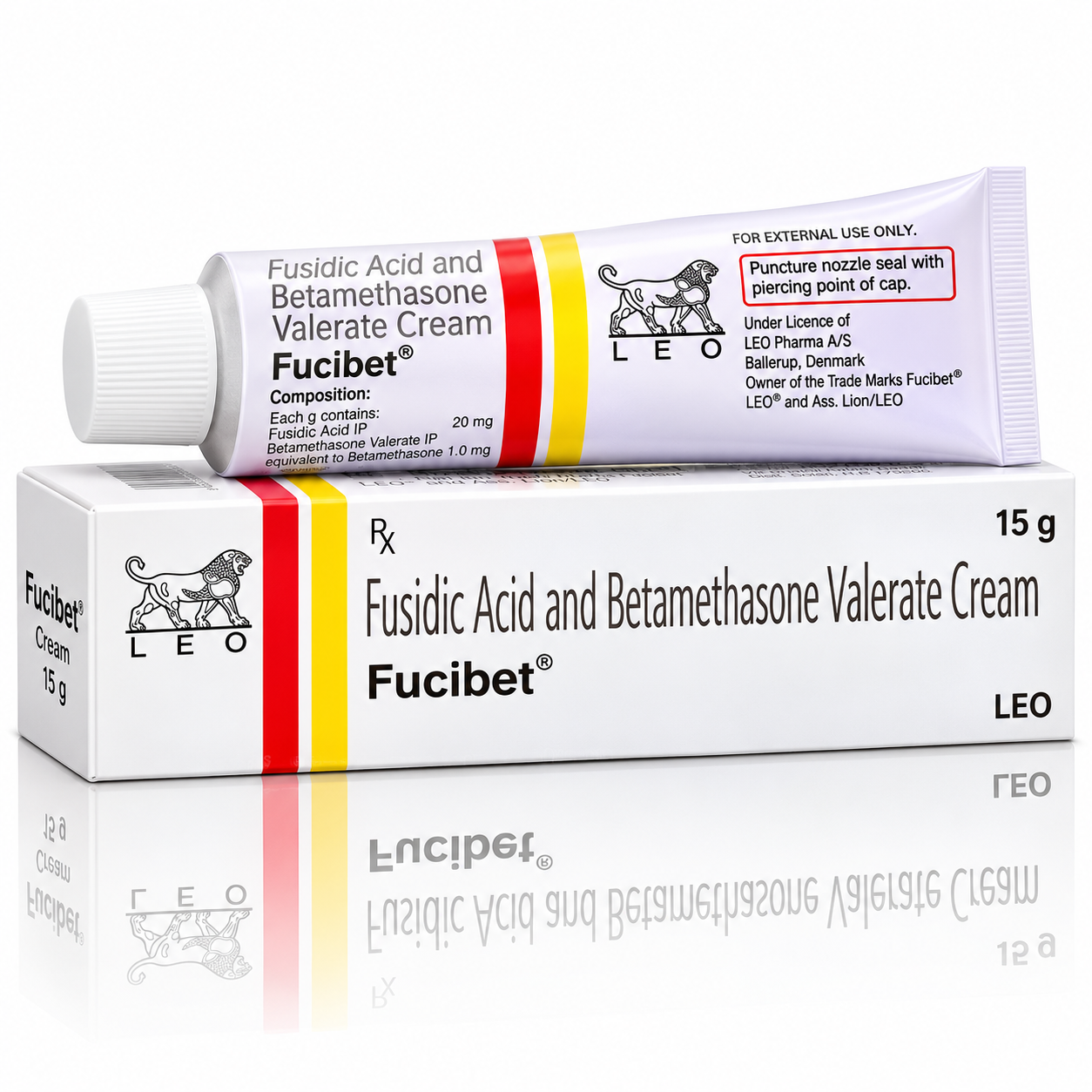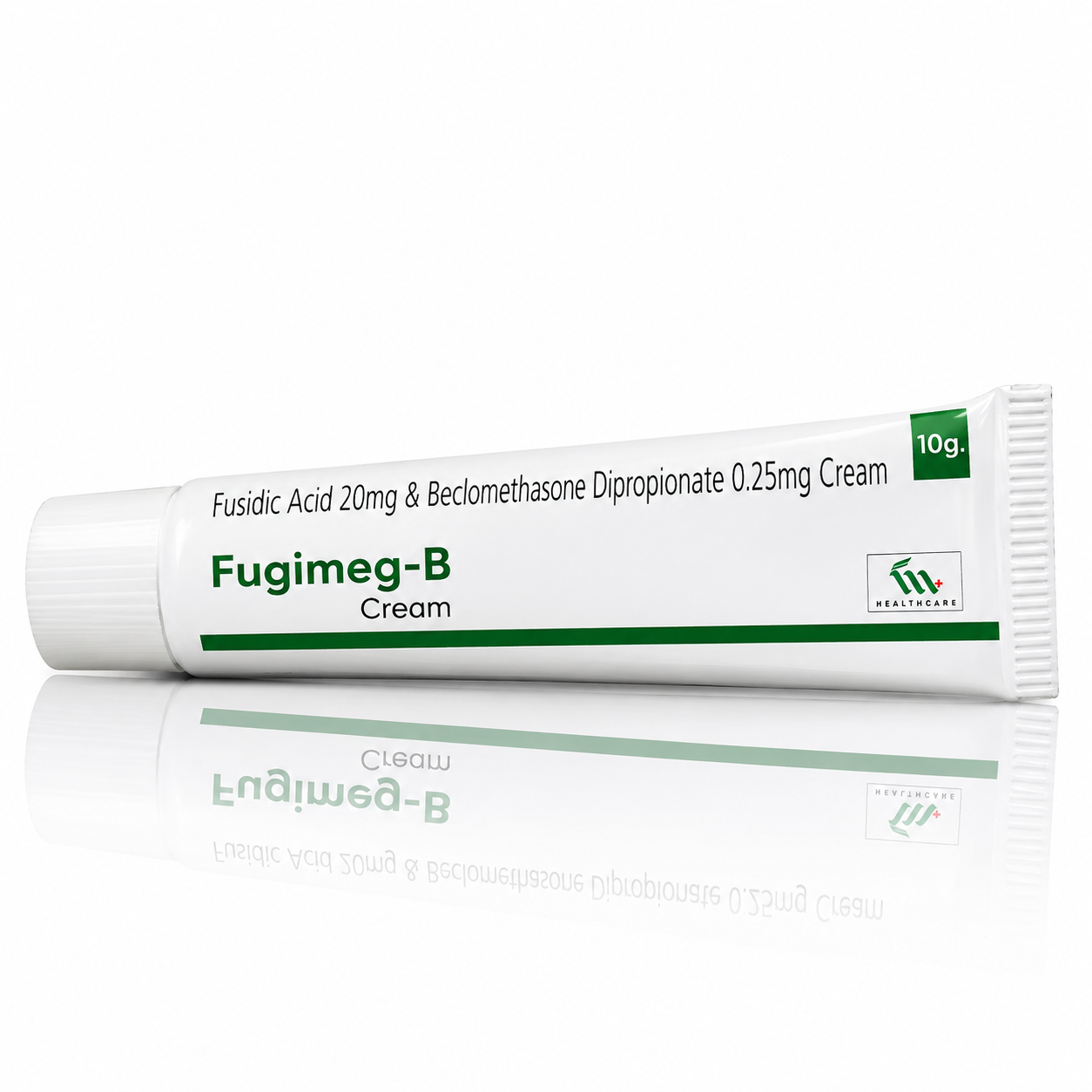
Fugimeg-B Cream (10 GM)
$9.00 / unit
Available Options
| Pack Size | Price | Price / Unit | Quantity | Action |
|---|---|---|---|---|
| 10 Cream | $66.00 | $6.60/unit | ||
| 8 Cream | $53.00 | $6.63/unit | ||
| 6 Cream | $40.00 | $6.67/unit | ||
| 4 Cream | $28.00 | $7.00/unit | ||
| 2 Cream | $16.00 | $8.00/unit | ||
| 1 Cream | $9.00 | $9.00/unit |
Product Description
FUGIMEG-B CREAM 10 GM
Brand Name: Fugimeg-B Cream
Generic Name: Fusidic Acid + Beclomethasone Dipropionate
Strength: Fusidic Acid 2% w/w + Beclomethasone Dipropionate 0.025% w/w (
Dosage Form: Topical Cream
Therapeutic Class: Topical Antibiotic / Topical Corticosteroid Combination
Manufacturer / Marketer: Listed under the Megma pharmaceutical product range
Pack Size: 1 × 10 GM Tube
Prescription Status: Prescription Medicine
What is this medicine?
FUGIMEG-B CREAM 10 GM is a prescription topical medicine containing an antibacterial ingredient, Fusidic Acid, and an anti-inflammatory corticosteroid, Beclomethasone Dipropionate.
Fusidic Acid belongs to a group of medicines known as topical antibiotics.
Beclomethasone Dipropionate belongs to a group called topical corticosteroids.
The combination is used for selected inflammatory skin conditions when a susceptible secondary bacterial infection is present and the healthcare professional determines that both components are needed.
Fugimeg-B may be prescribed for:
Infected atopic eczema
Infected contact dermatitis
Infected inflammatory skin lesions
Selected cases of bacterial folliculitis with significant inflammation
Certain other inflammatory dermatoses complicated by susceptible bacterial infection
The medicine is intended for external application to the skin.
Important: Fugimeg-B is not an antifungal medicine. It should not be routinely used for ringworm, jock itch, athlete's foot or other fungal infections.
How Does Fugimeg-B Work?
Fugimeg-B contains two active ingredients with different mechanisms of action.
1. Fusidic Acid – Topical Antibiotic
Fusidic Acid acts against certain susceptible bacteria, particularly strains of Staphylococcus aureus.
It works by inhibiting bacterial protein synthesis.
Specifically, it interferes with a bacterial protein called elongation factor G (EF-G).
This prevents bacteria from producing proteins necessary for normal growth and multiplication.
Its effects include:
Inhibiting bacterial growth
Reducing the number of susceptible bacteria in infected skin
Helping control localized bacterial infection
Supporting the recovery of infected skin lesions
Reducing infection-related symptoms as the bacteria are controlled
Important: Fusidic acid does not work against every bacterium. Some bacteria may be resistant.
2. Beclomethasone Dipropionate – Topical Corticosteroid
Beclomethasone Dipropionate reduces inflammatory responses in the skin.
It acts on pathways responsible for redness, itching, swelling and irritation.
Its effects may help:
Reduce skin redness
Relieve itching
Decrease swelling
Control inflammatory skin reactions
Reduce skin irritation
Improve discomfort associated with dermatitis
Beclomethasone does not kill bacteria.
It treats the inflammatory component of the skin condition.
Combined Action
Fusidic Acid and Beclomethasone work together to provide two effects:
Fusidic Acid: Helps control susceptible bacterial infection.
Beclomethasone: Reduces inflammation, redness, swelling and itching.
The combination may be useful when a patient has an inflammatory skin condition complicated by a susceptible secondary bacterial infection.
Important: Corticosteroids can hide signs of infection. The cream should not be used on undiagnosed skin rashes without a clinician's advice.
Common Uses
Fugimeg-B may be prescribed for:
Bacterially infected eczema
Infected allergic contact dermatitis
Infected irritant dermatitis
Selected inflamed bacterial skin lesions
Certain other infected inflammatory dermatoses
The diagnosis should establish that the antibiotic-steroid combination is clinically appropriate.
Infected Atopic Eczema
Atopic eczema is a chronic inflammatory skin condition associated with changes in the skin barrier.
Common symptoms include:
Dryness
Redness
Itching
Rough or cracked skin
Recurrent inflammation
Skin irritation
Scratching may damage the skin barrier and increase the risk of bacterial infection.
Signs suggesting secondary infection may include:
Increased oozing
Yellowish crusting
New pustules
Increasing tenderness
Rapidly worsening redness
Fugimeg-B may be used for a short course when the clinician determines that bacterial infection requires treatment.
Important: Many eczema flares are not bacterial infections and do not require topical antibiotics.
Infected Contact Dermatitis
Contact dermatitis develops when the skin reacts to an irritant or allergen.
Common triggers include:
Detergents
Fragrances
Cleaning chemicals
Cosmetics
Metals
Certain personal care products
Symptoms may include:
Itching
Redness
Dryness
Swelling
Blisters
Cracking
If the damaged skin becomes secondarily infected with susceptible bacteria, a clinician may prescribe Fugimeg-B.
Treatment should also involve avoiding the triggering substance.
Infected Skin Lesions
Some inflammatory skin lesions may develop secondary bacterial infection.
Possible symptoms include:
Redness
Tenderness
Pus
Crusting
Local swelling
Increasing discomfort
Fugimeg-B may help control bacterial infection and inflammation in carefully selected cases.
However, deep infections or large abscesses generally require other treatment.
Bacterial Folliculitis With Inflammation
Bacterial folliculitis occurs when bacteria infect hair follicles.
Symptoms may include:
Small red bumps
Pustules
Tenderness
Itching
Inflammation around hair follicles
Fusidic acid may be effective against susceptible bacteria.
However, the corticosteroid component is not routinely necessary for folliculitis and may sometimes worsen or mask an infection.
Important: Use this combination for folliculitis only when a healthcare professional specifically determines that both ingredients are appropriate.
Important Treatment Limitations
Fugimeg-B should not routinely be used for:
Ringworm
Jock itch
Athlete's foot
Other fungal skin infections
Acne vulgaris
Rosacea
Perioral dermatitis
Cold sores
Chickenpox
Viral warts
Uninfected eczema without a bacterial indication
Skin-lightening purposes
General moisturizing
Large abscesses
Serious bacterial skin infections requiring systemic antibiotics
Important: Applying a corticosteroid to an untreated fungal infection may cause the infection to spread or become less recognizable, sometimes resulting in tinea incognito.
Important Treatment Consideration
Fugimeg-B may be prescribed alongside:
Gentle skin cleansing
Appropriate moisturizers
Avoidance of skin irritants
Proper skin barrier care
Evaluation of bacterial infection
Assessment of eczema triggers
Medical follow-up when symptoms persist
NOTE: Antibiotic-steroid creams should generally be used for short prescribed courses. Prolonged or repeated treatment can increase the risks of antibiotic resistance and corticosteroid-related skin damage.
What should I tell my healthcare provider before I take this medicine?
Inform your healthcare provider if you have:
Allergy to fusidic acid
Allergy to beclomethasone
Previous reactions to topical corticosteroids
Previous allergic reactions to antibiotic creams
Fungal skin infections
Viral skin infections
Rosacea
Acne
Perioral dermatitis
Skin tuberculosis
Open wounds or ulcers
Extensive skin infections
Diabetes
Weakened immune function
Glaucoma
Cataracts
Previous steroid-induced skin thinning
Recurrent bacterial skin infections
Known antibiotic-resistant infections
Pregnancy or plans to become pregnant
Breastfeeding
Use of other topical corticosteroids
Use of topical antibiotics
Use of immunosuppressive medicines
Tell your healthcare provider about all prescription medicines, nonprescription medicines and medicated skin products you currently use.
Important Contraindications
Fugimeg-B should not be used in patients with:
Known serious hypersensitivity to fusidic acid
Known serious hypersensitivity to beclomethasone
Allergy to another ingredient in the formulation
Topical corticosteroid combinations are generally unsuitable for untreated:
Primary fungal infections
Viral skin infections
Skin tuberculosis
Certain primary bacterial infections
Rosacea
Perioral dermatitis
The precise contraindications should be confirmed against the supplied Fugimeg-B product label.
Important Topical Steroid Warning
Beclomethasone can cause unwanted effects when used inappropriately.
Prolonged or excessive application may cause:
Skin thinning
Stretch marks
Visible small blood vessels
Steroid-induced acne
Changes in skin pigmentation
Delayed wound healing
Increased susceptibility to infections
Systemic corticosteroid effects in certain circumstances
Risk increases with:
Large treatment areas
Prolonged use
Application under airtight dressings
Application to damaged skin
Use on sensitive body areas
Use in young children
Important: Apply only the prescribed amount for the prescribed duration.
Important Antibiotic Resistance Warning
Fusidic Acid is an antibiotic.
Repeated or unnecessary use may increase the risk of resistant bacteria.
To reduce this risk:
Use the cream only when prescribed.
Apply only to the affected area.
Avoid unnecessary repeat courses.
Do not use it for fungal infections.
Do not continue beyond the prescribed duration.
Seek medical assessment if the condition fails to improve.
Important Eye Warning
Avoid applying Fugimeg-B:
Inside the eyes
On the eyelids unless specifically directed
Inside the mouth
Inside the nose
To other mucous membranes
Prolonged corticosteroid exposure near the eyes can increase the risk of glaucoma and cataracts.
Important Pregnancy Warning
Topical corticosteroids and antibiotics should be used during pregnancy only when clinically appropriate.
Patients who are pregnant should avoid:
Excessive application
Large treatment areas
Prolonged courses
Occlusive dressings unless specifically prescribed
The healthcare professional should assess the benefits and potential risks.
How should I use this medicine?
Use Fugimeg-B Cream 10 GM exactly as prescribed by your healthcare provider.
Apply only to the affected skin.
Clean and gently dry the area before application.
Apply a small amount in a thin layer.
Spread gently over the prescribed area.
Wash your hands after application unless your hands are being treated.
Avoid contact with the eyes, mouth and other mucous membranes.
Do not apply over large areas unless instructed.
Avoid airtight dressings unless specifically prescribed.
Do not use more frequently than directed.
Do not continue treatment beyond the prescribed duration.
Do not share the cream with another person.
Understanding the Cream Strength
The commonly marketed fusidic acid-beclomethasone formulation contains:
Fusidic Acid: 2% w/w (20 mg per gram)
Beclomethasone Dipropionate: 0.025% w/w (0.25 mg per gram)
Dosage Form: Topical cream
Route of Administration: External application to the skin.
Important: These percentages are based on comparable formulations, not a verified Fugimeg-B pack label. Confirm them before using this description as final product labeling.
Usual Adult Dosage
A commonly used reference regimen for similar fusidic acid-beclomethasone creams is:
Apply a thin layer to the affected area once or twice daily, as prescribed.
The exact application frequency depends on the affected area, condition and clinician's directions.
Do not increase the frequency without medical advice.
How to Apply Fugimeg-B Cream
Wash your hands thoroughly.
Gently clean the affected skin if necessary.
Pat the area dry.
Squeeze a small amount of cream onto your fingertip.
Apply a thin layer to the prescribed area.
Spread gently without excessive rubbing.
Avoid unnecessary application to surrounding healthy skin.
Wash your hands afterward unless treating your hands.
Replace the tube cap securely.
Continue only for the prescribed duration.
Application for Infected Eczema
When Fugimeg-B is prescribed for infected eczema:
Apply to the specific affected area.
Continue appropriate skin-barrier care.
Use moisturizers as directed.
Avoid scratching.
Avoid known irritants.
Monitor for improvement in crusting, redness and tenderness.
Important: The cream should not automatically be applied to all areas of eczema.
Important Treatment Duration
Because Fugimeg-B contains an antibiotic and corticosteroid, treatment should normally be brief.
For similar combinations, courses are often limited to approximately 7–14 days, depending on the diagnosis and prescribing instructions.
The precise maximum duration for Fugimeg-B must be checked against its own product label.
Prolonged use can increase the risk of:
Antibiotic resistance
Skin thinning
Steroid-induced dermatitis
Delayed recognition of infection
Systemic corticosteroid absorption
Important: Do not repeatedly restart treatment without medical reassessment.
Children and Adolescents
Children may absorb proportionally more topical corticosteroid than adults.
Excessive exposure can increase the risk of:
Skin thinning
Adrenal suppression
Other systemic steroid effects
Growth-related effects with prolonged exposure
Use in children should be directed by a qualified healthcare professional.
Application on the Face
Facial skin is particularly sensitive to topical corticosteroids.
Avoid routine application to:
Eyelids
Around the mouth
Areas affected by acne
Areas affected by rosacea
If prescribed for a specific facial condition, use only as directed and for the shortest appropriate duration.
Application Under Dressings
Airtight dressings may increase absorption of beclomethasone.
This can increase the risk of corticosteroid adverse effects.
Important: Do not cover the treated area with plastic wrap or an airtight dressing unless specifically prescribed.
Special Patient Populations
Older Adults: May have thinner, more fragile skin and require additional caution.
Children: Use only under professional supervision.
Diabetes: Monitor for persistent or worsening skin infection.
Immunocompromised Patients: May require additional assessment for infection.
Pregnancy: Use only when clinically necessary and prescribed.
Breastfeeding: Avoid application to the breasts where the infant could ingest the cream.
Extensive Skin Disease: Large treatment areas may increase corticosteroid absorption.
How Long Does Fugimeg-B Take to Work?
Beclomethasone may begin reducing redness and itching within the first few days.
Fusidic acid inhibits the growth of susceptible bacteria during treatment.
Some patients may notice improvement in:
Redness
Itching
Swelling
Tenderness
Crusting
Local discomfort
within several days.
The response depends on:
The underlying skin condition
Bacterial susceptibility
Severity of inflammation
Correct application
Treatment adherence
Other skin-care measures
Important: If the infection spreads, worsens or does not begin improving within several days, consult your healthcare provider.
What if I miss a dose?
If you miss an application:
Apply the cream when remembered unless the next application is approaching.
If the next application is nearly due, skip the missed application.
Continue with the prescribed schedule.
Do not apply a thick layer to compensate.
Do not increase application frequency.
Important: Applying extra cream will not improve treatment effectiveness and may increase skin irritation or corticosteroid exposure.
What may interact with this medicine?
Fugimeg-B is applied topically.
When used correctly on small areas, systemic absorption is generally limited, so significant interactions with oral medicines are less likely than with systemic antibiotics or corticosteroids.
However, the risk of systemic corticosteroid effects may increase with extensive or prolonged treatment.
Potential Interaction Considerations
Other topical corticosteroids
Other topical antibiotics
Topical retinoids
Benzoyl peroxide
Exfoliating acids
Irritating antiseptics
Occlusive dressings
Systemic corticosteroids
Other immunosuppressive medicines
Important Drug Interaction Considerations
Other Topical Corticosteroids: May increase the risk of skin thinning and other corticosteroid-related effects.
Other Topical Antibiotics: May be unnecessary unless prescribed for a specific reason.
Tretinoin and Adapalene: May cause additional irritation when applied to the same area.
Benzoyl Peroxide: May worsen irritation on inflamed or damaged skin.
Salicylic Acid: May increase local irritation.
Systemic Corticosteroids: May increase total corticosteroid exposure when topical treatment is extensive.
Occlusive Dressings: Can increase absorption of topical beclomethasone.
These are primarily precautions concerning overlapping effects, absorption or skin irritation rather than proven direct drug interactions with Fugimeg-B.
Important Topical Steroid Combination Warning
Using multiple steroid creams on the same area can increase the risk of:
Skin thinning
Irritation
Stretch marks
Steroid-induced acne
Visible small blood vessels
Other steroid-related changes
Avoid combining steroid creams unless specifically directed.
Important Antibiotic Combination Warning
Using multiple topical antibiotics without a clear indication may increase unnecessary antibiotic exposure.
This can contribute to:
Skin irritation
Contact dermatitis
Antibiotic resistance
Do not combine topical antibiotics without professional advice.
Important Moisturizer Use
Moisturizers may help restore the skin barrier in eczema.
If both Fugimeg-B and an emollient are prescribed, follow the recommended application order and timing.
The clinician may advise separating applications to avoid diluting or spreading the medicated cream.
Important Drug Interaction Precaution
Tell your healthcare provider about all creams, ointments, prescription medicines and skin-care treatments you currently use.
What should I watch for while using this medicine?
Contact your healthcare provider if you develop:
Increasing redness
Worsening itching
Persistent burning
Severe skin irritation
New pustules
Spreading infection
Increasing swelling
Skin thinning
Unusual pigmentation changes
Worsening eczema
New ring-shaped or fungal-looking rashes
Blurred vision
Persistent symptoms despite treatment
Seek urgent medical attention for:
Severe allergic reactions
Difficulty breathing
Swelling of the face or throat
Rapidly spreading infection with fever
Severe skin blistering
Significant eye symptoms
Severe skin pain with rapidly worsening illness
Important Monitoring
Skin Inflammation: Observe improvement in redness, itching and swelling.
Bacterial Infection: Monitor whether pus, crusting, oozing and tenderness improve.
Treatment Duration: Avoid unnecessary extended use.
Skin Thickness: Watch for thinning after prolonged or repeated corticosteroid exposure.
Antibiotic Response: Reassess infections that fail to improve.
Eye Symptoms: Monitor for vision problems, especially if used near the face.
Recurrence: Repeated infections may require bacterial culture or alternative treatment.
Important Antibiotic Resistance Monitoring
Repeated topical antibiotic use may encourage resistant bacteria.
Possible signs include:
Persistent infection
Recurrent infection
Continued crusting or oozing
Spreading lesions
Poor response to treatment
A clinician may recommend bacterial culture and susceptibility testing.
Important Skin Thinning Warning
Prolonged beclomethasone use may cause:
Thin or fragile skin
Easy bruising
Visible blood vessels
Stretch marks
Skin color changes
The risk is greater on sensitive body areas.
Important Fungal Infection Warning
Corticosteroids may temporarily reduce redness and itching caused by fungal infections while allowing the fungus to continue growing.
This can produce atypical or spreading fungal infections.
Important: Fugimeg-B should not be used as an antifungal treatment for ringworm or other dermatophyte infections.
Important Rebound Skin Reaction
Prolonged or inappropriate use of topical corticosteroids may occasionally be followed by rebound inflammation after discontinuation.
Symptoms can include:
Intense redness
Burning
Stinging
Peeling
Worsening irritation
Persistent or severe symptoms should be evaluated by a dermatologist.
Important Warning Signs of Severe Skin Infection
Seek medical assessment for:
Rapidly spreading redness
Fever
Significant skin pain
Severe swelling
Extensive pus formation
Red streaking
Signs of systemic illness
Topical treatment may not be adequate for serious bacterial infections.
What side effects may I notice from this medicine?
Fugimeg-B Cream may cause local adverse effects and, rarely, systemic corticosteroid effects.
Side effects that should be reported promptly:
Severe allergic reactions
Significant contact dermatitis
Worsening bacterial infection
Severe burning or irritation
Skin thinning
Persistent pigmentation changes
Steroid-induced acne
Perioral dermatitis
Severe skin rash
Blurred vision
Signs of adrenal suppression following extensive or prolonged use
Severe rebound skin inflammation
Side effects that usually do not require immediate medical attention:
Mild burning sensation
Temporary itching
Mild redness
Dry skin
Local irritation
Application-site discomfort
Mild stinging
Not everyone experiences these effects.
Persistent or worsening symptoms should be discussed with a healthcare professional. The adverse effects listed are based on the known ingredients and comparable formulations, rather than a Fugimeg-B-specific clinical safety study.
Important Application-Site Reactions
Some patients may experience:
Burning
Stinging
Itching
Redness
Dryness
Mild discomfort
These symptoms may be temporary.
However, worsening reactions may indicate irritation, allergy or an infection that needs reassessment.
Important Skin Thinning
Prolonged use of topical beclomethasone may cause:
Skin atrophy
Stretch marks
Fragile skin
Visible small blood vessels
Easy bruising
The risk increases with prolonged treatment and application to sensitive areas.
Important Steroid-Induced Acne
Topical corticosteroids may cause acne-like eruptions.
Possible symptoms include:
Small inflamed bumps
Pustules
Increased irritation
Acneiform dermatitis
Important: Fugimeg-B is not a routine treatment for acne vulgaris.
Important Skin Pigmentation Changes
Prolonged topical corticosteroid exposure may alter skin pigmentation.
Some patients may notice areas of reduced pigmentation.
Persistent changes should be assessed by a dermatologist.
Important Allergic Reactions
Allergic reactions may occur to either active ingredient or another cream component.
Symptoms can include:
Rash
Hives
Itching
Swelling
Contact dermatitis
Important: Difficulty breathing or throat swelling requires emergency medical attention.
Important Systemic Corticosteroid Side Effects
Systemic absorption of beclomethasone is usually limited when applied correctly to small areas for short periods.
However, prolonged or extensive use may cause:
Adrenal suppression
Cushingoid features
Blood glucose changes
Other systemic corticosteroid effects
Risk is greater when applied to large areas, damaged skin or under airtight dressings.
Important Eye-Related Side Effects
Topical corticosteroid use near the eyes may increase the risk of:
Glaucoma
Cataracts
Increased intraocular pressure
Blurred vision
Avoid eye contact and unnecessary application around the eyelids.
Important Pregnancy and Breastfeeding Considerations
Pregnancy: Use only when clinically appropriate, for the shortest effective duration and on limited areas.
Breastfeeding: Application to small areas may be appropriate when prescribed. Avoid applying the cream to the breasts, particularly the nipple area, where an infant could ingest it.
Important: Patients who are pregnant, planning pregnancy or breastfeeding should consult their healthcare provider before using Fugimeg-B.
Where should I keep my medicine?
Store according to the temperature instructions printed on the product carton or tube.
Keep in a cool, dry place.
Protect from direct sunlight.
Protect from excessive heat.
Do not freeze unless explicitly permitted by the manufacturer.
Keep the tube tightly closed.
Store in the original packaging.
Keep out of the reach of children.
Keep away from pets.
Do not use after the expiry date.
Do not use a damaged or leaking tube.
Avoid contaminating the tube opening.
Do not share the cream.
Dispose of expired or unused medicine according to pharmacist instructions.
Storage Note: Comparable fusidic acid-beclomethasone products list storage below 30°C. However, the exact storage requirement for Fugimeg-B has not been independently confirmed. Follow the supplied product label.
Manufacturer Details
Field | Information |
|---|---|
Brand Name | Fugimeg-B Cream |
Generic Name | Fusidic Acid + Beclomethasone Dipropionate |
Fusidic Acid Strength | 2% w/w — Reference Formulation, Verify on Pack |
Beclomethasone Dipropionate Strength | 0.025% w/w — Reference Formulation, Verify on Pack |
Dosage Form | Topical Cream |
Therapeutic Class | Topical Antibiotic / Topical Corticosteroid |
Primary Indication | Selected Inflammatory Skin Conditions With Secondary Bacterial Infection |
Common Uses | Infected Eczema, Infected Contact Dermatitis and Selected Infected Inflammatory Dermatoses |
Mechanism of Action | Inhibits Bacterial Protein Synthesis and Suppresses Skin Inflammation |
Brand Range | Listed in Megma Pharmaceutical Product Catalogue |
Manufacturer / Marketer | Exact Legal Entity to Be Verified from Product Packaging |
Manufacturing Facility | Not Independently Verified |
Manufacturer Address | Verify from Current Product Packaging |
Prescription Status | Prescription Medicine |
Route of Administration | Topical / External Skin Application |
Common Reference Application Frequency | Once or Twice Daily, as Prescribed |
Typical Treatment Duration | Short Course, Often 7–14 Days; Follow Prescriber and Product Label |
Storage | Follow the Product Label |
Retail Pack Size | 1 × 10 GM Tube |
Packaging Type | Topical Cream Tube |
Country of Origin | India — Based on Indian Pharmaceutical Catalogue; Verify Pack |