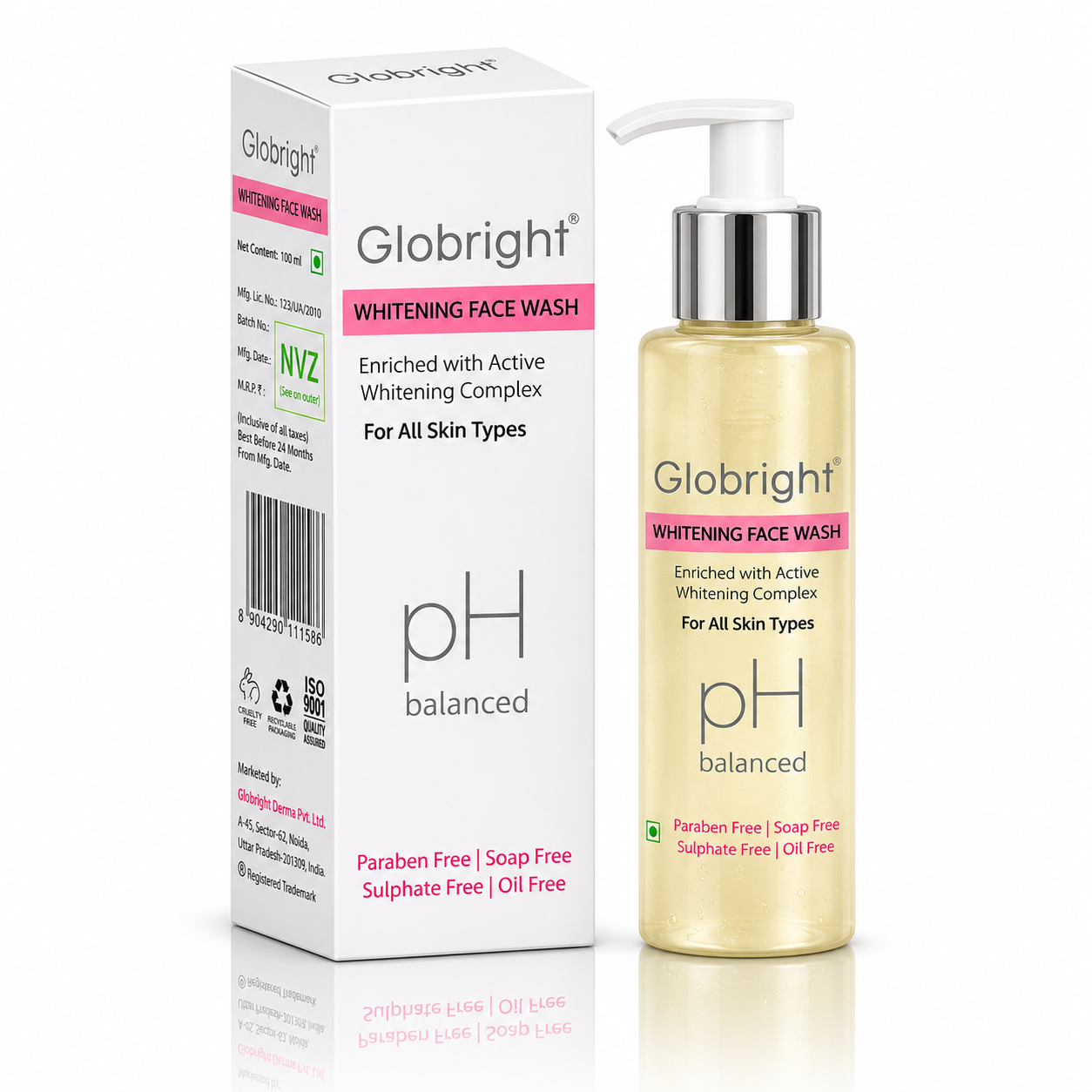
Globright Whitening Face Wash (100 ML)
Starting at just $3.14
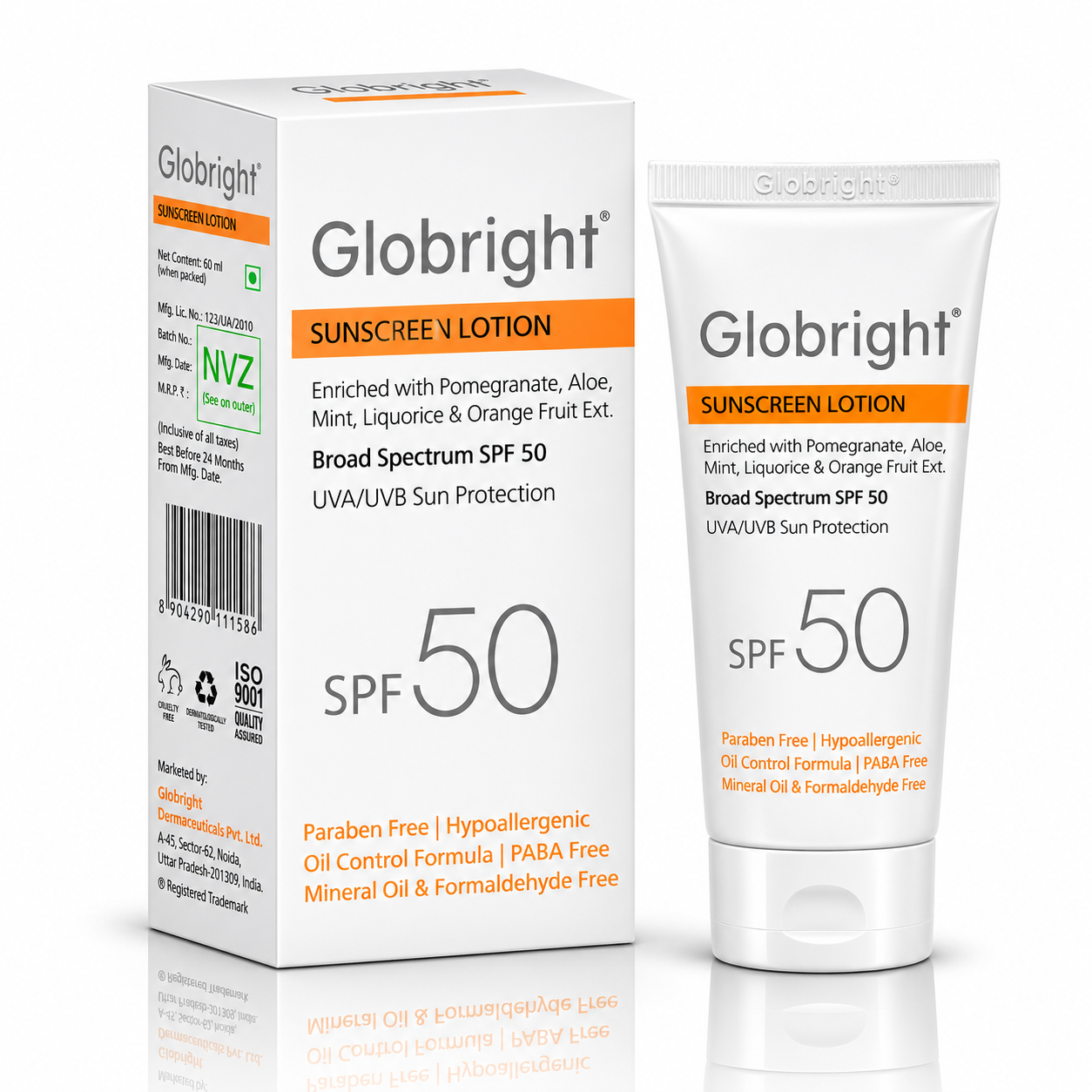
$4.11 / unit
| Pack Size | Price | Price / Unit | Quantity | Action |
|---|---|---|---|---|
| 10 Lotion | $41.10 | $4.11/unit | ||
| 8 Lotion | $32.88 | $4.11/unit | ||
| 6 Lotion | $24.66 | $4.11/unit | ||
| 4 Lotion | $16.44 | $4.11/unit | ||
| 2 Lotion | $8.22 | $4.11/unit | ||
| 1 Lotion | $4.11 | $4.11/unit |
Brand Name: Globright Sunscreen Lotion
Product Category: Sunscreen / Sun Protection / Skincare
Available SPF Variants: SPF 30 and SPF 50
Pack Size: 50 ml
Dosage Form: Topical Lotion
Therapeutic Class: Broad-Spectrum Sunscreen / Photoprotective Skincare Product
Manufacturer/Marketer: Innovative Pharmaceuticals Private Limited
Country of Origin: India
GLOBRIGHT SUNSCREEN LOTION is a topical skincare product designed to help protect the skin from harmful ultraviolet (UV) radiation caused by sun exposure.
It is formulated to provide broad-spectrum protection against both UVA and UVB rays, helping reduce sunburn, sun-induced skin damage, and premature skin aging when applied correctly.
Globright Sunscreen Lotion contains a combination of sunscreen filters and skin-conditioning ingredients. The SPF 50 product listing identifies ingredients such as avobenzone, octocrylene, octyl salicylate, micronized titanium dioxide, Tinosorb M, aloe vera, niacinamide, and botanical extracts. The complete ingredient list may vary by SPF variant or formulation.
UVA rays penetrate into deeper layers of the skin and contribute to premature aging, pigmentation changes, and cumulative skin damage.
UVB rays primarily affect the outer layers of the skin and are an important cause of sunburn.
Broad-spectrum sunscreen helps protect against both types of ultraviolet radiation.
Globright Sunscreen Lotion may be used for:
Sunburn Prevention: Helps protect the skin against UVB radiation responsible for sunburn.
UVA and UVB Protection: Provides broad-spectrum protection against ultraviolet radiation.
Prevention of Premature Skin Aging: Helps reduce sun-related fine lines, wrinkles, and photoaging.
Hyperpigmentation Prevention: Helps reduce UV exposure that can worsen dark spots and uneven skin tone.
Daily Sun Protection: Suitable for inclusion in a regular morning skincare routine.
Outdoor Sun Exposure: Helps protect exposed skin during outdoor activities when used and reapplied appropriately.
Skin Moisturization: Contains skin-conditioning ingredients that may help maintain skin comfort.
Support for Sensitive Skin Care: May be used as part of a sun-protection routine, depending on individual skin tolerance.
Post-Acne Pigmentation Care: Helps prevent sunlight from worsening the appearance of certain post-inflammatory dark marks.
Long-Term Skin Health: Consistent sunscreen use helps reduce cumulative UV damage and contributes to skin cancer prevention.
The SPF 50 version is marketed with aloe vera, pomegranate, orange extract, and other skincare ingredients. These ingredients may provide additional skin-conditioning properties, although their presence does not replace the protection provided by approved UV filters.
Tell your dermatologist or healthcare professional if you have any of these conditions:
extremely sensitive or reactive skin
history of allergic reactions to sunscreen products
allergic reactions to chemical UV filters
allergy to botanical extracts or fragrance ingredients
eczema or atopic dermatitis
psoriasis
rosacea
active acne or acne-prone skin
contact dermatitis
skin infections or open wounds
severe sunburn
unusually frequent sunburns
photosensitivity disorders
melasma or persistent hyperpigmentation
a history of skin cancer
a history of unusual reactions to sunlight
recently undergone chemical peels or laser procedures
using tretinoin, adapalene, isotretinoin, or other acne treatments
using photosensitizing medicines
an unusual or allergic reaction to skincare products, preservatives, dyes, or fragrances
pregnant or planning to become pregnant
breast-feeding
People with known sensitivity to particular sunscreen filters should review the complete ingredient list before use.
This product is for external use only.
Apply Globright Sunscreen Lotion according to the directions provided on the product packaging.
For Facial Application:
Cleanse your face with a suitable facial cleanser.
Apply moisturizer first if your skincare routine requires one.
Apply an adequate, even layer of sunscreen to the face, ears, neck, and other exposed areas.
Avoid direct contact with the eyes, mouth, and inside the nose.
For Body Application:
Apply generously to all exposed skin, including the neck, arms, hands, and legs.
Ensure the sunscreen forms an even layer over exposed areas.
For best results, apply sunscreen approximately 15 minutes before sun exposure, as directed in the product listing.
Reapplication:
Reapply sunscreen at least every 2 hours while outdoors.
Reapply immediately after swimming, excessive sweating, or towel drying, using a product specifically labeled water-resistant when these activities are expected.
Do not assume Globright Sunscreen Lotion is water-resistant unless this is confirmed on the particular packaging.
Recommended Amount:
Most adults require approximately 30 ml of sunscreen to cover the entire body when wearing minimal clothing, although the exact amount depends on body size and exposed skin area.
For the face and neck, use enough to achieve thorough, even coverage rather than applying an extremely thin layer.
For Daily Skincare:
Apply sunscreen as the final skincare step before makeup.
Use it even on cloudy days when significant outdoor UV exposure is expected.
If you are using retinoids, exfoliating acids, or treatments that increase sun sensitivity, consistent sunscreen application is especially important.
Do not apply to open wounds or severely irritated skin unless a healthcare professional recommends it.
If the product causes persistent burning, redness, or irritation, discontinue use and seek medical advice.
Accidental ingestion: If a significant quantity is swallowed, contact a poison control center or healthcare professional.
NOTE: This product is intended for personal skincare use. Do not share products when doing so could cause contamination or hygiene concerns.
Apply Globright Sunscreen Lotion when you remember, particularly before going outdoors.
If you have already spent time in the sun without adequate protection, applying sunscreen afterward will not reverse UV damage that has already occurred.
Do not apply an excessive amount to compensate for missed applications.
Continue applying an adequate layer and reapply as directed.
For extended outdoor activities, maintain an appropriate reapplication schedule.
Topical sunscreen products generally have fewer systemic drug interactions than oral medicines. However, certain skincare products and medications may affect skin sensitivity or tolerance.
Potential considerations include:
tretinoin
adapalene
topical retinoids
isotretinoin
benzoyl peroxide
salicylic acid
glycolic acid
lactic acid
alpha-hydroxy acid exfoliants
chemical peeling products
topical corticosteroids
topical acne medications
medicated skin-lightening preparations
certain fragranced skincare products
photosensitizing antibiotics such as doxycycline
other medicines that increase sensitivity to sunlight
Topical Retinoids: Medicines such as tretinoin and adapalene may cause skin irritation and dryness. Sunscreen remains important, but use a formula that your skin tolerates.
Exfoliating Acids: Products containing glycolic acid or other exfoliating ingredients may increase irritation or photosensitivity. Gentle skincare and consistent sunscreen use are recommended.
Benzoyl Peroxide: Using benzoyl peroxide alongside sunscreen is generally acceptable, but some people may experience irritation when combining several skincare products.
Photosensitizing Medicines: Certain medications may make skin more sensitive to sunlight. Sunscreen helps reduce UV exposure but may not eliminate the increased risk.
Other Sunscreens: Layering different sunscreen products does not mean their SPF values can be added together.
Cosmetic Products: Makeup and moisturizers can usually be applied with sunscreen. Allow sufficient time for layers to settle and avoid rubbing off the protective film.
This list may not describe every possible interaction or skin reaction. Inform your dermatologist about all skincare products, topical medicines, and oral medications you use.
Use Globright Sunscreen Lotion regularly as part of your daily sun-protection routine.
Broad-Spectrum Protection: Confirm that the product packaging identifies protection against both UVA and UVB radiation.
SPF Rating: SPF indicates a sunscreen's tested protection against UVB-related sunburn under standardized conditions. SPF 30 filters approximately 96.7% of UVB radiation, while SPF 50 filters approximately 98% when applied at the tested thickness. Actual protection may be substantially lower if too little product is applied.
Regular Reapplication: Sunscreen protection decreases with time, rubbing, sweating, and water exposure. Reapply at least every two hours during outdoor activity.
Sun Exposure: Avoid unnecessary prolonged sun exposure, particularly between approximately 10 AM and 4 PM when UV intensity is often higher.
Sensitive Skin: If you have sensitive skin, test the product on a small area before widespread application.
Skin Irritation: Mild temporary irritation may occur in some individuals. Persistent redness, itching, or burning may indicate sensitivity to an ingredient.
Acne-Prone Skin: People with oily or acne-prone skin should monitor for clogged pores or breakouts. The product's suitability depends on individual skin tolerance.
Hyperpigmentation: Consistent sunscreen application may help prevent UV-related worsening of pigmentation. However, sunscreen alone may not eliminate existing melasma or dark spots. Tinted products containing iron oxides may offer additional visible-light protection for people with pigmentation disorders.
Skin Aging: Regular broad-spectrum sunscreen use helps reduce cumulative UV damage associated with wrinkles and uneven skin texture.
Eye Contact: Avoid applying sunscreen directly inside or very close to the eyes. If accidental contact occurs, rinse thoroughly with clean water.
Children: For infants younger than six months, prioritize shade and protective clothing and consult a pediatrician before applying sunscreen.
Pregnancy and Breast-feeding: Many topical sunscreens are considered compatible with pregnancy and breastfeeding, but individuals with ingredient concerns should discuss their choices with a healthcare professional. Avoid applying sunscreen where a nursing infant could ingest it.
Water Resistance: Do not assume the lotion is waterproof or suitable for prolonged swimming unless the packaging specifically confirms water resistance.
Skin Cancer Prevention: Sunscreen can help reduce UV damage but does not eliminate the risk of skin cancer. Examine changing or unusual skin lesions and seek dermatological evaluation when necessary.
Important: Sunscreen should be combined with protective clothing, sunglasses, a wide-brimmed hat, and shade for comprehensive sun protection.
severe allergic reactions
swelling of the face, lips, eyelids, or tongue
difficulty breathing
severe skin redness or inflammation
persistent burning or painful skin irritation
severe itching or widespread hives
blistering or peeling of the skin
significant swelling at the application site
severe contact dermatitis
intense eye irritation that does not improve after rinsing
worsening rash following application
signs of skin infection associated with irritation
mild skin redness
temporary itching
slight tingling after application
mild burning on sensitive skin
temporary dryness
mild greasiness or shine
occasional acne breakouts
clogged pores in susceptible individuals
mild eye stinging if applied too close to the eyes
temporary white residue on the skin
minor skin discomfort
sensitivity to fragrance or botanical ingredients
Most people tolerate sunscreen products well when applied appropriately.
However, individual reactions depend on skin type, ingredient sensitivity, frequency of use, and other skincare products.
This list may not describe all possible side effects.
Keep out of the reach of children.
Store Globright Sunscreen Lotion in a cool, dry place, following the storage directions on the original packaging.
Protect the container from excessive heat and direct sunlight.
Do not leave the sunscreen inside a hot vehicle for prolonged periods.
Keep the container tightly closed when not in use.
Avoid exposing the product to freezing temperatures unless permitted by the packaging.
Store away from excessive moisture and heat.
Do not use the product if the lotion changes significantly in color, smell, consistency, or texture.
Do not use the product after its expiration date.
Keep the product in its original packaging to preserve its identification and storage instructions.
Dispose of expired or damaged sunscreen according to local waste-disposal guidance.
Field | Information |
|---|---|
Brand Name | Globright Sunscreen Lotion |
Product Name | Globright Sunscreen Lotion 50 ml |
Product Category | Sunscreen / Skincare / Sun Protection |
Available SPF Variants | SPF 30 and SPF 50 |
Dosage Form | Topical Lotion |
Pack Size | 50 ml |
Key Ingredients | Sunscreen UV filters and skin-conditioning ingredients; exact composition varies by formulation |
Ingredients Identified in SPF 50 Listing | Avobenzone, Octocrylene, Octyl Salicylate, Micronized Titanium Dioxide, Tinosorb M, Aloe Vera, Niacinamide, Pomegranate Extract, Orange Extract |
Therapeutic / Cosmetic Class | Broad-Spectrum Sunscreen / Photoprotective Skincare |
Indication | UVA and UVB Protection, Sunburn Prevention, Reduction of UV-Related Skin Damage |
Manufacturer/Marketer | Innovative Pharmaceuticals Private Limited |
Route of Administration | Topical / External Use Only |
Prescription Status | Sunscreen Skincare Product; generally available without prescription |
Skin Type | Suitability depends on individual skin sensitivity and formulation |
Storage | Store in a cool, dry place; protect from excessive heat and direct sunlight |
Country of Origin | India |
Starting at just $3.14
Starting at just $10.00
Starting at just $7.50
Starting at just $5.00
Starting at just $1.16